





The lights came on at dusk. Not gradually — all at once, like someone had thrown a switch on the whole town.
If you played Texas high school football, you don't need that scene described to you. You lived it. The smell of the turf after the groundskeepers watered it at 5 PM. The distant percussion of the band warming up in the end zone. The way your shoulder pads never quite sat right until you hit somebody in the first series, and then they were fine.
Texas high school football memories don't work the way other sports memories work. They don't fade at the edges. They stay sharp: the specific score, the specific cold, the specific feeling of running through that paper banner with your teammates at your back and 15,000 people on their feet.
This article is for the people who were on that field. The ones who know what it meant, and what it cost, to play football in the Lone Star State.
The Weight of Friday Night in Texas
There is a reason the phrase Friday night lights belongs to Texas before it belongs anywhere else. H.G. Bissinger spent a year in Odessa documenting the Permian Panthers' 1988 season and came away with something that reads less like sports journalism and more like anthropology. He had stumbled onto a culture that used football to organize itself: its identity, its pride, its grief, its ambition.
That was 1988. The culture hasn't softened.
In Texas, high school football is the only sport where a regular-season game routinely draws more fans than many college programs in other states. The stadiums prove it.
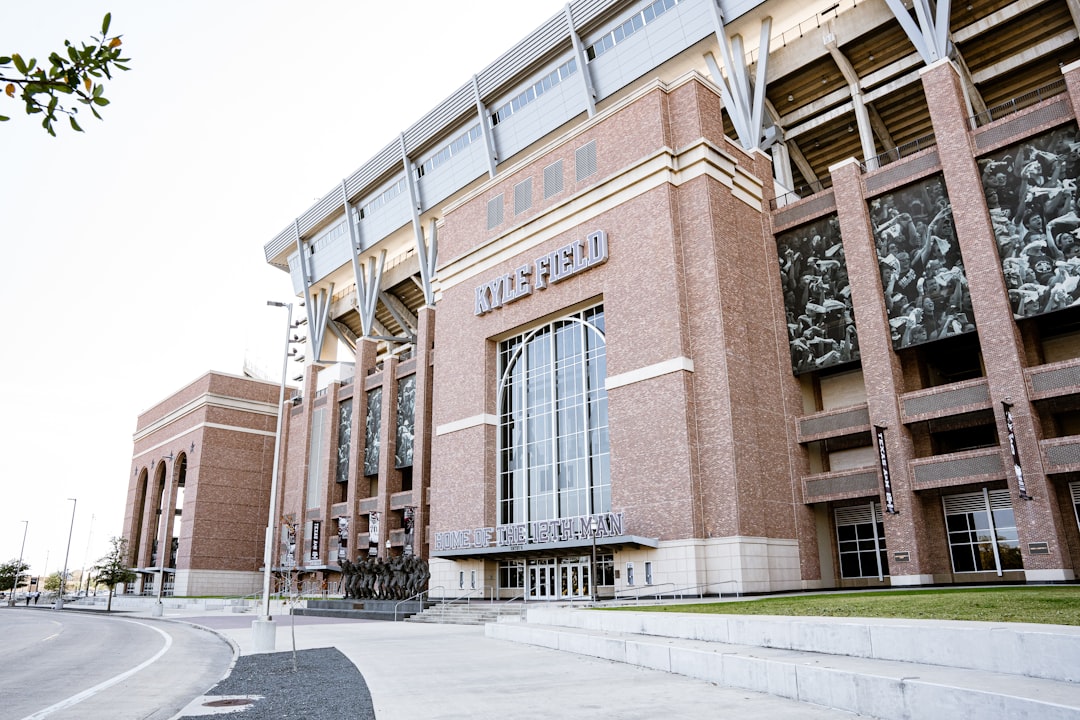
Allen ISD Stadium seats over 18,000 people. McKinney ISD's program operates out of a facility that cost north of $60 million to build. In Katy, in Southlake, in Denton, in Midland, the infrastructure tells you everything you need to know about the priority level. These are not afterthoughts. These are monuments.


If you played in one of those stadiums as a teenager, you understood the weight before you understood how to articulate it. You just felt it in your legs during warmups, that specific nervousness that is different from the nervousness before a game in front of 500 people, because 500 people could be wrong about you, but 15,000 people? That many people watching means something was at stake.
And in Texas, something always was.
The Pressure Was Real — and So Was the Community
The pressure of playing Texas high school football is one of the things former players talk about most honestly once they're old enough to name it. At the time, you absorbed it. You didn't have language for the weight of representing your town, your school, your coaches, your parents' Friday nights for four consecutive years.
What you had was the weight itself.
The players who thrived under that pressure weren't always the most talented. They were the ones who found the community inside the pressure. The locker room. The film sessions on Tuesday evenings. The 5 AM weight room in August when the air outside was already 90 degrees and the only people who showed up were the ones who meant it.
That community was, for a lot of Texas players, the most significant social structure of their adolescence. Not just the team — the ecosystem. The coaches who remembered your older brother. The trainer who taped your ankles the same way every Thursday and knew when you were nervous because you went quiet. The bus rides back from away games when nobody talked because the loss was still too fresh, or everybody talked at once because the win was still buzzing through you.
That's what playing football in Texas actually felt like from the inside.
Texas High School Football Traditions That Formed You Whether You Knew It or Not
Every Texas program has traditions. Some are universal. Some are specific to a single field, a single coach, a single era. But they all do the same thing: they give individual moments a larger frame.
The Two-A-Days ritual. August in Texas is a design decision, not an accident. Two-a-day practices in August heat are a deliberate crucible. Surviving that heat together creates a group that is different from a group that has never been tested, and that was the point. By the time the first game of the season arrived, your team had already been through something. That mattered.
Senior Night. There is no way to prepare for Senior Night as a senior. You've watched it four times. You've stood in the end zone while the seniors ahead of you walked out with their parents, and you understood in the abstract that it would end. When it is actually your turn — when your name is called and your parents are walking across the field toward you and the band is playing and the crowd is standing — you understand it in your body, not your brain. Several former players described it, independently, as the first time they cried on a football field and felt no need to hide it.
The jersey handoff. In programs with a history of excellence, certain numbers carry weight. When a retiring senior passes a number to an incoming player, formally or informally, they are passing something that cannot be described on paper but is felt immediately by both people involved. The number belongs to the position, but it also belongs to everyone who wore it before you. You carry that.
The rivalry game. Every Texas high school has one. One game on the schedule that is underlined in red before the season starts, that determines how the offseason is remembered, that players talk about at reunions thirty years later. The geography of rivalry in Texas is hyperlocal — two towns fifteen miles apart might produce a game that draws more combined passion than a state playoff matchup between programs nobody has heard of. The proximity is the whole point. You know these people. You go to church with them. You work at the same places their parents work. And then, on one Friday night per year, you meet them on a field and it means everything.
What the Stadiums Actually Felt Like
Reading about Texas high school football stadiums and standing inside one as a player are entirely different experiences.
The photographs show the size. They don't show the sound.
Picture a lineman at a 5A program outside San Antonio, running through the tunnel for the first time at a stadium that held close to 12,000 people. It didn't feel like high school anymore; it felt like something he'd only seen on television. The sound hit him before the light did, the crowd noise arriving a half-second before his eyes adjusted to the stadium lights overhead. He couldn't feel his legs for the first two plays of the game. By the third, he didn't notice the crowd at all. Those are the sounds only a player knows, and they stay with you long after the final whistle.
That's the thing about the Texas high school football stadiums that you don't understand until you've played in them: the environment is designed to be overwhelming, and then you adapt. The adaptation is part of the education.
Smaller stadiums carry their own particular weight. The wooden bleachers that creak when the crowd shifts. The press box that's been there since 1962. The end zone that slopes slightly to the left because the field was built on a hill. These details are permanent. Former players who played in those intimate stadiums describe them with a precision that surprises even them. They can tell you exactly where the home crowd sat, which corner the student section claimed, where the band set up.
That specificity is the signature of a memory that mattered. You only remember with that kind of precision the things that shaped you.
The Scale Varied. The Stakes Didn't.
One of the realities of Texas high school football, a state with over 1,500 high school programs competing across six classifications, is that the experience varies enormously in scale. The Allen Eagles play in front of 18,000 people. A six-man program in the Panhandle might draw 200.
But talk to players from both ends of that spectrum, the programs that head the state rankings and the six-man squads that draw 200, and they'll tell you the same thing: the stakes felt identical. The preparation was the same. The Friday night weight was the same. The bus ride home after a loss hit the same.
Texas six-man football has produced some of the most intensely devoted communities in the state, precisely because in a small town, fifteen players is a substantial percentage of the eligible male population, not a squad in the usual sense. Every player matters in a way that is arithmetically true, not just motivationally true. You cannot lose a starter without the entire geometric structure of what you do on offense changing.
That reality produces a specific kind of player: one who understands that their individual effort is load-bearing for the whole enterprise. It's a lesson that outlasts the sport.
What You Carried Off the Field
The cleats wore out. The programs got thrown away. The letterman jackets still hang in closets, or they've been handed down, or they've been lost somewhere between three moves and a marriage.
What didn't disappear was the shape of the experience.
The former Texas high school football players who talk about what the sport gave them don't lead with wins and losses. They lead with the two-a-days. The locker room. The coach who told them something on a Tuesday afternoon in October that they still think about. The way it felt to be trusted with something — a position, a role, a responsibility — at an age when most of the world treats you like you're too young to be trusted with anything.
That trust was the real product of Friday nights in Texas. The scoreboard was just the measure.
The players who remember their time most vividly are often not the ones who went on to play in college. They're the ones for whom high school football was the whole thing, the peak of what they would do in the sport, and they knew it, and they played every Friday like they knew it. There is something particular and irreplaceable about giving everything you have to something that has a fixed end date.
Texas high school football has a fixed end date. That's what makes it matter the way it does.
Your jersey is still out there waiting.
Design yours in minutes and see your name and number exactly the way you remember it.
Frequently Asked Questions
What made Texas high school football different from other states?
The scale, the infrastructure, and the cultural priority. Texas programs operate with budgets, facilities, and community investment that rival small college programs in other states. More importantly, in many Texas communities, Friday night football is the central social event of the week — not a peripheral activity. That level of community investment changes what it feels like to play. The game carries the weight of the whole town, and players feel that weight from the first day of practice.
How big are Texas high school football stadiums compared to other states?
Texas high school stadiums are, by a significant margin, the largest in the country. Allen ISD Stadium seats over 18,000 and is routinely cited as the largest high school football stadium in the United States. Several other Texas programs — Katy, McKinney, Denton — operate facilities seating between 10,000 and 15,000. By comparison, most high school programs outside Texas play in stadiums seating 2,000 to 4,000. The size difference is not incidental — it reflects the degree to which communities have invested in the sport as a civic institution. Design your own — custom football jerseys.
What do former Texas high school football players remember most?
Consistently: the August two-a-days, the specific sounds and smells of their home stadium, Senior Night, and the relationships formed in the locker room and on the bus. Former players tend to remember the process — the preparation, the Tuesday film sessions, the Thursday walk-throughs — as vividly as they remember the games themselves. The games provided the moments, but the daily work provided the identity. Most former players also remember a specific coach's words, a specific play, or a specific loss with unusual precision — the kind of detail retention that signals a formative experience rather than an ordinary one.
Is six-man football in Texas as intense as the larger classifications?
Players and coaches from six-man programs are consistent on this point: the intensity is identical, and in some ways more concentrated. With fewer players on the field, each individual's contribution is arithmetically more significant — a single player's absence changes the structure of the entire offense or defense. Six-man communities are also typically smaller, which means the relationship between the team and the town is more direct and personal. The scale is different. The weight is the same.
See also: why high school sports still matter so deeply to adults | what playing under the Friday night lights actually felt like | why your senior season memories are so vivid even decades later | Texas consistently ranks among the most football-crazy states in America | the athletic identity you built on those Friday nights