

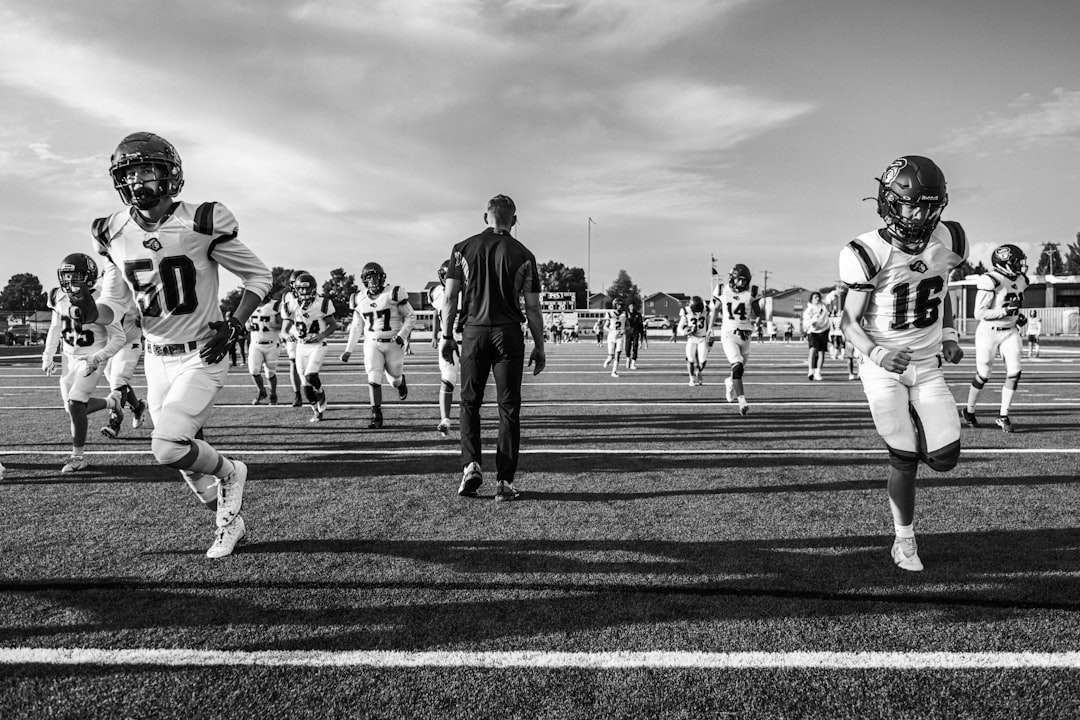


There's a specific moment that brings it back.
Maybe it's homecoming weekend and you drive past the stadium on a Friday night — the lights are on, the crowd is audible from two blocks away, and for a split second you're not 35 or 42 or 51. You're in the locker room. You're in the tunnel. You're in the starting lineup and someone just called your number.
Reconnecting with your high school sports experience isn't about living in the past. It's about acknowledging that something real happened to you during those years (something that shaped how you compete, how you lead, how you handle pressure) and giving it the recognition it deserves. For a lot of people, that chapter closed quietly, without ceremony. The season ended. School ended. Life started. And that identity (the one that wore a number and ran plays and left everything on the floor or the field or the ice) got filed somewhere in the back.
This article is about going back and getting it.
The Identity That Doesn't Expire
Here's what's worth understanding before anything else: your high school athletic identity didn't disappear. It compressed.
The neuroscience behind this is straightforward. The reminiscence bump (a well-documented phenomenon in memory research) explains why memories from roughly ages 15 to 25 carry disproportionate emotional weight throughout adulthood. These are the years when identity is forming at its most accelerated rate. The experiences during this window (including athletic experiences) encode more deeply than almost anything that comes later.
What this means for you: the game-winning shot, the comeback season, the injury that changed everything, the team that became a family — those memories are not fading. They are sitting in high-resolution, waiting. When something in your current life pings them (a homecoming game, an old teammate's post, a jersey folded in a box) the response feels immediate and physical because neurologically, it is.

This is the architecture of who you became, not sentimentality.
Your sport gave you something specific:
- A physical identity: a body that did something well, that moved in a trained way, that performed under pressure
- A social identity: a team, a locker room, a shared language with people who went through it with you
- A competitive identity: the part of you that knows how to prepare, how to push, and how to come back from a loss
None of those things expired when the season did.
What "Reconnecting" Actually Looks Like
The word reconnecting can feel vague when you first encounter it in this context. What does it actually mean to reconnect with a high school sports experience that ended a decade or three decades ago?
It looks different for everyone, but it almost always involves at least one of four distinct actions: retrieving the memories, telling the story, sharing it with someone new to it, or marking it with something tangible.
Retrieving the Memory
This is the first step, and it's both the simplest and the most underestimated.
Most people's high school sports memories are archived rather than actively held. They exist, but they're not visited. The act of deliberately retrieving them (sitting with them, giving them space and time) is itself a form of reconnection that most former athletes never actually do.
Try this: give yourself 20 uninterrupted minutes and think specifically about one season. Not the whole career. One season. Walk through the roster in your mind. What was the pre-game ritual? Who sat next to you on the bus? What was the away game you remember most clearly, and what made it specific?
The goal isn't productivity. The goal is presence with your own history. And almost everyone who does this deliberately (rather than letting memories arrive randomly) reports that the experience is more vivid and more meaningful than they expected.
Telling the Story
There's a version of your athletic story that exists only in your head. Your family heard pieces of it. Your current friends may have heard a summary. But the full story (the season arc, the turning points, the teammates who mattered, the moment things clicked or fell apart) that version lives only in you.
Telling it matters.
Not because anyone needs to hear it, but because the act of narrating your own experience transforms it from a collection of images into a coherent story. Athletes who articulate their sports history (in conversation, in writing, even just in their own internal monologue) consistently report a stronger sense of personal continuity. The playing years feel less like a separate chapter and more like a through-line.
Start somewhere specific: tell someone the single best game you ever played. Not the stats. The experience of it. What the conditions were, what was on the line, what you felt at the end. There's a difference between reciting your career highlights and telling your sports story in a way that makes people feel why it mattered, and that's a skill worth developing.
Reconnecting Through the People Who Were There
Marcus T., 44, played varsity basketball in a small Illinois town where the gym held maybe 400 people and felt like Madison Square Garden on game nights. He hadn't spoken to most of his teammates in 15 years when his high school held a 25-year reunion. He almost didn't go. "I figured it would be awkward: you spend so much time with these people and then you don't, and there's this gap." What he didn't expect was the first five minutes in the room: "We walked in and it was like the gap just collapsed. Someone said something about the sectional game we lost and we were immediately back in it. Not sad about it — just back in it together."
The teammates who shared your athletic experience are the only people on earth who hold the same specific memories you hold. They are the co-authors of a story that exists nowhere else.
This is the dimension of reconnecting that most people undervalue, and that delivers the most immediate return.
Finding Former Teammates
This has never been easier, and it's still something most former athletes don't actively do. A few specific paths that consistently work:
-
Search your school name + sport + year on Facebook groups: nearly every high school in the country has at least one alumni group, and many have sport-specific ones. These groups are quiet until someone posts something specific: a photo, a score, a name. Then they light up.
-
Contact your school's athletic department directly. Many schools now have alumni athlete networks, booster clubs, or homecoming game events specifically designed to bring former players back. A single email to the athletic director or alumni office is often all it takes.
-
Use LinkedIn for the alumni you've lost track of. The school name and graduation year combination finds people quickly, and LinkedIn has less social friction than a cold Facebook message.
The goal is not to reconstruct the team but to find one or two people who were there (who hold the same specific memories) and to let the conversation that follows do what those conversations always do. If you're looking for a more structured approach to reconnecting with former teammates after years or decades of silence, we've put together a guide specifically for former athletes who aren't sure where to start.
Attending a Homecoming Game
There is a specific thing that happens when you sit in the stands of your old stadium or gym and watch a current team run the same plays on the same field you ran them on.
It's not sadness, exactly. It's closer to a kind of double exposure — you're watching the present and simultaneously feeling the past layered underneath it. The current athletes don't know you're there or what this field means to you. And somehow that makes it more, not less.
If your school hosts a homecoming game this season, go. Especially if you haven't been back. Walk the perimeter of the field before anyone else arrives. Find your old locker room if it's accessible. Stand in the spot where something happened.
The reconnection doesn't require anyone else's acknowledgment. It happens in you, on the ground where the original experience occurred.
Playing in Alumni Games
There's a version of going back that watching from the stands doesn't reach.
More and more schools are hosting alumni games now (basketball, soccer, baseball, lacrosse) where former athletes come back not to spectate but to play. Same field. Same floor. Same rules, more or less, with bodies that have a few more miles on them and a few more reasons to be careful. If your school offers one, it's worth taking seriously as its own kind of reconnection.
Homecoming puts you in the stands. An alumni game puts you back in it. The difference is the difference between remembering a thing and doing it again — you feel the surface under your feet, you hear a teammate call for the ball in a voice you last heard a decade or two ago, and for a stretch you're not an observer of your own history. You're a participant in it.
It connects you in a direction you probably didn't expect. The people you line up next to aren't only your graduating class. Alumni games pull players from across classes, so you meet teammates you shared a locker room with and players who came through years before or after you, all bound by the same program. And somewhere in the crowd or on the sideline are the current players, watching the people who built the tradition they're now carrying. There's a quiet mentoring in that — you don't have to coach them. You just have to show up and show them that the identity lasts longer than the eligibility.
That's the deeper point. Playing in an alumni game isn't about reliving glory days. It's about proving something you've probably suspected all along: the player you were is continuous with the adult you became. The skill comes back a little slower, the body protests a little louder, but the person who showed up is the same one who never stopped being an athlete. It's identity continuity you can feel in your legs the next morning.
Making It Tangible: Marking the Experience
Memory is invisible. At some point, most people who take their athletic history seriously want to make it visible — to give it a physical form that holds it in the present rather than leaving it entirely in the past.
This is one of the most underrated acts of athletic identity maintenance, and it's worth taking seriously.
Gathering What You Still Have
Start an audit of what physical artifacts from your playing years still exist:
- Game programs, schedules, and scorecards
- Photos: team photos, action shots, newspaper clippings
- Awards, trophies, letters
- Any equipment you kept: a glove, a pair of cleats, a mouthguard you never threw away
- The jersey, if you still have it
If the jersey is still around, take it out. Look at the number. Put it somewhere you can see it, not in a box.
If it's gone (lost to time, passed down, deteriorated) that's a loss worth acknowledging. A lot of former athletes feel a specific grief around the disappearance of their jersey that they can't quite explain to anyone who didn't play. It makes complete sense: the jersey was the most tangible physical representation of who you were in that identity. When it's gone, something concrete is gone with it.
Recreating What Was Lost — or Honoring What Was
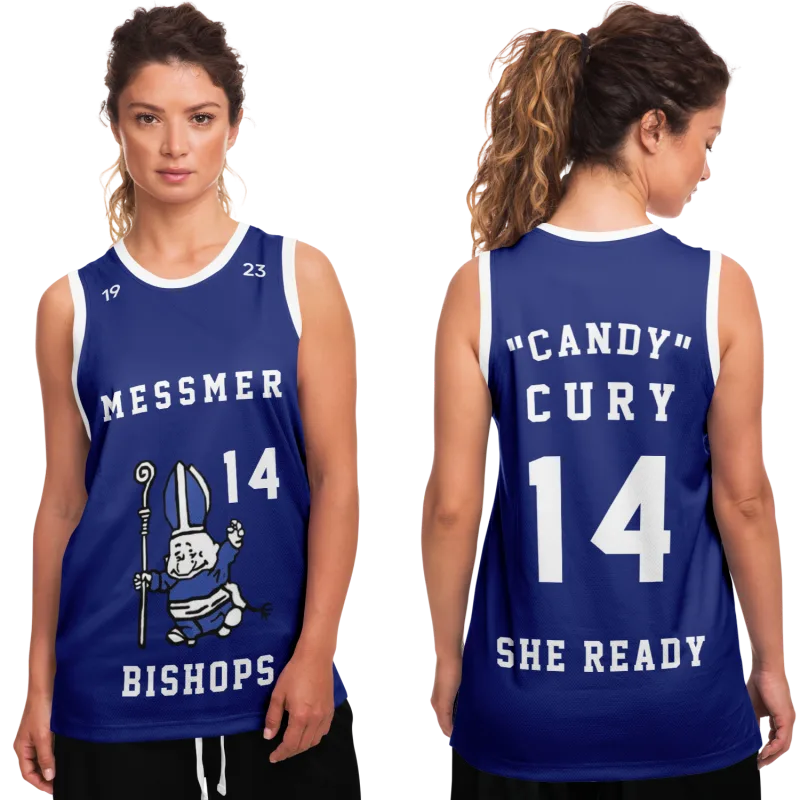
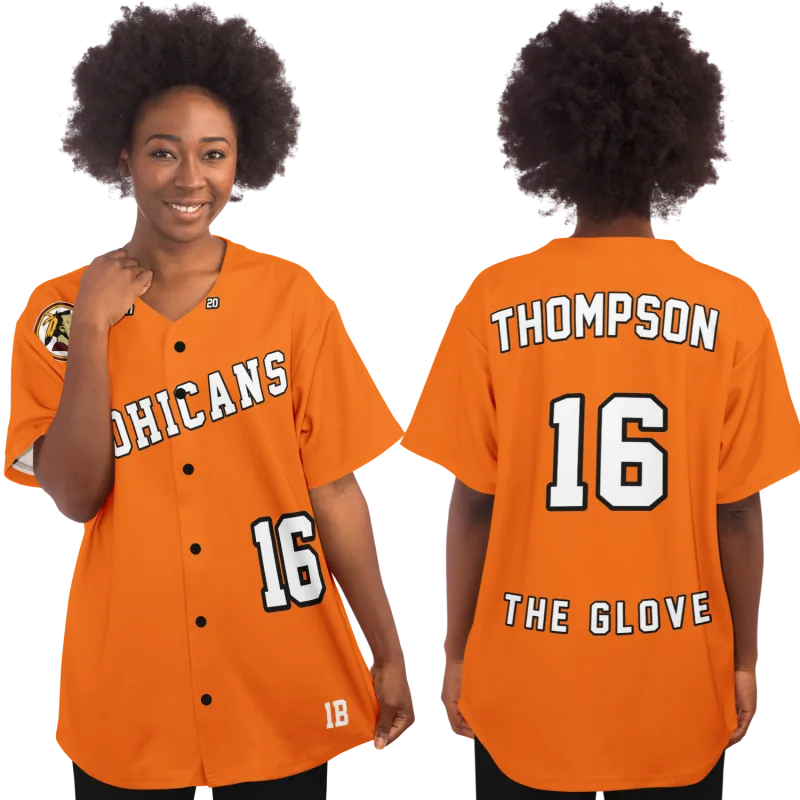
The ability to recreate that physical piece of your athletic identity is now genuinely accessible in a way it wasn't even five years ago. A custom commemorative jersey (your school colors, your number, your name on the back) is a new physical object that holds the same significance, not a substitute for the original.
A lot of people use them for reunions, for homecoming weekends, for framing. Some wear them to current games at their old school. Some just want them visible in their home.
Whatever the use, the act of seeing your number and your name on a jersey (in the colors you wore) is one of the more powerful forms of physical reconnection available to a former athlete. It's specific in a way that a generic alumni t-shirt never is.
Building a Practice, Not Just a Moment
One of the patterns worth recognizing in former athletes who maintain a strong connection to their sports identity is that reconnection is a recurring practice, not a one-time event.
They show up to homecoming games when they can. They have a standing group chat with two or three teammates. They keep something visible (a photo, a jersey, a plaque) in a space they occupy daily. They tell the stories when it's appropriate and let themselves feel the memories when they arrive.
This isn't nostalgia in the pejorative sense. It's identity continuity — the active maintenance of a thread that runs from who you were at 16 to who you are now.
Two things make this practice sustainable:
- Keep it low-friction. The goal isn't a major production. A 10-minute conversation. A photo on a wall. A message to a former teammate on the anniversary of a significant game. Small, specific, recurring acts of acknowledgment.
- Bring someone into it. Whether that's a current partner who hears the stories, a child who sees the photos, or a former teammate you stay in contact with, the practice deepens when it's shared. Your athletic identity doesn't have to be a private archive.
The season ended. The team scattered. But the experience is still yours — completely, permanently, specifically yours. It doesn't need to be recovered from the past. It needs to be carried forward.
Your jersey is still out there waiting.
Browse the gallery for inspiration, or jump straight in and see your name and number just the way you remember it.
Frequently Asked Questions
How do I find former high school teammates I've lost contact with?
The most direct path is a combination of your school's official alumni network (contact the athletic department or alumni office directly), Facebook groups organized around your graduation year or sport, and LinkedIn for professional-age alumni. Searching your school name, sport, and graduating year together on any platform surfaces groups and profiles quickly. The simplest approach: reach out to the one teammate you're most likely to still have a contact for, and let that conversation lead to others. One reconnection almost always opens several more.
Is it worth going back to a homecoming game if I didn't have a great experience in high school?
For many former athletes, the homecoming experience is less about nostalgia for the high school years broadly and more about the specific athletic identity and the specific people on the team. Those two things can be meaningful and worth revisiting even if the overall high school experience was complicated. Going back as an adult (with the distance and perspective that brings) often produces a different and more resolved relationship with that time than the memories themselves suggest. That said, only you know whether the emotional return is likely to be net positive. There's no obligation to reconnect on anyone else's timeline or terms.
What do I do if most of my athletic memorabilia from high school is gone?
This is more common than most former athletes realize, and the loss is worth acknowledging rather than minimizing. A few practical paths: your school's athletic department or local newspaper archives may have team photos and game records you didn't know existed. Former teammates often kept photos you didn't. Your school's yearbooks (accessible through alumni offices or digitized at many public libraries) contain team photos and season records. And a custom commemorative jersey (your number, your name, your colors) is one of the most effective ways to create a new physical object that holds the same specific significance as what was lost.
How do I start talking about my high school sports experience with people who weren't there?
Start with one specific story, not a summary of the whole experience. The specific story (the away game, the comeback, the teammate, the play) is what makes the experience real and transferable to someone who didn't live it. Summaries ("I played basketball for four years") don't carry emotional weight. Specifics do ("we were down eight with three minutes left in the sectional final, and our point guard hadn't missed a free throw all season"). The specific story is the door. It lets the other person in, and it lets you revisit the memory at depth rather than from a distance. If you're unsure how to bring up your athletic past in conversation without feeling like you're dwelling on it, we've explored talking about your playing days in a way that keeps the conversation natural, confident, and forward-looking.
See also: why high school sports still matter so deeply to adults | how to find your old high school game film and highlight footage | tracking down your high school sports stats and records | reconnecting with former high school teammates | the athletic identity you carried out of high school