

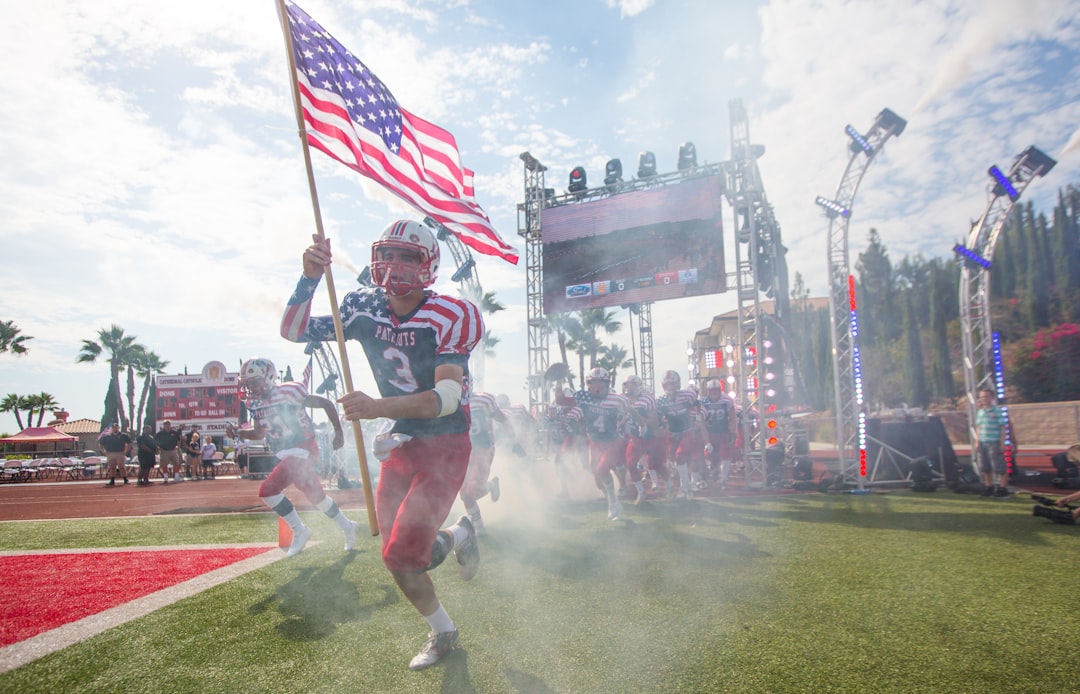




Peyton Manning's son, Marshall, makes his high school football debut against national power Buford — and for anyone who ever pulled on a helmet and ran out under the Friday night lights, that sentence lands like a gut punch of pure memory.
Not because of the last name. Not because of the legacy angle that every sports outlet in the country has already covered at length. Because of the moment itself — the specific, unrepeatable experience of stepping onto a varsity field for the first time and discovering that everything you practiced was either enough or it wasn't.
Sports Illustrated's high school sports desk called it one of the most anticipated prep debuts of the year. Marshall suited up for Baylor School in Chattanooga, Tennessee for a preseason scrimmage in early August — and his first varsity action came not against a warm-up opponent, but against Buford, the defending national champion and one of the most relentlessly dominant programs in American high school football.
For the sports world, that's a headline.
For former players, it's a mirror held up to a version of themselves they haven't thought about in years.
What Marshall Manning Just Did That Every Former Player Recognizes
Strip away the famous last name for a moment — just for a moment — and look at what actually happened.
A fifteen-year-old freshman — a backup quarterback behind four-star senior starter Keegan Croucher — showed up to face one of the toughest possible opponents for a debut and played. He didn't request an easier opponent. He didn't defer to a more comfortable moment. Wearing No. 16, the same number his father wore at Tennessee, he walked into Buford's atmosphere, a program that has built a national championship culture, and competed.
Every former player reads that and feels something specific. Not admiration exactly — though that's part of it. More like recognition.


Because here is the truth that no amount of legacy coverage will capture: no last name runs a route for you. No famous father absorbs a hit on your behalf. No pedigree in the world helps when the defensive end across the line outweighs you by forty pounds and has been starting varsity since before you finished eighth grade.
The Manning name opens no holes in the defensive line. It calls no plays. It cannot silence the internal noise that every player — every single one, regardless of who their father is — deals with in the hours before a varsity debut.
That noise is the private cost of playing. Former players know it intimately. And watching someone walk through it, especially for the first time, especially against that level of competition — that is the part of this story that doesn't make the highlight reel but hits hardest for anyone who has been there.
Remember When It Was You?
Most of us didn't debut against a national champion. Most of us played our first varsity snap in front of a few hundred people on a Friday night in a town where the game was the biggest thing happening for fifty miles in any direction.
But the internal experience of that debut? Identical to what Marshall Manning walked through that August afternoon.
Remember the locker room before your first varsity game — the way the pregame quiet felt different from any practice silence you'd ever sat in? Remember lining up for warm-ups and noticing, for the first time at this level, how much bigger the other team looked in full pads than they had on any scouting film? Remember the moment the crowd noise went from background to foreground and you realized this was actually happening?
Every former player carries a sensory archive from those years. It doesn't fade with time. It just waits. A story like this unlocks it.
You're not reading about Marshall Manning anymore. You're back on that field — hands on your knees in the huddle, waiting for the snap count, running on a combination of preparation and adrenaline and something that you wouldn't have called love at the time but absolutely was.
That's what high-profile debuts do for former players. They don't just make news. They make you remember.
The Manning Legacy Is Real — But It's Not the Point
It would be easy to spend an entire article on the legacy dimension of Marshall Manning's debut. The Mannings are the closest thing American football has to genuine sports royalty — Archie's college career, Peyton's two Super Bowls, Eli's two Super Bowl MVPs, the dynasty of quarterbacks that spans three generations and counting.
That context is real, and it matters for how the sports world frames this story.
But former players know something the legacy narrative tends to skip: the weight of a famous name is its own kind of pressure, and it doesn't function the way outsiders assume.
Kendra M., 31, played four years of varsity volleyball for a school in the Pacific Northwest where her mother had been an all-state player two decades earlier. "Everyone expected me to be her," she says. "Every game, every practice, every conversation with a coach. I loved volleyball, but there were seasons where I couldn't tell if I was playing for myself or playing to be her. That takes something from you — but it also makes you tougher than you expected."
Marshall Manning is navigating that dual weight at fifteen — the weight of genuine expectation and the weight of his own developing identity as a player. Those are not the same thing, and managing both simultaneously while also competing at a high level is something only former players with a sports parent in the stands will fully understand.
The fact that he went straight at it — against Buford, against those stakes, in that spotlight — tells you something about how he's been raised to handle pressure.
What High School Football Actually Gives You
The coverage cycle on a story like this moves fast. Debut. Analysis. Projection. Comparison to the father. Speculation about the future. Within days, the sports media will have moved on to the next thing.
But former players know that what happened on that field for Marshall Manning when he took that first snap doesn't move on. It stays.
High school football — high school athletics at that level of commitment and consequence — marks people in a way that other experiences simply don't. Not because of the competition, though the competition is real. Because of the specificity of those years.
Your team. Your town. Your season. The bus rides that lasted two hours each way to play a game that lasted forty-eight minutes. The teammate who made every block and never appeared in the stat line. The coach who believed in what you could become before you had any evidence that they were right. The Friday nights that felt, for four years, like the only nights that fully existed.
Those years don't get smaller when the career ends. They get larger, actually — more defined in memory, more emotionally complete, more specifically yours than almost anything that comes after.
Marshall Manning is building those years in his freshman season. He doesn't know yet what they'll mean when he's thirty, or forty, or sixty. None of us did while we were still in them — until the first time we watched our own kids start playing, and the memories came rushing back.
That's the particular charge of watching a debut like this if you played. You know what he doesn't — yet. You know how fast the season goes. You know that this opponent, this crowd, this jersey, this night will matter to him in ways that are currently invisible to him.
You know because you lived it.
And you still carry it.
The Jersey That Holds All of It
Former players don't keep their jerseys for sentimental reasons alone. They keep them because a jersey is one of the few physical objects that can return you to a specific moment with genuine precision.
You pick it up. You see the number. You see your name across the shoulders — or maybe it's just the team name and the number, which somehow makes it more yours, not less. And for a moment that doesn't require any explanation, you are not standing in whatever room you're standing in.
You're back on the field. Back in the tunnel. Back in the specific version of yourself that only existed during those years.
Marshall Manning will have a jersey from this debut. He'll have jerseys from every game he plays, every season he competes, every milestone in a high school career that's just beginning. And at the end of it, those jerseys will hold more than fabric and color.
They'll hold what he can't yet know he's accumulating.
Former players who still have their jerseys understand this completely. The ones who lost theirs in a move, donated them without thinking, or simply never thought to hold onto them — they understand a different version of it.
Your Jersey Is Still Out There Waiting
Your name. Your number. The colors you wore on those Friday nights when everything felt possible and nothing felt permanent.
Design yours in minutes and see your name and number exactly the way you remember it.
Frequently Asked Questions
Who is Marshall Manning and why is his varsity debut generating national attention?
Marshall Manning is the son of Peyton Manning — two-time Super Bowl champion, five-time NFL MVP, and Pro Football Hall of Famer — and the grandson of Archie Manning, one of the most celebrated quarterbacks of his era. Marshall plays for Baylor School, an independent preparatory school in Chattanooga, Tennessee. His varsity debut drew national attention both because of his family's football legacy and because his first opponent was Buford High School in Georgia, the defending national champion and one of the most dominant programs in American high school football. Sports Illustrated covered the debut as one of the most anticipated prep appearances of the current season.
What is Buford High School's football program and why does it matter as a debut opponent?
Buford High School, located in Buford, Georgia, has built one of the most consistently dominant football programs in the country over the past decade. The Wolves have won multiple state championships in Georgia and have claimed national championship recognition in recent years, making them a measuring-stick program at the prep level. Debuting against Buford is the equivalent of a young musician's first public performance being at Carnegie Hall — the level of competition removes any possibility of easing in gradually.
What does a varsity debut mean emotionally for a high school player?
For most players, a varsity debut represents the convergence of years of preparation and the first real test of whether that preparation was sufficient. The emotional experience is distinct from anything in practice — the crowd, the opponent's size and speed, the stakes of a real scoreboard — and former players consistently describe their varsity debuts as among the most vivid athletic memories they carry. The experience is essentially universal across sports: the specifics differ, but the internal reckoning is identical whether you played football, soccer, basketball, or any other varsity sport.
Why do former players connect so personally with stories like Marshall Manning's debut?
High school athletics occupy a unique emotional space in the memories of people who played. Unlike college or professional sports, high school competition carries no financial stakes and exists in a specific, unrepeatable context — your school, your town, your team, your years. Those experiences tend to become more emotionally significant over time rather than less, and stories like a high-profile debut function as triggers that return former players to their own versions of those moments. The Manning name makes the story newsworthy; the universal experience of a first varsity snap is what makes it personally meaningful to anyone who played.
Where can I get a custom jersey that looks like the one I wore in high school?
iPlayedFor designs custom jerseys built to look the way you remember yours — your name, your number, your colors. You can preview your design before ordering and see exactly how it will look.
See also: what it means to play under the Friday night lights | why high school sports carry so much emotional weight for families | how football culture runs differently depending on where you play | the pressure young athletes face when a famous name follows them onto the field