



There's a smell you never forget.
Grass that's been cut too short, chalk dust drifting off the yard lines, the specific cold that arrives in October right around kickoff — somewhere between jacket weather and something sharper. High school football memories are stored differently than other memories. They don't live in your head the way facts do. They live in your chest, your hands, your legs. They come back the moment you drive past a stadium on a Friday night and see the lights from the highway.
You don't remember it. You feel it all over again.
If you played — for any amount of time, at any level, in any town — you know exactly what this means. And if you've ever wondered why those Friday nights still pull on you decades later, why a highlight reel from a game you played in 1994 can still make the hair on your arms stand up, the answer isn't sentimentality. It's something deeper than that.
The Lights Changed Something in You
The first thing that separated Friday nights from everything else in your week was the lights.
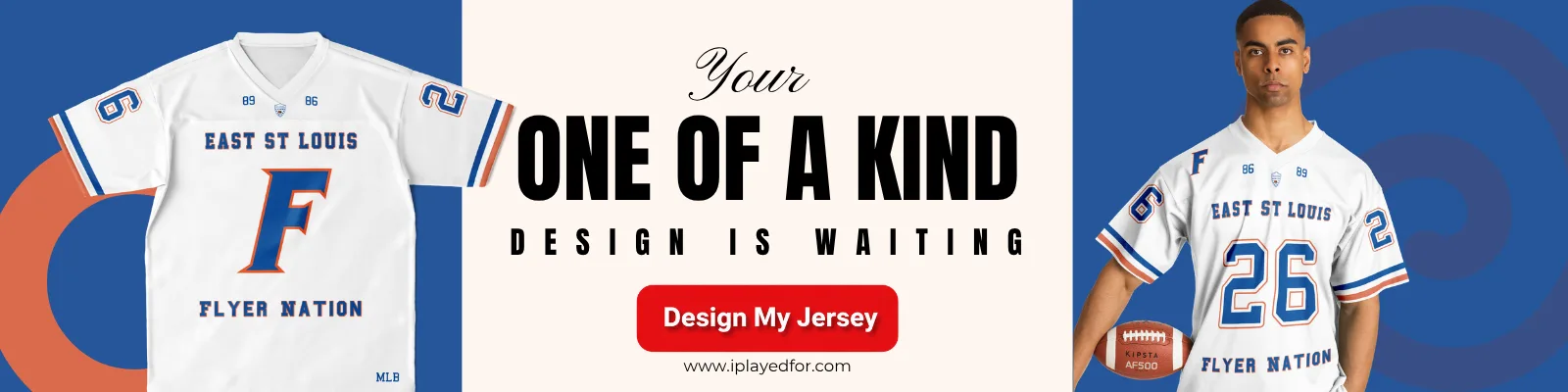
High school stadium lights don't look like anything else. They're not the fluorescent buzz of a gym or the flat wash of a practice field at dusk. They're white and hard and they make everything underneath them look like it matters enormously — because in that moment, it does. You step out of the tunnel or off the sideline and the whole world compresses down to the 100 yards in front of you.
Everything outside the stadium disappears. Whatever was happening in your life that week — the test you hadn't studied for, the argument with your parents, the noise of being seventeen — none of it existed under those lights. Just the field, the other team, your teammates lined up beside you.

Neurologically, that kind of total sensory immersion creates memory differently than ordinary experience. When multiple senses are engaged simultaneously under conditions of high emotional stakes, the brain consolidates those experiences into what researchers call emotionally enhanced memories — moments that are encoded with greater durability and vividness than everyday events. The lights, the crowd noise, the physical sensation of pads and turf, the adrenaline — all of it working together is why you can remember specific plays from a game you played as a teenager, but can't remember what you had for lunch last Tuesday.
You weren't just playing a game. Your brain was recording something it had decided was important.
It was right.
What the Game Actually Taught You
Here's what no one tells you when you're in it: the football was almost beside the point.
The game was the container. What happened inside it — that's what stayed.
Every former player carries a version of this education, and it rarely shows up on any official list of what sports are supposed to teach you. It shows up in boardrooms and job sites and late-night conversations with people who also played. It sounds like: I learned how to take a hit and get up. Or: I learned that how you practice is how you play. Or simply: I learned what a real teammate looks like.
Consider what the game actually required of a 16-year-old:
- To perform under pressure in front of an audience — not a metaphorical audience, but your entire community, your school, your family, the girl or guy you'd been thinking about all week, watching from the stands
- To subordinate personal glory to collective outcome — no single player wins a football game, and the game makes this viscerally, undeniably clear in a way that classroom lessons about teamwork never quite do
- To recover from failure in real time — you drop a pass, you get beaten on a route, you miss a block, and the next play is already being called. You don't get to process it later. You recover now or you don't recover
- To trust people you might not particularly like — a huddle is not a friend group. It's a team. The offensive lineman who you have nothing in common with is still the reason you make it to the second half
None of this was on the schedule. None of it was in the playbook. It was delivered through repetition and consequence and the particular pressure of doing it in front of people who cared about the outcome.
In our experience working with former athletes across decades and sports, the ones who describe high school football as formative aren't talking about the wins. They're talking about what the losses required of them.
And what the losses taught you didn't come from a coach's speech or a game film session. It came in the spaces between — in the locker room after the final whistle, and on the quiet bus ride home after a loss, where the silence packed every seat and nobody knew what to say.
The Town Was Watching — and That Changed You Too
There's a specific kind of accountability that comes from playing in a small town, or even a medium-sized city, where the Friday night game is genuinely the center of community life.
The grocery store knows your number. Your English teacher is in the stands. The guy who runs the auto shop on Route 9 is going to ask you about the third quarter on Saturday morning. This is not anonymity. This is the opposite of anonymity.
For a teenager who is still becoming a person, this kind of visibility does something. It forces a kind of commitment that private effort doesn't require. It's one thing to push through a hard practice in the dark, with only your teammates watching. It's something else entirely to carry yourself — your effort, your attitude, your response to adversity — in front of people who will remember.
Marcus T., 41, played defensive end for three years at a 2A school in central Texas. He works in construction management now and coaches youth football on weekends. He says the thing he took from Friday nights wasn't the football knowledge — it was the experience of being held to a standard publicly. "You couldn't half-ass anything," he said. "Not in a town that small. Everyone knew who you were and how you played. That's never left me. I still work like someone's watching."
That expectation — performing as if it matters, because it does, because people who care about you are present — is a lesson that transfers. Not just to careers but to parenthood, to community, to the way you show up for the people in your life who are counting on you.
The Brotherhood (and What It Actually Means)
Every former player uses the word. Brotherhood. It gets used so often it's almost stopped meaning anything.
But strip away the cliché and what's underneath is real: you went through something hard with specific people, and the shared experience of going through something hard creates a bond that ordinary friendship doesn't replicate.
This is not unique to football. Ask anyone who played any team sport at a high level about the people they played with. They'll remember names, numbers, specific moments. They'll tell you about the teammate who picked them up when they were ready to quit. About the game where everything went wrong and the only thing that held together was the person next to them.
What football produces, specifically, is physical shared suffering. Two-a-days in August heat. Conditioning drills at the end of practice when your legs are already gone. The specific indignity of being asked to keep going when you're certain you have nothing left — and then finding out you do. You find that out together.
The teammates who were beside you for that aren't just people you played with. They're people who know something about you that most people you'll meet in life will never know: what you're like when things are genuinely hard.
That's not a small thing. It stays.
Why It Hits Harder as You Get Older
Here's the part that catches former players off guard: the memories don't fade with time. For many people, they intensify.
At 20, the games are recent enough to feel ordinary. By 35 or 40, when the distance has grown and life has filled up with responsibilities and obligations and the particular exhaustion of adulthood, those Friday nights under the lights start to look different. Not smaller — larger.
What you had then was pure. You were playing because you loved it, because it mattered, because your whole week built toward that moment. There was no ambiguity about your purpose on a Friday night. You knew exactly what you were there to do. You knew exactly who you were in that context.
That clarity is rare. Most adults spend significant energy just trying to figure out what they should be doing and why. The teenager who walked onto that field under the lights had none of that confusion. The goal was clear. The team was clear. The stakes were clear.
Looking back at that from the vantage point of a complicated adult life — it makes sense that it feels significant. It was significant. Not because you were young and didn't know any better. Because genuine clarity of purpose, surrounded by people who share it, is one of the rarest experiences a human being gets to have.
You had it. And part of you has been looking for it ever since.
Every Former Player Remembers the Specific Moments
If you played, you know: it's never the whole season that comes back first. It's specific.
The specific play. The specific game. The specific moment when something shifted — when the crowd changed or the momentum turned or you did something you didn't know you were capable of. The smell of the locker room before the game, which is different from after. The specific sound a stadium makes in the seconds before kickoff, when everything goes briefly quiet before the noise.
There's a reason some of those moments stayed so clear, and it wasn't an accident. Coaches knew the clock was running out, and they told you so — usually the seniors, usually late in the season, usually when the end was close enough to feel. They'd stop practice or pull you aside and tell you to look around. Take a picture in your mind. You don't get this back.
It sounded like a small thing at seventeen. Most of the time you nodded and half-listened, already thinking about the next play or the ride home. But the coach wasn't being sentimental. He was asking you to do something your brain was already trying to do on its own — slow down, pay attention, save the moment before it's gone. That deliberate act of stopping to look is part of why the memory held. You weren't just present under those lights. You were told to notice that you were present, and noticing is what fixes a moment in place. It's the difference between being somewhere and remembering you were there.
The ritual didn't end when you hung up your pads. Former players still do it today, without anyone asking. They pause at their kid's first game, or when they drive past their old stadium, or in the middle of an ordinary week when something pulls them back — and they stop, look around, and take the picture. The habit a coach handed you at seventeen is now something you give yourself. It's the same instruction, decades later, with the same quiet power: stop, look around, save this. It still works.
These are not generic sports memories. They are yours, particular to your body, your team, your field, your town.
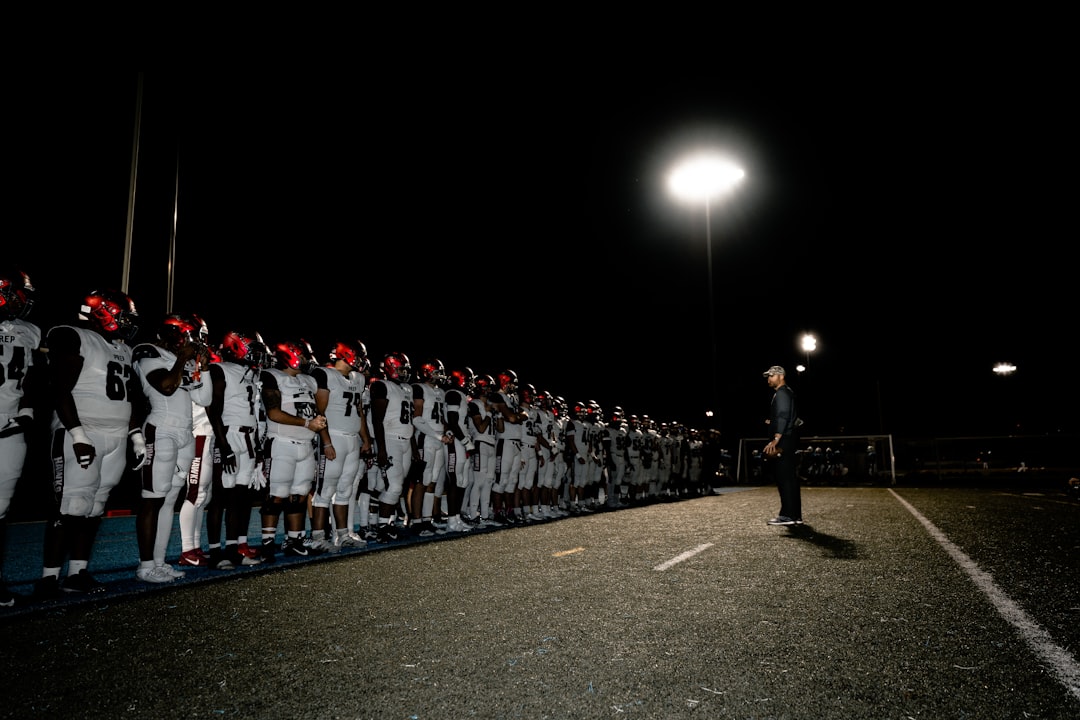
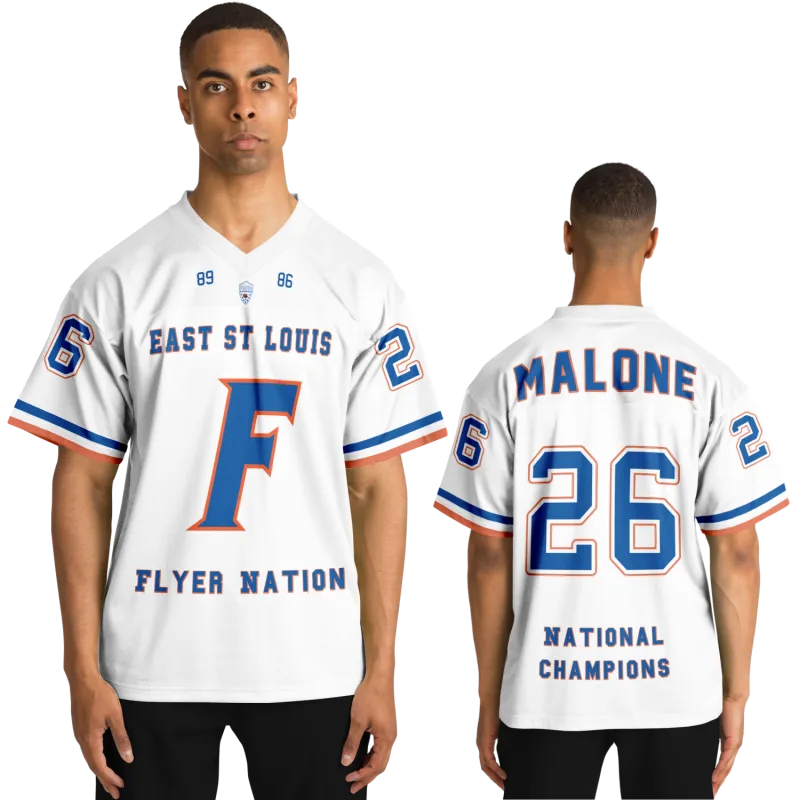
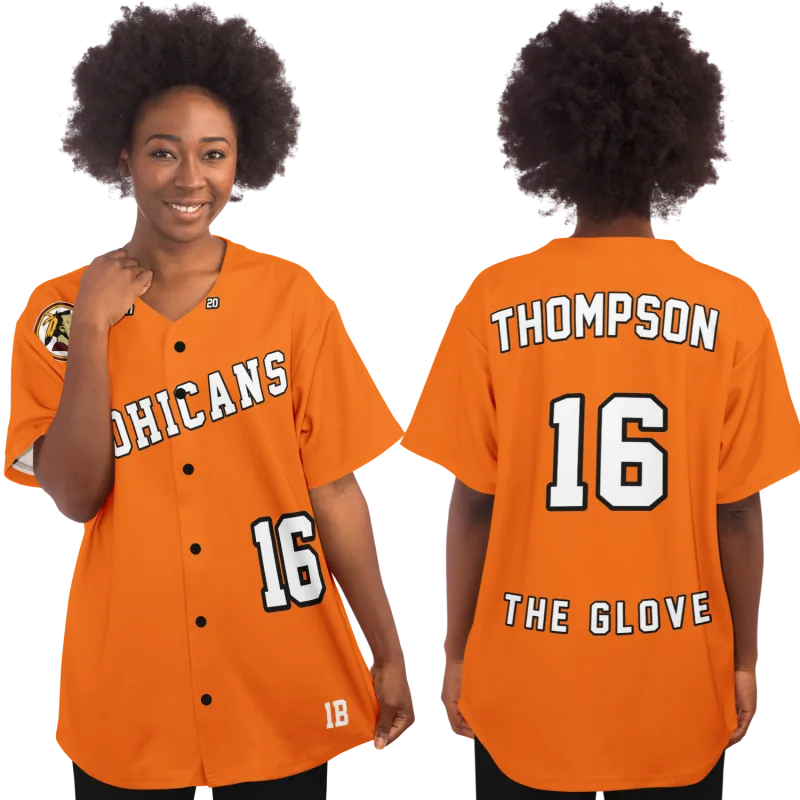
The number on your back was part of that specificity. It was yours in a way that your name almost wasn't — because everyone knew your name, but the number told them where to look, which role you occupied, what you were accountable for. It showed up in the program, in the game photos, in the memory of the people who watched you play.
It's why former players still remember their number the way they remember their own phone number. It isn't just a jersey. It was identity, made visible, every Friday night under the lights.
Your jersey is still out there waiting.
Design yours in minutes and see your name and number exactly the way you remember it.
Frequently Asked Questions
Why do high school sports memories feel more vivid than other memories from the same time period?
High-intensity physical experiences — especially those with high emotional stakes, audience pressure, and multi-sensory engagement — are encoded more durably by the brain than routine experiences. The combination of physical exertion, crowd noise, visual stimulation, and emotional significance during Friday night games creates conditions for what memory researchers call enhanced consolidation. The memories aren't more vivid because you were young. They're more vivid because the circumstances were genuinely extraordinary.
Is it normal to feel a strong sense of loss or nostalgia around high school football memories even years later?
Completely normal, and more common than most former players realize. The game provided a structure — clear purpose, defined roles, immediate feedback, genuine community — that adult life rarely replicates at the same intensity. What feels like nostalgia is often the recognition of something real and valuable that existed in that specific time and context. The emotion is a signal that it mattered, not a sign that you're stuck in the past.
Do former players who didn't have standout careers still feel this connection to the game?
Consistently, yes. In our experience talking with former players across decades and skill levels, the connection to Friday nights isn't correlated with statistics or playing time. It's correlated with participation — with having been part of a team, having trained and prepared and competed, having stood in the locker room before a game and been part of something larger than yourself. The backup who played special teams and the starter who made all-conference often describe the formative experience in nearly identical terms.
How do former players typically honor or reconnect with that part of their identity?
The most common approaches fall into two categories: active reconnection (coaching youth sports, attending games, staying involved in the sport in some capacity) and symbolic reconnection (memorabilia, game photos, the specific gear that represented who they were). Many former players describe moments of reconnecting with their number — a commemorative jersey, an old photo — as unexpectedly powerful. The symbol carries the identity, which is why it still means something decades later.
See also: why high school sports still matter to adults | what playing under the lights actually felt like | why your senior season memories are so vivid | the grief that comes when high school sports end