
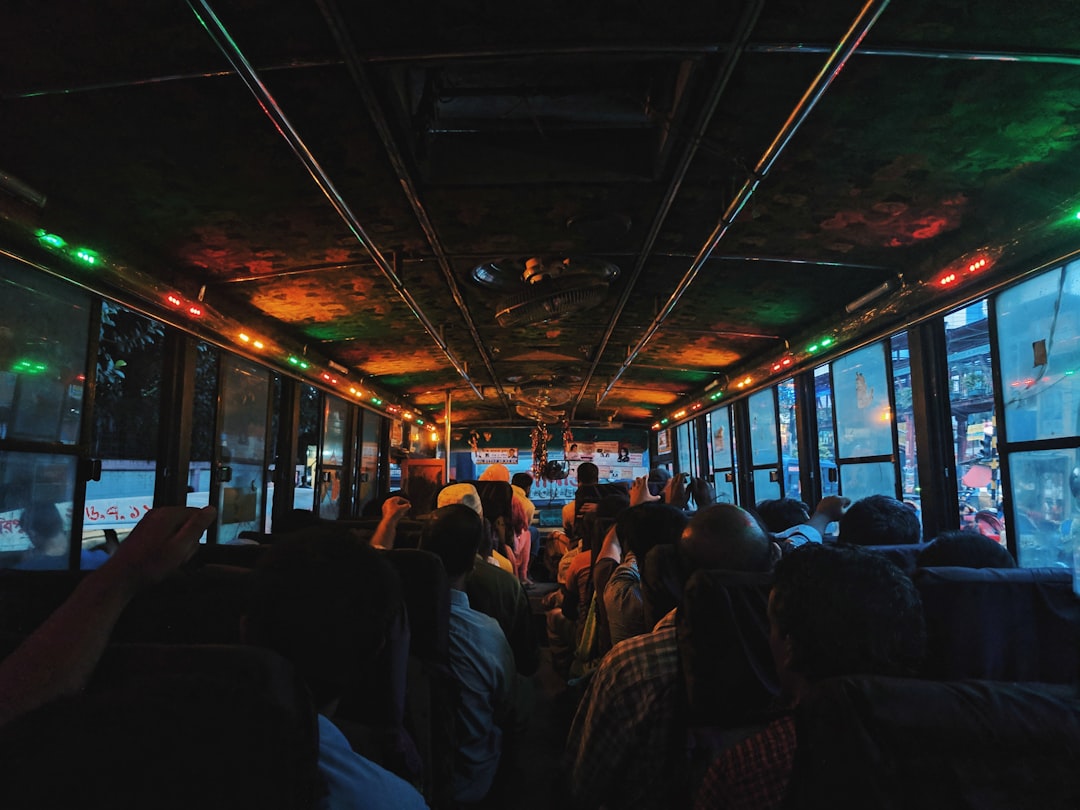
The bus ride home after losing a game is one of the most specific silences you will ever sit inside. Not library silence. Not the silence of an empty house. Something heavier — shared between thirty or forty people who all feel the specific same thing and have no language for it yet.
You know the one. Windows dark. Coach facing forward. Nobody playing music. A few people staring at their phones without really seeing the screen. And somewhere behind you, or maybe it was you, someone crying quietly enough that everyone pretended not to hear.
You lived that ride. And if you played high school sports long enough, you lived it more than once. What's strange is how rarely anyone talks about it — even now, years later, when you bring up the season or the team or the game that still sits funny in your chest. The wins get the stories. The losses get the silence. Again.
This article is about the silence.
What Nobody Says Out Loud on the Way Home
The first thing that happens after a loss — especially a bad one, the kind that ends your season or costs you a championship you spent a year preparing for — is that the noise stops all at once. During the game there is always noise. Coaches calling plays. Teammates communicating. Refs' whistles. The crowd. Your own breathing, loud in your ears during the hardest moments.
Then it ends. And the locker room has a different kind of noise — equipment on the floor, maybe some words from the coach, the particular sound of people moving slowly because there is nowhere urgent to go anymore. And then the bus.
The bus is where it lands.
There is something psychologically true about enclosed spaces after defeat that anyone who has studied athletic performance recognizes immediately. The boundary between the competitive space and the rest of the world is still intact on the bus — you haven't walked into your house yet, haven't seen your parents' faces, haven't had to answer the question "how'd it go?" You are still in the team space, still inside the experience, and everyone around you is carrying the specific same weight.
Sports psychologists call this the transition period — the window between the end of competition and the return to normal life — and it's one of the least-coached moments in youth athletics. Coaches spend thousands of hours preparing athletes for the game. Almost no time is spent preparing them for the bus ride home after a bad one.
What fills that vacuum, for most teams, is silence.
And that silence does something. It either pulls a team apart, each person retreating into their own version of the loss, replaying their mistakes in isolation — or it holds them together in a way that words might actually interrupt. Sometimes the silence is the shared language. The most honest thing in the room.
The Teammate Who Cried, and Why You Never Forgot It
Here is something that almost every former high school athlete has in common: there was someone on one of those bus rides who cried. Openly, or almost-openly. And you remember them.
You remember them not with embarrassment — or maybe a little embarrassment at the time, the particular discomfort of a teenager watching another teenager feel something that large — but with something that has softened into respect. Because they were doing what the whole bus was feeling. They just had the least armor about it.
Mia R., 29, played varsity soccer in central Ohio and remembers a teammate who wept silently the whole forty-minute drive home after they lost the regional semifinal in overtime. "Everyone pretended not to see her," Mia said. "But I think we were all grateful she was doing it. Like she was crying for all of us."
That's the thing about those moments. They revealed something about the people around you that normal practice days never could. Who someone is after a loss — whether they shut down completely, or find one small thing to say to the person next to them, or fall apart without apology — that is real character information. You were seeing people clearly, maybe for the first time. It was the teammate bond that started in moments exactly like that bus ride — the kind that doesn't need a highlight reel to prove it was real.
The worst losses in high school sports are often remembered more vividly than the wins, and the bus ride is a big part of why. Neuroscience has a name for this: the negativity bias, the brain's tendency to encode difficult experiences with more detail and durability than positive ones. Losses are filed carefully. They take up more space. Research published in the journal Cognition and Emotion confirms that emotional intensity — not just valence — is the primary driver of long-term memory consolidation. That emotional encoding is part of the science behind why those memories still hit hard decades later. The bus ride home after your worst loss is one of the most emotionally intense experiences of your adolescent life. Of course you remember it.
What the Coach Said — or Didn't
The coach's behavior on the bus is one of the most-remembered details from any hard loss. Former athletes bring it up unprompted, decades later.
Some coaches talked. They stood at the front of the bus before it pulled out and gave a speech — sometimes about pride, sometimes about effort, sometimes about next year. A few got it right. Most were working in real time, without a script, trying to hold something together that had just come apart.
Some coaches said nothing. Sat in the front seat. Faced forward. Let the silence do whatever it was going to do.
And many former athletes, looking back, think the nothing was the right call.
Here's what that silence communicated without words:
- This is real, and I'm not going to pretend it isn't. A coach who immediately pivots to motivation after a devastating loss can feel dismissive, like the loss is being managed rather than felt. The coach who sits with it is acknowledging the weight.
- You don't have to perform right now. For athletes who spend entire seasons performing — for coaches, for crowds, for parents, for college scouts — the bus is one of the few places where performance is not required. A silent coach holds that space open.
What coaches almost never got credit for in the moment was the degree to which their presence alone — riding the same bus, absorbing the same silence — was an act of accompaniment. They didn't have to fix it. They were just there.
The coaches who got it wrong were usually the ones who either exploded in the locker room before the bus, or who tried too hard to reframe the loss into a lesson before anyone had time to actually feel it. There is a window — and it is longer than most adults think — when the lesson can wait and the feeling should be first. The ones who got it right — the coach who changed everything — understood that the feeling had to come first, and that their job on the bus was not to teach but to be present.
The Silence After Losing a Game Is Its Own Kind of Processing
Here is what the sports psychology research actually says about defeat and adolescent athletes, stripped of academic language: losing hurts because it should. Effort that doesn't produce the intended result is genuinely painful, and that pain is not a sign of weakness or poor mental toughness. It is the appropriate response to caring.
The athletes who are most often described by coaches as having "great character" are not the ones who feel nothing after a loss. They are the ones who feel it fully and come back anyway.
The bus ride is often where that process begins — even if no one on the bus would describe it that way at the time.
Sitting in that silence, staring out a dark window at a highway you've driven a hundred times, you are doing something important without knowing it. You are metabolizing. You are moving the experience from the body — where it lived during competition, in adrenaline and muscle memory and the sharp focus of performance — into memory, where it will eventually become part of the story you tell about who you were and what you were capable of.
Some of what you will carry from those rides:
- The specific feeling of sitting next to someone and not needing to speak
- The way a loss can make a team more honest with each other than a win ever did
- The understanding, bone-deep, that caring enough to hurt is not something to be ashamed of
- The first real lesson in how to hold failure without letting it define you
Dealing with loss as a high school athlete is not a skill that gets taught in a classroom. It gets learned on buses. In locker rooms. In the car ride home with a parent who had the wisdom to say nothing, or who said precisely the wrong thing, and you learned from both.
Why Former Athletes Still Think About This
Something about those rides stays. Not just the big loss — the championship game, the state qualifier, the rivalry matchup that went wrong — but the accumulation of them. The texture of defeat, learned over seasons, is part of what former athletes carry into adult life in ways they often can't fully articulate.
When former high school athletes describe what playing taught them, they almost never cite the wins first. They cite what happened when things went wrong — what your sport taught you about failure that no classroom ever could. The game where they fouled out and had to watch. The season-ending injury. The bus ride home where the coach said nothing and somehow that was enough. Years later, watching your own son start his first season brings it all back — every one of those rides, every silence, every lesson.
This is the part of athletic experience that doesn't show up in highlight reels or championship photos. It doesn't translate easily into the stories we tell at reunions or post on social media with throwback jerseys and young faces. But it is often the part that mattered most — the part that actually built something durable in the people who lived through it.
The team bus ride after a loss is not a sad memory. Or rather, it is — it was sad — but it is also one of the clearest pictures most former athletes have of who they were at that age: trying, caring, sitting in the dark with people they loved, all of them learning together how to carry something hard.
That's worth naming. It's worth writing down somewhere.
The Bus Ride Taught You How to Handle Silence — Here Is What That Means Today
The shared silence on the bus was collective processing, not suppression. When a team loses, there is nothing left to say in the moment. The bus becomes a container for emotions too raw for words — disappointment, regret, the nagging sense that you could have done more. That silence was not emptiness. It was the sound of fifteen people learning to sit with discomfort without needing to fill it.
This pattern carries directly into adult life. The partner who needs space after a disagreement is not shutting you out — they are processing the way the bus ride taught them to. The colleague who pauses before answering in a meeting is not slow; they are filtering, weighing their words the way the huddle taught them to assess before acting. Research in organizational psychology confirms what every former athlete knows intuitively: people who learned to sit with silence in high-pressure environments develop higher emotional regulation in adulthood.
The bus ride also taught former athletes to carry their own weight quietly. When you lost, there was no one else to blame and no one coming to rescue you. You sat with the result. That becomes a template for adult responsibility — showing up, doing the work, and not complaining about it. Employers consistently rank former athletes higher in resilience and dependability for this very reason.
And most importantly: some things do not need to be explained to people who were not there. The teammate who sat next to you in silence on that bus understands without a word. Everyone else would need the full context, and even then they would not fully get it. The jersey with your name and number is the quietest, most accurate way to say "I was there" without having to explain. It is the physical equivalent of that shared silence — unmistakable to those who know, invisible to those who do not.
If this resonated with you, read about the grief of losing your athletic career at 18 and why quitting sports can feel like losing yourself.
Your jersey is still out there waiting.
Design yours in minutes and see your name and number just as you remember it.
Frequently Asked Questions
Why do I still remember the bus ride home after my worst loss so clearly?
The brain encodes emotionally intense experiences with more detail and permanence than neutral ones. A loss — especially a season-ending or high-stakes loss during adolescence — triggers a level of emotional intensity that is genuinely rare in everyday life. The specific sensory details of that bus ride: the silence, the darkness outside the windows, the people around you, become part of a memory that your brain has marked as significant. This is not pathology. It is the appropriate response to an experience that mattered deeply.
Is it normal that my worst high school sports loss still bothers me years later?
Yes, and it's worth reframing what "bothers" means in this context. Most former athletes who carry a significant loss don't carry it as ongoing grief — they carry it as a kind of reference point. It meant something because they cared completely. The fact that it still registers is evidence of how fully they invested. If anything, athletes who feel nothing about their worst losses are the ones worth examining; the ones who still feel something are simply people who cared.
What's the best way to talk to a high school athlete after a tough loss?
The most consistent finding from both coaches and sports psychologists is that the window immediately following a loss is not the time for lessons, reframes, or silver linings. What young athletes need first is space to feel what they feel without having to manage anyone else's response to it. The most effective thing a parent or trusted adult can do is be present without demanding emotional performance. A simple "I'm glad I got to watch you play" lands better than "you'll get them next time." The debrief — the lesson, the encouragement — can come later. The first ride home should belong to the athlete.
Why did the silence on the team bus feel almost comforting sometimes?
Because the silence was shared. There is a meaningful difference between being alone with a hard feeling and being surrounded by others who are carrying the same thing. The team bus after a loss is one of the rare environments where emotional synchrony is total — everyone present has just experienced the specific same event and is processing the same outcome. That shared weight creates a kind of intimacy that doesn't require words. The silence isn't empty. It's full of people feeling the same thing at the same time, and that is, in its own way, a form of connection.
See also: why high school sports still matter to adults | the grief that comes with the end of a playing career | athletic identity that quietly shaped who you became | why you still dream about those games | what saying 'I played' really means