

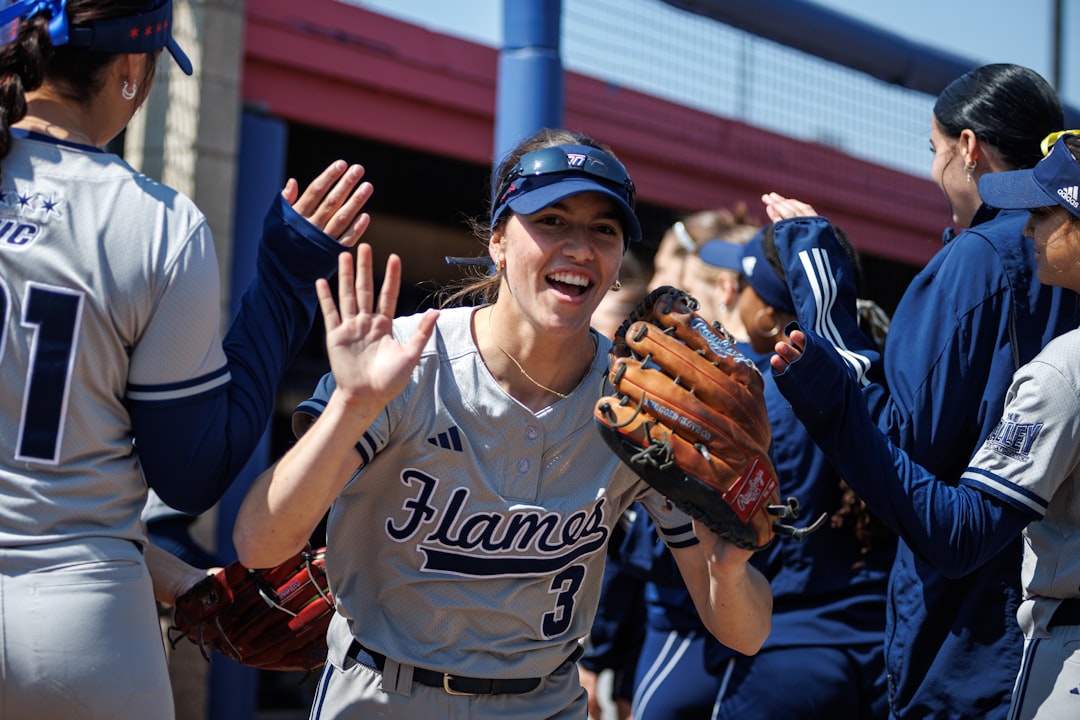



There's a specific smell to a high school baseball dugout: pine tar, chalk dust, somebody's leftover sandwich from third period, and the particular brand of cheap sunscreen that the whole team shared from one bottle because nobody remembered to bring their own. You can probably smell it right now.
That smell belongs to a specific group of people. And the friendships made on a high school baseball team are not like the friendships you made in homeroom or at the lunch table or at somebody's party junior year. They're built out of something different: repetition, sweat, shared pressure, and the specific intimacy of spending hundreds of hours with the same fifteen people in a space roughly the size of a living room.
The top search results for this topic are full of advice for parents: how to help your kid make friends through sports, how to encourage team bonding, what to say at snack time. That's fine. But it misses the whole thing.
This is for the players. The ones who lived it.
The Bus Ride That Built Everything
Ask anyone who played high school baseball what they remember most, and somewhere in the first three things they mention, there's a bus ride.
Not necessarily a championship run. Not even a particularly important game. Just a Tuesday away game, two towns over, school bus that smelled like diesel and had a heater that only worked on one side. You're in the back. Someone has a portable speaker (always a bad speaker, always too loud), and the argument about what to play has been going on since you left the school parking lot.
This is where the bond with high school teammates actually forms. Not at practice. Not in the game. On the bus, in the in-between space where nobody's performing for coaches or parents or scouts. Just the team, contained.

There's a reason military veterans talk about their unit the way baseball players talk about their team. The shared experience of confined space, shared purpose, shared discomfort. It produces a specific kind of closeness that doesn't require explanation to anyone who's been through it. You don't have to tell the story. Everyone on the bus already knows the story, because they were there.
The inside jokes are born on bus rides. So are the nicknames that follow people for decades. So are the conversations that happen after the lights in the bus go dark on the way home, when somebody says something honest they wouldn't say anywhere else.
Growing up with your baseball team means growing up in those small moments. Not just the big ones. When the last bus ride comes, the senior's final walk is worth meeting head-on instead of letting it pass in a blur.
What Teammates Know About You That Nobody Else Does
There's a version of yourself that only exists at 3-2 count with runners on first and third in the sixth inning of a tied game. Your history teacher has never seen that version. Your parents have, maybe, from the bleachers, but not up close. Not from the on-deck circle.
Your teammates have seen it from three feet away. They know what you look like when you're scared and pretending not to be. They know whether you go quiet or get loud when the game gets tight. They know your tells.
That's a different category of knowledge than most people have about each other. It's the kind of knowledge that usually takes years of adult friendship to accumulate, and your teammates had it by sophomore year.
In my experience as a former player, the thing I'd describe most often isn't the wins or the losses. It's being known. The specific feeling of walking into a dugout and not having to explain yourself because these people already understand exactly who you are in this context, and they're fine with it. They're actually glad you're here.
Marcus D., 34, played shortstop for his high school team in central Ohio and describes it this way: they saw him strike out three times in a section final and not one of them said anything except "next time" — and he knew they meant it. That's not something you build quickly. That's what you build over four years of losing track of your own stats because you're watching someone else's face when they round third base.
The teammates who became friends aren't the ones who were impressed by your highlights. They're the ones who were there for the low moments, and they stayed anyway. That, more than any pep talk or team dinner, is the real secret to making your high school team a family.
The Championship Nobody Will Ever Forget (And the Loss That Hurt More)
Here's what winning a championship together actually feels like from inside it: chaotic and specific and a little surreal.
Not the trophy presentation. Not the photos. The thirty seconds after the last out, when everyone is sprinting toward each other and nobody has rehearsed what to do next, so you're all just grabbing whoever is closest. It's your second baseman, and you've never actually hugged him before this moment, and now you're both screaming into each other's shoulders.
That image — that specific scramble of muddy cleats and untucked jerseys and pure, unrehearsed relief — is not something you share with anyone who wasn't on the field. The parents in the bleachers saw it. They have their version. But your version is from inside it, and that's its own country.
How team sports build friendships isn't really a mystery once you've been in that moment. Shared stakes produce shared meaning. When something matters to a group of people simultaneously, and they feel it simultaneously, something gets knit together that doesn't unravel easily.
But here's what gets talked about less: the losses that hurt more than any championship.
The season you were supposed to win and didn't. The error in the seventh. The rain delay that changed everything. The bus ride home after that game, which is a different bus ride. Quieter, heavier, everyone with their headphones in but nobody actually listening to anything.
Those bus rides build something too. Maybe something more durable than the championship ride, because everyone in them knows that the person sitting next to them felt it exactly the same way, and didn't hide it, and is still here.
Lifelong friends from sports are often built in those quiet, heavy bus rides home. The celebration is shared. But the loss is intimate.
The Inside Jokes That Only the Team Understands
There is a specific laugh that only exists inside a team.
It's not a polite laugh. It's not a social laugh. It's the laugh that comes from a reference so compressed — so deep in the team's shared history — that it takes less than a word to trigger it. Someone says a single name, or makes a specific gesture, and twelve people lose it completely while everyone else in the room looks confused.
These jokes are not really jokes. They're a compression of a shared experience into a code. Every time someone deploys the code, it re-activates the original experience. You're back at the pre-game meal where something went wrong with the pasta. You're back at the hotel on the overnight trip where someone did something that cannot be explained in polite company. You're back at the field where the sprinklers came on during batting practice.
The code only works if you were there. That's the point. That's why it works.
This is what it means to grow up with your baseball team in the fullest sense: you build a shared language. One that keeps working years later, at a reunion, at a wedding, in a text thread that's been going since someone figured out group messaging. Someone drops the reference, and in seconds, five different people who are now adults with jobs and mortgages and children are laughing like they're seventeen again.
Pre-Game Road Trips and the Rituals Nobody Planned
The pre-game rituals that matter most are the ones nobody decided on.
The order in which everyone put on their uniform. The specific playlist that became the team playlist, not because anyone voted, but because it played before the first win and nobody wanted to change it. The warm-up drill that the older guys did that the younger guys picked up without being told. The thing your third baseman said every time you took the field that everyone repeated until it became automatic.
None of these were organized by a coach. None of them were in a team handbook. They emerged, the way the best things do: organically, from repetition, from the specific group of people who happened to be on this team in this season.
Road trips for tournaments and away series were where these rituals accumulated fastest. Twelve-hour round trips. Fast food at six in the morning because someone made the wrong call on timing. Gas station stops where the entire team somehow agreed on the same candy bar without discussing it. Hotel rooms with four people to a room and the unspoken negotiation about who gets which bed.
These are the experiences that, when you describe them to someone who wasn't there, produce a polite smile. And when you describe them to someone who was, produce an immediate "oh my god, remember when—"
That gap — between the polite smile and the immediate recognition — is the exact size of the bond with high school teammates that you don't fully appreciate until you're on the other side of it.
When You Finally Grew Up — And Realized What You Had
There's a specific moment when you understand what those years actually were.
It usually doesn't happen during them. At sixteen, the bus rides are just bus rides. The championships are thrilling but you expect more of them. The friendships are real but you haven't yet experienced what it's like to try to make real friends after twenty-two, when you're new to a city and nobody has any shared history with you and there are no more teams to join.
Then you try. And you realize.
You realize that what you had — those hundreds of hours, that shared language, that specific knowledge of each other under pressure — is not something that just appears in adult life. It has to be built deliberately, slowly, with much more effort than it took when you were all just showing up to the same field every day because you had to.
The teammates who became friends across ten, fifteen, twenty years aren't people you kept up with because you worked at it constantly. They're people you could not talk to for eight months and then get on a phone call and be back inside the language in thirty seconds. Because the foundation was built when you were young enough and proximate enough and invested enough that it calcified into something permanent. Those are the everlasting ties of life after the final game, and they're still doing their quiet work long after the last out.
According to research published in the Journal of Adolescence, team sport participation during adolescence is one of the strongest predictors of long-term social connection and life satisfaction, not because sports are magic, but because they create the conditions (repeated contact, shared stakes, genuine interdependence) that friendship requires and that adult life rarely provides naturally.
You didn't plan any of it. You just showed up. And that was enough.
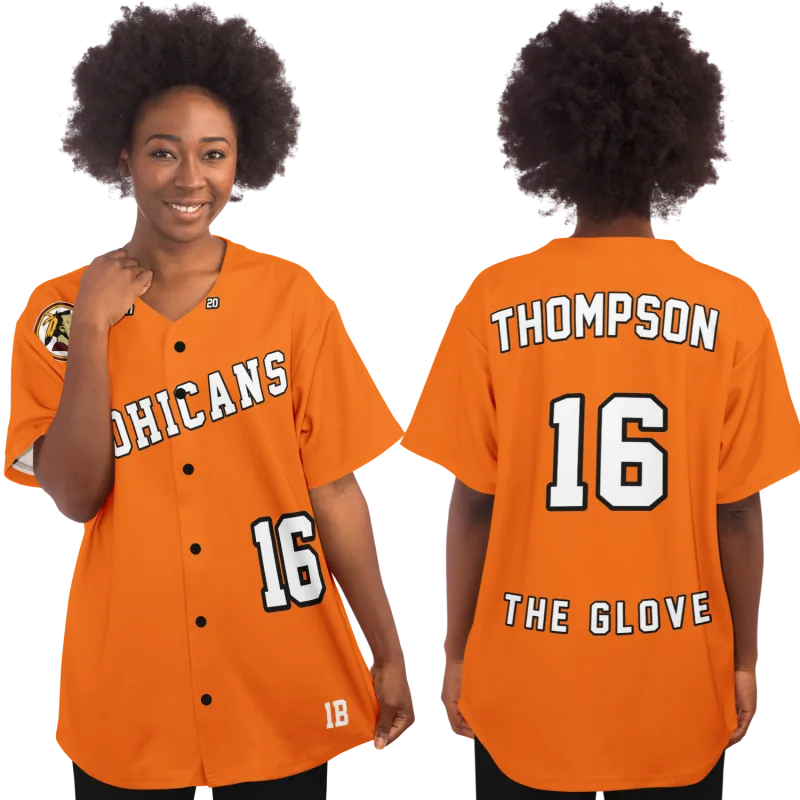
Your jersey is still out there waiting.
Design yours in minutes and see your name and number exactly the way you remember it.
Frequently Asked Questions
Why do friendships from high school baseball feel so much stronger than other friendships from that time?
Because they were built under conditions that adult friendships rarely replicate. High school teammates spent hundreds of hours together in close physical proximity, under shared pressure, with genuine stakes attached to the outcome. They saw each other perform and fail in real time, repeatedly. That kind of accumulation — of shared experience, shared stakes, and mutual vulnerability — is the actual raw material of lasting friendship. Most adult friendships are built in much lower-intensity environments, which is why they often feel shallower even when they're meaningful.
Is it normal to stay close with teammates even if you haven't kept in regular contact?
Yes, and it's one of the most distinctive features of team sport friendships. The foundation built during those years is strong enough to survive long gaps in contact. Many former teammates describe reconnecting after years of silence and finding the relationship essentially intact — the shared language, the inside references, the fundamental knowledge of each other all still present. The bond doesn't require constant maintenance the way newer friendships often do because it was built during a period of such concentrated shared experience.
How do you reconnect with teammates you've lost touch with?
Start with whatever thread still exists — a social media connection, a mutual friend, a shared memory you can reference. The re-entry point doesn't need to be elaborate. Former teammates almost universally report that the first message doesn't need explanation or apology for the gap. A specific reference to a shared memory ("I was just thinking about the bus ride back from that regional final") is enough to re-activate the connection immediately. The shared language is still there. You just have to use it.
What makes the inside jokes from a baseball team so durable?
They aren't really jokes — they're compressed memories. Every inside reference reactivates the full original experience for everyone who was there. The humor is almost incidental; what matters is the shared activation. This is why a single word or phrase can send a group of middle-aged adults immediately back to being teenagers in a dugout. The memory is stored collectively, and the joke is the key that opens it. As long as the people are alive and in contact, the key keeps working.
See also: why the friendships formed through high school sports carry so much weight in adulthood | how to find and reconnect with former high school teammates | the grief that comes when the team era ends | what those shared bus rides and losses actually built in us