



Almost every former high school athlete carries a specific moment somewhere in the back of their chest.
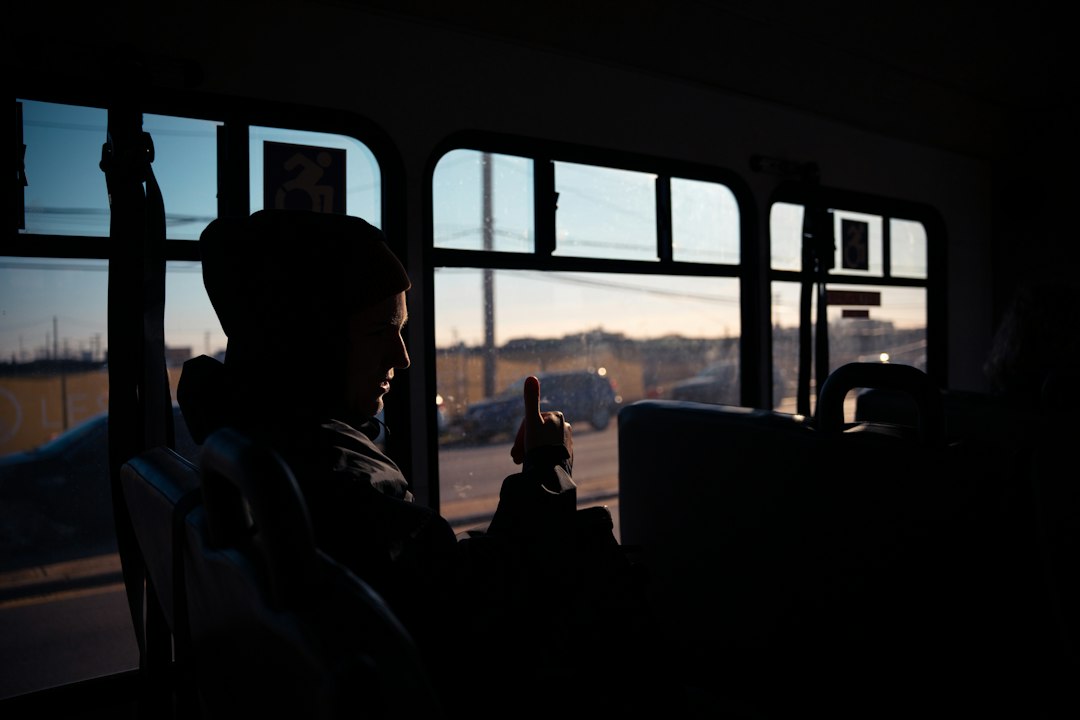
The bus is rolling. Highway lights sweep past the windows in long amber intervals. Someone in the back row has their phone wired into the portable speaker — the one the team pooled cash to buy at the beginning of the season — and a song comes on that changes the air in the vehicle. Shoulders settle. Chins drop. Someone slaps the headrest in front of them twice, hard. The conversation stops without anyone deciding to stop it.
Nobody has to say a word.
Songs from high school sports bus rides don't simply play in memory. They occupy it. They hold an entire season the way a number holds a jersey — fixed, particular, shockingly vivid for something that happened ten or fifteen years ago. This article is about those songs. About what the pregame playlist was actually doing, and why the sports season soundtrack performed emotional work that no pregame speech or team whiteboard session could touch. And about why, when one of those songs lands on shuffle during a random Wednesday commute, you are seventeen again before you can stop it — the game still hours away, the bus still moving.
What the Bus Ride Was Really Doing
Most coverage of high school athletics focuses on the game itself. The scores, the plays, the coaches. But ask former athletes to describe the moments they hold with full sensory precision, and a striking number of those moments happen before the bus ever reaches the opposing school.
The bus ride was its own kind of time. Bounded, contained, belonging to no other category — not practice, not game, not school, not home. It was the space between, and the space between is where teams actually form.
Different rules applied in that space. Seating was self-selected. Conversations drifted far from anything related to the sport. Seniors occupied the back with the relaxed authority of people who knew exactly how much time they had left. Freshmen watched and learned the unwritten geography. Inside jokes arrived on those seats and circulated for the rest of the season like shared language.

And running underneath everything — the nerves, the bravado, the older players performing calm they didn't entirely feel, the younger players studying that performance — there was music.
The sports season soundtrack wasn't assembled by anyone with a plan. It was assembled by whoever held the aux cord, whoever brought the speaker, whoever had accumulated enough social weight in the back row to make the call on a given Thursday in September. That person — and every team had exactly one — was making decisions that would shape collective memory for decades, without knowing any of that was happening.
In our experience looking at what former athletes carry forward from their playing years, very little functions as a more reliable emotional trigger than the specific songs attached to a team's travel. The music wasn't ambient noise layered over the real experience. It was part of the structure of the experience itself.
How Music Assembled Team Identity Before Anyone Called It That
There is a reason neuroscience research on music and emotional memory consistently shows that music-encoded memories are among the most durable and emotionally loaded that humans form — and the explanation goes deeper than nostalgia. It involves the convergence of repetition, emotional arousal, and collective synchrony, all of which high school sports seasons produce in concentrated and repeated doses.
When a song plays at a moment of genuine emotional significance — before a rivalry game, after a loss that stings, on the way to a regional tournament — it encodes alongside the full emotional weight of that moment. The song becomes a key. Hearing it later unlocks the room.
The pregame playlist tended to follow a recognizable shape, even when nobody consciously designed it that way.
The opener: Something familiar. Something that lifted the room's energy incrementally rather than demanding it all at once. This wasn't the hype song. This was the song that told everyone the ride had officially begun and the week was behind them.
The middle stretch: This was where team character surfaced most honestly. The genre, the era, the regional specificity of what the team shared — this section of the ride revealed what the group actually was, culturally, beyond the sport. What they all knew because they'd grown up inside the same county, the same decade, the same radius of experience.
The arrival song: This was the one that mattered most. The song playing as the bus turned into the opposing school's lot. By the fourth road trip of the season, this was no longer accidental. It was ceremony.
That arrival song — whatever it was for a given team in a given year — is the one that catches former athletes off guard on a random afternoon fifteen years later and lands directly in the stomach before the conscious mind has time to prepare.
The Songs That Held Both Ends of the Season
Every season had a song that functioned as the team's unofficial fight anthem. Not the school fight song — that belonged to the stands and the band. This was the one that lived in the locker room, on the bus, in the parking lot before warmups began. The one that told everyone the shift was happening.
What qualified a song for that role wasn't tempo or genre in any precise sense. It was whether the song made a group of teenagers feel temporarily larger than their circumstances — whether it collapsed the distance between who they were and who they were about to try to be for the next two hours.
The Songs That Carried the Wins
Winning bus rides have their own specific character. The volume is higher. The singing is less self-conscious. Songs that would normally get eye-rolls from the older players get a full-group performance instead. There's a looseness that doesn't exist anywhere else in the athletic week — not at practice, not in the hallway between classes. Only on the bus after a win.
The music and athletic memories connection is partly built here, in the specific feeling of a song absorbed at the exact moment when effort has just paid off and the relief and pride are still fresh and nobody has had to explain anything yet.
The Songs That Held the Hard Rides Home
Not every bus ride goes in the winning direction. Some of the most durable sports season memories belong to the rides nobody wanted to take — back from a game that should have gone differently, back from a season that ended before it was supposed to.
The speaker volume drops on those rides, or the speaker goes off entirely. Sometimes a song comes on at low volume — something slower, something that doesn't ask for energy nobody has — and it does something that no speech in a locker room can do: it gives everyone permission to feel exactly what they're feeling without being required to perform anything about it.
Marisol V., 28, a former high school softball shortstop from central Texas, still stops when a particular song from her junior season comes on. Her team lost a regional semifinal in extra innings on a night they'd expected to keep going. "Nobody talked the whole way back," she said. "That song was just playing quietly and everyone was looking out their own window and somehow that was exactly what the moment needed. I can't hear it now without being back in that seat." The song had nothing to do with softball or loss. It was simply the thing that was present when the team needed something to be present.
What Made Certain Songs Survive the Years
Not every song from a high school sports season travels the distance into adult memory with equal clarity. Some dissolve within a few years. Others stay sharp and immediate for decades.
The ones that hold longest tend to share a specific set of characteristics.
They were present at high-stakes moments. The emotional amplification surrounding an important game makes everything adjacent to it more memorable. A song from a bus ride before a playoff game encodes differently than anything from a random midseason Tuesday.
They were heard collectively. Music experienced inside a group sharing the same emotional state encodes with additional intensity. The bus, the dugout, the locker room — these were shared listening environments, and shared emotion compounds individual memory formation.
They belonged specifically to that team. The song that every team was playing at the time carried less weight than the song that felt like this team's song — the one that arrived at a particular game by accident and stayed by choice. Ownership amplified the encoding.
They marked a transition. Songs attached to the specific moment of crossing a threshold — the bus leaving the school lot, the team walking from the tunnel to the field — became associated with transformation. Memory holds transitions with unusual tenacity.
Nostalgic songs from high school carry a doubled resonance for former athletes: they hold both the general ache of youth and the particular compressed intensity of a team that existed fully for one season and was never quite the same configuration again.
The Aux Cord Was Never Trivial
Every team had an informal hierarchy governing who controlled the music. And whoever controlled the music was, in a quiet but real way, shaping the emotional temperature of the group.
Nobody voted on it. No coach announced a playlist director. But the role existed, everyone understood who held it, and the social feedback when someone played something that landed wrong was immediate and unanimous.
What the person with the aux cord was doing — without having any framework for it — was cultural curation. The songs they selected communicated something about what the team valued, what kind of group it chose to be on the way to doing something difficult together.
Our team has talked with former players and coaches across multiple sports about this, and a pattern surfaces consistently: coaches who allowed the team to own the music ritual — who occasionally made a request, acknowledged a song, let the playlist be the team's rather than the program's — tended to build team cultures with more genuine internal cohesion. The music ownership was a small piece of a larger trust structure.
Coaches who restricted it entirely weren't wrong, exactly. Those teams developed other rituals that served the same function. But the absence of shared music left a specific space unoccupied that usually filled with something else — sometimes productive, sometimes not.
Why These Songs Sound Different Now
There is an experience that shows up repeatedly in adult life for former athletes, and it doesn't have a clean name in English even though it probably deserves one.
A song from your high school sports years appears without warning — in a coffee shop, through a car window at a red light, in the background of someone else's apartment. For roughly four seconds, you are not in that coffee shop. You are on a bus. You can feel the particular texture of the seat. You can see the back of a specific teammate's head. You can feel the specific weight of what was about to happen, and you are not sure yet how it will go.
Then you are back. You are thirty-two. The coffee is still hot.
The music and athletic memories connection runs as deep as it does because those seasons were among the most emotionally concentrated experiences most people move through. The stakes felt enormous because, to a teenager inside a high school sports season, they genuinely were. The team felt like the whole world because within the specific boundaries of that season, it functioned as one.
The songs that ran underneath those seasons weren't decoration. They were architecture. Each one is a small, intact recording of who you were at a specific moment — before certain things happened, before certain choices were made, before the version of you that exists now had fully arrived.
That is not a small thing. That is one of the most specific and faithful things music has ever done for anyone.
Rebuilding the Playlist: Where to Start
If you played, you already have one. You may not have labeled it or organized it consciously. But the sequence exists in memory — the song that opened the ride, the one playing when the bus reached the opposing school, the one that came on after the game you still think about.
Writing it down, or actually reconstructing it in a streaming app, tends to surface memories that haven't moved in years. The act of placing the anchor songs in sequence works like a key turning: what was stored but inaccessible comes back with specific detail.
A practical starting sequence:
- Start with the arrival song. The one that was playing when the bus turned into the other school's parking lot. That one lives in the most specific memory. Anchor there first, then work backward and forward from it.
- Find the loss song. Even in a strong season, there was a ride home where something played quietly and held the team without demanding anything. Name that song before anything else in the middle section.
- Find the warmup song. The one from the locker room or dugout in the final minutes before taking the field. That one lives in muscle memory more than anywhere — it connects to the physical preparation more directly than any other.
Three songs is enough to start. The playlist rebuilds itself from those anchors. The rest of the season follows once the structure is in place.
Your jersey is still out there waiting.
Design yours in minutes and see your name and number exactly the way you remember them — a tribute to the season, the team, and everything the bus ride meant.
Frequently Asked Questions
Why do songs from high school sports bus rides feel so powerful years later?
Music experienced during emotionally intense moments encodes alongside the emotional state itself. When you encounter those songs again later, the brain retrieves not just the sound but the full emotional context that surrounded it. High school sports seasons compress an unusual amount of emotional intensity — anticipation, competition, team identity, winning and losing — into a short period, which is why the music attached to that time carries such durable weight.
What made a pregame playlist function differently from regular music listening?
A pregame playlist served as a transition ritual — it marked the shift from ordinary school-day mode into competition readiness. The same songs played in roughly the same sequence before each game created a reliable psychological signal. Over the course of a season, the playlist stopped being entertainment and became part of the preparation itself, conditioning the team's emotional state the same way warmups conditioned their physical state.
Is there a practical way to reconstruct a season's playlist as an adult?
Yes, and it works more effectively than most people expect. Beginning with two or three anchor songs — the arrival song, the loss song, the warmup song — and placing them in sequence tends to unlock associated memories that haven't surfaced in years. Building the actual playlist in a streaming service and listening straight through often surfaces specific faces, specific plays, and specific conversations that had been sitting in storage without a retrieval cue.
Why did the person with the aux cord have so much social weight on the team?
Because music selection was, functionally, emotional temperature control. The person choosing the songs was determining the collective mood of the group during one of the only unstructured windows the team had together. That kind of influence — quiet, informal, and powerful — naturally carried social significance, even when no one explicitly acknowledged it or gave the role a name.
See also: the silent bus ride home after a loss | why those senior season memories feel burned into your brain | the psychology of why high school sports still matter to adults