





You didn't just pick a song.
You made a statement.
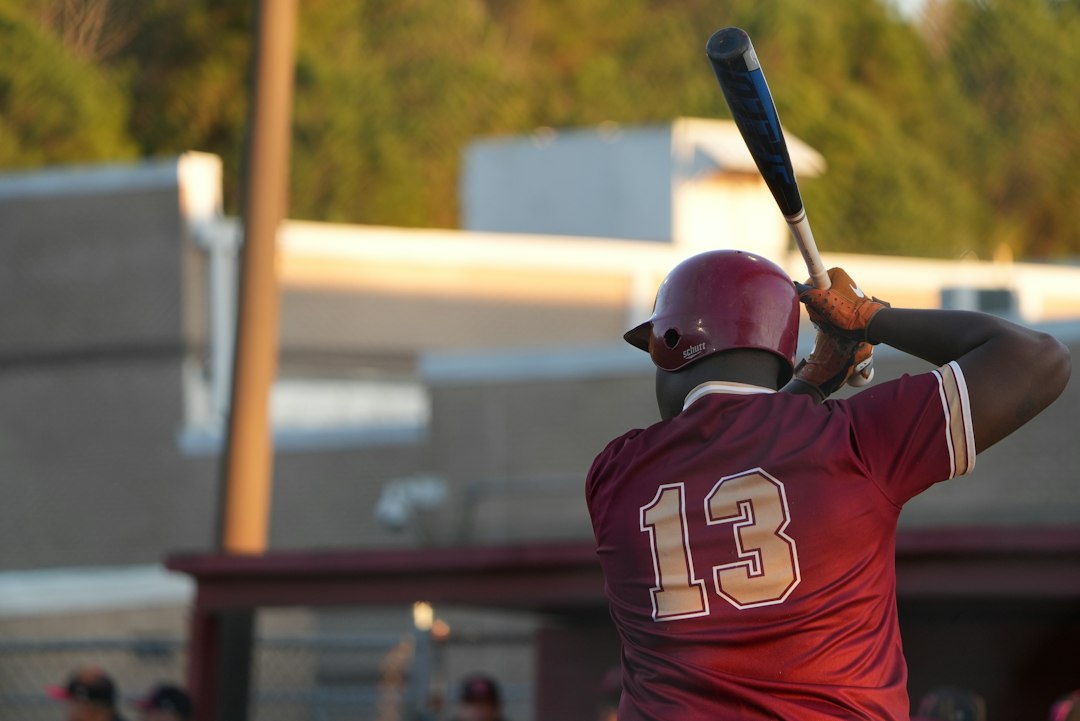
Standing in the dugout, cleats on the concrete, heart doing something you'd never admit to your teammates — you knew your high school baseball walk up song was coming up next. And in the thirty seconds between the on-deck circle and the batter's box, that song was the only version of yourself that mattered.
It didn't matter whether you hit .340 or .190. For those few seconds, the music made you someone. A version of yourself you'd been constructing since you were old enough to watch the big leaguers jog out of the tunnel and into the light. The song was the finishing touch on a persona you'd been sketching since middle school.
Here's the thing nobody talks about: you were right. The song you chose said everything.
The Batter's Box Is Its Own Kind of Stage
There's no moment in team sports quite like walking up to the plate.
Football has its huddles and formations — a collective identity, a play call, something shared. Basketball flows too fast for ceremony. Soccer doesn't pause long enough for ritual. But baseball stops. Baseball waits. Baseball makes you walk from one place to another while everyone watches, and the only thing filling that silence is the music you chose to fill it with.
Every former player remembers this differently, but they all remember it. The way the sound hit you when you stepped out of the dugout. Whether you tried to look cool or couldn't help breaking into a half-smile. Whether you had a routine — same number of practice swings, same way you dug into the dirt, same exhale before you turned to face the pitcher.
The song was part of the ritual. And rituals, when you're seventeen and playing the sport you love more than you've loved almost anything, are not small things.


They are the architecture of who you think you are.
What Your Song Actually Said About You
Walk-up songs fell into categories. Every player who ever played knows this without having to be told. You could read a lineup card by the songs alone — the personalities were that legible.
The Intimidation Seekers
This was the kid who picked something genuinely aggressive. Metallica's "Enter Sandman." Eminem's "Till I Collapse." Something from the early 2000s rap canon that hit like a physical object. Sometimes a rock anthem with a guitar riff that felt like a warning.
This player was telling the pitcher something. I am not nervous. I am not the one who should be nervous. Whether that was true was beside the point. The song was a performance of calm delivered through organized chaos. The internal message was always the same: I'm going to make something happen here.
In our experience talking to former players, the intimidation-song guys usually fell into two camps — the ones who genuinely backed it up with production at the plate, and the ones who needed the song most because the at-bats were harder. There's no judgment in that second category. The song was doing exactly what it was supposed to do: it was giving them something to stand behind.
The Cool-Under-Pressure Players
You know this one immediately. A smooth hip-hop track. Something with a slow-burn hook. Jay-Z. Outkast at the right tempo. A laid-back beat that suggested the player had all the time in the world.
These were the players who wanted you to see them as unfazed. Pitchers threw heat and these guys looked like they were waiting for a bus. Or they tried to. The song was calibrated, chosen specifically to project the image of someone who had already decided the outcome. I've been here before. I'll be here again. You're the one who's new to this.
There's a psychology to this that coaches rarely articulate but always recognize. A player who can slow their mental tempo in a high-stakes at-bat has a genuine edge. The walk-up song that reinforced that identity wasn't just theater — it was rehearsal.
The Sentimental Ones (Who Would Never Admit It)
Then there was the kid who picked something nobody expected. A country song. Classic rock from his dad's era. Something with a backstory that had nothing to do with swagger and everything to do with meaning.
Maybe it was the song playing in the car when his grandfather drove him to his first travel ball tournament. Maybe it was the track that was on during a road trip the summer everything still felt possible. Maybe he just loved it and couldn't explain why and decided that was enough of a reason.
These players are harder to categorize because they weren't performing an image — they were bringing something real into the box with them. A private talisman made briefly public. The song was an anchor, not a statement. Something to hold onto in the two seconds before the first pitch.
If you played, you know at least one guy like this. And you respected it more than you let on.
The Chaos Agents
The kid who picked something completely unexpected. A movie theme. The Rocky soundtrack. Something absurdly cheerful in an ironic way that somehow worked. A song that made the whole dugout either crack up or groan, which was probably the entire point.
These players understood something the rest of the lineup sometimes missed: the walk-up is also entertainment. You're allowed to enjoy it. You're allowed to make the moment lighter than it is, to remind everyone — including yourself — that it's a game and games are supposed to be fun.
The chaos agent often hit better than you expected, because he wasn't carrying the weight of his own mythology into the box. He'd already left it in the dugout with the laugh.
The Real Question Underneath the Song
Here's what the song choice was really about, under all the swagger and strategy and sentimentality:
Who did you want to be when the moment asked?
Not who you were in the dugout, joking around and stealing sunflower seeds from someone else's bag. Not who you were in fourth period when none of this felt real yet. Who you were when the announcer said your name, when the music came on, when thirty seconds of your own choosing stretched out between you and whatever was about to happen.
That's not a trivial question. Most people don't get to answer it at seventeen. Most people spend years discovering what they stand behind when things get real. Baseball players get to practice it twice, three times, four times a game — in a setting where the answer has music and everyone can see it.
The Memory Stays Longer Than the Stats
Marcus T., 34, played outfield for his high school team in central Texas and still remembers walking up to the same song every single game his junior and senior year — a track his older brother had burned onto a CD and told him was "built for moments." He never changed it. Even when the at-bats were rough, even when the team was struggling, he kept the song.
"It wasn't about the hit," he said. "It was about feeling like myself when I got in the box. Like I belonged there."
That's the thing about walk-up songs that doesn't show up in box scores. The numbers fade. The specific at-bats blur together. What stays is the felt sense of who you were becoming, and the song is often the sharpest pin in that memory — the thing that makes it specific enough to hold.
What It Meant to Have One at All
Not every level of baseball gets walk-up songs. Little League doesn't. Most rec leagues don't. The walk-up song is a marker — it's the point at which the game starts taking itself seriously enough to give each player their own entrance.
Getting to choose yours meant something. It meant you were playing at a level where individual identity within the team was recognized. Where you weren't just number seven in the batting order — you were the specific human being who chose this specific thirty seconds of audio to represent you at the plate.
That is, when you sit with it, kind of extraordinary.
And the fact that you remember your song — that you can still hear it in your head when you think about those seasons — says something about what it meant to have it. Sports give us rituals precisely because rituals encode meaning into muscle memory and sensory experience. The smell of the dugout. The weight of pine tar on your hands. The sound of your song through the PA system on a Tuesday night when the lights were on and the whole thing felt bigger than it probably was.
It was as big as it felt. You were right about that too.
The Player You Were Is Still Part of Who You Are
If you played, you know this: the version of yourself that stood in that on-deck circle doesn't disappear when the season ends. It becomes part of the substrate. The way you handle pressure at work. The way you approach something you care about. The specific kind of focus that clicks on when something matters.
You built that in a dugout. You rehearsed it every time you heard your song come on and pushed yourself to step into the box like you meant it.
The song was the trigger. The response was the real training.
Former athletes carry this forward in ways that are hard to explain to people who didn't play. There's a mental architecture that baseball builds — the tolerance for failure within a long season, the ritual that prepares you for a single important moment, the identity held steady under observation — and the walk-up song is one of the clearest artifacts of that architecture.
It was never just music. It was a daily act of deciding who you were.
Your Jersey Is Still Out There Waiting
The walk-up song is one piece of the story. The jersey is another.
Design yours in minutes and see your name and number exactly the way you remember it.
Frequently Asked Questions
What made a good high school baseball walk-up song?
The best walk-up songs did one of two things well: they either built genuine psychological intensity for the player walking up, or they projected a specific identity that the player wanted to carry into the at-bat. Song length mattered less than the first ten to fifteen seconds — that's what the crowd heard, and that's what the player felt when they stepped out of the dugout. A great walk-up song was less about what sounded cool in the abstract and more about what made that specific player feel locked in.
Did walk-up songs actually affect performance?
The research on pre-performance music and athletic readiness is real — studies in sports psychology consistently show that self-selected music can increase arousal, reduce perceived effort, and improve mental focus before performance. But beyond the data, any player who used one will tell you the same thing: it wasn't magic, but it wasn't nothing either. The song was part of a ritual, and rituals create the conditions for consistency. When you do the same thing before every at-bat, your body and mind learn to associate that sequence with being ready. The song was the start of that sequence.
Why do former players remember their walk-up songs so clearly?
Because the walk-up was one of the few moments in team sports that was entirely your own. In a game built around collective effort — the cutoff man, the rotation, the signs from the third-base coach — the walk-up song was personal. You chose it. It played for you. The combination of personal ownership, physical sensation, emotional stakes, and sensory specificity is exactly the kind of experience that encodes deeply in long-term memory. Decades later, hearing the song in a grocery store or a movie can drop a former player directly back into that dugout, cleats on concrete, waiting to hear their name.
What if you played a sport that didn't have walk-up songs?
The walk-up is specific to baseball and softball, but every sport has its version of the ritual that makes a moment feel personal within a team context. The pre-free throw routine. The pre-race playlist in your headphones. The specific warmup pattern before a match. Walk-up songs became their own cultural artifact in baseball partly because the sport's structure gives them such a natural home — the pause, the walk, the announcement. But the underlying need they serve is universal to any athlete who ever needed to feel like themselves before a moment that mattered.
See also: what high school sports actually taught you about yourself | why athletic identity runs so deep after high school ends | why those senior season memories stay so sharp decades later | the psychology behind why high school sports still matter to adults