




You pick up the ball after years away — and your hands already know what to do.
The grip settles without thought. The weight feels right in a way nothing else quite does. Your arm cocks back, your elbow tracks the angle it always tracked, and before your brain has finished forming the intention, the throw is already in the air.
That's not nostalgia. That's not wishful thinking. That's what is muscle memory in sports — one of the most remarkable and underappreciated phenomena in all of human physiology. It's the reason a retired point guard can still nail a mid-range jumper at 47. It's why a former competitive swimmer, twenty years removed from a pool, can dive in and find their stroke within two laps. It's why you, whoever you are and however long it's been, are still carrying the athlete you used to be somewhere inside your nervous system.
This article is about that. The science is real, the explanation is specific, and the feeling (that particular electricity of the body remembering) is something worth understanding.
What Muscle Memory Actually Is (The Science, Without the Jargon)
Here's the first thing to get straight: your muscles don't actually remember anything.
That phrasing ("muscle memory") is one of the great misnomers in sports science. Muscles are tissue. They contract and release. They don't store information the way a hard drive does. What actually holds the memory is your brain — specifically, a network of neural pathways that were carved into your motor cortex, cerebellum, and basal ganglia during every practice session, every repetition, every drill you ever ran.
When you learned to shoot a free throw or execute a backhand or find the sweet spot on a header, you weren't just learning a skill. You were physically building infrastructure in your central nervous system.
The mechanism is a process called myelination: the progressive wrapping of nerve fibers in a fatty insulating sheath called myelin. Every time you repeated a physical movement, the neural pathway responsible for that movement got a little more myelin around it. A more myelinated pathway transmits signals faster and more efficiently. The movement becomes crisper, more automatic, more precise. What started as a conscious, effortful action (think of the first time you tried to learn a jump stop, or the first time you swung a golf club) gradually becomes something your body executes without your brain actively directing it.

That is motor learning in sports, reduced to its biological core: repetition builds myelin, myelin builds speed, speed builds automation.
The Two Types of Memory That Govern Athletic Skill
To understand why the feeling of picking up a ball after years away hits so differently than, say, trying to remember a phone number from ten years ago, you need to understand that the brain stores athletic skills in a fundamentally different memory system than the one it uses for facts, names, and dates.
Declarative memory is what most people think of when they think of "memory." It's conscious, verbal, retrievable through effort. You can remember that your high school team's home court had a dead spot near the left elbow. You can remember your jersey number. You can talk about these things.
Procedural memory is something else entirely. It's the memory system that stores how-to knowledge — movement patterns, timing sequences, physical skills. It operates below conscious awareness. You don't remember how to ride a bike the way you remember a fact; you simply get on the bike and your body demonstrates that it knows. Procedural memory is encoded in different neural structures (particularly the cerebellum and the basal ganglia), structures that are evolutionarily ancient, robust, and remarkably resistant to the forgetting process that erodes declarative memory over time.
This is the reason why you don't forget athletic skills the same way you forget, say, a foreign language you studied in college. Procedural memories are not easily overwritten. They are encoded deep, and they persist.
The Ghost in the Nervous System
The question most people arrive with is rarely about biology. It's something closer to: why does it feel like that part of me is still there?
Because it is.
The neural architecture built by years of training doesn't dissolve when you stop playing. The myelin sheaths don't vanish. The pathways don't close. They quiet down (reduced in activity, no longer being reinforced by repetition) but they remain structurally present.
Think of it like a road system. Years of practice built a highway. The day you stopped playing, traffic dropped to almost nothing. The road deteriorated at the edges. Weeds grew in the breakdown lane. But the road itself? Still there. Still connected at both ends. And the moment you pick up the ball again, traffic begins to move, hesitantly at first, then with more confidence, the neural signals finding the old route because the old route is still the most efficient path available.
This is why relearning a sport is so dramatically faster than learning it for the first time. Research in motor learning consistently shows that even after extended periods of no practice, the rate of skill re-acquisition is significantly faster than original learning — sometimes by a factor of two or three. Your body isn't learning. It's remembering.
Keisha M., 38, played point guard through college and stepped away from competitive basketball for nearly twelve years to focus on her career. She picked up a ball at a company retreat ("just messing around," as she puts it) and found herself running a full give-and-go drill by instinct, directing people she'd never played with as if she'd been on a court that morning. "My hands just knew," she said. "My body had an opinion about everything before my brain caught up." That's procedural memory, intact and waiting.
How Long Does Muscle Memory Last in Sports?
The honest answer: longer than most people expect.
Studies on motor retention have documented skill preservation across decades of non-practice. The fundamental movement patterns for complex athletic skills (a tennis serve, a baseball swing, a gymnastics tumbling pass) appear to be encoded in ways that are remarkably stable over time. What degrades is not the neural blueprint but the physical execution platform: the muscles lose strength, the joints lose some mobility, the cardiovascular system loses the capacity to sustain the output. But the instructions remain.
What Actually Fades (And What Doesn't)
When athletes return after long absences, here's what the research consistently shows:
What comes back quickly: * Movement timing and sequencing (the rhythm of the skill) * Spatial awareness and positioning instincts * Reading-the-game cognitive patterns (for team sport athletes) * Technique under low-intensity conditions
What takes longer to restore: * Peak power and explosive output * Sustained high-intensity execution * The conditioning to perform skills at game speed for extended duration * Fine motor precision under fatigue
The distinction matters. The athlete who returns after a ten-year break starts with the skill intact and a significant deficit on physical capacity. The ghost is sharp. The body it inhabits needs work.
This is also why the emotional experience of returning to a sport is often disorienting in a specific way: your instincts are right, but your body argues with them. You see the opening, your brain sends the signal, and the body delivers a version of what it used to deliver — recognizable but softer, slower, a half-step behind the internal blueprint. The gap between the neural map and the current physical reality is exactly the distance between who you were and who you are now.
The Science of Motor Learning: How Those Pathways Were Built
To fully appreciate what your body is holding onto, it helps to understand what it cost to build it.
Skill acquisition in sports moves through a well-documented sequence. The psychologist Paul Fitts described it in three stages, and anyone who has ever learned an athletic skill has lived all three, even if they didn't have names for them:
-
The cognitive stage — everything is effortful and conscious. You are thinking about each component of the movement. Your performance is inconsistent and mentally exhausting. You're aware of how wrong it feels before it feels right.
-
The associative stage — the components begin integrating. You stop thinking about individual pieces and start thinking about outcomes. Performance becomes more consistent. Errors become more specific and detectable.
-
The autonomous stage — the movement runs without conscious supervision. You can perform the skill while simultaneously reading the court, tracking a defender, or processing other information. The movement has been subcontracted to the procedural system.
What transformed you from stage one to stage three was repetition, not talent: specific, accumulated, physical repetition that built and reinforced neural pathways until conscious direction was no longer required.
Every practice you ever attended. Every extra rep in the driveway. Every time you stayed late in the gym or pool or field because you wanted the movement to feel a certain way. That work didn't disappear. It's encoded. It's structural. It's still in there.
The reason you don't forget athletic skills isn't magic. It's the accumulated product of thousands of hours of physical labor that rewired your nervous system — permanently.
What This Means If You Wore a Jersey
There's a specific kind of person who arrives at an article like this.
You played. Maybe through high school, maybe through college, maybe in a competitive recreational league that mattered more than you ever fully admitted. You had a number. You wore it on a jersey that smelled like effort and felt like identity. And at some point (graduation, injury, life, the accumulation of obligations) the playing stopped.
But the body didn't forget.
The science of muscle memory in sports matters far beyond the lab. For anyone who competed, it's an explanation for something that's been quietly true for years: the athlete isn't gone. The movements are still coded into your nervous system. The instincts are still there. The game still lives in you, even if you haven't lived in it for a long time.
That knowledge does something. It changes the relationship with the past. It means the years of practice weren't just experience. They were physical inscription. Your history as an athlete is written in myelin and neural architecture. It is, in the most literal biological sense, a part of who you are.
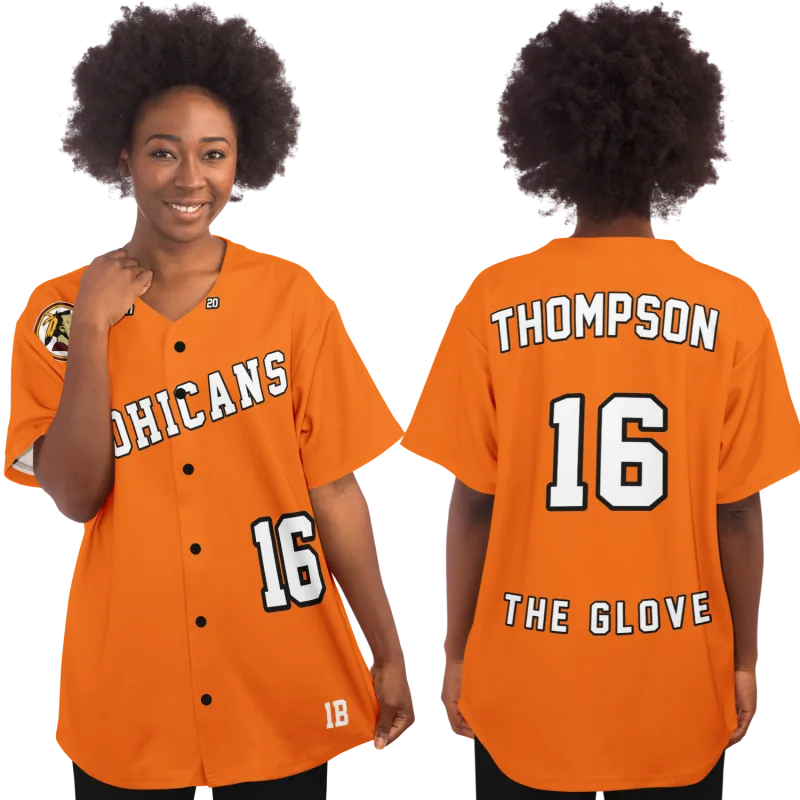
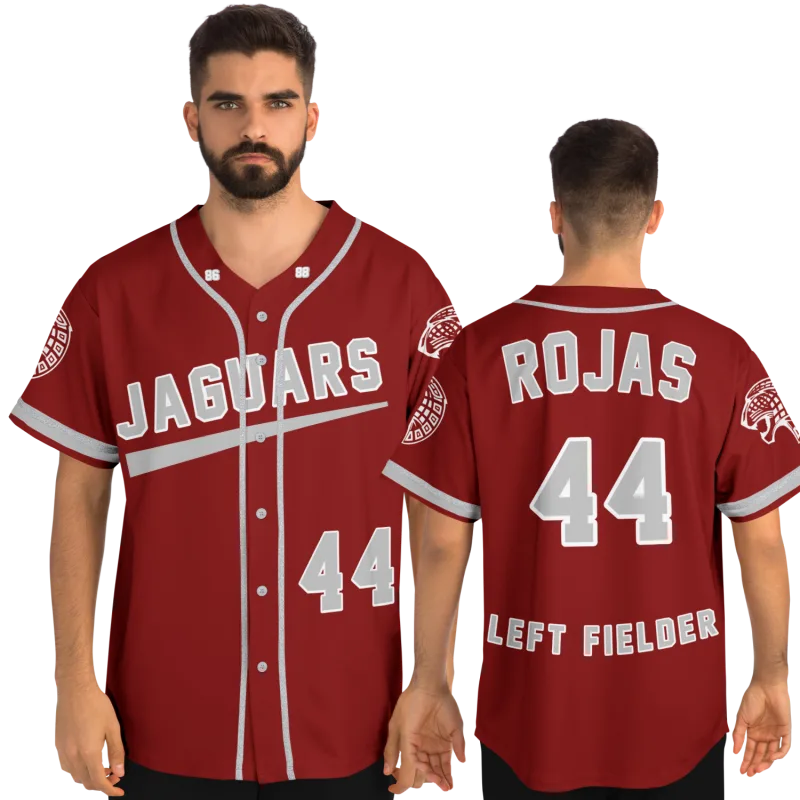
Some people mark that. They hold onto a photo, a medal, a jersey with their name and number on the back, the artifact that represents the version of themselves that existed on a court or a field or in a pool. Not because they're living in the past, but because that chapter of their story deserves to be acknowledged.
The athlete you were shaped the person you became. That's not sentimentality. That's neuroscience.
Your jersey is still out there waiting.
Design yours in minutes and see your name and number exactly the way you remember it.
Frequently Asked Questions
How long does muscle memory last in sports?
The neural pathways underlying athletic skills appear to be remarkably durable, lasting decades and possibly a lifetime. What changes with extended non-practice is physical capacity (strength, speed, endurance), not the encoded movement blueprint. Athletes returning after long absences consistently re-acquire skills significantly faster than they originally learned them, which is direct evidence that the procedural memory remains structurally intact even after years away from competition.
Is muscle memory the same for all sports?
The underlying mechanism (myelination of neural pathways through repetition) is consistent across sports, but the specific structures involved vary by skill type. Fine motor skills (a golf swing, a pitching motion) are encoded with high precision in the cerebellum and motor cortex. Gross motor skills with a strong rhythm component (swimming strokes, running gait) also rely heavily on the basal ganglia. Complex sport-specific skills that combine movement with real-time decision-making (basketball, soccer) involve additional regions managing spatial awareness and pattern recognition. All of these are procedural in nature and share the same durability.
Can you rebuild muscle memory after a long break?
Yes — and it's typically much faster than original learning. The process of returning to a sport after an extended absence is more accurately described as reactivation than relearning. The neural pathways are still present; they simply haven't been stimulated regularly. Consistent practice restores signal efficiency along those pathways relatively quickly. The greater challenge is usually rebuilding the physical conditioning to perform skills at the intensity the nervous system remembers, since fitness degrades more quickly than the encoded movement patterns.
Why do athletic skills feel automatic after years of training?
This is the direct result of the motor learning process moving a skill from the cognitive stage (where conscious effort and attention govern each movement) to the autonomous stage, where the procedural memory system manages execution without requiring active attention. At this point, the movement has been encoded deeply enough that it runs as a background process. The conscious brain is freed up to focus on strategy, reading opponents, or other high-level decisions. After sufficient repetitions, the movement is quite literally no longer a conscious act.
Does muscle memory explain why former athletes are hard to coach out of old habits?
Exactly. The same durability that makes athletic skills persist across decades of non-practice also makes established movement patterns resistant to replacement. A pitcher who learned a specific arm path through thousands of repetitions has deeply myelinated pathways for that pattern. Teaching a new arm path means competing with existing infrastructure — the new pattern must be practiced enough to build comparable myelination before it will begin to feel natural. This is why technique changes in experienced athletes require significant repetition under deliberate, focused conditions, and why old habits resurface under fatigue or stress: the older, more myelinated pathway is still the path of least resistance.
See also: why your athletic identity doesn't just disappear after high school | the science behind why your senior season memories feel so vivid | the gap between what your body remembers and what it can still do | why you still dream about running those plays | picking up where you left off when you start training again