

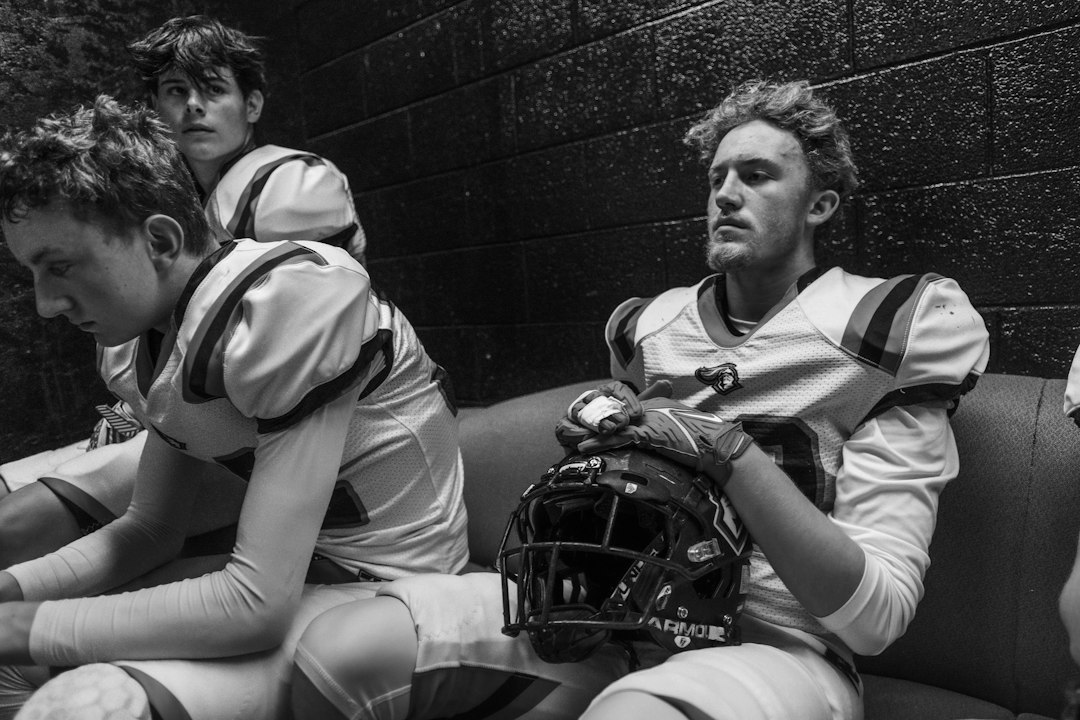




Somewhere in a closet or a garage or a box marked "misc," there is a piece of your person's athletic life that they haven't looked at in years. They haven't thrown it out. They haven't displayed it either. It just sits there, waiting for a reason.
If you're searching for meaningful gifts for athletes who've retired from the game, you've probably already felt the problem. The obvious options are everywhere: a mug with a sport silhouette, a generic "legend" t-shirt, a framed poster of someone else's famous moment. And you've probably sensed, correctly, that none of it will land. Your person didn't play for a poster. They played for the people next to them, for the version of themselves that showed up in the fourth quarter, for a name and a number that meant something specific.
This guide is for the person who loves a former athlete and wants to give them something that proves it. Not something that says "I know you liked sports," but something that says "I know who you were out there, and I know it still matters."
What Former Athletes Actually Miss (It Isn't the Trophy)
Ask a former athlete what they miss, and the answer rarely involves a scoreboard.
If you played, you know the list. The smell of the locker room before a big game. The particular silence on a bus ride home after a loss. The way a teammate could look at you across a field and you knew exactly what they were about to do. The weight of the jersey on your shoulders, which somehow felt heavier and lighter at the same time.
What retired athletes lose isn't the competition itself. It's the identity that came packaged with it. For years, they were someone in a very specific, visible way. They had a number. People knew it. Coaches yelled it. Parents in the stands cheered it. Then one day the season ended and it never started again.


Sports psychologists have a name for the disorientation that follows. The athletic identity, the degree to which a person defines themselves through their sport, doesn't switch off when the playing career does. A widely cited 2019 review in the Journal of Applied Sport Psychology found that former athletes with strong athletic identities often report a sense of loss comparable to other significant life transitions. The gifts that resonate are the ones that honor that identity rather than pretending it evaporated.
That's the lens for everything else in this guide. Before you pick anything, ask yourself one question: Does this tell them that who they were still counts?
Why Most "Athlete Gifts" Miss the Mark
In our experience, the gifts that disappoint share a common flaw: they're about the sport, not about the person.
A framed print of a famous play celebrates a stranger's moment. A novelty sign that reads "Old Athletes Never Die, They Just Smell That Way" jokes about aging when your person may be quietly grieving the end of something. A generic team-branded hoodie says "I know you like this sport" but nothing about you played this sport, at this level, with this name on your back.
Here's the test we use. Hold the gift up in your mind and ask: could this be given to any former athlete in the world, and mean the same thing? If yes, it's generic. The gifts that carry real weight are the ones only this person could receive: their number, their name, their team colors, their position, their era.
That specificity is the whole game. It's what turns a present into proof that someone paid attention.
The Gifts That Carry Real Weight
Meaningful gifts for athletes fall into a few categories, and each works for a different kind of person and a different kind of relationship.
Personalized Apparel With Their Own Name and Number
This is the category that consistently produces the strongest reaction, and the reason is simple: it gives back the exact thing they lost. A custom jersey with their real name and the number they wore isn't a souvenir of the sport. It's a souvenir of them.
Think about what happens when someone opens it. They don't just see fabric. They see the name that their coach used to bark across a gym. They see the number that their teammates chanted. For a lot of former athletes, pulling that jersey on again, even decades later, collapses time in a way almost nothing else can.
This is also the gift that's most often impossible for a person to buy themselves. Original jerseys get lost, outgrown, worn to threads, or were never theirs to keep, because plenty of teams collect uniforms back at season's end. A recreated or custom version fills a gap the person may not have known they felt.
Memory Objects
Beyond apparel, the second strongest category is objects that preserve a specific memory: a framed team photo with the roster typed out beneath it, a shadow box holding a game ball and a ticket stub, a printed schedule from their senior season. These work best when the details are precise. "The 2003 conference championship" beats "your glory days."
Experiences Tied to the Sport
For the athlete who's more restless than nostalgic, an experience can outperform an object: tickets to a game at the stadium where they once played, a day on the old field, a rec-league sign-up. The key is that it reconnects them to the doing, not just the watching.
Items That Honor the Team, Not Just the Individual
Many former athletes feel their sport as a family more than a résumé. Gifts that nod to teammates, a group photo, a reunion contribution, a printed list of the whole roster, often hit harder than anything about their own stats.
Why a Custom Jersey Hits Differently
Let's spend more time here, because this is the gift category where details separate "nice" from "unforgettable," and where most people make avoidable mistakes.
It Returns the Identity They Lost
Marcus T., a 41-year-old former high school linebacker, told our team his wife surprised him with a custom jersey carrying his last name and the number 54. "I hadn't seen that name stitched on anything since 1999," he said. "I put it on in the kitchen and my kids asked why I was quiet. I wasn't sad. I was just back there for a second." That's the reaction you're aiming for: not applause, but recognition.
It Works Across Every Sport
This isn't a football-only idea. Former softball catchers, hockey defensemen, volleyball setters, soccer midfielders, baseball shortstops, basketball guards: all of them had a name, a number, and a uniform that defined their season. Customization works anywhere there was a team and a jersey.
Choosing the Right Details
The details are where the emotion lives, so get them right:
- Name: Use what was actually on the back. A last name, a nickname, even a family name some players wore for a parent. If you aren't sure, ask a teammate or look at an old photo.
- Number: The exact number, not a "close enough" one. If they wore multiple numbers across years, pick the one tied to their best memory.
- Colors: Match the team palette they remember, which may differ from the school's current look.
- Position and style: A baseball pullover and a football jersey are not interchangeable. Match the cut to the sport they played.
If you want a head start on the design side, our guide to how custom jerseys come together walks through the choices step by step.
Sizing Considerations Nobody Warns You About
Here's the unglamorous part that can quietly ruin a beautiful gift: the fit.
A former athlete's body is rarely the body that wore the original jersey. Shoulders that once filled a size large may now carry a different frame. Pulling on a jersey that's two sizes off, especially in front of family, can turn a tender moment into an awkward one.
Size for the body they have now. This is the single most important rule. Don't buy the size they wore at eighteen. Buy the size that fits them today.
Check a shirt they already own. Quietly measure a favorite fitted t-shirt or a jersey-style top, chest width laid flat, shoulder to shoulder, and length. Compare those numbers against the size chart rather than guessing from a label.
Consider the cut. Sport jerseys often run looser or longer than street clothing. A basketball jersey is meant to hang; a hockey jersey is meant to be roomy over pads. If your person will wear it casually rather than over gear, sizing down one step can sometimes produce a better drape. Check the size chart for the specific sport.
If you're unsure, go slightly larger. A little room reads as comfortable. A jersey that's too tight reads as a reminder of everything that has changed.
Plan for the return. Before ordering, confirm the exchange policy for personalized items. Custom pieces are often made to order, so knowing your options ahead of time takes the pressure off.
How to Present It So It Lands
A meaningful gift can still fall flat if the moment is wrong. A few approaches we've seen work:
- Make it a private moment first. If your person tends toward emotion, give them the jersey somewhere they can react freely before sharing it with a crowd.
- Tell the story behind the choice. A sentence like "I asked your old coach what number you wore" tells them you did real work, and that effort is the actual gift.
- Pair it with one more memory. A photo from the era, a handwritten note, or a call from a former teammate can turn a jersey into an afternoon they'll talk about for years.
Danielle R., 34, a former collegiate volleyball setter, described her sister's gift this way: "She tracked down my old teammate to confirm the number and spelled my nickname exactly right. I cried before I even unfolded it. It wasn't the jersey. It was that she remembered."
Common Mistakes to Avoid
Most missteps come from good intentions, so they're easy to fix once you see them.
- Guessing the number. A wrong number is worse than no number. Verify before you order.
- Gifting a rival's colors. It sounds obvious until the person played for a school with a similar palette.
- Treating retirement like a joke. For some, humor is a coping tool. For others, it stings. Read your person before reaching for "over the hill" jokes.
- Overbuying. One thoughtful, specific item beats a pile of generic merchandise every time.
Your Jersey Is Still Out There Waiting
Your jersey is still out there waiting.
Design yours in minutes and see your name and number exactly the way you remember it.
Frequently Asked Questions
What are the most meaningful gifts for athletes who have retired?
The most meaningful gifts for athletes are the ones tied specifically to their own experience: a custom jersey with their real name and number, a framed team photo with the roster, or a shadow box of game memorabilia. Generic sport-themed items tend to feel impersonal because they could belong to anyone. Specific details, the number, the nickname, the year, are what make a gift feel earned.
Is a custom jersey a good gift if the person doesn't talk about their playing days?
Often, yes. Many former athletes don't bring up their playing days precisely because it's tender. A personalized jersey can be a gentle way of saying you see that part of them and that it mattered. If you're genuinely unsure, pair the gift with a short, sincere note so it reads as appreciation rather than pressure.
How do I find out what number or name someone wore?
Start with old photos, yearbooks, or team rosters, many schools keep these archived online. Former teammates, coaches, and family members are another reliable source, and asking them also gives you a chance to gather a memory or two for the presentation. Avoid guessing, since an incorrect number undercuts the whole gesture.
How should I size a jersey for a former athlete?
Size for their current body, not the one they had when they played. Measure a well-fitting shirt they already own, laid flat, and compare those numbers to the jersey's size chart. Because jerseys vary by sport in how loosely they're cut, check the specific chart for that sport, and confirm the exchange policy for personalized items before ordering.
Can I give a custom jersey for a sport that isn't football?
Absolutely. Custom jerseys work for any sport where a team and uniform defined the athlete's experience, including baseball, basketball, hockey, soccer, softball, volleyball, and more. The important part is matching the style and cut to the sport they actually played, so the finished piece feels authentic to them.
What if my gift recipient is going through a hard time adjusting to life after sports?
Lead with warmth and avoid jokes about age or decline. A gift that honors who they were, delivered with a personal story about why you chose it, can help them feel seen rather than sidelined. If their struggle seems heavier than nostalgia, encourage conversation with a trusted friend or a mental health professional alongside the gift, not instead of it.
See also: personalized gifts versus generic ones | a custom sports shadow box | why high school sports gifts mean more than you think | old game film and highlight footage | what to do with an old varsity letter jacket