

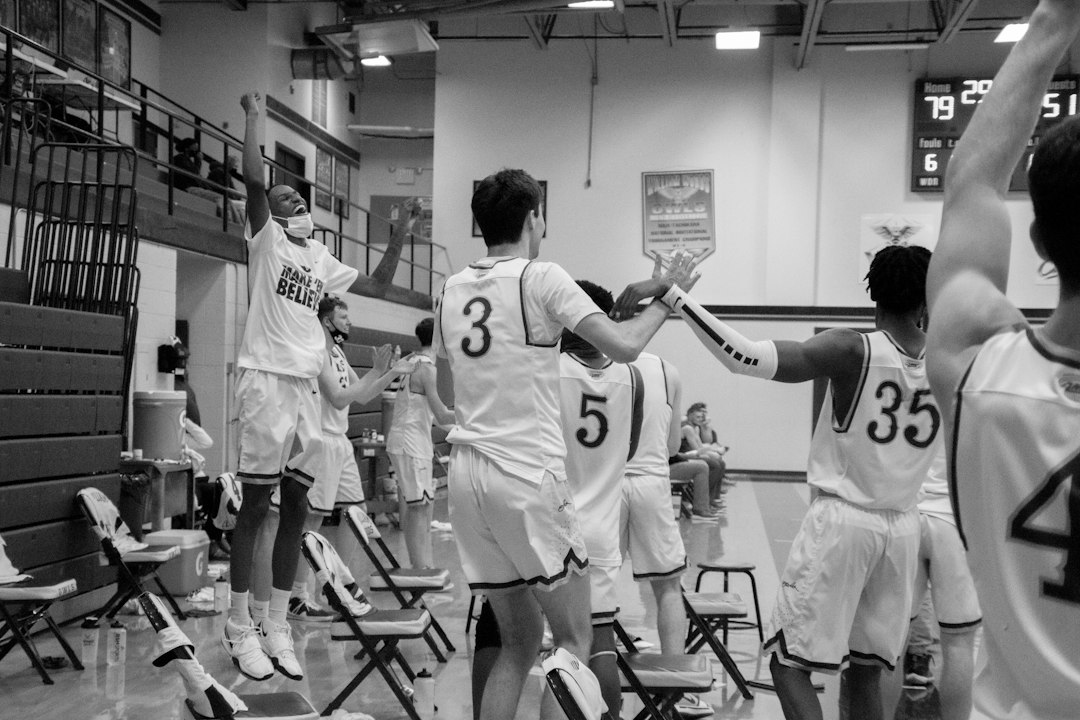




There is a specific kind of person who ends up searching "finding my old high school coach" at eleven o'clock on a Tuesday night. They just watched something — a game, a documentary, a kid on a court who reminded them of themselves at sixteen — and suddenly the name is right there. Coach Alvarez. Coach Williams. Coach Patty DeSouza with the whistle she wore like jewelry.
You want to know what happened to them.
Not in a sentimental, vague way. You actually want to know: Are they still coaching? Did they retire? Are they well? Is there still time to tell them what you never said when you were seventeen and too cool to mean it?
This guide gives you the specific steps to find out. We'll cover school archives, alumni networks, coaching directories, social media approaches that actually work for older coaches, and — because it needs to be addressed directly — what to do if you discover they've passed away and how to honor them in a way that means something. We'll also cover how to write the first message once you find them, because that part stops a lot of people cold.
Let's start with why the common approach fails.
Why a Basic Google Search Usually Isn't Enough
Most people try one Google search, get nothing useful, and assume the trail has gone cold. It hasn't. It just requires a different kind of searching than you're used to.
The reason Google falls short is that coaches — especially those who retired before 2010 — often have almost no searchable digital footprint. They weren't building personal brands. They weren't on LinkedIn. Their name might appear in a local newspaper archive from 1997 that has never been digitized, or in a school athletic program that only exists as a physical booklet in a trophy case somewhere.


That doesn't mean they're unfindable. It means you need to work the right channels in the right order. Here's the process that actually works.
Step 1: Start With the School Itself
This is the step most people skip, and it's often the most direct route to a current contact.
Your former school has records. More importantly, the athletic department has relationships — with former coaches, with the booster club, with the coaching network in your sport. Someone there likely knows exactly where Coach Rodriguez went after retirement.
Here's what to do:
- Find the current athletic director's contact information on the school's website. Call during school hours — email works, but a phone call signals genuine intent and gets faster responses.
- Identify yourself specifically: your name, the years you attended, your sport, and the coach's name and approximate years of service. The more specific you are, the more helpful they can be.
- Ask directly: "I'm trying to reconnect with Coach [Name]. I was a player from [years]. Do you have any contact information, or do you know if anyone on current staff is still in touch with them?"
In our experience, athletic departments respond well to this kind of outreach. They deal with it more than you'd expect — former players looking for former coaches is a regular occurrence around homecoming, milestone anniversaries, and team reunions. A current coach may have trained under your coach. A secretary who has been there for thirty years may have a personal phone number.
One follow-up worth making: ask specifically whether the school has any alumni records or booster club contact that might help. Many schools maintain active booster networks that stay connected to retired staff.
Step 2: Work the Alumni Network
If the school itself doesn't produce a direct lead, the alumni network is your next move — and it's often faster than you'd expect, because your former teammates are one degree of separation from the same coach you're looking for.
Four channels to hit in parallel:
- Former teammates on social media. Search for people you played with on Facebook and LinkedIn. Post a specific question — not "anyone remember Coach Torres?" but "Does anyone have contact information for Coach Torres or know where she ended up after she left Lincoln High in 2003?" Specificity gets responses.
- School alumni Facebook groups. Search "[School Name] Alumni" on Facebook. These groups exist for almost every school with a graduating class of any size, and they are remarkably active. A post in one of these groups about a former coach typically generates responses within 24 hours.
- LinkedIn alumni search. Use LinkedIn's alumni search tool (available under the school's LinkedIn page) to find people who attended your school during the same years. Filter by graduation year range and look for former teammates, then message them directly.
- Classmates.com and similar reunion platforms. These are worth checking specifically for older coaches who might be listed as staff rather than alumni.
The alumni network approach has the added benefit of reconnecting you with teammates you've also lost track of, which occasionally becomes its own worthwhile outcome.
Step 3: Search Coaching Registries and Professional Records
This step works especially well if your coach continued coaching after leaving your school, worked toward any kind of coaching certification, or was involved in state or national coaching associations.
The specific places to check:
- State athletic association websites. Most state high school athletic associations maintain rosters of registered coaches. Search your state's association (e.g., the NFHS member state associations) for your coach's name.
- The National Federation of State High School Associations (NFHS) maintains resources and sometimes searchable directories for coaches who participated in their certification programs.
- Sport-specific national coaching organizations. USA Basketball, USA Swimming, USA Track & Field, and similar bodies have coach registries. If your coach went on to club or collegiate coaching, they may be in one of these systems.
- College and university staff directories. If your coach moved into collegiate athletics, even as an assistant, they'll appear in a staff directory. Search "[Coach's Name] + [sport] + [state] + coach" and add "college" or "university" to the query.
A useful refinement: search the coach's name alongside the specific sport and the words "retired" or "career" — this sometimes surfaces local newspaper retrospectives or athletic department sendoffs that include current contact information for family or former colleagues.
Step 4: Social Media Approaches That Work for Older Coaches
Here's where most people's instincts are slightly off. They search Instagram or Twitter and find nothing, then conclude the coach isn't online. But the platform question matters enormously by generation.
Coaches who are now in their 60s, 70s, or older are far more likely to be on Facebook than anywhere else. Facebook remains the dominant platform for that demographic, and many coaches use it actively — posting about grandchildren, local events, and occasionally their old teams.
The search sequence that works:
- Search the coach's full name directly on Facebook. Try variations — middle initial, nickname, maiden name if applicable.
- Search the coach's name plus your hometown or the school's city.
- Search for the coach using Facebook's People search, filtering by location (city where the school is located) and approximate age range if you know it.
- If you find a profile that might be them but isn't confirmed, look for identifiers: mutual connections from your school years, photos from athletic events, or mentions of the sport they coached.
LinkedIn is worth checking for coaches who moved into athletic administration, college programs, or related fields after high school coaching. Use the same name variations.
One approach that works surprisingly well: search for your coach's name on YouTube. Local news stations, athletic department tribute videos, and retirement ceremonies are sometimes posted there — and those videos often include current information about where the coach is now.
Step 5: If You Discover They've Passed Away
This is the part of the search no one wants to arrive at, but it needs to be addressed plainly.
Sometimes the trail leads to an obituary instead of a phone number. If that happens, the search isn't over — it just changes shape.
What to do when you learn a former coach has passed:
- Read the obituary carefully. It will often list surviving family members and, occasionally, former teams or players as part of the legacy section.
- If surviving family members are listed and you feel moved to reach out, a brief, handwritten note is almost always welcomed. Keep it specific: one or two sentences about who you are, one specific memory of the coach, and a statement of what they meant to you. Family members of coaches who spent their careers with young people deeply appreciate hearing from those players.
- Check whether a memorial fund, scholarship, or named award was established in the coach's honor. Many school athletic programs name a field, trophy, or annual award after beloved coaches. Contributing to that fund, or reaching out to the school about its existence, is a meaningful act.
- Consider reaching out to former teammates to share what you've learned and organize some form of acknowledgment — a group message, a shared memory post in an alumni group, or something more formal.
There is no wrong way to grieve a person who mattered to you, even if you lost touch years ago. The fact that you searched for them tells you what they meant.
How to Write the First Message (When You Find Them)
Finding the coach is one challenge. Writing the first message is another — and it's where a lot of people stall.
The instinct is to write something long, to explain everything, to apologize for losing touch. Resist that. The best first messages are short, specific, and warm.
A structure that works:
-
Identify yourself immediately and specifically. Don't make them work to remember you. "[Your full name] — I played [position/sport] for you at [school] from [years]. You probably remember me as the one who [one specific, true detail]."
-
State why you're reaching out now. You don't need a dramatic reason. "I was thinking about you recently and wanted to reach out" is completely sufficient. Specificity helps: "My own kid just started [sport] and I keep hearing your voice in my head when they're at practice."
-
Ask one question or make one specific statement. "I'd love to know how you're doing" is enough. Or: "I've always wanted to tell you that [specific thing the coach did or said] stayed with me."
-
Keep it short. Three to four sentences. You're reopening a door, not delivering a speech. The conversation can grow from there.
Renata S., 38, found her high school swim coach after a two-year search. She'd tried Google, found nothing, and had given up — until she posted in her school's alumni Facebook group on a whim. Her former coach's daughter saw the post and connected them directly. Renata says the phone call lasted two hours. She mailed her coach a framed photo from their state championship season the following week.
What to Do if You Simply Can't Find Them
Some searches genuinely hit walls. A coach who retired to a rural area, never built any digital presence, and whose former colleagues have also scattered may simply not be findable through these methods.
If you've worked through all five steps and have nothing, two options remain:
- A paid people-search service (Spokeo, BeenVerified, and similar platforms) can sometimes surface address records and phone numbers that aren't publicly searchable. These services are imperfect, but they occasionally bridge the gap when public searches fail. Use the name, approximate age, and last known city as search inputs.
- A letter to the school addressed to the coach, asking the school to forward it if they have any means of doing so. This is a low-probability approach, but it requires almost no effort — and schools occasionally have forwarding relationships with retired staff that they won't share publicly but will use on behalf of a sincere former player.
Honoring a Coach Who Changed Your Game
Whether you find them, lose them, or never quite close the loop — there is something worth doing regardless of outcome.
The coach who mattered to you shaped something real. The way you responded to pressure. The way you showed up when you didn't feel like it. The way you still carry that one thing they said in some corner of your competitive self.
Naming that — to them, to your teammates, to yourself — is not a small thing. Reconnecting with high school coaches after years apart is, for many people, one of the most meaningful conversations of their adult lives. Not because of what the coach did, exactly, but because of what it felt like to be seen clearly at sixteen, and to be told, in whatever form a coach tells you, that you were capable of more.
That stays.
Your jersey is still out there waiting.
Design yours in minutes and see your name and number exactly the way you remember it.
Frequently Asked Questions
How do I find a high school coach who retired before social media existed?
Start with the school's athletic department directly — call and ask by name. Many schools maintain informal contact with longtime staff even after retirement, and a current athletic director or long-tenured secretary may have a phone number or know of a family member to contact. State coaching association records and local newspaper archives (many now available through public library digital databases) are also productive for coaches who retired in the 1980s or 1990s.
Is it appropriate to reach out to a former coach after many years of no contact?
Yes — in our experience, coaches overwhelmingly welcome hearing from former players, regardless of how much time has passed. Most coaches entered the profession specifically because of the relationships they built with young athletes, and a message from a former player decades later is rarely unwelcome. Keep the first message brief and warm, identify yourself specifically, and let them set the pace of the conversation from there.
What if I only remember my coach's first name or nickname?
Start with the school's athletic records for the years you attended. If you remember your approximate graduation year, sport, and the coach's first name, the school's athletic department can usually identify who that was. Former teammates are also a reliable resource here — post in an alumni group with what you remember and someone almost always fills in the gap.
Should I reach out to a former coach's family if the coach has passed away?
A brief, handwritten note is almost always welcomed by surviving family members. Keep it simple: introduce yourself as a former player, share one specific memory of the coach, and express what they meant to you. You don't need to ask anything or propose any action — the gesture of reaching out is itself meaningful. If there is a memorial scholarship or named award associated with the coach, the school's athletic department can tell you how to contribute.
What's the best platform for an old high school coach lookup if they're in their 60s or 70s?
Facebook is consistently the most productive platform for coaches in that age range. Search by full name, try variations (including maiden names for female coaches), and filter by city if the search returns too many results. Facebook alumni groups for your specific school are also worth searching — coaches sometimes participate in those groups themselves, or their former colleagues will know how to reach them.
See also: how to find and reconnect with former high school teammates | find your old high school game film and highlight footage | why high school sports still matter so much to adults