

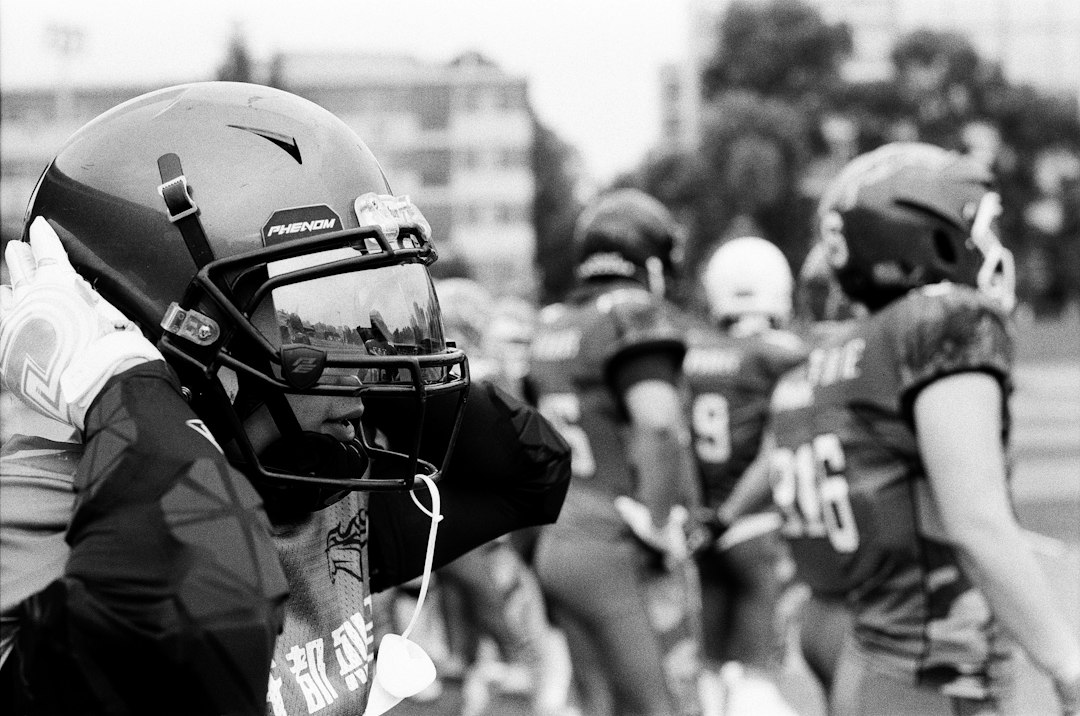




You've thought about it more than once. Maybe it surfaces when you drive past the old gymnasium, or when someone mentions your sport at a party and you catch yourself almost saying I used to play that. The question isn't dramatic. It's quiet, and it's specific: does my coach remember me?
Do coaches remember their players — really remember them, not just recognize a face at a grocery store — is a question that almost every former athlete carries around longer than they'd admit. The internet offers you Quora threads full of contradictory guesses and sports-psychology articles that talk about memory in the abstract. What it rarely offers is the honest answer from the coaches themselves.
So we went and got it.
What follows is built around direct conversations with current and retired high school coaches — football, swimming, track, volleyball, basketball — about which players they actually recall decades later, and why. The answers were surprising enough that we almost restructured this piece halfway through. Because the players coaches remember most vividly are not always who you'd expect.
The Honest Answer: Yes, But Not the Way You Think
The short version is this: most coaches remember far more players than those players assume. But the specific players who stay sharpest in a coach's memory are rarely the ones who made the all-state team.
A retired high school basketball coach with 28 years of experience — who asked to remain unnamed because he still lives in the community where he coached — put it plainly: "The stars, I remember their stats. The kids I remember as people are the ones who gave me something to think about. The ones who weren't naturals but kept showing up. The ones who pushed back and then figured it out. The ones who left before I thought they were ready."
That distinction — remembering stats versus remembering a person — came up in nearly every conversation.


A current volleyball coach at a large suburban high school has been coaching for 19 years. She estimates she has coached somewhere between 300 and 400 players. When asked how many she could recall by name and specific detail, she paused, then said: "Honestly? Probably 200 of them without much prompting. Maybe more if you give me a season to work from."
That number surprised us. It will probably surprise you too.
The reason coaches retain so much isn't nostalgia. It's the nature of the relationship itself. A high school coach spends two to four hours a day with a player, often six days a week, across multiple seasons. That's more concentrated time than most teachers, relatives outside the immediate family, or childhood friends. The relationship is emotionally loaded — wins and losses, conflict and breakthrough, the specific texture of how a kid handles pressure — and emotionally loaded experiences encode differently in memory than routine ones.
Who Coaches Actually Remember 20 Years Later
This is where the research got interesting. When we asked coaches to describe the players they remember most vividly, four profiles emerged — and only one of them was "the best player on the team."
The kid who kept showing up despite having no reason to
Every coach we spoke with named at least one version of this player: the benchwarmer, the third-string lineman, the swimmer who never placed at a meet but never missed a practice. A retired track coach recalled one specific athlete — a middle-distance runner who finished last in every JV race her freshman year and still showed up every morning for optional early workouts. "She never made varsity. She graduated as a team manager. I think about her more than I think about kids who went on to play in college. She understood something about commitment that I still try to explain to my current athletes."
The difficult one who eventually got it
Conflict creates memory. Coaches are almost universally candid about this. A coach who had a contentious relationship with a player — power struggles in film sessions, arguments about playing time, the kid who questioned everything — tends to remember that player with unusual clarity. And when that player eventually came around, or when the coach looks back and realizes the player was right about something, the memory sharpens further. "He was a pain," one football coach said about a player from fifteen years ago. "He was also the smartest player I ever coached. I just didn't know it yet."
The player who was going through something
High school is not a neutral backdrop. Kids show up to practice carrying things — family stress, academic pressure, the specific cruelty of being 16. Coaches who noticed, who adjusted, who made room for a player who was struggling off the field — those moments are mutual. The player remembers. The coach remembers. "There was a girl on my JV squad her sophomore year," a volleyball coach recalled. "Something was going on at home, I never knew the full story. I just let her stay in the gym longer on days I could tell she needed to. She sent me a letter about it ten years later. I still have it."
The one who left
Players who quit mid-season, transferred, walked away — they occupy an unusual place in a coach's memory. There's often unfinished emotional business there, genuine wondering about what happened and what could have been different. "I think about the ones who left more than the ones who graduated," admitted a retired swimming coach. "Not with regret, exactly. More like an open question I never got to answer."
The Players Coaches Struggle to Place
Here's the part that's harder to hear, and worth knowing before you reach out.
The players coaches sometimes struggle to remember clearly are the ones who were solidly good, consistently present, and emotionally unobtrusive. The reliable starter who played well for four years without any particular conflict or breakthrough moment. The athlete who did exactly what was asked, never more and never less, and graduated without incident.
This is not a reflection of worth or value. It's a reflection of how human memory works. Research on episodic memory consistently shows that emotionally neutral experiences — even repeated ones — are harder to retrieve than experiences with emotional weight, whether positive or negative.
The coach almost certainly has warm feelings about that reliable, unobtrusive player. They may simply need more prompting to bring the specific memories into focus. A detail — the year, a specific game, a practice drill — can unlock recognition that feels absent before the first word of context.
Marcus T., 34, reached out to his old coach last spring.
He'd played soccer at a mid-sized high school in Ohio, starting midfielder for three years, good enough to play club but never recruited at the college level. He'd thought about reaching out to his coach for years and kept finding reasons not to. "I told myself he wouldn't remember me," Marcus said. "I wasn't a star. I was just… there."
He finally sent an email — short, specific, mentioning one particular away game from his junior season. His coach responded within two hours. He remembered the game, remembered Marcus's specific role in it, and asked how his knee had held up — a detail Marcus had forgotten the coach even knew about. They talked on the phone for forty minutes. "It changed something for me," Marcus said. "Not dramatically. Just — I realized I had mattered to someone I thought had moved on."
The Emotional Risk of Reaching Out — And How to Prepare for Both Outcomes
Reconnecting with an old coach carries real emotional stakes. It's worth thinking about before you send the message.
The most common fear is non-recognition: reaching out and receiving a response that makes it clear the coach doesn't remember you, or receiving no response at all. Both outcomes happen. Not often — coaches are generally more receptive than former players expect — but they happen. A coach might be retired, in poor health, or simply unreachable. A coach who does respond might be warm but vague in a way that signals they're working to reconstruct the memory rather than retrieving it whole.
None of those outcomes mean you didn't matter. But they can sting if you aren't prepared for them.
If you're going to reach out, here's what actually works:
-
Lead with a specific detail. Not "I played for you in the early 2000s" but "I played point guard during the 2003–04 season, the year we made it to the regional semifinal." Specificity unlocks memory in a way that general references don't.
-
Make the purpose of your outreach clear and low-pressure. "I've been thinking about that season and wanted to say thank you" is a complete message. It doesn't require a reply to feel worthwhile, and it gives the coach room to respond at whatever level of recall they have.
-
Don't center the outreach on whether they remember you. Center it on what the experience meant to you. That reframe protects you emotionally and makes the conversation richer if they do respond.
If the response is warmer than you expected:
Let it land. Former athletes often deflect or minimize — "I was just a benchwarmer, I don't know why you'd remember me" — and that deflection can cut a real moment short. A coach who remembers you deserves to have that received without qualification.
The Coach-Former Player Relationship, Decades Later
Something shifts in the coach and former player relationship once enough time has passed. The power dynamic flattens. A coach who once felt like an authority figure becomes, in retrospect, a person in their thirties who was figuring out how to lead a room full of teenagers while managing their own life. Former players often report that reconnecting with an old coach produces a disorienting but welcome realization: the coach was human the whole time.
Coaches report something similar. Seeing a former player as an adult — employed, maybe with kids, carrying the weight of a full life — tends to confirm something coaches hold privately: that what happened on the field or in the gym mattered less than what was being built around it. The habits of showing up. The experience of being held accountable. The specific memory of what it felt like to be part of something that required more than you thought you had.
"I don't coach basketball anymore," the retired coach with 28 years told us. "But I think about those kids constantly. They're in their thirties now. They have no idea how much I wonder about them."
The question did I matter to my coach almost always has a yes buried inside it. The more honest question is often its inverse: did you realize, at the time, how much they were thinking about all of you?
Your jersey is still out there waiting.
Design yours in minutes and see your name and number exactly the way you remember it.
Frequently Asked Questions
Will my coach remember me if I was never a starter?
Almost certainly, yes — though the strength of the memory depends on factors other than playing time. Coaches consistently report that non-starters who brought consistent effort, unusual dedication, or a distinct personality are often more vivid in memory than players who started but blended into the flow of a successful season. If you attended practices faithfully, contributed to the team's culture, or had any moment of real connection with your coach, the odds that you're remembered are higher than you probably assume.
How should I reach out to an old coach after many years?
Keep it specific and low-pressure. Identify one concrete detail from your time together — a specific season, a specific game, a specific exchange you remember — and lead with that. Make your message easy to respond to but not dependent on a response. Email is generally the most accessible format; social media works if the coach has an active presence. Avoid messages that put the coach on the spot by asking directly whether they remember you. Give them context first and let the recognition follow.
What if my coach doesn't respond or doesn't remember me?
Prepare for this possibility before you reach out, not after. A non-response usually reflects logistics — a retired coach without consistent email access, a busy active coach during a season — more often than it reflects anything about the relationship. A response that seems to require prompting to reconstruct the memory is not the same as not remembering. If the outcome is genuinely a blank, the value of what you experienced during those years is unchanged. The coach-player relationship created something real whether or not the retrieval of specific memories is intact on their end.
Do coaches stay in touch with former players on purpose?
Some do, deliberately. Coaches who run active alumni networks, or who stay connected through social media, maintain more continuous threads with former players. Others lose contact entirely and report that they wish they hadn't. In our conversations with coaches, the consistent theme was that reconnection is welcomed — that former players reaching out is almost never an imposition, and more often a genuinely meaningful moment in a career defined by relationships that otherwise exist only in memory.
See also: why high school sports still matter so deeply to adults | the athletic identity you carried long after the final whistle | why your senior season memories feel so sharp even decades later | the grief that comes with the end of your playing days | reconnecting with the people who shaped your athletic years