
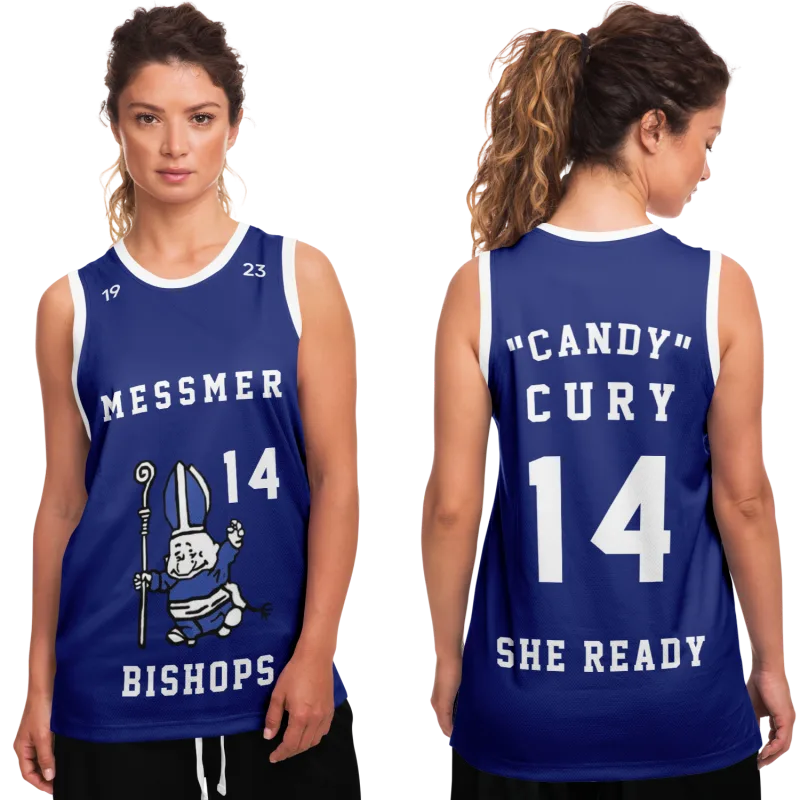
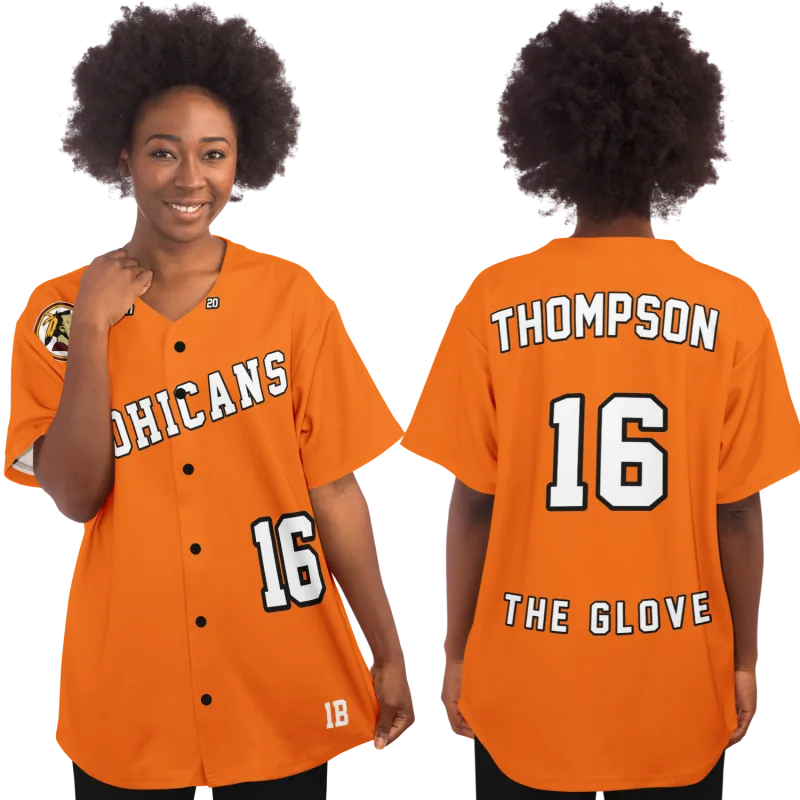
You wore a number. You earned it.
It didn't come on a jersey with buttons or a wide collar. It came on four ounces of spandex stretched across your back at 5:30 AM on a Saturday, or on a singlet that barely moved when you hit the mat, or on a unitard that was somehow the most uncomfortable and most meaningful piece of fabric you ever owned. If you're looking for a custom jersey for track wrestling volleyball swimming — or any sport where the "uniform" looked nothing like a football jersey — you already know the problem. The rest of the custom apparel world was built for a different kind of athlete.
This article was written for the athletes who got left out of that conversation.
The Uniform Problem Nobody Talks About
Walk into any custom jersey conversation — any online design tool, any nostalgia apparel site — and you'll find the same assumption baked into every template: the uniform is a loose-cut jersey with a front number, a back number, and room for a name. Football. Basketball. Baseball. Hockey. The sports with jerseys.
But a significant portion of American athletes — a number that climbs into the tens of millions when you count high school and collegiate participation — competed in sports where the uniform was something else entirely. The NCAA sports participation data consistently shows wrestling, track and field, volleyball, and swimming among the top 10 sports by athlete count. And every one of those athletes wore something that the standard custom jersey template simply was never built to match.
This is the gap. Former wrestlers want their singlet number back. Former track athletes want the name arc across their chest from conference championships. Former volleyball players want their libero jersey or their team colorway. Former swimmers want the warm-up jacket that hung in their locker from October to March.
The creative approaches exist. They just haven't been assembled in one place — until now.
In our experience, the athletes who feel this gap most acutely are the ones who competed deepest into their careers. The further you went — the more meets, duals, matches, and invitationals — the more specific that number and that uniform became to your identity. Getting it back isn't nostalgia for nostalgia's sake. It's claiming something that was always yours.
Custom Track Singlets: The Sprint, the Distance, and the Name Arc
Track and field uniforms occupy a specific aesthetic that no other sport shares. The singlet — that sleeveless, form-fitted top — with its club name arced across the chest, its number pinned on for meets or sublimated directly into the fabric for team-issued versions, carries a visual identity as specific as any football jersey.
For former track athletes designing a custom track singlet, the challenge is both the garment type and the design detail:
- The garment: Most custom jersey providers default to a looser athletic cut. A true track singlet is form-fitted, moisture-wicking, and minimal. Look for providers who offer sublimated singlets as a specific garment category — not just a jersey with the name changed.
- The name arc: This is the defining design feature. The school or club name arched across the chest, usually in block or condensed varsity font, is what makes a track uniform immediately recognizable. When designing custom, specify the arc curve radius and ensure the font matches your school's actual letterform if accuracy matters to you.
- The number: Track singlets typically carry a smaller number than team-sport jerseys — often on the left chest or lower front, not centered. Rebuilding the placement accurately from your competitive years requires a reference photo if you have one, or a general knowledge of the era and program you competed for.
For distance athletes, the singlet was part of every long morning. For sprinters, it was what you saw in finish-line photos. For field athletes in multi-events, it was what connected every discipline. The custom track singlet for former athletes is one of the most emotionally resonant pieces you can commission — because every detail carries a specific memory. If you're remembering what it was really like running high school track and cross country, you already know why each of those details is worth getting right.
Wrestling Singlets: The Most Personal Uniform in Sport
No uniform is more intimate than a wrestling singlet. It leaves nowhere to hide — not physically, and not emotionally. The number on your back was yours alone, assigned to you for the season or the tournament, displayed in front of a gym that knew precisely who was on the mat.
A wrestling singlet custom piece presents unique design considerations:
Color and cut are everything. Wrestling singlets come in two primary cuts — the high-cut (classic) and the low-cut (more modern). Your era in the sport likely determines which you wore, and getting this right matters for authenticity. Most custom apparel providers can accommodate both.
The team name placement. On wrestling singlets, the team name often appears across the chest in a straight line rather than arced — though this varies by program. Some programs used a diagonal placement. Again, a reference photo from your competitive years is the most accurate guide.
The number system. Wrestling numbers were weight-class specific in many programs — your number told the room what weight you competed at. For some athletes, that number carries a specific weight (literally and figuratively) that makes accuracy non-negotiable.
Marcus T., 34, a former two-time state qualifier from Ohio, had his singlet number — 52 — custom-reproduced in his program's navy and gold after his high school retired those colorways in a facilities renovation. He wanted the block number placement from his junior year, the year he went furthest in the tournament. He used a team photo as the design reference and described the finished singlet as "the one thing from that gym I actually get to keep."
For former wrestlers, the custom singlet isn't decorative. It's documentary — the same identity you carried through what it was really like wrestling in high school, now hanging where you can see it.
Volleyball Jerseys: The Libero, the Setter, and the Back-Row Identity
Volleyball sits in an interesting middle ground: it does use a jersey in the traditional sense — a loose-cut athletic top with a number — but the design conventions are specific enough that a generic custom jersey template often misses the mark.
The Libero Jersey Problem
The libero position wears a contrasting jersey by rule — a different color from the rest of the team. This means a former libero recreating their uniform needs two design decisions: the base team colorway AND the contrasting libero colorway. In our experience, this is the single most overlooked detail when volleyball players order custom pieces.
Front and Back Number Conventions
Volleyball jerseys typically carry both a front number (on the chest, often smaller) and a back number (larger, centered). The name, when present, appears across the upper back above the number. This is standard — but the proportions and spacing matter. A volleyball jersey personalized to echo an actual competitive uniform should carry those proportions faithfully, not default to basketball jersey proportions.
The Team Name and Logo Placement
High school and collegiate volleyball uniforms often carry the full school name across the chest rather than an abbreviation. Club volleyball uniforms frequently carry a city name or club identifier in a specific font and colorway that was part of the team's brand identity. If you competed for multiple programs at different levels — high school, club, and collegiate — you may want to commission pieces that honor each separately.
Volleyball's design language is distinct from every other court sport. Getting it right requires attention to these conventions, not just a name and number on fabric — the details that linger from what it was really like playing high school volleyball, swimming, or tennis.
Swimming Team Apparel: When the Uniform Was a Suit — and a Jacket
Here is where the creative approach shifts most significantly. The competitive swimsuit itself — the technical suit that represented your program in the water — is not a realistic recreation target for most former swimmers. Technical swimsuits are function-specific, not identity-specific, and the fit and feel of a competitive suit is entirely different from a commemorative piece.
What IS a realistic and meaningful target: the swim team warm-up jacket.
The Warm-Up Jacket as the Real Uniform
For most competitive swimmers, the warm-up jacket — worn on deck, during warmup, during relay team introductions — was the visible face of the program. It carried the team name, often the individual's name on the chest, the season year on the arm, and sometimes the swimmer's events or personal bests embroidered alongside. It was worn to away meets, worn for team photos, worn on the bus home after a winning relay.
Custom swimming team apparel that recreates this piece — a full-zip jacket with sublimated team name, your name, your events, and the year of your most meaningful season — is the authentic path for most former swimmers.
What to Include in a Custom Swim Warm-Up Piece
- Team name and colorway (check your program's hex codes if precision matters)
- Your name in the format your program used (first only, last only, first and last, last with graduation year)
- Your signature events (100 Fly, 200 Free, 4x100 Medley Relay)
- Conference or championship year if you want to memorialize a specific season
The jacket approach also translates naturally to a gift. A former swim team captain commissioning warm-up jackets for a reunion, a parent honoring a senior swimmer's last season, a coach commemorating a record-breaking relay team — custom swim warm-up apparel carries meaning that a generic jersey never could.
How to Adapt Any Non-Traditional Uniform to a Custom Design
Across all four of these sports, a consistent creative framework applies regardless of the specific garment:
-
Start with a reference photo. The single most valuable design input is a photo of the actual uniform from your competitive years. It captures the color, font, number placement, and proportions that matter to you. If you don't have one, your school's athletics archive, a team photo from the yearbook, or a meet program from that era can provide the visual reference you need.
-
Identify the three non-negotiable details. Every meaningful recreation has three elements the athlete will not compromise on — usually the number, the colorway, and one specific design feature (the name arc, the block letters, the font). Identify yours before you begin the design process. Everything else is flexible.
-
Choose the right garment category first, then customize. The temptation is to start with a generic jersey and try to adapt it. The better path is to identify providers who offer your specific garment type — singlet, unitard, athletic jacket — and then apply the design. The garment shape carries as much meaning as the design itself.
-
Commission for the moment you want to commemorate, not for every moment. Some athletes want to recreate their entire career in custom pieces. That's a longer project. Start with the one season, the one meet, the one number that matters most. A single, perfectly accurate piece carries more meaning than a collection of approximate ones.
-
Order a commemorative fit, not a competitive fit. A competition singlet or unitard was cut race-tight — fitted to a body in peak season by a coach who measured you every year. A commemorative piece is for wearing, not for racing, so when there's no team fitting you anymore, order it comfortable rather than compression-tight. That one decision changes how the whole piece feels and how often you actually reach for it. Accurate current measurements matter far more than guessing the size you wore at 17, because bodies change and so do size charts.
-
Choose sublimation for a piece that actually lasts. Full-sublimation construction bonds the ink directly into the fibers of a poly-spandex four-way-stretch fabric rather than layering it on top, which is why the color becomes part of the garment instead of a coating that can fail. That means colors that never crack, peel, or fade, even after years of hanging in a closet or being pulled on for a reunion. If you want the trade-offs spelled out, see screen printing vs. sublimation vs. stitched lettering.
Your jersey is still out there waiting.
Design yours in minutes and see your name and number just the way you remember it.
Frequently Asked Questions
Can I get a custom singlet that matches my actual high school program's colors and design?
Yes — with the right provider and the right reference material. Sublimated singlets allow full-color, full-coverage design that can produce virtually any color combination. Bring a reference photo of the original uniform and specify colors, number placement, and font style. Providers who offer custom sublimation (rather than screen-printed stock garments) give you the most design control. If your program had a specific shade — navy that leaned toward royal, or a gold that was closer to old gold than yellow — a hex color reference from your school's athletics branding guidelines will get you closest to accurate.
What's the best way to honor a swimming career when the competitive suit itself isn't practical to recreate?
The warm-up jacket is the standard answer, and it's the right one for most former swimmers. It was the visible piece — the one worn in team photos, on deck, at championships — and it carries the design elements that made the program visually distinct. A custom sublimated full-zip jacket with your name, team name, events, and season year is both a meaningful commemorative piece and a wearable one. Some former swimmers also commission a custom t-shirt or hoodie in program colors with their name and events as a more casual everyday option alongside the jacket.
Is there a difference between ordering a custom wrestling singlet for display versus for actual wear?
Yes, and it matters. A display piece can use slightly different materials and construction — a heavier sublimated fabric, for example — that holds color well and frames nicely but isn't optimized for athletic movement. A wearable piece needs the stretch, moisture management, and durability that competitive singlet construction provides. Be clear with your provider about intended use. If the piece will be worn — to a reunion, to a masters competition, or just to remember what it felt like — specify athletic construction. If it's going in a frame, display-grade construction is fine and may offer more design fidelity.
Can I order custom volleyball jerseys for a full reunion team, not just an individual piece?
Absolutely — and this is one of the most common use cases for volleyball custom apparel outside of active programs. Reunion sets require consistent colorway and font treatment across all players' numbers and names, which means working from a single design file rather than individual orders. Most providers offer team ordering at volume pricing. The key detail for reunion sets: collect all players' original numbers before ordering, because part of the value of a reunion uniform is wearing the number you actually wore, not an assigned one.
How do I find the font my school used on our track singlets?
Start with your school's current athletics department — many programs have brand guidelines that go back decades, and a current athletics director or equipment manager may be able to provide the specific font name. If the school has changed its branding since your competitive years, your best resources are: the school's yearbook archives from your era (most are digitized), an athletics booster club that may have historical records, or a fellow alumni who competed in the same years. Sports font identification communities online can also help match a font from a reference photo. The closer you get to the original, the more the finished piece will feel like the actual thing.
See also: why high school sports still matter to adults | how to create a custom sports shadow box for a former athlete | athletic identity after high school and what gets left behind | what the right jersey size actually means