
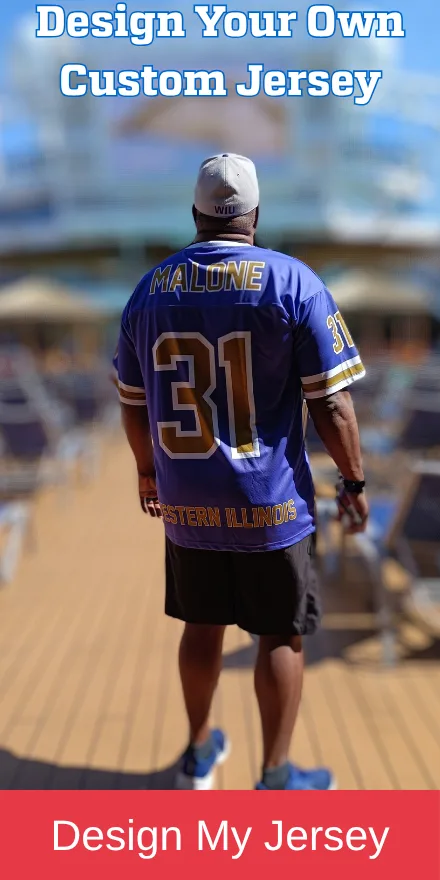

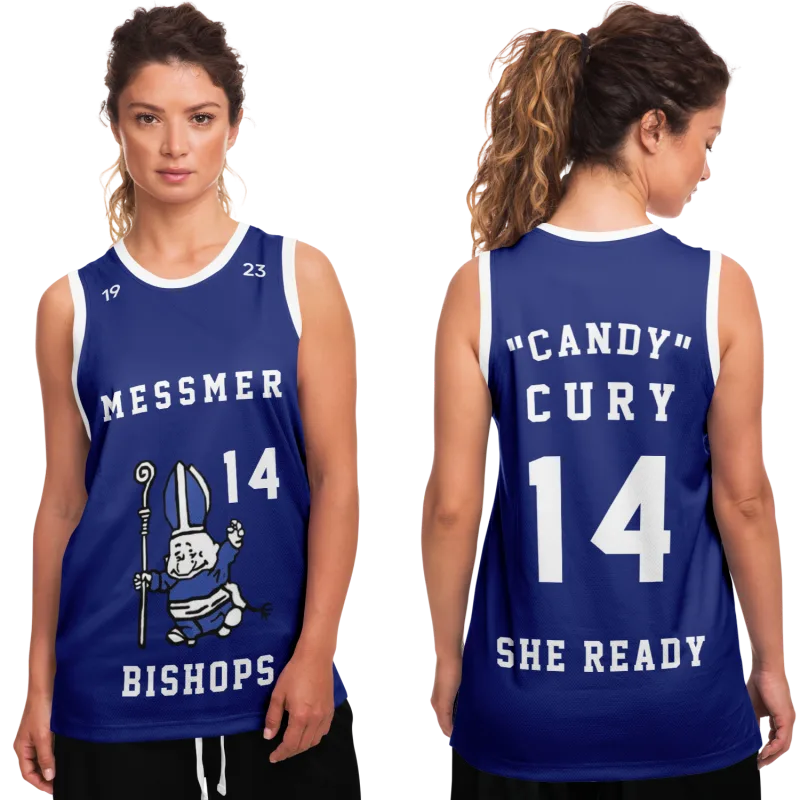
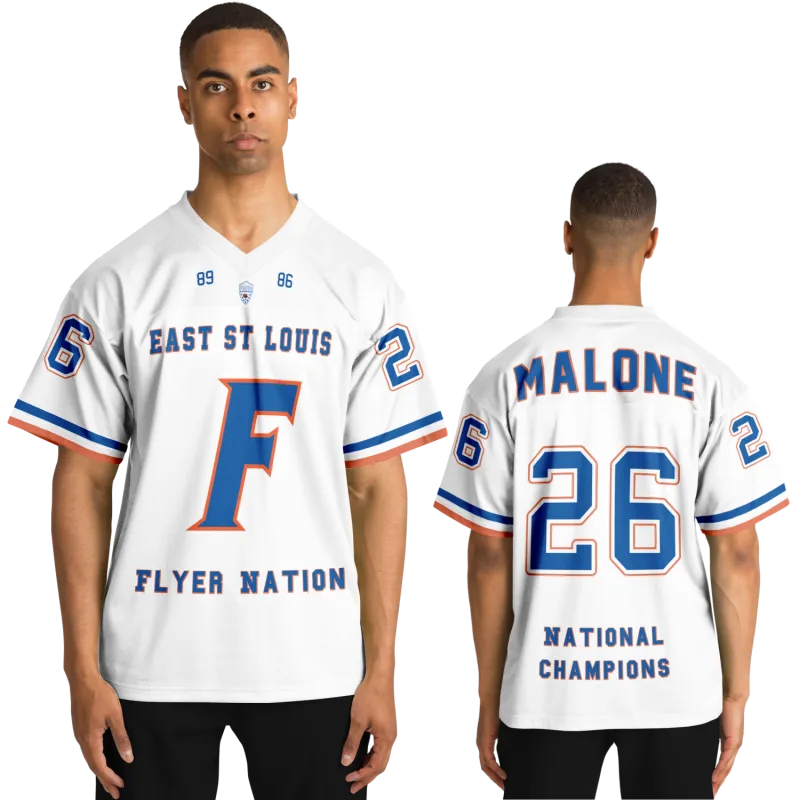
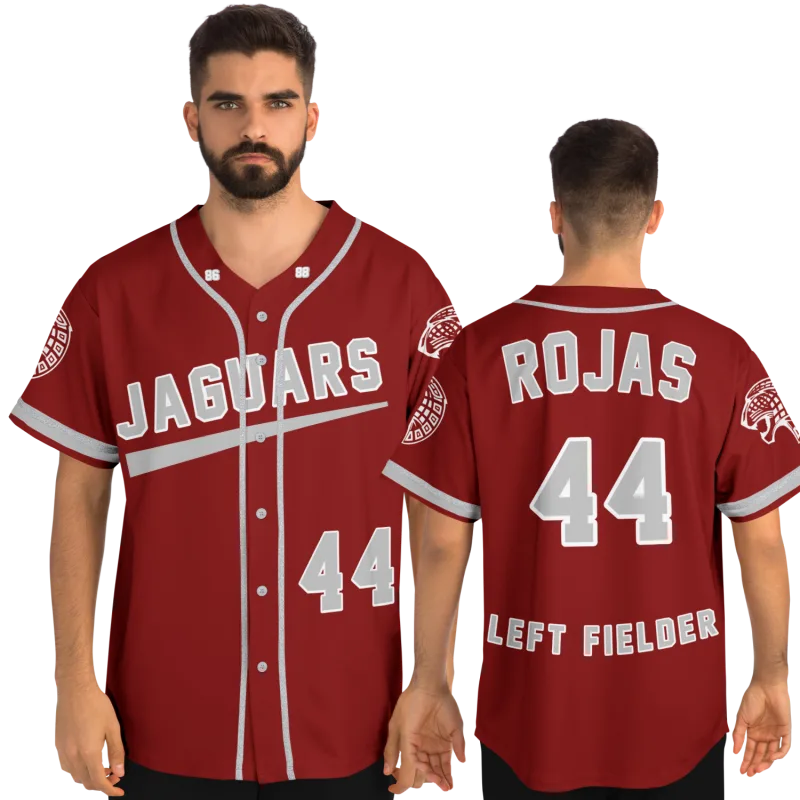
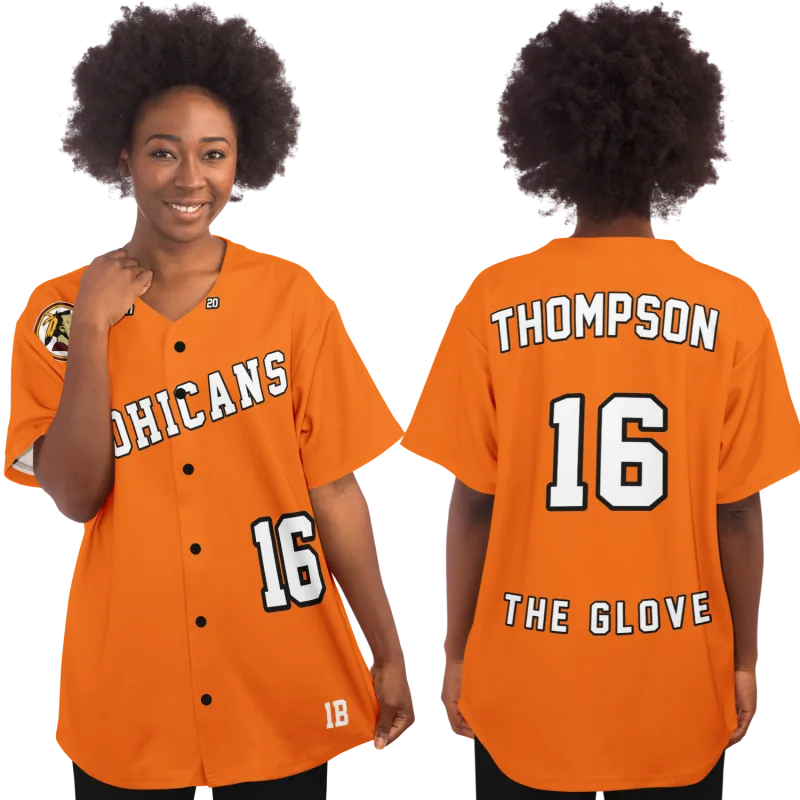
There's a specific weight to a soccer jersey that's been played in.
Not the weight of the fabric. Though you remember that too, the way a properly broken-in kit sits differently than a fresh one, softer at the collar, lighter across the shoulders somehow even when it's soaked. The weight we're talking about is the other kind. The kind that accumulates over a season, or four seasons, or the twelve years between when you first laced up and when you finally couldn't anymore.
A custom soccer jersey, to someone who has never played, is a product. A piece of athletic wear. A gift option. To you, to someone who logged thousands of hours on grass and turf and the occasional terrible dirt field with rocks in inconvenient places — every former soccer player remembers the field that made them — it is something closer to a document. Proof of something that happened. Evidence that you were there and that it mattered.
This article is not for the fan. The fan has plenty of places to shop. This is for the player. The former player. The person who sees the words custom soccer jersey and thinks, before they think anything else, about the one they already had.
The Jersey You Didn't Buy
You know just what we mean when we say "earned, not bought."
It's not a slogan. It's a distinction that lives in your body. You remember when you got it: maybe a first-day distribution from a bag in the back of the coach's car, everyone grabbing and then standing around to check the names on the back like there was going to be a mistake. Maybe a ceremony, if your program did things properly. Maybe just the equipment manager sliding it across a table without ceremony, as if the significance were invisible to everyone but you.
The point is you didn't pay for it at checkout. You paid for it in preseason fitness tests and defensive slides in the pouring rain and the specific misery of a two-hour bus ride home after a loss you should have won. The jersey was the receipt.
This is not nostalgia for nostalgia's sake. There is something structurally different about an object that represents effort rather than purchase, and that difference is not lost on anyone who has been on a competitive soccer field with their name and number on their back. It creates a relationship with the garment that retail cannot recreate. You took care of it differently. You thought about it differently. When someone asked about it — a younger sibling, a parent, a friend from school who didn't play — you explained it differently than you would explain any other piece of clothing you owned.
That jersey was an argument about who you were.
What the Number on Your Back Actually Meant
Every former athlete remembers the number conversation.
Maybe you inherited a number from a player who graduated ahead of you, a number with a reputation attached to it, and the quiet understanding that the reputation transferred, too. Maybe you fought for your number, or simply asked for it because of someone you admired or a superstition you'd carried since you were eight. Maybe the number was assigned arbitrarily and then became yours through pure accumulation of games, until by the end of your last season, that number and your name existed as a single unit in your teammates' minds.
Numbers mean nothing to the sport itself. The ball doesn't know what's on your back. But numbers mean everything to the culture of a team, and the culture of a team is the actual thing you were part of. The structure, the history, the way a certain number in a certain program carries a certain expectation. You understood that even if you never articulated it.
The same is true of the name on the back. Which, depending on where you played, you may or may not have had. Some programs put names on. Some don't. Some coaches felt that putting your name on the jersey was a privilege you earned mid-season. In my experience as a former player, the ones who had to wait for the name, who played the first half of a season with just a number, and then got the name added, remember that transition with a clarity that surprises them decades later.
Because the name on the back meant the program claimed you. Officially. On fabric.
The Anatomy of a Kit That Actually Belonged to You
There's a specific version of your jersey that exists in your memory with photographic clarity.
Not the clean version. The one that had the grass stain on the left hip that never fully came out no matter what your mom tried. The one where the collar had softened just enough that it didn't chafe in the second half of a long game. The one where the number had started to crack slightly at the top edge of the eight — or the six, or the eleven, or whatever it was — because you'd worn it enough times that the material was starting to tell the story physically.
That specificity is not incidental. It's what separated your jersey from a jersey. The particular deterioration was the archive. Every scuff was an event. The way it faded slightly toward the end of the season was evidence of duration, proof that you'd been out there long enough, consistently enough, to wear the dye down.
A custom soccer jersey built right — with the real design, the actual colors of the program that formed you, your name and your number just the way they were — doesn't recreate the wear. Nothing can do that. But it can recreate the declaration. The specific visual argument that says: this is who I was on the field, and that person is still part of who I am.
That's what former players are actually looking for when they search for a custom jersey. Not a costume. An artifact built to the correct specifications.
When the Jersey Comes Back
Priya M., 34, played four years of college soccer as a defensive midfielder. She'd been thinking about getting a custom jersey made for almost three years before she actually did it: not because she doubted the impulse, but because she wasn't sure it would feel right. "I was worried it would feel like I was pretending," she said. "Like I was a fan of my own old team, which seemed strange."
What she ordered was inspired by her senior-year home kit: the same colors, the same style of font her program used, her name, her number. When it arrived, she put it on and stood in front of the mirror for a while. What surprised her was that it didn't feel like nostalgia. It felt like acknowledgment. "It was less about the past," she said, "and more about saying: yes, that happened, and it was real, and it's part of me." She wears it to her daughter's youth games now. Her daughter asked about the number. She told the whole story.
That's the thing about an earned jersey. The story doesn't stay private.
The Gap Between What Fans Get and What Players Need
The sports apparel industry is built for fans. It has always been built for fans: that's where the volume is, that's where the licensing money lives, that's the market that scales. The result is a world saturated with jerseys designed around fandom: fan kits of professional clubs, name-and-number customization built around the idea that you want to wear someone else's identity.
Former players are a different kind of buyer, and the industry mostly doesn't know what to do with them. You're not trying to affiliate yourself with a professional player. You're trying to recover something that was specifically yours. That distinction changes every decision in the design process — the color choices, the font, the placement of the name, the specific shade of the number. You're not building a tribute. You're reconstructing a document. And the big licensed retailers won't help you with it: their printing licenses cover current squad players only, so personal and tribute names get blocked at checkout. That restriction is a big part of why former players end up at custom jersey services.
The practical challenge is this: most custom jersey services are built for team orders. Minimum quantities, standardized options, design tools that assume you want to pick from their templates rather than recreate something specific. They work well for organizing a new recreational league or outfitting a corporate soccer day. They don't work as well for the person who needs the precise burgundy of a specific club's 2003 away kit, with a specific block letter font, because that combination is what their senior season looked like.
Getting the details right matters more than it sounds like it should. A slightly wrong blue isn't the right blue. A different font on the nameplate reads as someone else's jersey. The reconstruction has to be accurate to function as the thing it's meant to be, which is not decoration, but documentation. And once the design is right, getting the fit right matters just as much, especially when you're ordering for the adult you are now, not the teenager who wore the original.
What Makes a Custom Soccer Jersey Worth Keeping
The jerseys worth keeping share a few specific qualities, and they don't have much to do with price.
Construction that survives use. A jersey built to be worn, not just displayed, needs to hold its shape and colorfastness through actual activity. Sublimated printing holds up better than heat transfer on a garment that's going to be worn to pickup games, to your kid's matches, to the gym. The print is part of the fabric, not a layer on top of it, which means the cracking that happens to lower-quality jerseys doesn't happen here.
Name and number done correctly. This is where the detail work separates intentional custom jerseys from mass-produced ones. The font matters. The placement matters. The size of the number relative to the back panel matters. If you're reconstructing something specific, every one of these decisions carries weight, because the memory you're working from is precise, and the approximation will be visible to you even if no one else notices.
The right colors, actually. This sounds obvious and it isn't. Color reproduction in sublimated printing varies significantly across providers, and the difference between a close match and an accurate match is the difference between a jersey that feels right and one that feels like a copy of the right thing. When you're designing, look for color matching capability and, where possible, compare against reference images of the original kit.
A design process that lets you control the specifics. The value of a custom jersey for a former player is entirely dependent on accuracy. A design tool that offers three preset templates is built for someone who doesn't have a specific target. What you need is granular control: color by color, position by position, font by font.
The Quiet Argument a Jersey Makes
There is a kind of identity claim that only athletes fully understand: the claim that comes not from what you own or consume, but from what you did with your body over a sustained period of time.
You can't buy the fact that you played. You can't purchase the calluses or the recovery sessions or the specific intelligence that comes from reading a field for a thousand hours. Those are earned. The jersey, when it was originally given to you, was the program's way of acknowledging that you'd paid in. It was a visible marker of the invisible work.
When a former player wears a custom jersey that accurately represents what they played in — their name, their number, their colors — they're not performing nostalgia. They're making a quiet factual statement: I was a player. This is what my program looked like. This is who I was in it.
That statement doesn't expire. The playing career ends, but the fact of it doesn't. You were a soccer player. Present tense is wrong now, but the past tense is permanent and nothing changes it. The jersey, done right, is a way of keeping that fact visible — carrying the identity stitched into every thread of who you were — to yourself, first, and to anyone who asks about it.
If you played, you know that being asked about it is one of the better conversations you can have. Someone notices the jersey, asks a question, and you get to tell the story. Not the highlight version. The real version. The practices at 6 AM and the coach who pushed you past what you thought you had and the teammate who made you better and the game you still replay in your head because of the thing that happened in the 78th minute. That story is waiting in the jersey. The jersey is what invites the question.
Your jersey is still out there waiting.
Design yours in minutes and see your name and number just the way you remember them.
Frequently Asked Questions
Can I re-create my actual college or club team jersey, or will I run into licensing issues?
You can absolutely design a jersey that matches your former team's colors, style, and general aesthetic — the colors you wore, the layout you remember, your actual name and number. What you can't re-create are trademarked logos or licensed insignia from professional or licensed collegiate programs. For the vast majority of former players — those who played at the high school, club, college, or amateur level — there's no licensing barrier. The design is yours to reconstruct. The specifics that made your jersey yours were your name and number, and those belong to no one but you.
Can I customize an official Adidas or Nike soccer jersey with my own name and number?
Official brand stores like Adidas and Nike do offer customization — but with real limits. Their printing licenses only cover current squad players, so personal names, tribute names, and legend names are usually blocked, and any customization that is offered tends to come with an added cost. That's why so many former players land at a custom jersey service instead: start from a blank team-color jersey, and your own name and number go on with no licensing barrier and no extra fee.
What if I can't remember the specific details of my old jersey — the font, the specific shade of color?
This is more common than you'd think, and it's worth spending a few minutes digging before you design. Old team photos — especially end-of-season group shots — are the best reference. Your program may have an alumni page, a social media archive, or photos in yearbooks. Former teammates are often useful here: someone kept their jersey, or someone has a photo from just the right season. The goal is to find at least one clear reference image that shows the nameplate and number placement. Once you have that, the design process becomes a reconstruction rather than a guess.
Is a custom soccer jersey appropriate as a gift for a former player, or is it too personal a thing to design for someone else?
It can be one of the most meaningful gifts a former player receives — but the execution matters. The gift has to be accurate to work. A jersey with the wrong colors or the wrong number becomes a reminder of the gap between the gift-giver's knowledge and the recipient's actual history. If you're giving one as a gift, do the research: find out the specific program colors, confirm the number they wore (not their favorite number — the number they actually played in), and get the name spelling right. A jersey built on correct details lands completely differently than a well-intentioned approximation. When it's right, former players tend to hold onto it for a long time.
Does the type of printing — sublimation versus heat transfer — actually matter for a jersey meant to be worn?
For a jersey you intend to wear, sublimation is the better choice. Sublimated printing dye becomes part of the fabric itself, which means it doesn't crack, peel, or fade the way heat-transfer graphics do over time. Heat transfer works acceptably for display pieces or low-use items, but if you plan to wear the jersey to pickup games, coaching your kids' team, or general athletic use, sublimation holds up significantly better. The number and name will look the same after fifty washes as they did the day it arrived. That durability matters when the jersey is meant to represent something specific: the last thing you want is for the name to start peeling.
See also: personalized gifts that actually make a former athlete feel seen | the psychology of why high school sports still matter to adults | the grief that comes when your athletic career ends at 18 | how a custom sports shadow box can preserve what a jersey represents