


WVU's running back situation takes an interesting turn ahead of Iowa State — and if you ever wore a number, carried a ball, or filled a role nobody else wanted, you already know this story isn't really about a roster transaction.
According to On3's Pete Nakos, former Utah running back NaQuari Rogers has officially signed with West Virginia, giving Rich Rodriguez an experienced weapon to deploy against the Cyclones on Saturday. With the Mountaineers' backfield depth under pressure from attrition and injury, Rogers arrives with Big 12 credentials, a ready-now profile, and the particular kind of competitive courage it takes to show up somewhere new in the middle of a season and compete immediately.
On paper, it's a name added to a two-deep. A line in a transaction log. A depth chart update that most fans will scroll past.
But for anyone who ever put on pads and played this game at any level, the human story inside this move runs much deeper than a portal entry.
What Rich Rodriguez Saw — and Why the Timing Is Everything
The West Virginia Mountaineers did not have the luxury of waiting. Roster attrition has a way of compressing timelines in ways that coaching staffs can plan around only so much — and with Iowa State on the schedule, the margin for being undermanned at running back was effectively zero.
The Cyclones under Matt Campbell are not a program that lets you off the hook for positional weakness. Iowa State's defensive identity is built on stopping the run first, eliminating the explosive play, and making offenses sustain long drives to score. Against that kind of defense, a West Virginia offense without a credible ground threat becomes predictable. Predictable against Iowa State is dangerous.
Rogers fills a gap that matters structurally, not just numerically.
His time at Utah means he has competed inside a program that runs the ball with genuine physicality — the Utes built their Big 12 identity on downhill, assignment-sound running football. Rogers has taken handoffs in real schemes against real competition. He understands protection responsibilities. He knows what it means to execute when the play design requires precision, not improvisation.

That background translates. Not after a month of practice. Now.
Rich Rodriguez, who has spent his entire coaching career designing systems that extract maximum performance from players who fit the scheme rather than transcend it, made a targeted call to a targeted player at a targeted moment. That's not desperation. That's a head coach who knows exactly what his offense needs and exactly what kind of athlete can provide it on a compressed timeline.
The chess move is real. But the human story behind it is the part worth sitting with.
Every Former Player Knows the Exact Feeling of That Call
You remember the moment you weren't sure whether the game was still going to give you what you came for.
Maybe the depth chart had stalled. Maybe a new coaching staff came in and your name moved in the wrong direction. Maybe you transferred once already, worked through the adjustment period, earned your place — and then found yourself in another window of uncertainty you hadn't anticipated. Whatever the specific details of your story, most players who competed at any serious level know the particular weight of not knowing whether another opportunity is coming.
And then — the call. Or the conversation in a coach's office. Or the message that starts with "we've been watching your film."
Come play for us. We need you. There's a role here with your name on it.
Every former player knows that there is no feeling quite like that one. It is not the feeling of winning a championship, which is enormous and communal and shared across forty people simultaneously. It is not the feeling of a great individual play, which is electric and burns out in seconds. This feeling is slower and deeper — it is the feeling of being wanted at a moment when you were not certain you would be, of being seen by someone who runs a real program, of getting a second act when the first one felt like it might be ending.
NaQuari Rogers is living that feeling right now. In real time. In Morgantown.
He signed papers, relocated, walked into a building where nobody knew him yet, shook hands with a coaching staff he'd never worked under, and started absorbing a playbook at a speed that casual observers would find uncomfortable to think about. New terminology. New protection schemes. New personnel groupings. New offensive linemen whose blocking tendencies he had to learn by watching film rather than by years of shared practice reps.
And then he agreed to potentially carry the ball in a Big 12 football game.
That's not just athleticism. That's a specific kind of mental toughness that the stat sheet will never fully account for.
The Role That Doesn't Make the Highlight Reel — But Wins Games
Marcus T., 34, played running back at a Division II program in Virginia and has followed Big 12 football obsessively since his playing days ended. When the Rogers news hit, he texted a former teammate a single sentence: "That's the guy who saves your season." His teammate — who had come off the bench in a playoff game after their starter went down in the second quarter — replied with one word: "Yep."
No further explanation was needed.
There is a specific category of football player that programs cannot win without, and that experienced coaches prize beyond what their recruiting star ratings would ever suggest: the ready, reliable, mentally durable depth player who steps into a role at the worst possible moment and does exactly what the team needs — without complaint, without drama, without audible concern for his own statistics.
These players are not always trending. They are not always the headline. But they are, in the truest competitive sense, the players who keep seasons alive when the plan breaks down.
Every former player has either been that player or played alongside that player — the running back who doesn't see the ball for three weeks and then runs for a first down on third-and-two in a game that ends up mattering for the standings. The receiver who's dressed on the scout team for two months and then runs the exact right route in the exact right moment because he never stopped practicing it correctly. The linebacker who plays every special teams snap all season and then, one Saturday afternoon, makes the tackle that pins the opponent inside their own ten-yard line.
Rogers is stepping into that identity at WVU. And every player who has ever filled that role — at any level, in any sport — knows the full weight of what it requires.
What the Transfer Portal Era Gets Right — and What It Demands
There is a version of the transfer portal conversation that focuses entirely on player movement as a problem — roster instability, program identity disruption, the difficulty of building team culture when the personnel changes constantly.
That conversation misses something important.
The portal also creates a mechanism for players like Rogers to find a home when the original plan didn't work out the way anyone intended. It creates the possibility of a second act, a different jersey, a coaching staff that sees you differently than the previous one did. For players who might have simply run out of road under the old rules, the portal is an extension of competitive life.
The demands it places on those players, though, are real and worth naming.
Adapting to a new program mid-season requires four things that no recruiting ranking measures: the ability to learn fast under pressure, the willingness to earn trust with people who don't yet know you, the composure to perform before you feel fully comfortable, and the specific kind of humility that lets you take instruction from coaches and teammates who are still forming their impression of you.
Players who have navigated a transfer before tend to handle this better the second time — not because the transition is easier, but because they've already built the internal framework for it. They know that the discomfort of being new is temporary. They know that trust is earned in practice reps before it shows up in game snaps. They know how to shorten the adjustment curve by working harder and asking better questions.
In our experience tracking how mid-season additions perform across college football, the players who contribute fastest share one consistent trait: they don't wait to feel ready. They perform their way into readiness. The action precedes the confidence.
Rogers has already been through the transition once. That experience matters more than most depth chart analyses will give it credit for.
What Saturday Reveals
Iowa State is the kind of test that doesn't grade on a curve.
Campbell's program is built on a defensive philosophy that makes life difficult for running backs who are not assignment-perfect — they will find the gap in your technique, they will exploit the hesitation, they will punish the back who is not fully certain where he's going before the ball is snapped. Against that defense, Rogers cannot be learning on the fly. He has to arrive on Saturday already prepared, already trusting his reads, already comfortable enough in the scheme to play instinctively rather than analytically.
If he contributes — if he picks up a key first down, if he gives WVU's offense a functional ground presence that creates the play-action opportunities Rich Rodriguez wants, if his mere presence in the backfield makes Iowa State's defensive coordinator account for a genuine two-back threat — then the phone call paid off completely.
And if it does, the story writes itself in exactly the direction that every former player who has ever been the new guy would want it to go.
That's the thing about these moments. They are tests of every quality that football builds over years of practice and competition: preparation, adaptability, composure, and the willingness to trust that the work you put in somewhere else still lives in your legs when a new program needs it.
Rogers answered the phone. He got on the plane. He learned the playbook.
Now comes Saturday.
Your Jersey Is Still Out There Waiting
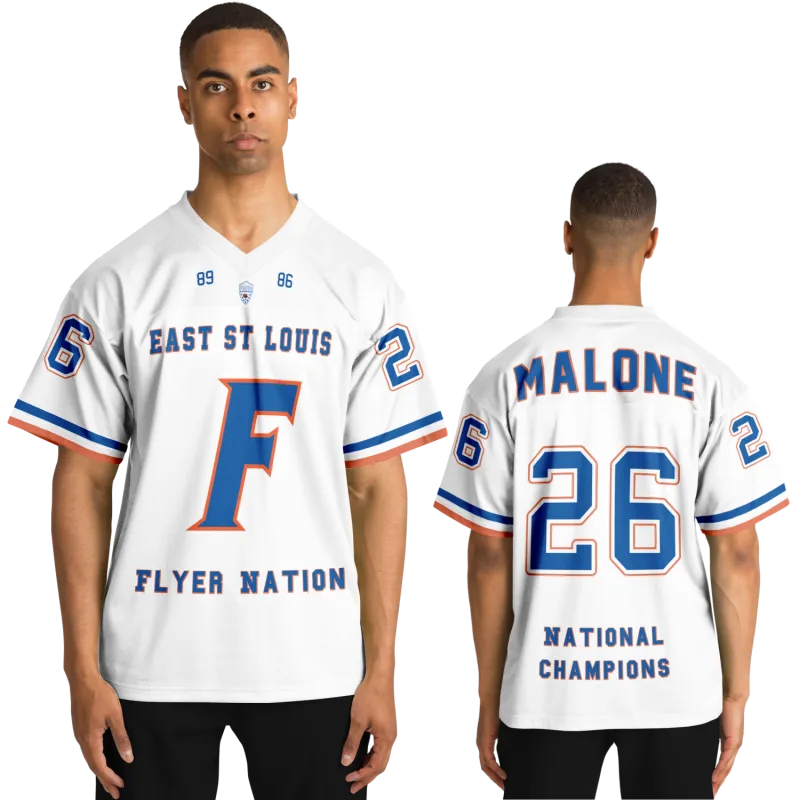
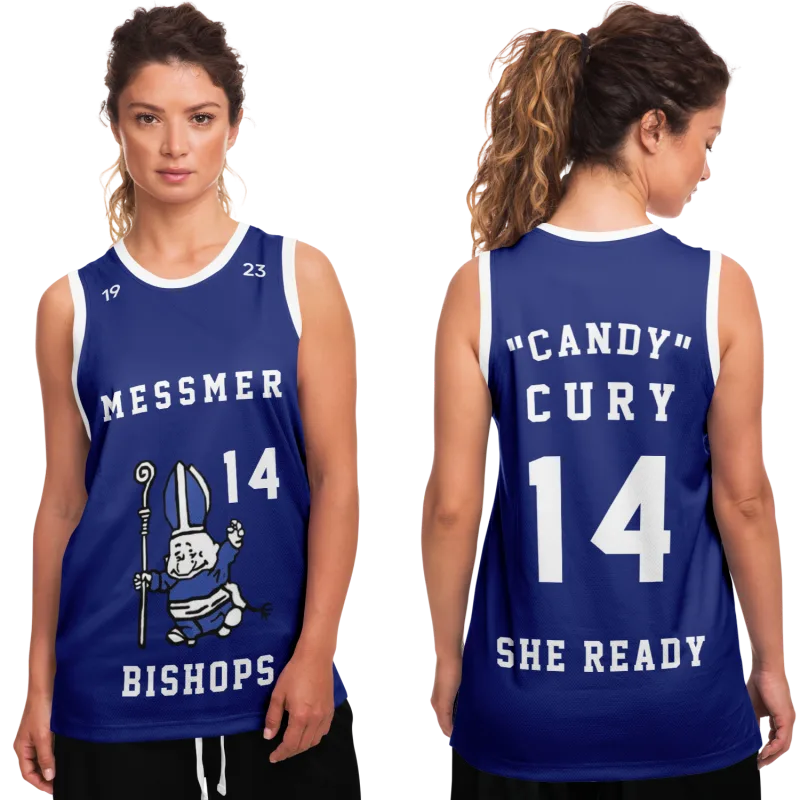
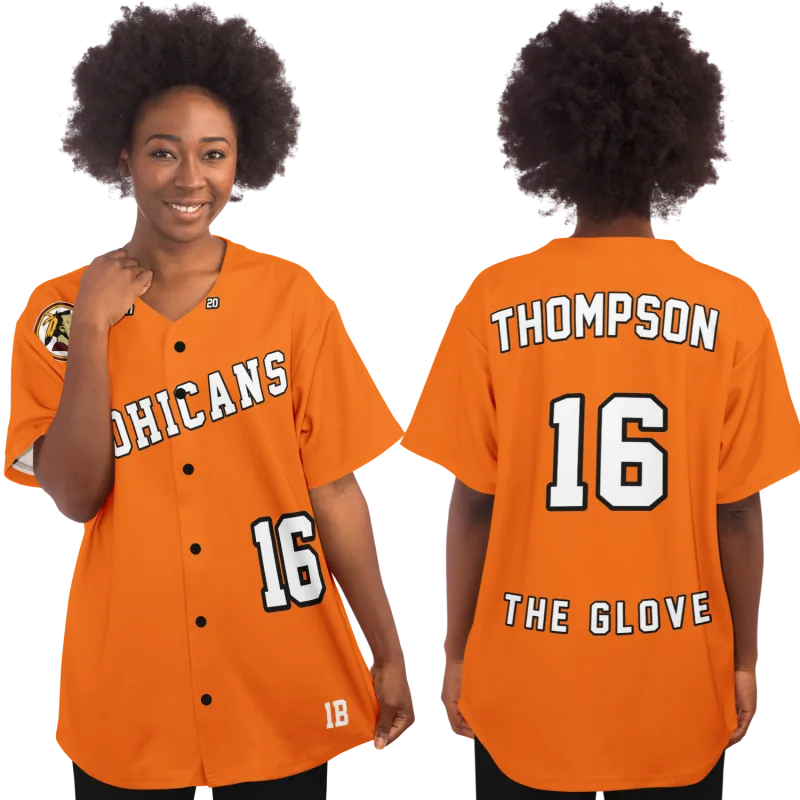
For everyone reading this who once wore a number — who took a handoff, cut upfield, filled a role nobody celebrated, showed up when the depth chart called your name — the Rogers story is a reminder that the jersey isn't fabric. It's the specific version of yourself that competed, adapted, and kept showing up regardless of circumstances.
That version of you deserves to exist somewhere permanent, not just in memory.
Design yours in minutes and see your name and number exactly the way you remember it.
Frequently Asked Questions
Who is NaQuari Rogers and what does he bring to WVU?
NaQuari Rogers is a running back who previously played at the University of Utah, giving him direct Big 12 conference experience before arriving in Morgantown. His background in Utah's physically demanding run game means he understands assignment-sound blocking schemes, protection responsibilities, and the kind of downhill running football that translates immediately at the conference level. For a WVU program that needed experienced depth ahead of Iowa State, Rogers represents a ready-now addition rather than a developmental project.
How does a mid-season transfer signing actually work in college football?
Under current NCAA transfer portal rules, players can enter and exit the portal during designated windows throughout the academic year, including during the season itself. Once a player signs with a new program and completes eligibility verification, they can potentially play immediately — the compressed timeline is the tradeoff. Programs targeting mid-season additions typically prioritize players who have prior experience at a comparable level, reducing the adjustment period required before meaningful contributions are possible.
Why does WVU's running back depth matter so much against Iowa State specifically?
Iowa State's defensive identity under Matt Campbell is built around stopping the run first and forcing offenses into obvious passing situations. A West Virginia team without credible running back depth becomes predictable — and predictable against Iowa State typically means a long afternoon. A functional ground game creates play-action opportunities, controls time of possession, and forces Iowa State's defense to account for multiple offensive dimensions rather than simply teeing up on known passing situations. Rogers' addition directly addresses that structural vulnerability.
What does the transfer portal era mean for players who need a second chance?
The portal has fundamentally changed the landscape for players whose initial program placement didn't align with their competitive potential. Under previous NCAA rules, a player whose opportunity stalled at one school had limited options for finding a better fit without sitting out a year. The portal removes that barrier — creating a mechanism for players to find programs where their specific skill set is valued and their development can continue. The tradeoff is that mid-season transitions demand rapid adaptation, which places a premium on players who are mentally resilient and experienced enough to shorten the adjustment curve.
See also: most football-crazy states in America | what high school sports teach you | the athlete who didn't get a scholarship