

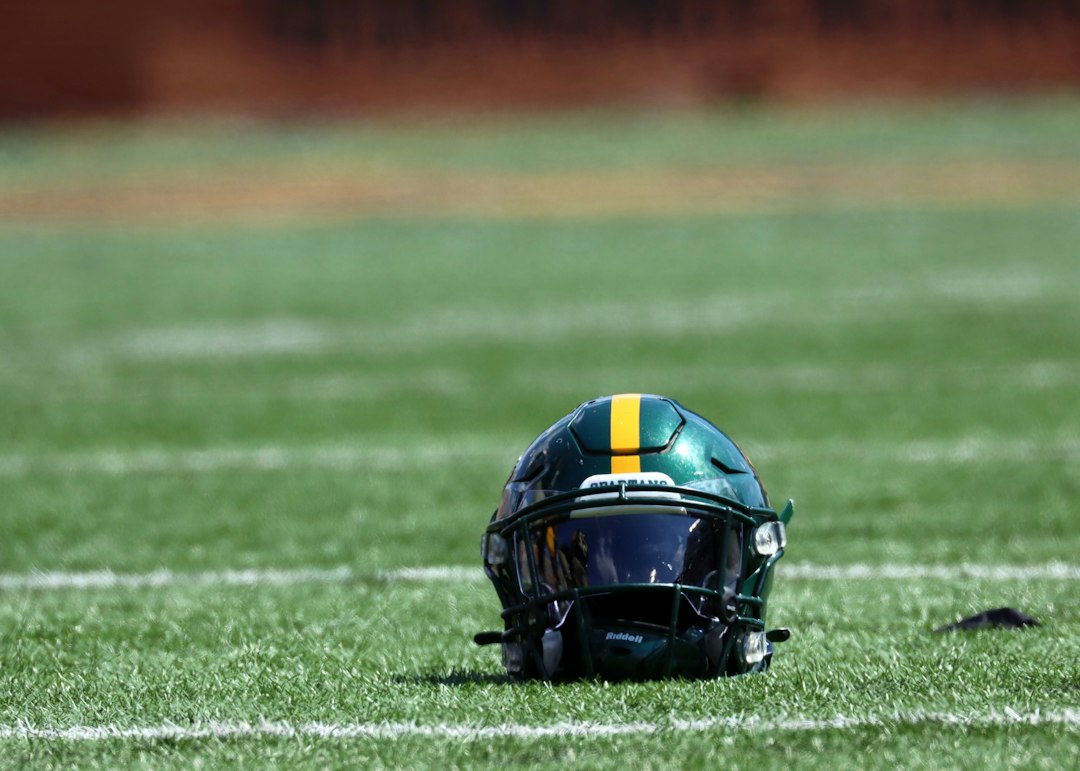




When playoff dreams die before kickoff, what Maryland's withdrawals mean to anyone who ever suited up is something no wire report can fully capture. The MPSSAA has confirmed that three Maryland high school football programs have withdrawn from the state playoff field — their names removed from brackets that had, just days before, finally included them.
The news cycle moved on almost immediately. It always does.
But for anyone who ever ran out of a tunnel with a playoff berth on the line — anyone who ever taped their ankles in a locker room that smelled like liniment and anticipation — this particular update lands somewhere the standings never reach. Because a spot in the state playoffs isn't a logistical entry. It's what all of September was built for. It's the thing that made every August two-a-day feel like it had a reason.
The Bracket Is the Proof
Here is what people who never played find difficult to understand: earning a playoff berth in high school football is not automatic. It is not a participation structure. It is not a computer formula that eventually slots every program in. You earn it — week after week, drive after drive, late Thursday practice after late Thursday practice when the legs are gone and the coaches are still running film.
When the MPSSAA posts the playoff field and your school's name is on it, the building changes. Monday hallways feel different. The lunch table conversations shift. Students who haven't attended a single game all season suddenly know your record and your opponent's record. Your coach — the one who spent ten straight weeks insisting the only game that matters is the next one — finally lets you look up.
That bracket is the proof that it worked. That the work was real.
For three Maryland programs this fall, that moment arrived. The field was announced. Their names appeared.


And then, before a single playoff snap was played, they were gone.
The Feeling That Doesn't Have a Box Score
You may not have had your name pulled from a bracket. Maybe your own playoff run ended differently — a fumble at the worst possible moment, a fourth-quarter lead that evaporated, a quarterfinal loss you still turn over in your head on long drives home from nowhere.
The specific circumstances don't matter much. The feeling underneath is the same.
There is a particular kind of grief that arrives when a high school football season ends before you were ready for it to end. It doesn't respect age. It doesn't soften with time. You can be 17 when it happens or 44, and the memory stays exactly the same age it was the moment you lived it. You were right there. The season was supposed to continue.
In our experience covering this community — former players, former coaches, parents who stood on those sidelines in folding chairs through October cold — nothing surfaces that specific emotional memory quite like news of a high school program's postseason coming to an early close. Particularly when it ends in an administrative decision rather than on the field.
Because at least when it ends on the field, you got to play your way out of it.
Remember When Playoff Week Had Its Own Texture
Every former player carries a physical memory of what playoff week felt like from the inside — and it is unlike any other week in the calendar.
It usually starts on Sunday or early Monday, when the bracket gets printed and taped to the locker room wall. Your coach circles your opponent in marker. The film sessions run longer than they did in September. The walk-throughs feel sharper — everyone moving with a focus that the third week of the regular season never quite produced.
The school itself reorganizes around the news. Pep rally announcements come over the intercom. The local paper sends a photographer to practice. Parents work out the carpool logistics for an away game forty minutes down the highway.
And the team — your team — starts moving like a single organism. Kids who couldn't agree on anything in homeroom are suddenly running the same adjustments on instinct, finishing each other's thoughts in the huddle. The chemistry that coaches spend all season trying to build shows up, finally and completely, in playoff week.
That week has a texture you don't find anywhere else. Once you've lived it, you recognize it in every story you read about another group of kids living it now. That recognition is exactly why this Maryland news hits the way it does.
The Senior Who Won't Get That Week Back
The version of this story that is hardest to sit with belongs to the seniors on those three rosters.
Danielle R., 34, played varsity soccer and ran track at a mid-Atlantic high school — her senior fall was the one where her soccer team made the regional bracket for the first time in six years. They lost in the second round. She still has her jersey from that season, the one her mom kept in a bin in the basement for nearly a decade before Danielle asked for it back. It sits folded on her bookshelf now.
"That jersey is from the last time I was just an athlete," she said, describing why former players hold onto these things the way they do. "Everything that came after was something else. But that jersey is from when the season was the whole world."
For the seniors on those three Maryland rosters, this fall's jersey is now that jersey — the one from the year the season ended too soon. The one from the year they were supposed to go further.
Most of them won't fully understand that for another decade. That's how these things work.
What the Locker Room Conversation Actually Sounds Like
From the outside, a team withdrawal from a state playoff bracket is an administrative event. The MPSSAA updates the field, the bracket adjusts, and other programs fill the gaps.
From inside a high school football program, it is one of the most difficult conversations a coaching staff ever navigates.
Consider what it means to stand in front of a group of teenagers who have been running the same offensive system since August — kids who know every crack in their practice field, who can hear the difference between a live-rep whistle and a walk-through whistle — and tell them the season is finished. Not because the final gun sounded and the other team had more points. Because of circumstances that the scoreboard never saw.
That conversation doesn't appear in any stat archive. It doesn't generate a headline that lasts more than a news cycle. But it is one of the formative moments those players will carry with them for the rest of their lives, because high school football's actual curriculum has always been taught in exactly those moments.
The game teaches you that sometimes it ends on terms you didn't write. That the work you put in has value regardless of how the bracket resolves. That standing in a circle with your teammates at the end of something and finding the right words — that's a skill you'll use far longer than any coverage scheme.
Maryland's Friday Night Culture Runs Deeper Than Most Realize
Maryland's high school football landscape is more layered than it appears from the outside. The MPSSAA playoff structure spans multiple classifications and draws from programs across genuinely different football cultures — Baltimore's urban programs, the Eastern Shore communities where Friday night football is legitimately the center of town life in October, and the DC-adjacent suburbs where rosters run deep and competition runs year-round.
The state has produced NFL-caliber talent and strong Division I pipelines, but that's not what defines Maryland high school football from the inside. What defines it is the community infrastructure around the programs — the way a school's football tradition passes from one graduating class to the next, carried by coaches who have been there for twenty years and parents who drove those same sidelines as players themselves.
Three programs losing their playoff positions affects more than three rosters. It reorganizes three communities' football memories for this particular fall. The parents who ordered playoff gear. The freshmen on those rosters who were going to experience postseason football for the first time as underclassmen, building the reference point they'd carry into their own senior seasons.
All of that gets reshaped around an absence now. And absence, as any former player knows, has its own specific weight.
What You Actually Carry Forward
Nobody tells you when you're in the middle of playing that you won't remember the final score of most of your games. You'll remember fragments — a specific third-down conversion, a sideline moment before a big series, the particular quality of light on a Thursday practice field in late October.
You'll remember the bus rides as clearly as the games. The sound of a bus full of players heading toward a playoff game versus heading away from a loss are two completely different pieces of music, and both of them stay with you.
You'll remember the relationships. The teammate who covered for you when you were struggling. The coach who noticed and handled it quietly. The opponent who made you genuinely better just by being difficult to stop.
And you'll remember the jersey.
Not as a garment. As evidence. As proof that for a specific window of time, you were part of something that had a name on the front, a number on the back, and a community standing behind it on Friday nights. The jersey is the physical artifact of everything the season meant — including the playoff run, however long it lasted. That's why former players hold onto them for decades. That's why Danielle R. has hers folded on a bookshelf at 34.
The playoff berth is woven into what the jersey represents. Especially — especially — when the playoff run ends before it was supposed to.
The Season Always Ends — That's What Makes It Matter
Every season ends. Every playing career ends. The question is never whether the final game is coming. It's whether you're ready for it to be the final game when it arrives without announcement.
For the seniors on those three Maryland rosters, that moment arrived this week in a way none of them could have predicted when August camp started. Their last game, for most of them, has already been played. Their last snap, their last huddle, the last time they heard their number called in a live game — those moments have already happened. They just didn't know it at the time.
That specific loss — the loss of the chance to know — is something every former player understands, even if their own story ended differently. You don't get to choose the final game. You rarely see it coming. You just look back later and realize that was it.
The MPSSAA will finalize its bracket. Other programs will compete for the state title. By January, this particular news will be three lines in a season retrospective that most people skip.
But those three programs — their players, their coaches, the parents who drove to every away game — will carry this fall forward with them for a long time. The season that was going to keep going, and then didn't.
That's high school football. It's why the jersey still means something twenty years later.
Your Jersey Is Still Out There Waiting
The jersey from your playing days is more than fabric and a number. It's proof that for a specific window of time, you showed up, you earned your spot, and you were part of something worth remembering.
Design yours in minutes and see your name and number exactly the way you remember it.
Frequently Asked Questions
Why do high school football teams withdraw from state playoffs?
Programs withdraw from state playoff fields for a range of reasons — late-confirmed eligibility issues, administrative decisions made at the school or district level, scheduling circumstances that cannot be resolved, or roster situations that develop after the playoff field is announced. The MPSSAA, like most state athletic governing bodies, maintains formal withdrawal procedures that protect the overall bracket's integrity while acknowledging that individual programs sometimes face situations outside their control. The confirmation of these three withdrawals indicates the situations were processed through standard administrative channels.
How does a playoff withdrawal affect the remaining bracket?
When a program withdraws from a state playoff field, the bracket is typically reorganized — in some cases through automatic advancement of the scheduled opponent, in others through re-seeding depending on the bracket structure and timing of the withdrawal. The specific adjustment method varies by classification and how early in the playoff window the withdrawal occurs. The MPSSAA manages these adjustments to minimize disruption to programs that remain in competition.
Does withdrawing from the playoffs affect a team's future postseason eligibility?
A standard voluntary withdrawal from a playoff field does not automatically affect a program's future postseason eligibility in most state athletic association frameworks. Situations tied to eligibility violations or rule infractions may trigger additional review, but administrative withdrawals processed through normal channels are generally handled without long-term consequences to the program's standing. Each case is evaluated individually by the governing body.
What makes a high school playoff berth emotionally significant for players?
For most high school football players, a state playoff berth represents the cumulative result of an entire season's work — preseason conditioning, regular season performance, and the accumulated wins that secured a postseason slot. Unlike professional or college environments where playoff appearances are recurring events across a long career, high school athletes have at most four seasons, and many programs earn postseason berths rarely or never. The playoff berth is therefore a milestone that carries weight far beyond its competitive function. It's the proof that the work was real — which is why its loss, however it arrives, stays with players long after the season ends.
See also: the grief that comes with the end of your athletic career | why high school sports still matter so deeply to the adults who played them | how athletic identity shapes who you become long after the final whistle | the bus ride home after a devastating loss