





You pulled up the size chart. You measured. You ordered what the chart said.
Then it arrived — and the shoulders sat halfway down your arms, the chest billowed like a sail, and the torso hit somewhere around your knees. You looked nothing like the player you used to be.
That jersey is still in a drawer somewhere. You know the one.
If you played — really played — you know your body doesn't fit standard sizing the way the chart assumes. Broad shoulders from years of overhead work. Chest and back musculature that built up through decades of training. A torso that's longer or shorter than the generic proportions some spreadsheet decided were "women's medium." Getting women's custom jersey fit right means understanding why those charts were never built for you in the first place — and knowing exactly what measurements and cut options to use instead.
This guide exists to get you from "I don't know where to start" to "I know exactly what to order" — and if you're ordering for a man in your life, our men's fit guide covers the same ground for male athletic builds. No guesswork. No second drawer jerseys.
The Real Reason Women's Jersey Sizing Fails Athletic Builds
Most jersey sizing — even sizing labeled "women's" — is built around a standardized silhouette that assumes a relatively narrow shoulder, a defined waist-to-hip drop, and a chest measurement that lands within a narrow range. That silhouette describes a portion of the female population. It does not describe most former competitive athletes.
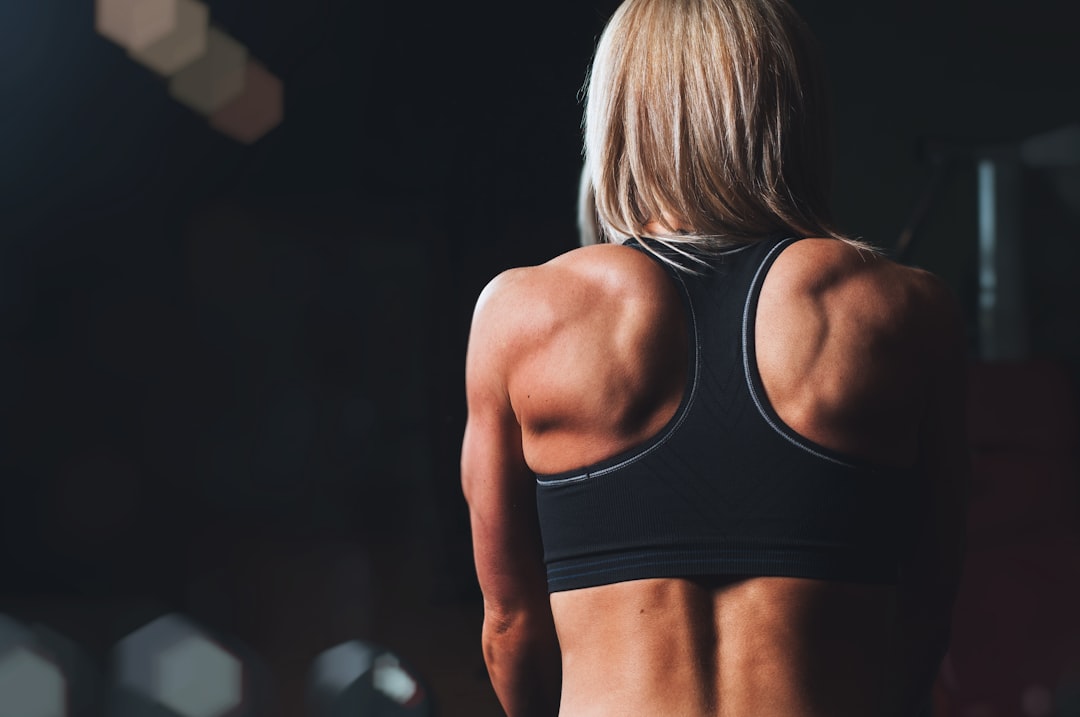
If you played volleyball, basketball, softball, lacrosse, swimming, or virtually any sport that demands significant upper-body output, your shoulder width is almost certainly wider relative to your chest circumference than the sizing charts account for. If you played a sport requiring core endurance — rowing, soccer, track — your torso proportions likely fall outside the range a standard medium or large was designed to accommodate.


This isn't a flaw in your body. It's a flaw in the sizing assumption.
The athletic female build tends to have two specific characteristics that confuse jersey sizing:
- Shoulder-to-chest ratio: Athletes typically carry more width across the shoulder relative to their chest measurement than the standard sizing model expects. A chest that measures a size medium may be attached to shoulders that need a large or even XL to sit correctly.
- Torso length variation: Years of sport-specific conditioning create postural and proportional differences. Swimmers and volleyball players often carry longer torsos. Gymnasts and dancers often carry shorter ones. Standard jersey length doesn't account for either.
The result is what you've already experienced: a jersey that fits in one dimension and fails in every other.
Understanding this is the foundation. From here, every decision gets easier.
The Four Measurements That Actually Matter
Before you open a sizing chart, before you read a single product description, take these four measurements. You'll need a soft measuring tape and someone to help with the back measurements — trying to do this solo against a mirror introduces error you'll regret when the jersey arrives.
1. Shoulder Width
Stand naturally with your arms relaxed at your sides. Measure from the bony point of one shoulder (the acromion — where the shoulder cap ends) to the same point on the other side, across the back. This is your actual shoulder width.
Write it down. This number often tells you more about your true jersey size than any other single measurement.
2. Chest Circumference
Measure around the fullest part of your chest, keeping the tape parallel to the floor and snug but not tight. Most sizing charts use this as the primary number. For athletes, it's necessary but not sufficient on its own — you'll use it alongside your shoulder measurement to identify any sizing conflict.
3. Torso Length
Measure from the base of your neck (the prominent vertebra at the top of your spine) straight down to where you want the jersey to end — typically mid-hip or just below. This tells you whether the jersey's stated length will actually land where you want it.
4. Bicep Circumference
For sleeved jerseys specifically. Measure around the fullest part of your upper arm. Athletes with developed arms often find that a jersey sleeve that fits the torso is tight across the bicep — which is uncomfortable and looks nothing like the intended fit.
With these four numbers, you can have a real conversation with any custom jersey provider's sizing guidance. You're no longer guessing at "medium." You're matching specific measurements to specific specs.
Cut Options and What They Mean for Your Build
Once you have your measurements, the next decision is cut. This is where most guides stop short — they tell you to "choose women's cut" without explaining what that actually means in practice or how different cuts interact with different athletic builds.
Women's Cut (Fitted)
The standard women's cut jerseys are typically tapered through the waist and hit shorter than unisex options. For athletes with defined shoulder-to-waist proportions, this can look excellent — but if your shoulders are significantly wider than the assumed ratio, the chest and waist taper may be too aggressive, creating a pulled look across the back.
Our team recommends women's fitted cut for former athletes whose shoulder width and chest circumference fall within two size categories of each other on the sizing chart. If your shoulders put you in a large and your chest puts you in a medium, you're in what's sometimes called a "split size" — and fitted cut is likely to create tension across the back seam.
Relaxed Women's Cut
Some custom jersey providers offer a relaxed women's option — it uses the proportional shaping of a women's cut (shorter length, some waist allowance) without the aggressive taper. This is frequently the best option for athletes with the wide-shoulder builds described above. The silhouette reads as intentionally athletic rather than oversized.
Unisex / Standard Cut
This isn't automatically a bad choice. Unisex cut jerseys are longer and have less waist shaping — for athletes who prefer wearing their jersey over leggings or shorts at full length, this can be the preferred option. The fit challenge for women with athletic builds is the shoulder assumption. Unisex sizing tends to have the worst shoulder-to-chest ratio issues for female athletes. If you go unisex, size down one from what your chest circumference suggests and check whether your shoulder measurement still clears — most custom providers will confirm shoulder specs if you ask directly.
Custom Sizing (Where Available)
Some custom jersey providers allow you to submit actual measurements rather than select a standard size. When this option exists, use it. It eliminates the sizing chart translation problem entirely. You're describing your body, not matching it to a fictional average.
Priya's Order — and What She Changed the Second Time
Priya M., 34, played Division I volleyball for four years and still runs an adult rec league on weekends. She ordered a custom jersey for her old number — a gift to herself after her team's reunion — and sized based on her chest measurement alone. When it arrived, the shoulders sat nearly two inches off her actual shoulder point on each side, and the back seam pulled every time she moved. She returned and reordered using her shoulder width as the primary sizing driver, sizing up one full size and choosing the relaxed women's cut. The second jersey fit the way she remembered her game jerseys fitting — structured across the shoulder, clean through the back, with room to move.
The only thing that changed between the two orders was which measurement she started with.
How to Read a Custom Jersey Sizing Chart as a Former Athlete
Every chart is built around assumptions. Your job is to find where your measurements conflict with those assumptions and make a deliberate choice about how to resolve the conflict.
Here's the process:
-
Find your shoulder measurement on the chart. Most standard sizing charts don't list shoulder width as a primary column — look for it in the detailed specs or contact the provider to get it. If a provider can't tell you the shoulder width for each size, that's information worth having before you order.
-
Cross-reference with chest circumference. If both measurements point to the same size, order that size. If they point to different sizes — which is common for athletic builds — note the difference and decide which fit matters more. Shoulder fit is typically harder to compensate for after the fact; chest fit can be accommodated with styling. In our experience, sizing to the shoulder and noting the chest discrepancy produces more wearable results for athletes than the reverse.
-
Check the listed body length against your torso measurement. A jersey that fits perfectly across the shoulder and chest but hits at an awkward point on your torso reads as poorly fitted. Most custom providers list body length from the highest shoulder point — compare that to your neck-to-desired-hem measurement.
-
Ask about the sleeve opening diameter. This spec is almost never listed publicly. If you have developed biceps, a quick message to the provider asking for the sleeve hem circumference by size will save you from a jersey that looks exactly right everywhere except where it cuts into your arms.
Number Placement and Customization Considerations for Women's Fit
This section gets skipped in most guides, and it shouldn't.
Where your number and name sit on a jersey is determined by the jersey's dimensions — which means sizing affects customization placement in ways that aren't always obvious until the jersey is in your hands.
Front number placement: On a women's fitted cut, the front number typically sits higher on the chest than on a unisex cut. If you size up to accommodate shoulders, confirm that the number placement spec adjusts accordingly — some providers use fixed placement that doesn't scale with size.
Back name arc: The nameplate arc on the back of a jersey follows the width of the back panel. A jersey that's too wide through the shoulders will have a nameplate that arcs more broadly than intended, which can make lettering look spread out. A jersey that's too narrow will compress it. When you get your shoulder fit right, the nameplate arc follows correctly.
Sublimated vs. tackle twill customization: Sublimated designs (printed into the fabric) have more flexibility at any size. Tackle twill lettering — the sewn, raised lettering you remember from actual game jerseys — has minimum and maximum width requirements that interact with the jersey size. If you're ordering tackle twill, confirm with your provider that your chosen size accommodates the character count in your name at the appropriate scale.
Your jersey is still out there waiting.
Design yours in minutes and see your name and number exactly the way you remember it.
Frequently Asked Questions
What size should I order if my chest measurement says medium but my shoulders measure large?
Size to your shoulders. The chest discrepancy in women's custom jerseys is almost always easier to live with than a jersey that pulls across the back or sits off the shoulder point. A jersey that fits through the shoulders with a slightly looser chest still reads as intentional and athletic. A jersey that fits the chest but binds across the back looks and feels wrong every time you put it on. If the provider offers a relaxed women's cut, that's the option to select when you're in this split-size situation — it gives you shoulder room without the aggressive waist taper of a fitted cut.
Is women's cut or unisex cut better for athletic builds?
It depends on your specific proportions and how you plan to wear the jersey. Women's cut — particularly relaxed women's cut — is typically better for athletes who want a silhouette that reads as fitted and intentional. Unisex cut works well for athletes who prefer full-length wear over bottoms and don't mind a less tailored shape. The key variable is your shoulder-to-chest ratio. If your shoulders and chest measure within the same size category, either cut can work. If they're a full size or more apart, relaxed women's cut or custom sizing will produce a better result than either standard option.
Can I submit my actual measurements instead of choosing a standard size?
Some custom jersey providers offer this — and when they do, it's worth using. Submitting your shoulder width, chest circumference, and desired body length eliminates the sizing chart translation problem entirely. If a provider doesn't advertise this option publicly, it's worth asking directly. Many will accommodate measurement-based orders, especially for custom runs. The worst they can say is no, and knowing that before you order is better than discovering the limitation after.
How do I account for jersey fit if I plan to layer it over a long-sleeve shirt or athletic top?
Add one inch to your chest circumference measurement and use that adjusted number when cross-referencing the sizing chart. The shoulder measurement doesn't change — shoulder fit is structural and doesn't compress the same way chest fit does when layering. For body length, consider that a long-sleeve layer won't affect the visual line of the jersey, but it will affect how the hem sits and moves. If you're ordering a fitted cut specifically to wear over layers, the relaxed women's cut will give you more comfortable movement without adding visual bulk.
See also: jersey size chart with numeric sizing explained | how your athletic memory can clash with your current body | personalized sports gifts that actually make a former athlete feel seen | custom softball jerseys built around your name and number