

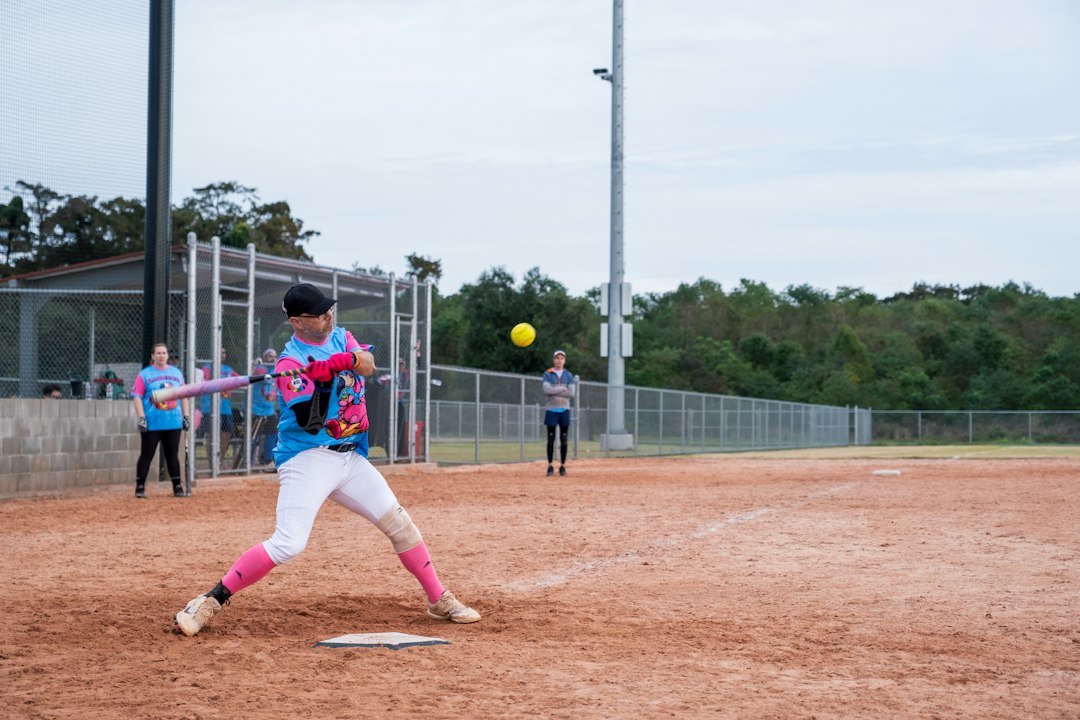




You already know what jersey you're looking for. You've searched. You've scrolled. And what came back was rhinestones, cropped hems, and pink pinstripes — the visual language of fandom, not of someone who actually took a lead off second base.
That is not the women's baseball jersey you're here for.
You played. High school ball, college ball, a competitive adult league that treated the game exactly as seriously as you did. You had a number. You had a cut that let you drop into a fielding stance without the fabric pulling away from your waistband. You had a jersey that communicated player before anyone watched you move.
This article is written for that person. We're going to cover the actual silhouette options now available in baseball jerseys for women, how jersey numbering works on non-unisex cuts, which team color identities translate well to custom builds, and how to build the jersey you wore — the one that fit like a uniform because it was one.
The Fan Jersey Gap — And Where the Market Has Actually Moved
The market for baseball jerseys for women has historically occupied two narrow lanes: unisex cuts in men's proportions that required guessing how many sizes down to order, or officially licensed women's jerseys designed for a specific purpose — looking good in the stands, not moving well on a field.
That second category deserves some clarity. The New York Mets baseball jersey marketed to women, the Yankees baseball jersey in a women's cut, the LA Dodgers baseball jersey with the shaped hem — these are real products made for real people. They're designed for fans wearing jerseys to games over a tank top, and they do that job well. The fabric is lighter. The numbers, when they're there at all, are scaled decoratively rather than by uniform convention. The silhouette prioritizes a flattering off-field look.
None of that is wrong. It's just a different jersey for a different person.


Here is what has changed for the person reading this article: the custom jersey market has matured to a point where women's athletic cuts — genuine ones, built on women's proportions rather than scaled-down unisex proportions — are accessible without a team purchase order. Sublimation printing, performance mesh, tackle twill numbering, and shaped silhouettes are all available to individual orders now.
What hasn't changed: if you don't specify what you want explicitly, most platforms will default to a unisex template. Knowing what to ask for is most of the work.
The Three Silhouette Options in Women's Baseball Jerseys
Before jersey numbers, before color, before name bar font — get the silhouette right. In our experience working through custom jersey decisions with former players, cut is the question that creates the most confusion and accounts for the most orders that arrive and don't feel right.
The Unisex Athletic Cut (What Most Builders Default To)
Straight sides. Dropped shoulder seams. Hem landing at the hip. This is the standard baseball jersey silhouette — the one team equipment managers have been ordering for generations, and the one most custom platforms serve first unless you route around it.
For former players: If your team-issued jerseys were unisex cuts, this is the memory you're trying to match. The proportional tradeoffs — the broader shoulder span, the absence of waist shaping — are part of the visual language you associate with playing. Many former players prefer it for exactly that reason. It doesn't just look like a uniform; it looks like their uniform.
Jersey number placement on this cut: Standard. Back number centered on the back panel between shoulder seams, top of the number sitting 3–4 inches below the collar seam, number height approximately 8 inches for adult sizing. Front number, when used, centered on left chest at 4–5 inches height. No adjustment required for this silhouette.
The Women's Athletic Cut (Shaped Silhouette, Uniform Proportions Intact)
This is the cut the custom market has gotten meaningfully better at producing: a jersey built on women's skeletal proportions — narrowed shoulder seam, defined waist taper, same hip-length hem — without sacrificing the structural elements that make it read as a baseball uniform rather than fan apparel.
For former players: This is frequently the right answer for anyone for whom fit was always a problem in team-issued gear. The shaped waist does not break the uniform silhouette. A well-built women's athletic cut still reads as a player's jersey — the difference is that it fits a player who is a woman, rather than a player who is a man wearing a smaller version of a man's jersey.
Fabric weight and construction matter more here than on the unisex version. Look for builders offering athletic twill or performance mesh in the women's cut rather than a lightweight sublimated version, which tends to read as fan apparel regardless of how correctly the number is placed.
Jersey number placement on this cut: The back number follows standard convention with one confirmation step: verify that the builder centers the number on the back panel between shoulder seams, not on the full back width — the distinction matters on women's cuts with extended yoke construction.
The front number requires a placement adjustment. Because the chest tapers toward the waist on a women's athletic silhouette, front numbers on smaller chest sizes can appear to drift toward the side seams if placed at standard height. Specify to your builder that the front number should sit above the narrowest point of the waist taper — typically 1–2 inches higher than the unisex standard placement.
The Cropped or Fashion Cut (Know What You're Getting Before You Order)
The cropped cut is where most of the fan jersey market lives, and it is a legitimate product category. It is not a player's jersey. If you want a wearable piece that references your playing days as a fashion item — something you'd wear to a game, not something you'd wear to a game you're playing in — a cropped cut can work for that purpose.
For former players building a uniform-style jersey: The cropped silhouette changes the visual reading of every other element on the jersey. Numbers that read as a player's numbers on an athletic-length jersey read as decoration on a cropped version. The hem length is not incidental to the uniform silhouette; it's part of it. If your goal is to recreate the look and feel of the jersey you wore, this cut works against that goal.
Jersey Numbers: What They Are, How They're Placed, and How to Get Yours Right
The question comes up consistently when former players are designing a custom jersey: does a jersey have to have a number? No rule governs custom jerseys the way MLB uniform regulations govern team-issued professional gear. But a jersey without a number on the back is a fan jersey. The number is what makes it a player's jersey. More specifically, it's what makes it your player's jersey.
What Jersey Numbers Actually Are
Jersey numbering in professional baseball exists as an administrative identification system — umpires and official scorers track players by back number. That's the functional origin. But for anyone who played below the major league level, jersey numbers carry a different weight entirely. The number you wore was assigned, requested, or inherited from someone who wore it before you. It marked your place on a roster. It's the number your teammates called when they were looking for you on the field.
For a former player building a custom jersey, jersey numbering has one correct answer: use your number. The one you wore. If you played different numbers at different levels or for different teams, choose the number associated with the season or the team that matters most to you. That answer is personal and yours — no formula produces it.
Number Sizing and Placement: The Exact Specifications
Back number: 8 inches in height on an adult jersey is the standard. The top of the number sits 3–4 inches below the collar seam. Centered on the back panel between shoulder seams — not centered on the full back width, which would pull the number toward the right on jerseys with extended yoke construction. When specifying placement to a builder, say: "centered on back panel, below yoke seam."
Front number: When included, 4–5 inches in height, positioned on the left chest. On women's athletic cuts, confirm placement sits above the waist taper point to avoid number distortion as the fabric narrows.
Number font: Block numbers read as player jerseys across any fabric weight, any cut, any color combination. Script numbers read as more decorative. For uniform recreation in the style of a specific team identity, font matching matters. For an original build, block is the choice that holds across the most variables.
Name bar font: A separate selection from the number font on most platforms, and one that gets overlooked often enough to be worth flagging here. The name bar font and the number font should either match intentionally or contrast intentionally. An accidental mismatch — because one was specified and the other was left to the platform default — is one of the clearest signs that a custom jersey was built without attention to uniform convention.
Building a Jersey Inspired by a Team You Played For (or Loved)
Karla M., 34, played varsity softball through high school and competitive baseball through college in a league that wore a pinstripe home set she describes as the most beautiful uniform she ever put on. When she went looking for anything close to it in a women's baseball jersey, everything she found was either licensed fan merchandise or a unisex blank. She came to iPlayedFor with a team photo and a specific request: same color block, same number placement on the back, her number, her name on the nameplate. The finished build was a custom jersey in the style of that original uniform — not a copy of it, but a tribute to it, built on a women's athletic cut that fit the way the original never quite did.
That is what the custom market is for.
Team Color Identities That Translate Well to Custom Builds
If you played for a team whose colors reference a professional franchise — or if you want to build a jersey inspired by a team identity you grew up watching — the color work is straightforward on any reputable custom platform. A few combinations that come up often:
- Pinstripe builds in the style of classic Yankees or White Sox colorways reproduce cleanly on sublimated jerseys. Confirm pinstripe width with your builder — platform defaults vary significantly, and the difference between a narrow pinstripe and a wide one changes the visual register of the finished jersey considerably.
- San Francisco Giants and SF Giants colorways — orange and black, high contrast — read sharply on custom builds. The orange-dominant version requires careful number color selection. White numbers with black outline hold the best legibility against an orange ground.
- Pittsburgh Pirates-inspired builds in black and gold are among the cleaner custom executions: the contrast is built into the color combination, and jersey number placement pops on either dominant colorway.
- Arizona Diamondbacks-inspired color builds — if you're working with the original purple and teal combination rather than the current red and black palette, confirm your builder carries the specific purple. A generic violet substitute reads as a different jersey entirely.
For builds in the style of Chicago Cubs, Atlanta Braves, or Mets and NY Mets jerseys, the pinstripe work and the chest lettering font are what determine whether the finished jersey reads as a genuine tribute or a generic approximation. Work with builders who allow font reference matching rather than builders who offer a single generic script for all chest lettering regardless of the team identity you're working from.
How to Spec a Custom Order That Arrives Right the First Time
The most common source of disappointment in custom jersey orders is not the fabric choice or the color selection. It's leaving decisions to platform defaults that were built for a different kind of order.
Here are the four things to specify explicitly, every time:
-
Cut type, by name. State "women's athletic cut" or "women's fitted cut" explicitly. Do not assume the platform will surface it as the default. Many builders have women's cuts that aren't displayed in the primary configurator — ask if you don't see it.
-
Back number height and placement. State it in writing: "8-inch back number, centered on back panel, top of number 4 inches below collar seam." This removes the builder's guessing and gives you a specific spec to reference if the finished jersey differs from what you ordered.
-
Number font by name or reference image. If you're building a jersey in the style of a specific team identity, provide a reference. If you're building something original, specify "block" or "script" and include a reference image for the specific style within that category.
-
Name bar font, matched to number font or intentionally contrasted. State this explicitly. Do not leave it to the platform default.
A jersey built from explicit specifications reads like a uniform. A jersey built from defaults reads like a jersey that was almost right.
Your jersey is still out there waiting.
Design yours in minutes and see your name and number exactly the way you remember it.
Frequently Asked Questions
Does a jersey have to have a number on it?
No rule requires a number on a custom jersey — there's no governing body for personal orders the way professional leagues regulate team-issued gear. But for a former player building a jersey that reflects their playing days rather than their fan identity, the number is the element that separates a player's jersey from a fan jersey. It's the visual declaration that says I wore this on a field. Omitting it typically produces a finished jersey that reads as apparel rather than a uniform tribute.
What are jersey numbers for — and why do jerseys have numbers?
Jersey numbering originated as a player identification system for umpires and official scorers, who track players by their back number during play. That's the functional origin in professional baseball. At every level below that, jersey numbers carry a different weight: they mark your place on a roster, they're what your teammates call when they're looking for you, and they're the number your name appears next to in every team photo. For a former player, the number is personal in a way the jersey's color and cut are not.
What jersey number should I use if I played different numbers at different levels?
Use the number from the team or the season that carries the most meaning. That's a personal answer and there's no formula for it. If you're genuinely undecided, the number you wore longest tends to be the one that reads as yours when you see it on the finished jersey. If two numbers carry equal weight, consider which team identity the rest of the jersey reflects — the number that matches that chapter of your playing days is usually the right one.
What is the difference between sublimation printing and tackle twill for jersey numbers?
Sublimated numbers are printed directly into the fabric during construction — they're flat, integrated into the jersey surface, and don't add texture. Tackle twill numbers are cut from separate fabric and sewn onto the jersey, producing the raised, textured look of team-issued jerseys. For a jersey built in the tradition of a standard baseball uniform, tackle twill reads more authentically as a player's jersey. Sublimation holds sharper edges on complex number fonts and is more practical for all-over design work, but on a traditional baseball jersey silhouette, the tactile difference is noticeable.
Can I get a women's athletic cut in a button-front baseball jersey rather than a pullover?
Yes — most custom builders who offer genuine women's athletic cuts carry both pullover and button-front options. Specify this explicitly when you order. Button-front jerseys require a placement note for front numbers and chest lettering: the button placket runs down the visual center of the front panel, which shifts the effective center point for any front-facing design element. A good builder will account for this automatically; if they don't raise it during your order review, ask before the order goes to production.
See also: jersey size chart for numeric sizing | personalized vs. generic sports gifts | custom softball jerseys built around your name and number | the athletic identity you carried long after the last game | adult recreational leagues where that jersey actually gets used