

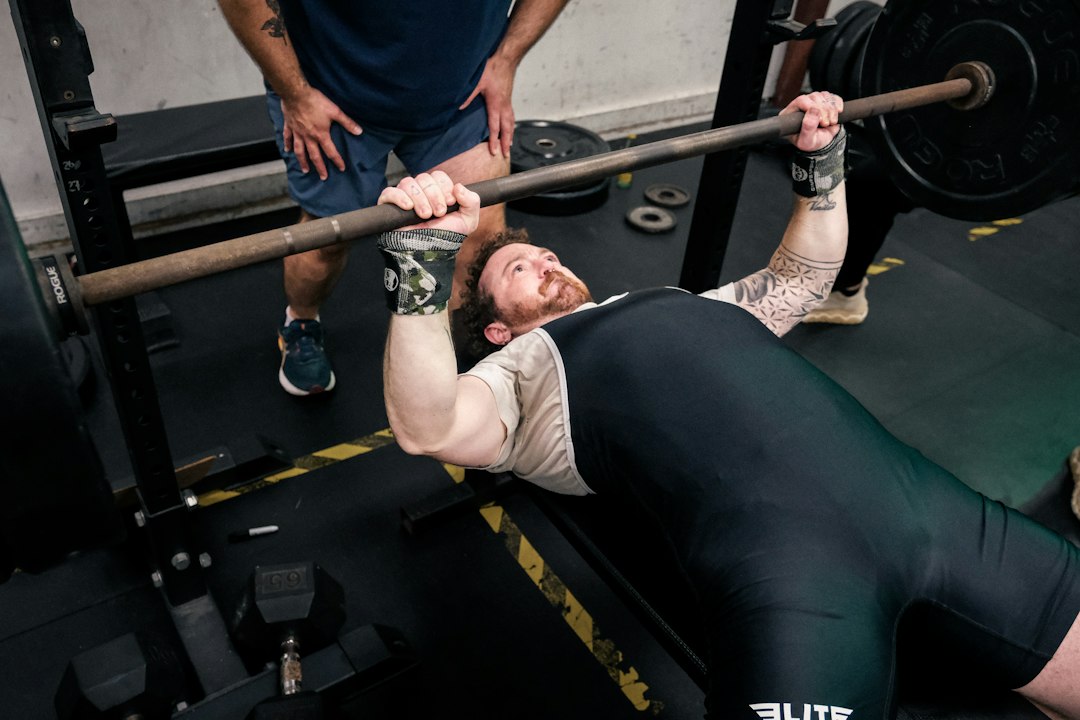




You remember exactly what your body could do.
The early morning practices that felt brutal for the first week and automatic by the third. The way conditioning became background noise — something your body just handled. The specific feeling of being genuinely, effortlessly capable. You didn't have to think about being an athlete. You just were one.
Then life happened. And now you're staring at a treadmill or a barbell or a swim lane, and something that should feel familiar feels completely foreign. It's harder to get in shape as a former athlete than it has any right to be — and you can't quite explain why to people who didn't play. They look at your history and assume you have an advantage. You look at your history and feel the weight of it.
This article is about that weight. What it actually is, where it comes from, and — most importantly — what to do with it.
The Comparison That's Running in the Background (Whether You Notice It or Not)
Here is the thing nobody talks about when they write generic "get back in shape" advice for ex-athletes: your benchmark is broken.
A 38-year-old who never played competitive sports starts a fitness journey with no athletic identity to protect. They feel progress quickly, because any progress is new. They're not comparing their current mile time to the one they ran at peak conditioning in front of coaches, teammates, and scouts. They're just running.
You are not just running. You are running against a ghost.
That ghost is the version of you that could do things your current body simply cannot — not yet, possibly not ever, and your nervous system has not fully accepted that reality. Every workout becomes a data point measured against an internal standard that is fifteen or twenty years old, forged during peak physical development, under professional coaching, with hours of daily structured training built into your schedule.


This is why ex athlete fitness struggles so often look like motivation problems on the surface. They're not. They're identity problems. The former athlete doesn't lack the will to work hard — they spent years working harder than most people will ever work. What they lack is a new standard to work toward. And without that new standard, every session feels like failure, because it doesn't match the old one.
The result is a cycle that's both predictable and devastating: you start with high expectations, you feel immediately behind where you "should" be, you either push too hard (injury) or give up too early (defeat), and the gap between who you were and who you are widens instead of closes.
What Actually Changes in a Former Athlete's Body
The psychological piece runs deep, but it doesn't run alone. The physiological reality of former athlete body changes is real, specific, and worth understanding — because understanding the mechanism is what transforms frustration into strategy.
Muscle memory is real, but it has a shelf life. The neuromuscular patterns you built over years of sport-specific training do persist longer than in non-athletes. This is a genuine advantage. But those patterns are sport-specific. The explosive hip extension of a sprinter, the rotational power of a baseball player, the aerobic base of a distance swimmer — these patterns don't automatically transfer to general fitness. They transfer to their specific movement demands. When your general fitness routine doesn't match your previous sport's movement profile, you're not drawing on that muscle memory the way you expect to.
Your VO2 max has declined, and it declined faster than you think. Research from the American College of Sports Medicine shows that aerobic capacity decreases by roughly 1% per year after peak athletic age — and that rate accelerates without sustained training. A former competitive rower who peaked at 22 and stepped away at 24 is working with a meaningfully different aerobic baseline at 35, regardless of how capable they still feel.
Hormonal changes are not optional and not negotiable. Testosterone, growth hormone, and estrogen all shift with age in ways that directly affect recovery time, muscle protein synthesis, and fat distribution. These are not excuses — they're parameters. Working with the new parameters, rather than against them, is what separates former athletes who make real progress from those who keep hitting the same wall.
Joint wear is cumulative and not evenly distributed. Years of sport-specific loading patterns leave specific joints and connective tissue with histories your general fitness programming doesn't know about. The former soccer player's knees. The baseball pitcher's shoulder. The gymnast's lower back. These aren't limitations to push through on the first week back — they're information about where to build support before building intensity.
The Structure You Lost (And Didn't Know You Needed)
Ask any former athlete what they miss most about their playing days, and "the structure" rarely comes up first. They say the competition, the teammates, the feeling of being in peak shape. But structure is usually the actual engine beneath all of it.
As an athlete, your training was decided for you. Practice time, conditioning requirements, game schedules, offseason programs — the architecture was built by someone else, and your job was to show up inside it. You didn't have to design your own fitness programming. You didn't have to decide how hard to push today, when to rest, how to periodize your training over a season. Someone else carried that cognitive load.
Now that cognitive load is entirely yours, and most former athletes are not prepared for it.
This is one of the core reasons why it feels harder to get in shape as a former athlete than the average person might expect. The athlete brings the work ethic. They bring the pain tolerance. They bring the competitive drive. What they often don't bring — because they never had to develop it — is the ability to design, implement, and adjust their own programming.
The result is training that's either too random to build momentum, too intense to sustain, or too similar to their old sport's demands to be broadly effective. Without the external structure of a team, a season, and a coaching staff, the former athlete is often flying without instruments.
Marcus T., 41, former collegiate wrestler, came back to training after a twelve-year gap. He was putting in four days a week of serious effort and going nowhere. When he mapped out what he was actually doing, he realized every session looked exactly like a wrestling conditioning workout — anaerobic, explosive, high-intensity. He had no aerobic base work, no progressive overload structure, no periodization. He was recreating the drill without the architecture. Once he built a simple three-phase program — aerobic base, strength foundation, then intensity — he started making progress for the first time in two years.
The Grief Nobody Names
This is the part most fitness advice skips entirely. And skipping it is exactly why that advice doesn't work for former athletes.
There is a grief that comes with athletic retirement that the fitness industry does not acknowledge. When you stop competing — whether by choice, by injury, by age, or by circumstance — you lose something that was not just physical. You lose an identity. You lose a community. You lose a daily source of meaning, structure, and feedback. You lose the clearest version of who you were.
That grief doesn't disappear when you buy a gym membership. It shows up inside the gym, in every session that falls short of the standard your past self set. It shows up in the locker room, in the quiet absence of teammates who knew exactly what you were capable of. It shows up in the mirror, measuring the distance between then and now.
The former athlete who ignores this layer will keep wondering why their discipline doesn't produce the results it used to. The former athlete who names this grief — who acknowledges that getting back in shape is not just a physical project but an emotional one — has access to something the other approach never provides: a realistic starting line.
You are not trying to become who you were. That person existed in a specific context that no longer exists. You are trying to become the athlete you can be now, with the body you have now, in the life you're living now. That is a different project. It is not a lesser project. But it requires a different framework.
A Framework That Actually Works for Former Athletes
The standard fitness advice — "just get moving," "start small," "be consistent" — is not wrong. It's just incomplete for someone carrying an athletic past. Here is a framework built specifically for the challenges outlined above.
Step 1: Establish a new benchmark that has nothing to do with your old performance.
Pick a single measurable metric that is entirely about your current body. Not your old mile pace. Not your old squat max. Something you have no historical data on. For many former athletes, this is a movement quality assessment — how deep is your squat today, how mobile is your thoracic spine, how balanced is your single-leg stability. These become your actual starting line. Progress measured from here is real progress, uncontaminated by the ghost of your former self.
Step 2: Build the structure your former coaching staff used to provide.
This means a written program with defined training blocks — not just a loose plan but a periodized structure with phases. At minimum: a base phase focused on rebuilding movement quality and aerobic capacity (four to eight weeks), a build phase that introduces progressive overload (four to six weeks), and a performance phase that layers in the intensity your competitive background craves (four to six weeks). Cycling through these phases prevents the intensity-only trap and mirrors the seasonal structure your body learned to respond to.
Step 3: Find or rebuild your team.
The social and accountability structure of team sport is one of the most powerful performance environments ever designed. Recreating some version of it matters more than most former athletes expect. This doesn't require a formal team — a consistent training partner, a small group fitness class, or a coached program all activate the same accountability mechanisms. The former athlete who trains alone and in silence is missing one of their primary performance drivers.
Step 4: Address the sport-specific wear before adding load.
Before returning to heavy training, invest four to six weeks in targeted mobility and stability work for the joints and movement patterns most stressed by your former sport. This is not optional prehab busywork — it is the foundation that determines whether you're able to sustain the program you're trying to build. Former athletes who skip this step are frequently back on the couch with an injury within eight weeks.
The Real Finish Line
The goal is not to get back to who you were at 17 or 22 or 25. That finish line doesn't exist — and chasing it is what has been making this so hard.
The goal is to build a body and a practice that works in your actual life — that uses the discipline, work ethic, and competitive intelligence your athletic past gave you, without being held hostage to the performance standards that came with it.
Former athletes have more raw material for this project than almost anyone else. The capacity for hard work is there. The understanding of what real effort feels like is there. The ability to tolerate discomfort in service of a goal is there. What needs to be built is a new standard to work toward, a new structure to work inside, and an honest reckoning with what this stage of the athletic journey actually is.
It is not a lesser version of what came before. It is a different chapter — and it can be a genuinely good one.
Your jersey is still out there waiting.
Design yours in minutes and see your name and number exactly the way you remember it.
Frequently Asked Questions
Why do former athletes often struggle more with fitness than people who never played sports?
The core reason is a broken benchmark, not a broken body. Former athletes unconsciously measure every workout against their peak athletic performance — a standard set during years of professional coaching, structured training, and peak physical development. When current performance inevitably falls short of that historical peak, the result feels like failure rather than normal starting-point progress. Add to that the loss of team structure and sport-specific identity, and the psychological friction becomes the primary obstacle, not the physical one.
How long does it take for a former athlete to get back into shape?
It depends significantly on the gap between peak training and the restart, age, and the specificity of "in shape" to the former athlete. The neuromuscular advantages of a serious athletic background do persist — former athletes typically rebuild sport-specific movement patterns faster than non-athletes building them for the first time. A realistic framework: four to eight weeks to rebuild an aerobic and movement-quality base, another four to six weeks to restore meaningful strength levels, and a full training cycle (three to four months) before performance metrics start reflecting genuine progress. Expecting peak condition in six weeks is what creates the cycle of disappointment and dropout.
Should a former athlete train the same way they did during their playing career?
Generally, no — and this is one of the most common and costly mistakes in ex-athlete fitness. Sport-specific training is optimized for the demands of that sport, not for general fitness or long-term health. It also doesn't account for the cumulative joint stress of years of sport-specific loading, the absence of a conditioning base built over years of organized practice, or the hormonal and recovery differences that come with age. A former athlete returning to fitness is better served by a generalized progressive program that builds from movement quality and aerobic base before adding the intensity their competitive instincts push them toward.
What's the best first step for a former athlete who wants to get back in shape but keeps quitting?
Start by retiring the old benchmark. Literally write down the performance standards you've been unconsciously measuring yourself against, and then write "this is not my starting line" next to them. Then establish a single new metric — something you have no historical data on — and use that as your actual starting point. The second step is structural: commit to a periodized program rather than improvised sessions. Former athletes respond to structure because structure is what produced their best performances. Recreating that architecture, even in a simple form, removes one of the primary barriers to sustained progress.
See also: how to start training again after years away from your sport | athletic identity after high school | adult recreational leagues for former high school athletes