

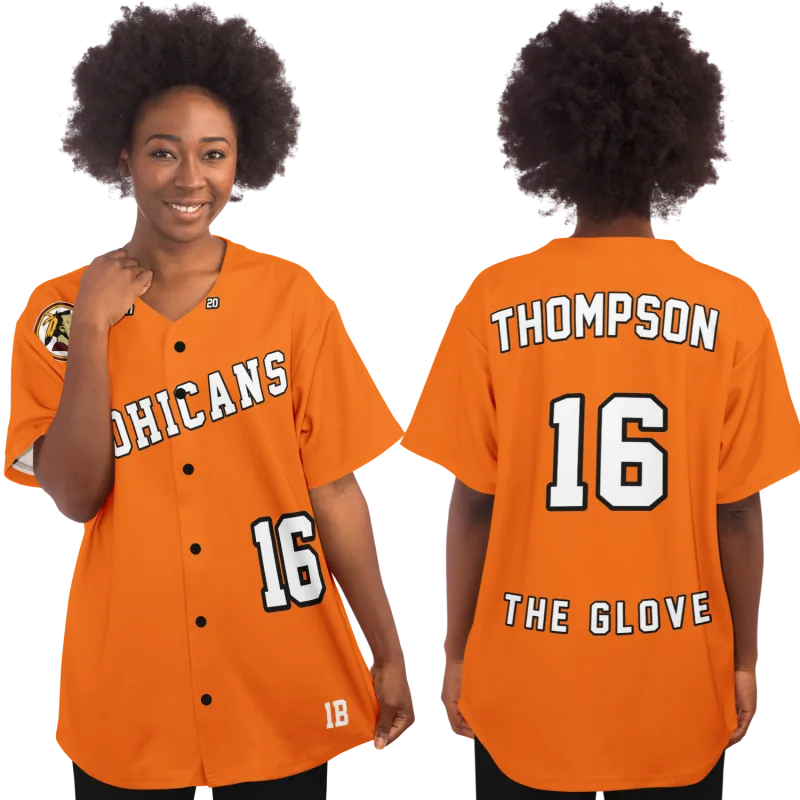
Athletes use their jersey number everywhere, and the behavior is so consistent across sports, generations, and competition levels that it has stopped being surprising — it has become a reliable signature of what it means to have played.
PIN codes. Fantasy team names. Wi-Fi network passwords discovered by houseguests. Custom license plate requests sitting in DMV queues across every state. The number called out without thinking when someone says "just pick any number, doesn't matter." Former swimmers incorporate it into email addresses they've carried since college. Former lacrosse players find it in their phone passcode and realize they never consciously chose it — it just arrived there, the way all deeply familiar things do.
This is not quirky behavior, and it is not the behavior of people who peaked in high school and can't let go. It is one of the most consistent psychological markers of athletic identity formation — the quiet, persistent proof that the person you became while wearing that number never fully changed out of it. What playing gave you (the confidence, the voice, the sense of self) extended far beyond the sport itself, and your number became the durable marker that pointed back to everything the experience taught you.
This article is about why that happens. Not clinically. In the way that makes you glance at your phone and confirm what you already know.
The Number Was Never Just a Number
Consider the moment you got it.
Maybe you chose it: the number your favorite player wore, the one that felt claimed the instant you saw it hanging in a locker. Maybe it came by assignment: you were new, something was available, and over weeks or a full season it migrated from "the number they put on my jersey" to my number. The mechanism doesn't matter as much as the result. Something shifted, and it wasn't gradual.
When the choice was yours, the reason was rarely arbitrary, and it often had little to do with the number itself. A surprising share of athletes picked their number as a tribute. It honored the older sibling who wore it first, the parent whose own playing days gave the digit its weight, or the idol whose poster hung above the bed and whose moves were rehearsed in the driveway. The number became a way of carrying someone else's story into your own, of making the person you looked up to a permanent, wearable part of your game.
Sometimes the tribute pointed not at a person but at a belief, a date, a piece of history the athlete wanted close. Chamique Holdsclaw wore 23 for the 23rd Psalm. Nyheim Hines chose 7 because, in his words, it was "God's number." Jaromir Jagr wore 68 to keep the memory of the 1968 Soviet invasion of Czechoslovakia alive on his back every shift. Dereck Whittenburg's lucky 7 became 25, because two plus five still came back to seven.
None of that is superstition, and none of it is a tangent. It is the same impulse drawing on a different source: the number arrived pre-loaded with meaning, and wearing it was a way of carrying that meaning into the game. Whether the number pointed at a sibling, an idol, a psalm, or a date that mattered, the mechanism held — the athlete put something larger than themselves on their back and let it speak before a single word was said.
The famous versions make the pattern impossible to miss. Michael Jordan chose 23 because it was roughly half of 45, the number his older brother Larry wore — the brother who was, by Jordan's own account, the better player when they were kids. Rickey Henderson, already a star, once paid $25,000 to secure the number 24, simply because it was his. That is how deep the attachment runs: for an athlete, the number is not a label to be swapped at no cost; it is a claim.
So whether it arrived as a tribute, an inheritance, or an assignment that slowly became yours, the number was never neutral. Something shifted the moment it landed on your back, and it wasn't gradual.
Sports psychology situates this inside the broader concept of athletic identity, defined as the degree to which a person incorporates the athlete role as a central component of self. The jersey number becomes one of the most durable and portable anchors of that identity for a specific reason: it was singular. Your name existed everywhere in your life. Your number existed only in one place, attached only to you, visible to everyone in the space where you performed at your highest level.
In my experience talking with former athletes about custom jerseys (people who reach out a decade or two after their last game wanting their number reproduced faithfully), the number is reliably the first detail they give. Not the school. Not the team record. Not even the colors. The number. Always the number first.
That sequencing is itself a kind of data.
The Two Mechanisms That Made It Stick
The transition from assigned digit to identity anchor runs through two reinforcing channels.
The first is repetition. Every time a teammate called your number instead of your name during a play, your nervous system registered the equivalence: this number and I are the same thing in this context. Scoreboard appearances, lineup sheets, game programs, officials addressing you by number during competition. Each instance added another layer to the association. By the end of a full season, the connection wasn't conceptual anymore; it was automatic.
The second is social recognition. The number was how your athletic community knew you. Coaches used it under pressure. Opponents referenced it. Families in the stands called it. The public, repeated, high-stakes recognition of that number as you created an identity anchor with a depth that most other numeric associations in a person's life never approach.
Human memory doesn't maintain clean boundaries between contexts. The self that was recognized by that number didn't stay behind when you left the sport. It came along, and it kept its number.
Why the Password Is Almost Always the Jersey Number
The honest security assessment: your jersey number is a genuinely poor password choice.
It appeared on publicly distributed rosters, programs, and team websites. Anyone who played with you, coached you, or kept a schedule from that season has one of your most commonly used credentials. Information security professionals document this category of personally significant numbers as a top vulnerability precisely because the emotional attachment is so strong and so consistent.
And the behavior persists anyway, because the jersey number as password was never a security decision.
It was an identity decision wearing a security decision's clothes. When you need a number that arrives without searching, that your fingers type before your conscious mind has finished processing the prompt, that feels irreversibly correct in the field — your memory returns the number that is most fundamentally you. Not the most secure option. The most yours option.
Here is a small test: bring your jersey number forward right now. Measure how long that took. Notice that it didn't surface the way a forgotten PIN surfaces — fragmentary, requiring reconstruction. It arrived whole. Immediately. Without effort.
That retrieval speed is the story. The number was encoded through movement, competition, social recognition, and the specific emotional intensity of performing your sport well in front of people who were watching and responding. That kind of encoding produces retention that outlasts almost everything else in a person's numeric memory. Decades pass. The number stays.
The Lucky Number Nobody Admits To
Ask a former athlete for their lucky number and watch the brief internal negotiation that follows.
The real answer is almost always the jersey number. The socially comfortable answer is something more defensible — seven for broadly understood cultural reasons, three because of a family birthday, nine because of something half-remembered about numerology. The jersey number is the actual answer, and offering it requires acknowledging something adults aren't generally given much space to admit: that a number worn during competition became personally significant enough to function as a talisman long after the last game.
This is how the sports number in daily life operates at its least visible level. It appears when a former athlete gravitates toward the parking spot in row 11 without registering the pull. When they find themselves rooting for the player wearing 22 before any performance has been evaluated. When a meeting date that falls on the 8th generates a faint, sourceless sense of readiness.
None of this is superstition in the way the word is usually deployed. It is associative memory executing a completely normal function — linking the emotional state of peak performance, identity coherence, and belonging (what you felt wearing that number in competition) to any subsequent encounter with the same stimulus. The number doesn't produce luck. It produces a brief activation of the version of you that was operating at full capacity, in full identity alignment, in the environment where you were most completely yourself.
That's a resource. Former athletes reach for it the way anyone reaches for a resource that has reliably worked.
Every Domain Where the Number Resurfaces
The places athletes carry their jersey number into ordinary life form a longer list than most people have stopped to consider. The patterns that recur most reliably across sports and decades fall into a few clear categories.
Digital identity is the most documented territory. Passwords and PIN codes lead — the connection between athletes and number identity is embedded in the login credentials of a substantial portion of anyone who played organized sport. Usernames extend the same logic outward: initials combined with the number, the number standing alone, the sport abbreviation paired with the number. Gaming handles are particularly consistent with this pattern because competitive online environments activate the same identity orientation that competitive sport did. The old number appears in new arenas.
Civic choices operate at a more deliberate register:
- Custom license plate requests: DMV vanity plate systems in every state carry plates that are simply jersey numbers, or numbers paired with position and sport abbreviations
- Address preferences when people have any flexibility: apartment 34, office suite 7, the floor they request when it doesn't genuinely matter
- The number volunteered in any context that asks for one without specifying what kind
Family and social life is where the number enters its most personal territory. Former athletes who become parents report incorporating their number into their children's lives with a frequency that would be remarkable if the underlying reason weren't so straightforward. Birthday party themes built around the number. A custom jersey given as a milestone gift, the kind of present that acknowledges a specific, irreplaceable chapter of the recipient's life. The particular choice to put the number on a child's first sports uniform. Friends who played together still use numbers as shorthand in certain contexts. The social recognition function of the number persists long after the team dissolves.
The Player Who Kept 14
Maria C., 41, played collegiate volleyball for four seasons. Her number was 14, assigned her freshman year, never changed even as upperclassmen graduated and lower numbers became available. She kept it because by the start of her sophomore year, 14 had already stopped being an assignment.
Nearly two decades removed from her last competitive match, the number is still present across her daily life. Her gym locker combination incorporates it. Her adult recreational league fantasy volleyball team is called "Team 14." When she ordered stationery for her small business, she found herself asking the print shop to work a 14 into the logo, quietly, not prominently, but there. The shop treated it as an aesthetic preference. Maria knew it wasn't.
"It sounds like I'm frozen in college when I try to explain it," she said. "But it isn't that. 14 is from when I felt like the most complete version of myself. Everything I was doing matched who I actually was."
That's as clear a description of athletic identity formation as exists: not nostalgia, not unresolved attachment to a former life, but the specific and lasting memory of operating as a fully integrated self, recognized by a community, performing at a high level, in complete alignment with your own identity. The number is the shorthand for that state. Of course it travels.
When the Number Gets Louder
The attachment to a jersey number doesn't maintain a constant volume across a lifetime. It amplifies at predictable moments, and those moments reveal the function it's serving.
The transition from competitive athletics to early professional life produces the most commonly reported surge. The identity structure of being a student-athlete (defined schedule, clear role, consistent community, daily performance feedback) gives way to the ambiguity of starting a career with none of those scaffolds in place. Many former athletes report that this is the first period when they noticed the behavior. Not because it started then, but because the contrast made it visible. New apartment, new accounts, new routines: the number appeared across all of them without being invited.
Career changes, significant relocations, relationship transitions — the pattern holds across all of them. When other identity anchors shift or disappear entirely, the jersey number remains constant because it points to a self that was fully formed, publicly recognized, and deeply satisfying to inhabit. Careers change. Cities change. Partners change. But you will always have been Number 34, and Number 34 was someone worth being.
Research published in the Journal of Sport and Exercise Psychology established athletic identity as a significant predictor of psychological well-being, particularly during life transitions. The number is one of the most portable and persistent expressions of that identity. Reaching for it during periods of flux isn't regression; it's drawing on a stable self-concept in a moment when other self-concepts are temporarily unavailable.
Making the Identity Tangible
Everything here converges on the same quiet question: if the number carries that much (if athletes and number identity are genuinely inseparable in the ways this article describes), what does honoring that actually look like in practice?
For some former athletes, the daily rituals are sufficient. The password, the lucky number, the slight pull toward anything that shares the digit. The number does its work in the background and doesn't need to be made explicit.
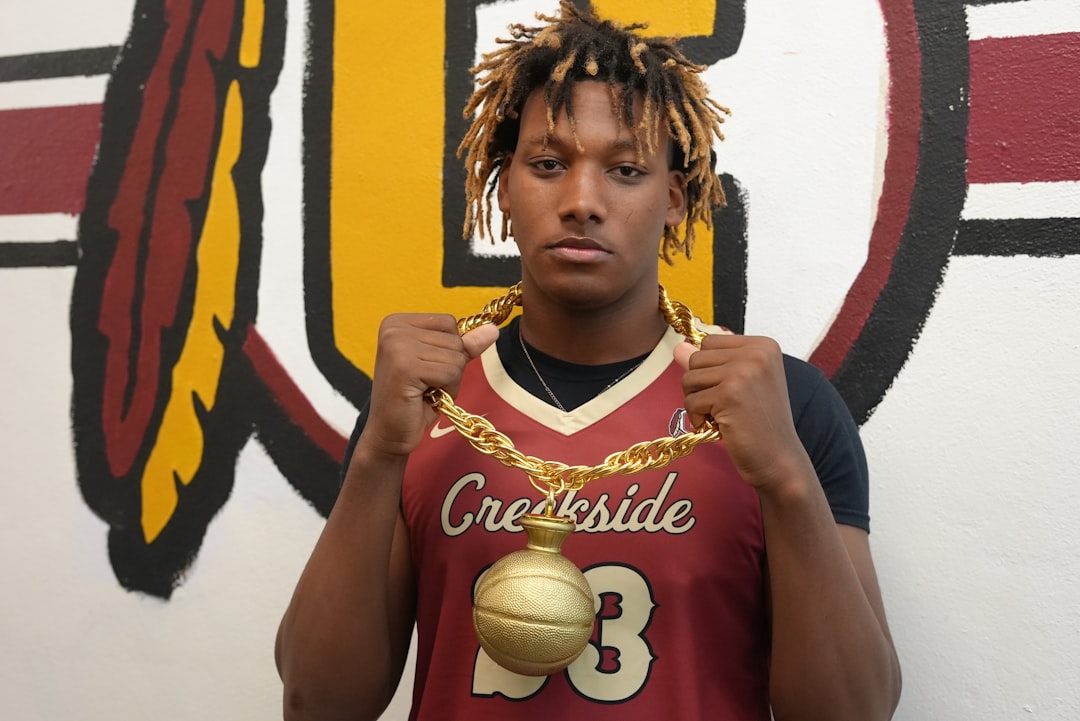
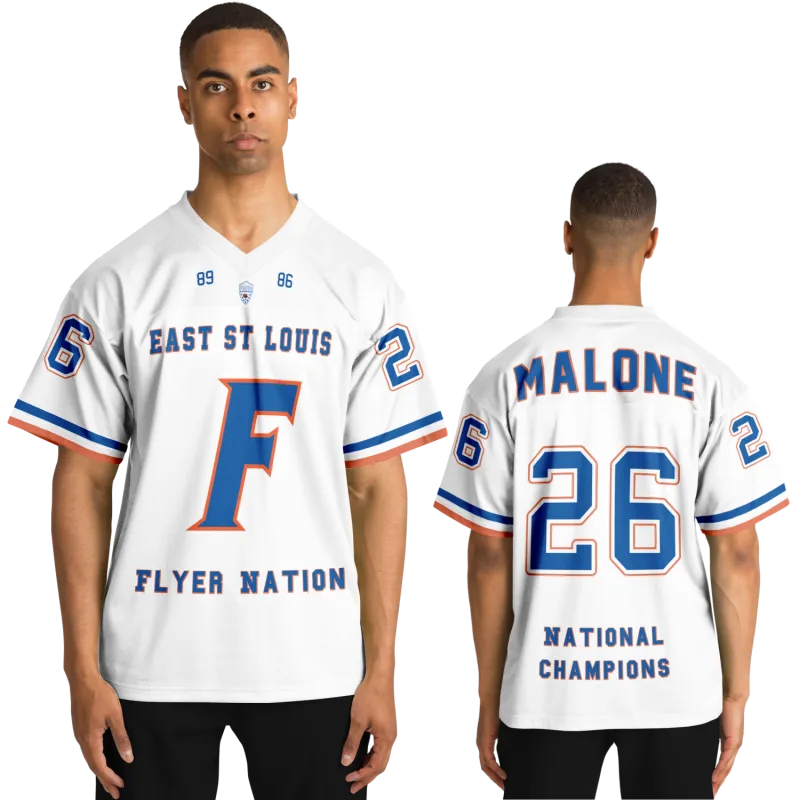
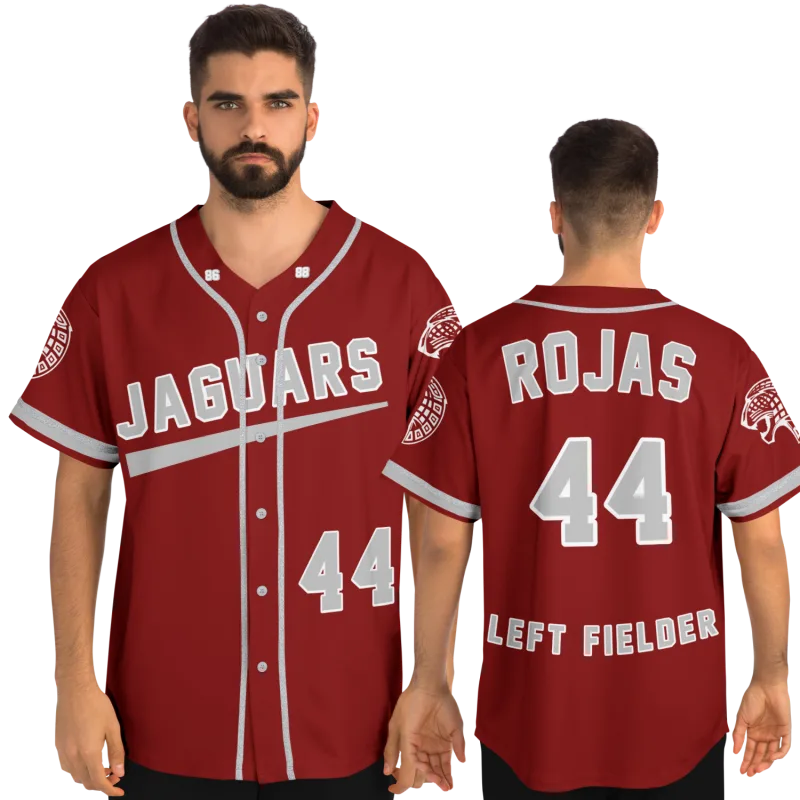
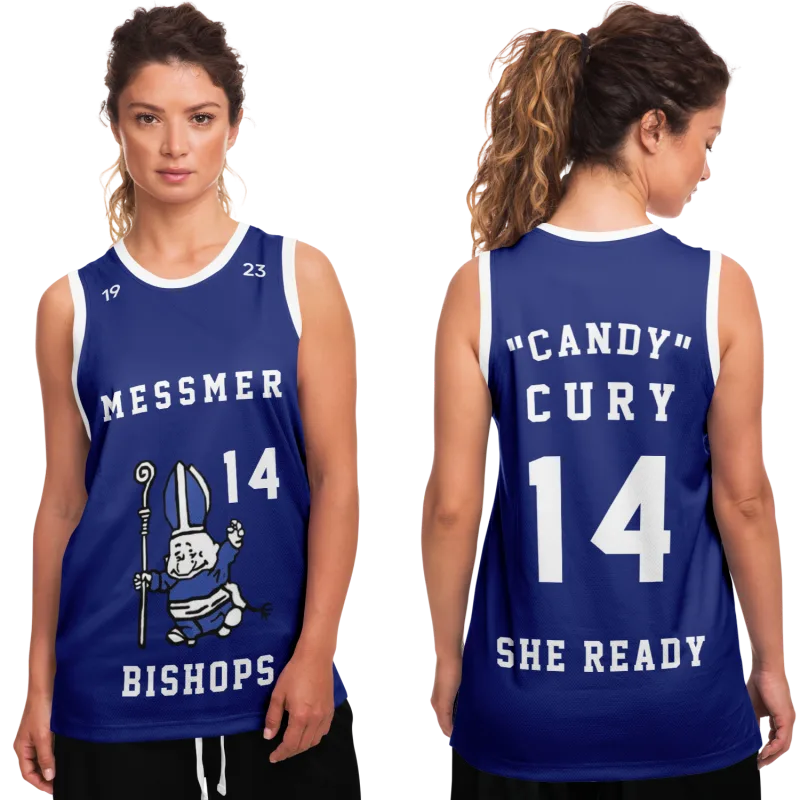
For others, something more concrete feels right. Not symbolic; actual. The jersey with the real number on the back. Your name above it. The colors of the team and the sport that gave you the number in the first place. Not something pulled off a rack with a stranger's name on it, but the specific combination that was yours alone. The experience of seeing your number on a custom jersey again after years away from the game delivers something that photographs and framed memorabilia alone can't reproduce — the number, your name, and your colors, reunited in a form you can hold.
Our team hears this distinction in almost every conversation with former athletes who reach out about custom jerseys. The number is always where the conversation starts. The sport and the colors are context. The number is identity. And the jersey that carries that number (your name, your number, the colors you played in) is the most tangible form that identity can take.
Your jersey is still out there waiting.
Design yours in minutes and see your name and number just the way you remember it.
Frequently Asked Questions
Is it actually common for former athletes to use their jersey number as a password or PIN?
Extremely common — and consistently underreported because most people feel mildly self-conscious acknowledging it. The behavior is a direct product of athletic identity formation: through years of repetition and social recognition, the jersey number becomes one of the most personally significant numeric anchors in a person's life. The speed with which former athletes recall their number (often instantly, decades after their last game) is itself evidence of the encoding depth. Security professionals flag jersey numbers as a credential vulnerability precisely because the emotional attachment is so reliable and so strong. The psychological reason for the behavior is straightforward: it's a number that arrives without effort because it was learned as identity, not as information.
Why does a jersey number feel like a lucky number so long after playing?
The lucky number association is a product of associative memory encoding. The brain links the emotional state experienced while competing under that number (competence, belonging, peak performance, identity coherence) to the number itself. Later encounters with the same number reactivate fragments of that emotional state, which registers as the number "feeling right" or fortunate. This is not superstition in any meaningful sense; it is memory functioning exactly as designed: connecting a recurring stimulus to a significant emotional experience. The number doesn't produce good outcomes. It produces brief access to the version of you that was operating at full capacity during one of the most identity-defining periods of your life.
Does the attachment to a jersey number weaken over time?
For most former athletes, it doesn't weaken — it changes form. Early in post-sport life, the number tends to appear most prominently in daily functional choices: passwords, usernames, the number given when any number will do. Later it often becomes more deliberate, showing up in custom jerseys, family traditions, or personalized gifts that carry the number's significance to the next generation. The research on athletic identity consistently shows that attachment strength correlates more closely with the intensity of identity formation during the playing years than with how much time has elapsed. Athletes who had a strong sense of their athletic self during competition report durable attachment to their number well into middle age and beyond.
What happens when an athlete played under more than one number?
Most former athletes who wore multiple numbers report a clear internal hierarchy: one number registers as definitively theirs and the others as chapters rather than anchors. The dominant number is typically the one worn during the period of most intense identity formation, which is usually high school or college rather than youth leagues or professional affiliations. It also tends to be the number associated with the most significant competitive experiences: the championship run, the breakout season, the team that mattered most. Athletes who chose to change numbers carry the chosen number more strongly than an assigned one. Athletes who had numbers changed involuntarily (through a transfer, a trade, a coaching decision) frequently retain the original number as the primary identity anchor regardless of what came after.
Is wanting a custom jersey with your old number just nostalgia?
Nostalgia is part of it, but reducing the behavior to nostalgia misses most of what's actually happening. Sports psychologists distinguish between nostalgic rumination (dwelling on a former identity as a substitute for present engagement) and nostalgic affirmation (drawing on a meaningful past self-concept to reinforce current identity stability). Wanting a custom jersey with your name and number on it sits clearly in the second category. It's an act of recognition: an acknowledgment that a significant chapter happened, that you were genuinely excellent at something that mattered, and that the specific symbol of that experience is worth preserving in a form you can hold. That's not living in the past. That's knowing which parts of your past are worth keeping.
See also: athletic identity that doesn't disappear after the final whistle | why former athletes hold onto symbols from their playing days | what saying 'I played' still means decades later | why senior season memories stay so sharp