



There was a version of you that only existed on the court.
Not the version that sat in the third row and kept quiet. Not the version that second-guessed every answer before raising a hand. The version that called for the ball in the fourth quarter. The version that talked loud and direct, without apology, and had people listen. Basketball identity and self confidence aren't just phrases from a sports psychology textbook. They are the biography of a specific kind of becoming, and if you played, you already know what that sentence means.
The classroom had rules about who got to be visible. The court had different ones.
The Classroom Had One Version of You
Most of us spent the better part of our childhoods navigating institutions built on silence. Sit down. Raise your hand. Wait your turn. The reward for compliance was approval. The reward for standing out was risk.
For a lot of players (especially those who came from households where confidence wasn't modeled, neighborhoods where speaking up carried consequences, or school environments where they simply hadn't found their frequency yet), that system was a slow compression. You got smaller. Not deliberately. Just incrementally.
And then the gym opened.
There is something about the first time you step onto a basketball court that feels structurally different from everything else in a kid's life. The gym is loud by design. Movement is required, not policed. The feedback is instant: you made it or you didn't, and you get to try again in seven seconds. There is nowhere to be invisible on a basketball court. The game will not allow it.
The pattern that comes up again and again when former players tell their stories is about voice acquisition, not skill acquisition. Players who describe themselves as shy, quiet, or overlooked in every other context describe the court as the first place they discovered they had something to say, and that people were willing to hear it.

The Game Gave You a Language Before You Had the Words
Here is what the psychology of sport has documented, and what any former player could have told you without a study: physical competence creates psychological permission.
Research in developmental sport psychology has consistently linked athletic self-efficacy (the belief in your ability to execute specific physical tasks) to generalized confidence that transfers outside the sporting context. In plain language: when the game taught you that you were capable, part of you started applying that lesson to everything else.
But that's the clinical description. The actual experience was something more particular.
It was the first time you crossed someone up and the crowd reacted. It was the first time your coach called a play and put the ball in your hands at the end of it. It was the first time a teammate looked at you — not past you, not through you, but at you — because they trusted you with something that mattered.
Those moments don't just build confidence in the abstract. They install a specific identity: I am someone who can be counted on. I am someone who performs when it costs something to perform.
Behind almost every one of those moments stood a coach who saw the voice in you before you did. Youth-development research keeps returning to the same word for what good coaches do: autonomy-supportive. In plain terms, it means the coach who corrected you without cutting you down, who pulled you aside, told you what to fix, and said it in a way that made you believe you could fix it. That coach wasn't just teaching you the game. They were handing you a voice. When they demanded you call out the play, hold the baseline, or take the last shot, they weren't only assigning responsibility. They were telling you, out loud and in front of everyone, that you had something worth hearing, and then insisting you say it.
And underneath all of it ran a quieter engine: small victories. Not the highlight-reel moments. The first clean crossover in a drill. The first time you finished through contact. The first time the varsity pace finally felt slow enough to think. Each one was small enough to survive a bad day, but together they compounded the way compound interest does, a little belief stacked on a little belief until self-efficacy stopped being a guess and became a fact. Nobody builds confidence from a single grand win. They build it one gettable, repeatable, winnable moment at a time. The court handed you thousands of them, and it asked nothing of you except that you show up and try the next one.
Every former athlete remembers the first time they felt that. It arrives differently for everyone — a breakaway, a defensive stop, a moment of poise under pressure that surprised even them — but the internal experience is the same. Something clicked into place. A self-concept that hadn't existed five minutes earlier now did, and it would not be easily removed.
Belonging Before You Knew What You Were Looking For
Basketball is, before it is anything else, a team game played in close quarters with people who are counting on your presence.
That is not a small thing. For young people still assembling an answer to the question where do I belong, the team functions as a kind of portable community, one that travels with you through gyms, away games, early mornings, and late practices. You didn't choose each other the way you choose friends. The game chose you for each other. And that particular kind of belonging, forged through shared difficulty rather than shared preference, has a different weight.
It is the kind of belonging that teaches you who you are by showing you who you are to other people. It's one of the universal experiences every high school athlete shares, regardless of which sport you played, which state you called home, or which decade you called yours.
Marcus T., 34, was cut from his middle school team twice before making the roster as an eighth grader. He describes the first practice where a teammate called his name across the court — not to pass, just to acknowledge him — as the moment he stopped feeling like a visitor in his own life. "I didn't know I'd been waiting for that," he said. "I just knew I'd been waiting for something."
The team was the answer to a question he hadn't known how to ask.
What Confidence Actually Looked Like in That Gym
Let's be specific about this, because the word "confidence" gets used so loosely that it starts to mean nothing.
The confidence the court built was not the self-promotional kind. It was not the confidence that announces itself in job interviews or on social media. It was something more earned and more durable than that. It had four qualities that most other formative experiences don't produce in combination:
- It was tested. You didn't feel confident because someone told you to. You felt confident because the game tested you — repeatedly, in real time, with real consequences — and you came through it. That is a different kind of knowing.
- It was public. Every win and every failure happened in front of people. There was no private confidence available on the court. Whatever you built, you built it visibly, which meant you couldn't argue yourself out of it later.
- It was repeatable. The game gave you the opportunity to prove it again. Bad game last week? Here's the next one. The structure of the season trained you to understand that one result is not a verdict. That lesson follows you for the rest of your life.
- It was shared. Your confidence was calibrated against your teammates'. You watched people you knew and respected face the same challenges and learned to measure your own capability against a real reference point, not an imagined one.
That combination — tested, public, repeatable, shared — is why the confidence basketball built feels categorically different from the confidence that comes from a trophy, a grade, or a compliment. Those things feel good. The court's version of confidence felt true.
The Voice That Traveled With You
Here is the part that doesn't get talked about enough: what happened when you left the gym.
The confidence didn't stay in the building. It couldn't. You brought it into the hallway between classes. You brought it into the conversation with someone you wouldn't have spoken to before. You brought it into the job interview, the negotiation, the moment when you had to advocate for something you believed and the easier path was to stay quiet.
It showed up in your posture. In your willingness to hold eye contact. In the specific way you walk into a room that people who played will recognize in each other without ever discussing it.
Jenna R., 28, played point guard through high school and two years at the junior college level. She describes her on-court role — running the offense, calling out plays, managing the pace of the game — as the direct predecessor to the skills she uses now leading a regional sales team. "I learned to read a defense before I learned to read a spreadsheet," she said. "The pattern recognition is the same. The composure is the same. The voice is the same. I just use different words now."
The game didn't stop being useful when the final buzzer sounded. It had already done something permanent.
The Identity That Doesn't Require a Box Score
There is a specific grief that comes with the end of a playing career, and it hits at different times for different people. For some it is the last game of senior year. For others it is years later, when the pickup runs get less frequent and the knees start issuing opinions about your weekend plans.
What makes that grief complicated is that it is not purely about missing the game. It is about the question that surfaces underneath it: If I'm not playing, am I still that person?
The answer, it turns out, is yes. But it takes some people years to understand why.
The identity basketball built was not stored in the sport. The sport was just the environment where the identity was forged. What it produced — the voice, the composure, the capacity for belonging, the willingness to be counted on — those are attributes of the person, not of the player. They came home with you. They stayed.
If you played, you know this already. You feel it in the way you carry yourself under pressure. In the way you default to solution-seeking when things go wrong. In the way you never fully lose the habit of reading the room, adjusting the plan, and calling for the ball when it matters.
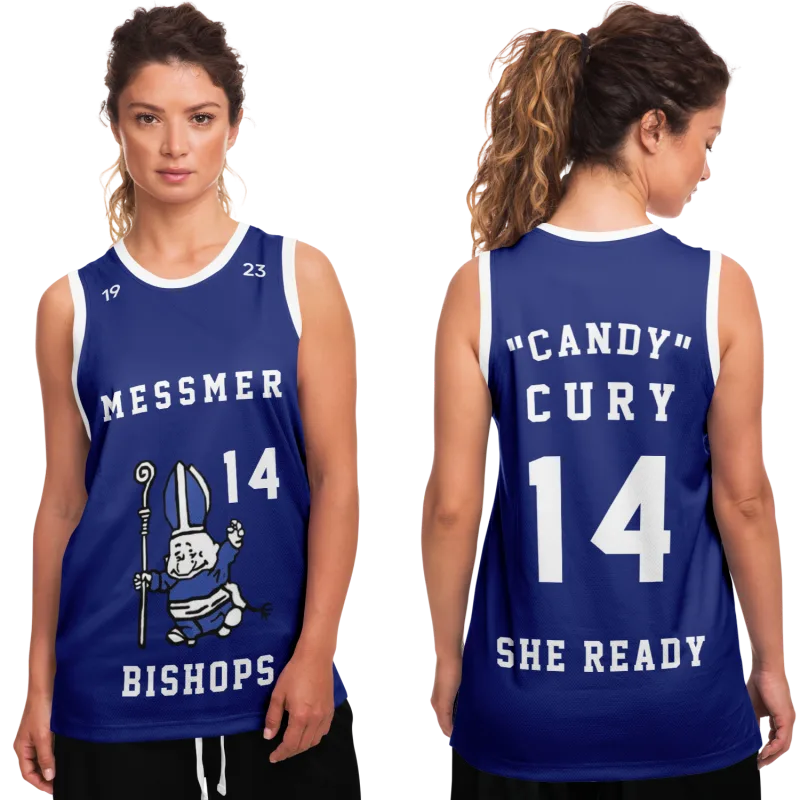
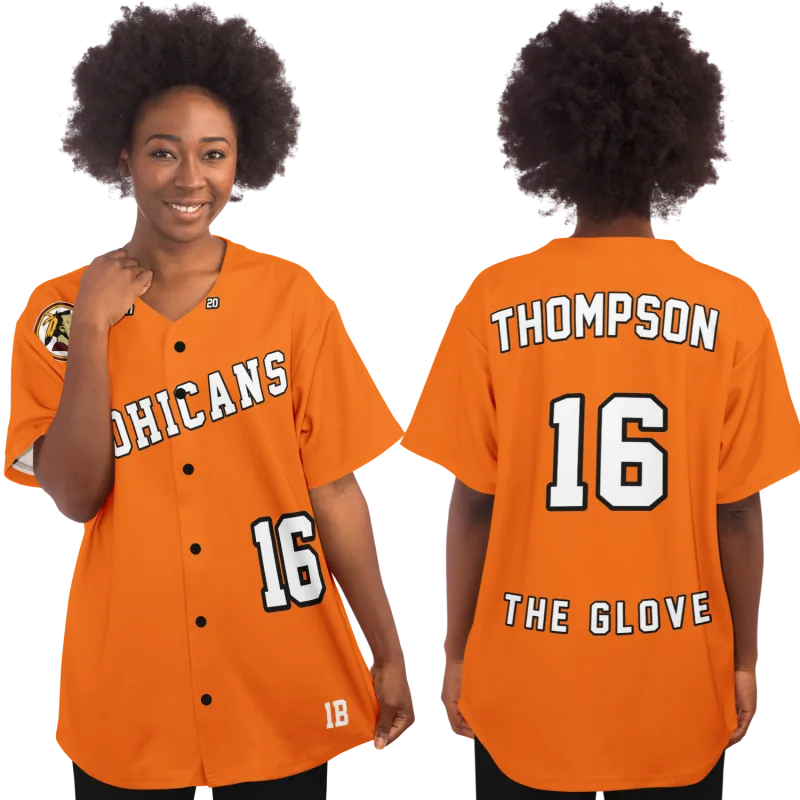
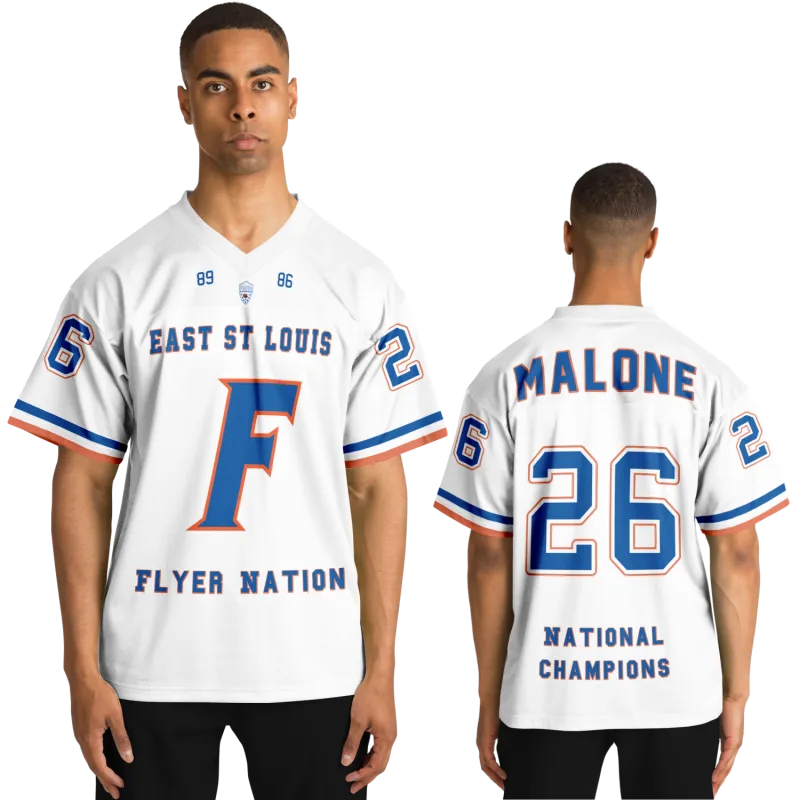
That's not nostalgia. That's identity. The court just happened to be where you found it. If you've ever felt the pull to wear something that puts your name and number back where they belong, you already understand why former athletes wear gear that says they played. It's not about the fabric. It's about what the fabric represents.
Your jersey is still out there waiting.
Design yours in minutes and see your name and number exactly the way you remember it.
Frequently Asked Questions
How does basketball specifically build self-confidence in ways other activities don't?
Basketball demands real-time decision-making under pressure in a public, social environment with immediate feedback. Unlike individual sports where success is private and sequential, basketball requires you to perform visibly, to communicate directly with teammates, and to recover from failure immediately, often in the same possession. That combination of public performance, instant feedback, and communal stakes creates a uniquely compressed environment for confidence development. The game trains you to trust yourself when the information is incomplete and the moment is now, which is precisely the kind of confidence that transfers most powerfully into adult life.
Can the confidence basketball builds last into adulthood even if you stopped playing competitively?
Yes, and the research on athletic identity transfer suggests it does so through specific psychological mechanisms. The self-efficacy beliefs formed through repeated successful performance in athletic contexts create durable internal narratives: I am capable under pressure. I can be counted on. I recover from failure. Those narratives don't require continued athletic participation to remain active. They become part of the self-concept and continue shaping behavior, decision-making, and interpersonal confidence long after the playing career ends. Many former players describe this as a kind of permanent baseline: a floor of confidence below which they rarely fall, regardless of circumstance.
What is it about team sports specifically that builds belonging and identity?
Team sports create belonging through a mechanism that most other social structures don't replicate: shared difficulty chosen together. You didn't join a basketball team for the comfortable parts. You joined for the practices, the losses, the physical exhaustion, the pressure of competition. When you endure those things alongside other people, and succeed or fail together in real time, the bond that forms carries a different quality than friendships formed through shared preference or proximity. Developmental research on team cohesion consistently shows that shared challenge produces stronger group identity and personal identity than shared reward does. The team became part of who you are because you went through something with them. That's not sentimental. That's structural.
How do former athletes reconnect with their basketball identity later in life?
It varies by person, but the most consistent thread across former player experiences is that reconnection happens through community, not necessarily through playing again, though many do return to recreational leagues. The act of being around people who share the reference points, who understand the specific language of the game, who recognize in each other the thing the court built is often enough to reactivate what felt dormant. Some players reconnect through coaching, some through watching the game seriously, some through something as simple as wearing a jersey that puts the name back on their back. The identity was never gone. It was waiting for the right context to surface.
See also: what athletic identity really means after high school ends | why high school sports still matter to adults decades later | what high school sports taught you that no classroom ever could