




You've looked at it a thousand times. That line on your shin. The raised ridge below your collarbone. The faint seam running through your eyebrow where the skin never quite grew back the same way.
You know exactly where it came from.
That's the thing about the meaning of sports scars — they don't need a caption. You don't have to explain them to yourself. Every time your hand passes over one, the whole story comes back in about three seconds. The sound of the court. The smell of the turf. The moment right before, and the moment right after.
Doctors see tissue repair. Trainers see recovery timelines. But you see something else entirely.
You see proof.
Scars Are Not What the Anatomy Textbooks Say They Are
Medical literature will tell you that a scar is the body's default response to dermal injury — collagen fibers laid down in a hurry, cross-linked differently than normal skin, sometimes raised, sometimes sunken, never quite the same texture as what surrounded it before.
That's accurate. It's also completely beside the point.
Because for anyone who played a sport long enough to earn one, a scar is not a wound that closed. It's a timestamp. A coordinate. A piece of autobiography written directly onto the body in a language that doesn't require translation.
The story behind a sports injury doesn't live in the medical chart. It lives in the specific way you describe it when someone asks — the way you find yourself going back to the beginning, to the practice or the game or the tournament, to who was there, to what was at stake. The scar is just the index entry. The memory is the whole chapter.
This is why athletes tend to remember their scars with unusual precision. A 2019 study published in Memory journal found that physical markers associated with emotionally significant events serve as retrieval cues — the body literally anchors the memory. Touch the scar and the memory sharpens. Which is why you probably know the exact game, the exact play, the exact season.

Your scars are mnemonic devices. They are your body's way of saying: this happened, and it mattered.
The Seven Stories Sports Scars Tell
Not all scars carry the same narrative weight. In our experience covering athlete stories across every level of competition — youth leagues, college programs, weekend warriors pushing forty — certain story types appear again and again. Here are the seven that come up most.
1. The "I Wasn't Ready to Stop" Scar
This one usually comes from a late-season moment. The team was short-handed, or the tournament was on the line, or you'd been trying to get back to full speed after a minor injury and you pushed through the wrong moment. You weren't reckless. You were committed. The scar is the permanent record of the fact that you chose the game over self-protection — not because you were careless, but because it mattered that much.
These tend to sit on hands, forearms, knees. Places that absorb impact when you refuse to go down.
2. The "I Didn't Know I Could Do That" Scar
There's a category of injury that happens not from failure but from a moment of unexpected capacity. You went up for a ball you shouldn't have reached. You dived for a save your body wasn't designed for. You hit harder than you knew you could, and the collision proved it. The injury was the collateral damage of a moment of genuine athletic transcendence.
Athletes who carry these scars often describe them with a complicated pride. "I probably should have let that one go," they'll say. And then they'll smile.
3. The "First Time I Really Got Tested" Scar
These arrive early in athletic careers. The first real hit. The first real fall. The first time the sport stopped being a game and became something that could actually hurt you — and you kept going anyway.
This scar matters because of what happened after it. You came back. That's the sentence the scar is written in.
4. The "We Won That Night" Scar
Some scars are permanently fused with a win. The injury was real. The pain was real. And the result was also real. These are the scars that athletes point to with something close to gratitude, because the cost and the reward are inseparable in memory. You couldn't have had one without the other.
5. The "My Body Kept Me In the Game" Scar
This is the scar from a surgery that extended an athletic life. The knee reconstruction. The shoulder repair. The procedure that took six months and returned you to competition when many people assumed you were done.
These scars carry a different emotional register than impact scars — they are marks of resilience over time, not a single moment. Athletes who wear them describe a complicated relationship with the altered body part. It is simultaneously the place that failed them and the place that brought them back.
6. The "Nobody Saw It Happen" Scar
Practice. An empty gym. An early morning run. No crowd, no teammates, no scoreboard. Just you, and the moment the pavement or the equipment or the physics of the situation made a decision your body had to absorb.
These are sometimes the most private scars — the ones you don't tell the big story about because there is no big story. Just the fact of continued effort, witnessed by no one, kept as a secret between you and your body.
7. The "That's When I Knew This Was My Sport" Scar
The injury that, paradoxically, confirmed the commitment. You got hurt, you healed, and somewhere during the recovery you realized that the desire to return was stronger than any rational calculation. You could have walked away. You didn't even seriously consider it.
The scar from that moment is the one that most clearly says: this is who I am.
Marcus T., 34, Tells It Better Than Any Article Can
Marcus T., 34, played four years of college lacrosse at a mid-major program in the mid-Atlantic — never made it to the championship, never got a mention in any regional highlights. He's got a three-inch scar along his left forearm from a stick-check that caught him wrong during a conference game his junior year. Six stitches, back on the field ten days later.
"I used to be a little self-conscious about it," he said. "Then one day my kid asked me where it came from and I found myself talking for twenty minutes. The game, the score, who we were playing, what it felt like to jog back out after halftime knowing my arm was wrapped under my pad. I realized — that scar knows more about who I am than my résumé does."
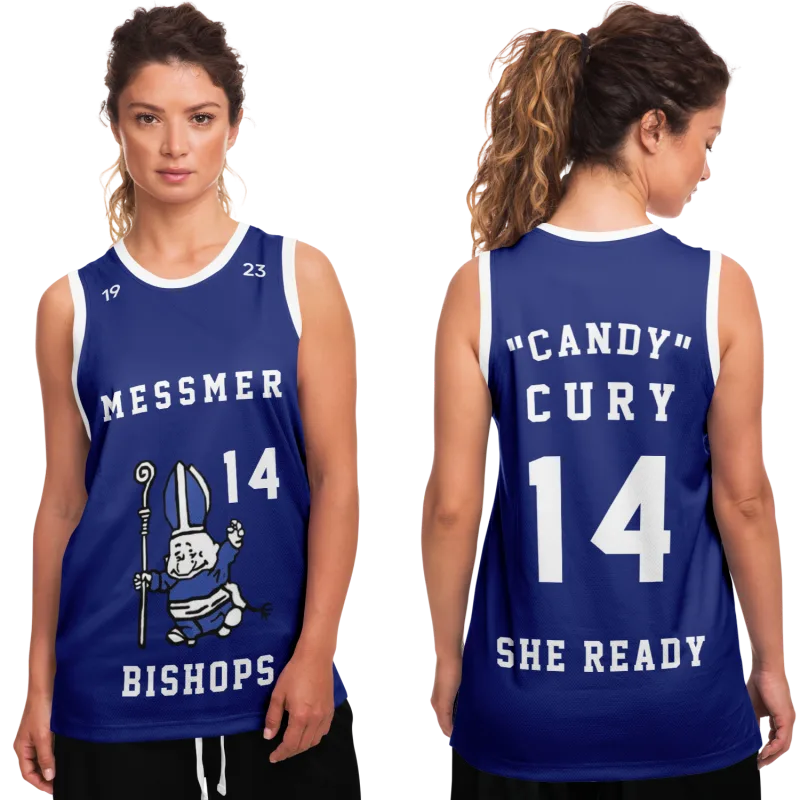
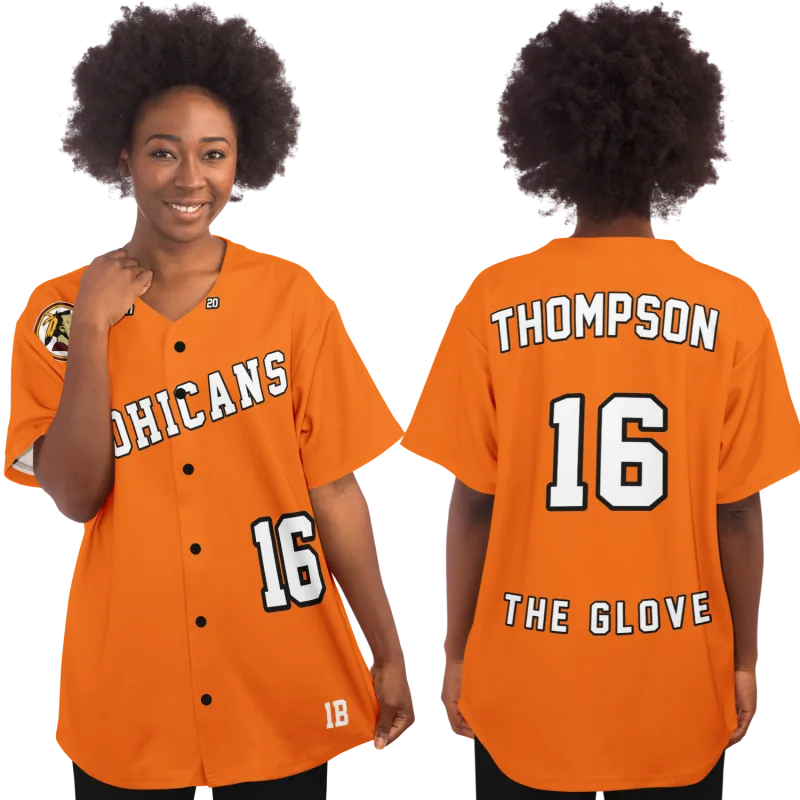
He has a jersey from that season framed in his office. His name and number. Number 18.
He's still number 18.
What My Scars Mean: How to Build Your Own Narrative
Here is what separates athletes from everyone else who carries physical marks: athletes have context. They know why. They have the sport, the moment, the stakes, the people involved.
That context is the raw material for something worth preserving.
When people ask about the story behind their sports injury, they often start in the middle — the impact, the sound, the immediate aftermath. What's worth doing is expanding the frame. Here's how to build the full narrative from a scar you already carry.
Step 1: Place it in time. What season was it? How old were you? What level were you competing at — and what did that level mean to you at the time? These aren't just chronological details. They locate you in your own athletic development: early career, peak years, a comeback, a final season.
Step 2: Name what was at stake. Not just for the team — for you personally. Was this a moment when you were trying to prove something? Defending something? Playing through something that had nothing to do with the sport? Athletes rarely compete in a vacuum. There's almost always a personal dimension operating beneath the competitive one.
Step 3: Identify what you chose. This is the sentence the scar is actually written in. At the moment of injury — before, during, or in the immediate aftermath — you made a choice. To continue. To come back. To return to the sport despite knowing it could happen again. Name that choice. It is the core of what the scar means.
Step 4: State what came after. Not necessarily a win. Not necessarily a triumphant comeback. Just: what happened next? Did you play again? Did you finish the game? Did you spend six months in physical therapy and walk back onto the field at thirty-four pounds lighter and three miles-per-hour slower and still feel like yourself for the first time in months?
The scar is the chapter break. The story continues on the other side.
Battle Scars From Sports as Evidence of Investment
There is a concept in behavioral economics called the endowment effect — we value things more when we have invested in them. The more you've put into something, the more it means to you. The more it means to you, the more the marks of that investment become part of your identity rather than evidence of damage.
This is why athletes so rarely regret their scars the way non-athletes sometimes expect them to.
"Doesn't it bother you?" people ask.
"Not really," athletes tend to answer. And mean it.
The scar is proof of investment. It is evidence that the thing was real, that you were there, that you brought enough of yourself to the competition that the competition left a mark on you in return. A sport that never touched you was never really yours.
Battle scars from sports are not the cost of playing. They are the receipt.
This is the gap that most physiology-first articles on this topic completely miss. They explain the mechanism of scarring and leave the meaning entirely unaddressed — as if the meaning were somehow less real than the collagen. But for anyone who has ever looked at a scar and felt the specific gravity of a specific moment come flooding back, the meaning is the only thing that matters.
Your body kept the receipt. You don't have to lose it.
The Athletes Who Wear Their Scars Best
Some athletes have made their physical history part of their public identity. Not as a performance of toughness, but as honest acknowledgment that the body remembers what happened to it.
What's notable about the athletes who carry their scars with the most composure is not bravado. It's specificity. They can tell you exactly where each one came from. They've already done the narrative work — they know the story, they've told it, they've integrated it into their understanding of themselves.
That specificity is what turns a scar from a source of self-consciousness into a source of quiet confidence.
The athletes who struggle with their scars — who feel the pull to hide or explain or minimize — are often the ones who haven't yet told themselves the full story. Not because the story is bad. Often because they haven't given themselves permission to claim it.
You were there. You played. You got marked. You came back.
That story doesn't need to be tidied up. It needs to be claimed.
How Jerseys and Scars Tell the Same Story
Here's something our team has noticed in the way people talk about their athletic history: the two things they remember most precisely are their injuries and their numbers.
Not their stats. Not their seasonal records. Their jersey number. The specific way their name looked across the back of the fabric. The exact color combination of the away kit. The font. The year.
A jersey and a scar are doing the same symbolic work from opposite directions. The scar says: something real happened here, to this body, in this sport. The jersey says: I was here, I was someone specific, I belonged to this.
Together they form the full identity document. The body's record and the uniform's record, both saying the same thing in different languages:
I played.
Your jersey is still out there waiting.
Design yours in minutes and see your name and number exactly the way you remember it.
Frequently Asked Questions
Is it normal to feel proud of a scar from a sports injury?
Completely normal — and well-documented in sports psychology. Scars associated with athletic effort tend to be integrated into identity rather than experienced as purely negative body image. Research on athletes consistently shows that physical markers connected to meaningful competition are interpreted as evidence of commitment rather than damage. If a scar makes you feel something other than embarrassment, that response is accurate. The scar is, in the most literal sense, proof of what you put in.
How do I explain the story behind my sports injury to someone who never played?
Start with what was at stake, not with what happened anatomically. Non-athletes disengage when the story is primarily about ligaments and impact forces. They engage when the story is about what the moment meant — the game, the season, the people involved, what you chose to do next. Lead with the human context, let the physical details serve the narrative rather than replace it. Most people who have never played a sport can still understand the feeling of caring about something enough to get hurt for it.
What's the difference between a battle scar you're proud of and one you're not?
Usually it comes down to narrative resolution. Scars that carry a sense of pride tend to be ones where the athlete has worked out what the moment meant — they know the story, they've told it, they've made peace with the outcome or found meaning in the recovery. Scars that still feel complicated are often ones attached to unresolved injury grief: a career that ended earlier than expected, a game that was lost at a pivotal moment, a recovery that didn't go the way it was supposed to. The scar itself isn't the issue. The unfinished story is. Telling the story — to yourself first, to someone else second — is consistently what shifts the emotional register from complicated to claimed.
Can scars from recreational sports carry the same meaning as competitive ones?
Yes. The meaning of a scar is not determined by the level of competition — it's determined by how much you cared. A recreational league player who showed up every week for fifteen years and earned a scar diving for a ball in a game that meant nothing to anyone outside that gym has exactly as much claim to the story as any professional. Investment, not audience size, is what gives the mark its meaning. Your sport doesn't have to have been important to anyone else. It only has to have been important to you.
See also: what former athletes feel when they look back on their playing days | the identity shift that happens when your playing days end | why saying 'I played' still carries so much weight years later | the grief that comes with leaving your sport behind