



There's a specific moment every former high school athlete knows. You're driving somewhere ordinary — the grocery store, a school pickup, a Saturday errand — and a song comes on, or you pass a gym with its lights still on after dark, or you catch a whiff of chlorine from a neighbor's backyard. And for a half-second, you are back.
Not nostalgic in a soft, hazy way. Back. In the body. In the uniform. In the exact feeling of what it was like to compete in that gym, that pool, that court.
What playing high school volleyball, swimming, or tennis is like isn't something you can fully describe to someone who wasn't there. But you already know that. What you might not realize is how much of what you carry from those years is still shaping the way you move through the world.
This is for the players who lived it.
Volleyball: The Sport That Lived in the Gymnasium's Echo
Walk into any high school gym during volleyball season and you know exactly where you are before you see the net. The squeak of court shoes. The particular hollow percussion of a ball hitting a hardwood floor. The way the bleachers smell faintly of old cushion and concession stand salt.
Volleyball in high school was communal in a way that's hard to replicate later in life. Six players on a court, rotating through positions, covering for each other's angles. You learned your teammates' tendencies before you learned their middle names — that outside hitter always drifted left, that libero read sets before anyone else called the play. It all traced back to the week you found out whether you made the team — the shared threshold that bonded the six of you in the first place.
The Rotation and What It Actually Teaches
The six-rotation system is volleyball's invisible curriculum. Every player moves through every position. The tallest player eventually ends up in the back row. The defensive specialist takes her turn near the net. Nobody gets to stay only where they're comfortable.


Volleyball players consistently describe rotation as the thing that taught them adaptability — not as a lesson they were told but as something they were required to practice every single set. You didn't have the option of staying in your lane. The game moved you.
There's also the language. Volleyball teams develop shorthand that sounds almost like code to outsiders: mine, help, line, angle, seam. The speed of communication required on a 25-point rally compresses trust-building into something that might otherwise take years. You learned to call the ball with confidence or live with the consequence. Most players can point to the exact moment they learned to be louder.
What the Pre-Match Warmup Actually Felt Like
There was a ritual quality to pregame warmups that no amount of adult exercise recaptures. The serving lines. The defensive shuffle. The setter getting her hands warm with controlled tosses. The moment the music in the gym was loud enough that you couldn't hear your own thoughts — only the rhythm of the warm-up and the low hum of competitive anticipation building in your chest.
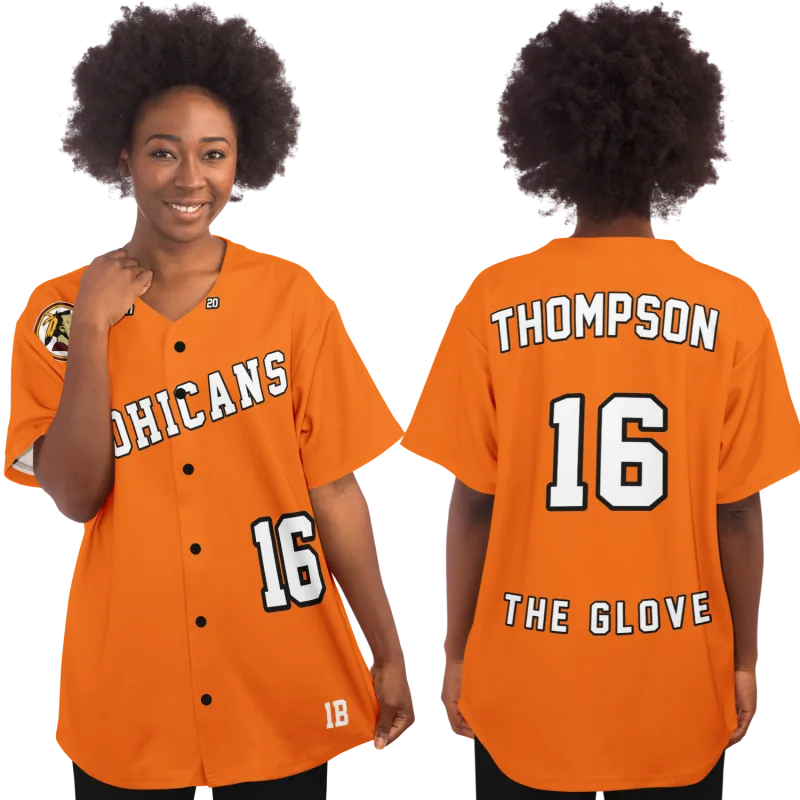
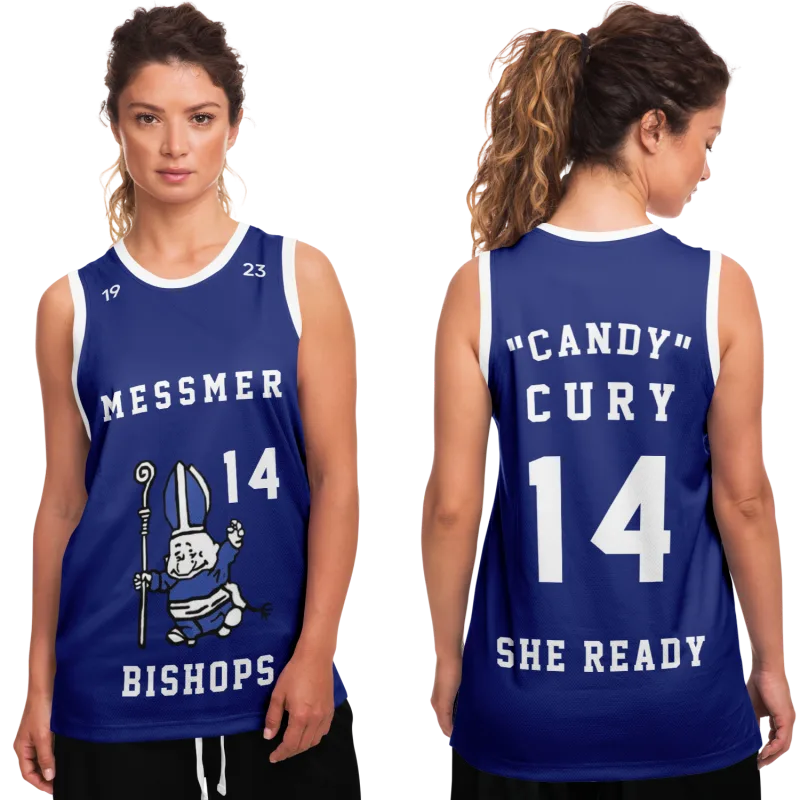
Jenna R., 27, played outside hitter for three seasons at a mid-size school in the Midwest. She remembers the last home match of her senior year not for the score but for the way the gym smelled when she walked in. "It was the same gym I'd walked into a hundred times," she says, "and I knew it was the last time it would ever smell exactly like that." She still keeps her number on a custom jersey hanging in her apartment. If you still remember the cut, the colors, and the number, you already know why it still hangs there. Some things don't need to be explained — they just need to stay visible.
Swimming: The Loneliest Sport That Made You Less Alone
If volleyball was communal, swimming was solitary. You trained in lanes. You raced alone. Your worst practices happened in the dark of early morning, before school, before most of your classmates had opened their eyes. The pool didn't care what day it was.
And yet, swimmers consistently describe their team bonds as among the closest they formed in high school. The paradox makes sense when you live it: shared suffering builds something that shared celebration doesn't. You and your lane partner shivered on the pool deck at 5:45 AM together. That kind of cold makes trust.
The Training Calendar Was Relentless
High school swimming seasons typically run from mid-October through February, with championship meets in late winter. That window covers Thanksgiving, winter break, and the stretch of January that most teenagers experience as either freedom or boredom. Swimmers experience it as practice.
Double sessions during holiday breaks were standard at competitive programs. Two-hour morning workouts followed by two-hour afternoon workouts. Thousands of yards on days when the rest of the world was eating leftovers. The protocol was specific and exhausting: warm-up sets, drill work, broken swims, race-pace repeats, cool-down. Every element had a purpose even when your body couldn't locate the logic.
What the training calendar actually taught wasn't endurance. It was the relationship between process and outcome — the understanding that the improvement you wanted on race day was built in increments on days that felt inconsequential. This is not a lesson most high school subjects can deliver. The pool delivered it involuntarily, meet after meet, season after season.
The Smell You Never Fully Lose
Chlorine is persistent. It bonds to hair, skin, and the fabric of every bag you ever packed for morning practice. Former swimmers report — sometimes decades later — that catching a strong whiff of pool chemicals produces an immediate, involuntary memory response. Not just a thought. A sensation.
The neuroscience of smell-linked memory is well-established: olfactory information travels through the limbic system, which governs emotion and memory, before it reaches conscious processing. The chlorine response is not metaphor. It's wiring.
What that means practically: the pool years are stored differently than other memories. They are body memories. And they resurface not when you think about them but when something external calls them up — a hotel pool, a child's swim lesson, a summer afternoon near water.
Racing and What the Block Actually Felt Like
The starting block was its own territory. Feet set, goggles sealed, the grip of your toes on the edge. The moment between the starter's signal and the water was suspended time — every swimmer describes it the same way: the world narrowing to a single fixed point directly ahead.
The race itself was internal in a way no other sport replicates. No teammates to read, no ball to track, no play to run. Just the mechanics of your stroke, the turn you'd practiced ten thousand times, and the wall coming toward you at the other end. You either trusted your training or you didn't. The water didn't negotiate.
Tennis: The Individual Sport That Tested Everything You Were Made Of
Tennis was the sport that removed every excuse. No teammate to assist. No external play to execute. Just you, a racket, and someone across the net who wanted the same point you did.
High school tennis had a particular social texture. It was smaller than football or basketball — fewer teammates, quieter matches, a fraction of the gymnasium crowd. The courts were often located away from the main athletic complex, which gave tennis a slightly peripheral feeling in the school's sports hierarchy. Practitioners didn't mind. They often preferred it.
Singles vs. Doubles: Two Different Sports
Doubles was a partnership with its own grammar. Court positioning, poaching, the signal system developed between partners — whether to stay back or crash the net. The communication between a doubles pair was compressed and nonverbal, built over a season of practice matches until partners could anticipate each other's reads without speaking.
Singles was something else entirely.
Singles was forty minutes to two hours alone on a court with your own decisions. Every error was yours. Every winner was yours. There was nowhere to redirect credit or deflect blame. The mental dimension of singles tennis — the ability to reset after a bad point, to stay disciplined during an opponent's run, to maintain form when you were down a set — was the real sport. The technical game sat inside the mental game. Most players learned this the hard way.
Marcus T., 31, played number two singles for four years at a small public school in the Pacific Northwest. He describes his junior season as the year he learned to lose. "I had a stretch where I dropped seven straight matches," he says. "I had to figure out how to show up anyway, shake hands, and come back on Tuesday. Nobody was going to do that part for me." He had a custom jersey made the year after his youngest started playing USTA juniors. He wanted her to see what it looked like when someone played through the hard years.
The Season's Arc
High school tennis seasons run in fall or spring depending on region, with state championship tournaments anchoring the schedule. The arc of a tennis season — from early scrimmages through conference play to postseason — mirrors something larger: the process of refining a skill under increasing pressure. If you came in as a newcomer, that first season when everything was new, the arc also doubled as a crash course in how much you didn't yet know.
Early season matches exposed technical gaps. Mid-season matches revealed character. Postseason matches required both in full. The players who advanced weren't always the most gifted technically. They were frequently the ones who had built the mental infrastructure to compete when the matches mattered.
The league ladder — where players competed within the team for lineup positions — added a layer of internal competition that most other sports didn't have. Your closest teammates were also your direct competitors for playing time. Navigating that tension without damaging the team required a specific kind of maturity. Most players developed it because they had to.
The Part That Never Made the Highlight Reel
For every athlete who played a full season, there was almost certainly a stretch when the body stopped cooperating and you had to sit. The volleyball player who lands wrong after a block and feels the ankle roll before she hears it — the trainer's hands, the ice, the walk to the bench that takes longer than the whole match. The swimmer whose shoulder gives out mid-season, the sharp pinch on every pull that starts as a whisper and becomes a diagnosis, weeks spent watching the lane from the pool deck in a team parka instead of a suit. The tennis player with the elbow or the wrist that won't stop aching, standing on the baseline holding a racket he can't swing.
Being sidelined was its own kind of loneliness. You were still on the roster, still in the team photo, still wearing the colors — but you weren't on the court, the deck, or the baseline. You watched your team play without you and felt proud of them and quietly erased at the same time. Everyone told you you're still part of the team, and it was true and also not enough. One day you were the hero; the next you were the person everyone felt sorry for.
And here is the part nobody mentions: the injury is part of the story too. It is the quieter loss that comes later — the weeks in the training room, the slow, boring work of coming back, the day you finally touched the ball or the wall again. Not because it was heroic, but because it was real. The jersey you remember isn't only for the wins. It's for the ice, the rehab, the bench, and the part of the story that never made the reel.
And years after the last whistle, that story can turn inward — into the sense that your best days happened in a gym you can no longer walk into. That feeling gets the timeline wrong: what you built there didn't end there.
The Teams You Played On Weren't Always There
If you played volleyball, swam, or played tennis in high school, chances are you walked onto a team that felt like it had been there as long as the building itself. That's the illusion. For a whole generation of girls before you, those teams didn't exist yet.
Before Title IX — the 1972 law that barred sex-based discrimination in federally funded education programs — many schools simply had no girls' volleyball, no girls' swim team, no girls' tennis squad. Girls who wanted to compete often did it on the boys' team, or in a club, or not at all. When programs did finally start, they were frequently built around the boys' schedule: the girls practiced at night, after the boys were done, in the same gym with the lights turned back on. Some states didn't hold a girls' state tournament for years after the teams existed, because the championships simply hadn't been organized yet.
The women who pushed all of that through deserve credit most of us never hand them, because we arrived after the doors were already open and assumed they had always been open. The fight that built those teams is the reason the gym, the pool, and the court were yours at all.
That's worth sitting with. The number you wore, the position you played, the season you still think about — none of it was inevitable. Somebody older, whose name you'll never know, made the case for it in a school board meeting you never attended. The teams you played on weren't always there. You just got to play like they were.
What All Three Sports Gave You That You're Still Using
The specific sports are different. The gifts overlap.
Every volleyball player, swimmer, and tennis player who competed seriously in high school carries something beyond the sport itself:
- The baseline understanding that preparation is the work. Match day, race day, tournament day — these were the proof of prior investment, not the investment itself. This is the most transferable thing sport teaches, and it transfers everywhere.
- A physical experience of resilience. Not resilience as a concept but as a body memory — the specific sensation of being behind, or exhausted, or outmatched, and continuing anyway. You know what that feels like from the inside, which means you can recognize it again when it arrives in other forms.
- Team belonging of a specific kind. Even in the individual sports, the team structure of high school athletics produced something distinct: shared identity around a shared pursuit. Your number on a jersey, your name in a lineup, your place on a roster. It was yours.
And those gifts tend to resurface when old teammates get back together — which is why a reunion gift for the former athlete in the group lands harder than anyone expects.
Your Jersey Is Still Out There Waiting
Design yours in minutes and see your name and number exactly the way you remember it — your sport, your number, your colors, the way it looked when it was yours.
Frequently Asked Questions
What makes high school volleyball different from club or recreational volleyball?
High school volleyball combines the intensity of competitive play with the specific social context of your school — your gym, your classmates in the stands, your school's colors. Club volleyball often involves higher technical training loads, but high school ball carries a layer of meaning that club settings rarely replicate: the identity piece, the team belonging, the fact that you were representing something with a history that existed before you arrived and would continue after you left. Design your own — custom volleyball jerseys.
How physically demanding is high school swimming compared to other high school sports?
By training volume, high school swimming is among the most demanding high school sports. Competitive programs regularly log 20,000 or more yards per week during peak training. Early morning practices, often before school, are standard at serious programs. The combination of high volume, technical precision requirements, and year-round training culture places swimming at the upper end of the athletic commitment spectrum — regardless of what the sport's visibility in the school hallway might suggest.
Is high school tennis hard to make progress in as a beginner?
Tennis has a steeper early learning curve than most racket sports because the technical foundation — grip, footwork, stroke mechanics — requires significant repetition before it becomes reliable under pressure. Most players who joined their high school team with little prior experience describe the first season as a technical investment that paid dividends in the second. The players who stayed found that the sport's learning curve was also part of its appeal: there was always something specific to improve, which kept the game interesting well past the point when casual sports lost their pull.
What do former high school athletes say they miss most?
Across all three sports, former athletes most commonly describe missing the routine: the daily structure of practice, the specific relationships built inside that structure, and the clarity of a defined season with a defined goal. The jersey and the locker room and the bus rides are remembered fondly — but the thing athletes say they actually miss is the purposefulness of showing up every day for something that mattered, alongside people who were also showing up, in a building that held the collective weight of everyone who had played there before them.
See also: why high school sports still matter so much to adults | the athletic identity you built during those years | what high school sports taught you that nothing else could | why your senior season memories are so much sharper than the rest | the grief that comes when it all ends at 18