

Why high school sports memories are so strong is one of those questions that sounds sentimental until you look at the neuroscience — and then it sounds like the most precise thing you've ever heard about yourself.
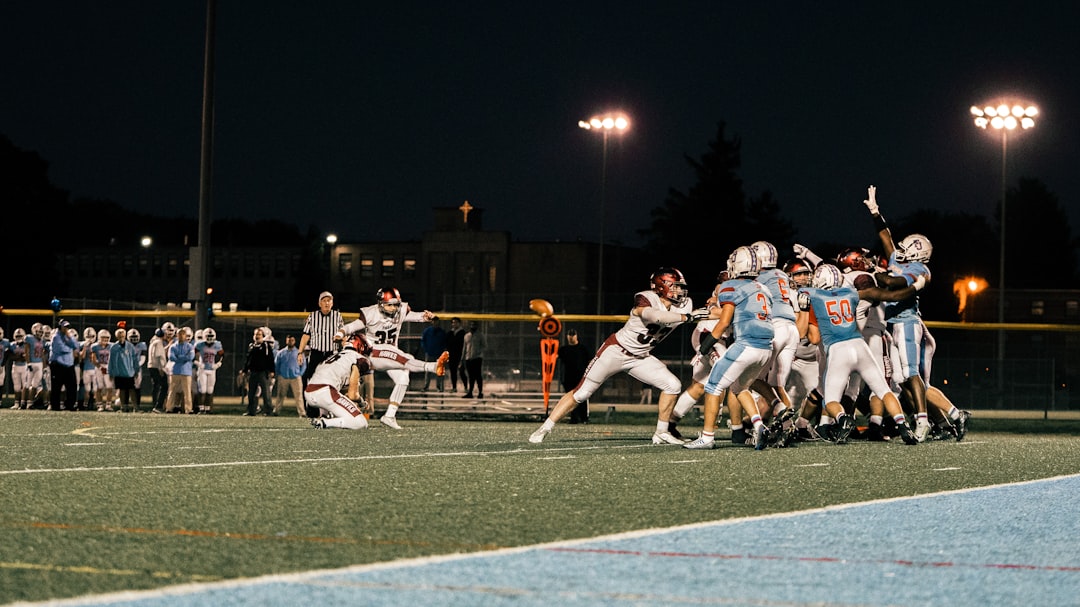
You already know the feeling. A song comes on during a drive, or you pass a field with the Friday night lights still burning, and suddenly you're back. Not remembering back — back. The weight of the uniform, the cold air, the particular noise a crowd makes when something important is about to happen. Your chest does something complicated. You might not have been a starter. You might not have won a championship. But the feeling that returns is as vivid and physical as anything you've experienced in years.
That response isn't random, and it isn't weakness. It's the product of a specific set of neurological and developmental conditions that existed only once in your life, did their most intense work between the ages of 14 and 18, and encoded those years with a fidelity that ordinary adult experience simply cannot match.
Here is what actually happened, and why it still matters.
Your Brain Was Running a One-Time Construction Project
The foundational fact is this: the human brain doesn't finish developing until roughly age 25. The years you spent playing high school sports fell directly inside one of the most neurologically active periods of your entire life.
During adolescence, your brain is doing something it will never do again with the same intensity. It's building the emotional and identity scaffolding it will depend on for the next several decades. The prefrontal cortex (responsible for long-term decision-making, self-concept, and executive function) is still forming its final architecture. The limbic system, which governs emotional processing and memory formation, is running at peak reactivity. Every experience that lands during this window gets evaluated not just as an event but as identity-relevant data: what does this say about who I am?

That's the mechanism behind the staying power. Those memories weren't filed as things that happened. They were filed as things that defined you.
A game-winning goal at 32 is something you did. A game-winning goal at 16 is something you are. The adolescent brain doesn't yet have the developmental capacity to fully separate performance from self-concept. The experiences that happened on that field weren't just stored — they were incorporated into the working definition of who you believed yourself to be.
The Reminiscence Bump: Why Your Brain Over-Saved Those Years
Psychologists have identified a consistent phenomenon called the reminiscence bump — the finding, replicated across cultures and demographics, that people remember disproportionately more events from ages 10 to 30, with the densest concentration between 15 and 25, than from any other period of their life.
The leading explanation maps directly onto the identity-construction framing: your brain saves more from the periods when the most self-defining experiences are occurring. First times. Threshold moments. Events that announce, in some fundamental way, this is who this person is becoming.
High school sports are almost architecturally designed to trigger this over-saving mechanism. You were doing something new, doing it publicly, doing it alongside people who mattered, under conditions of genuine emotional stakes. Your brain treated every practice, every game, every ride home on the bus as potentially identity-relevant. It saved accordingly.
The result is a library of high-definition memory from those years, stored with emotional metadata so rich that it becomes retrievable at the slightest contextual cue. A song. A smell. The particular creak of bleachers. The specific quality of October air at game time.
The Neurochemistry of Unforgettable
The science becomes more specific when you examine what was actually happening chemically during competition.
When you ran onto a field in front of a crowd, executed a play that worked, failed publicly in a moment that mattered — your brain released a cascade of neurochemicals that directly govern how strongly memories get encoded.
Dopamine surged every time you achieved something in competition, and also during the anticipation of competing. Dopamine doesn't just feel rewarding; it tags experiences as worth retaining. High-dopamine moments receive preferential storage. Your brain, in effect, marks them with a flag that says: keep this one.
Cortisol and adrenaline (the stress hormones released during athletic competition) work in conjunction with dopamine in a way that sharpens rather than blurs memory formation. Moderate acute stress during an event amplifies the fidelity of the memory for that event. Your pre-game nerves weren't just preparing your muscles. They were preparing your memory systems to record what was about to happen with exceptional detail.
Oxytocin (the neurochemical most associated with social bonding) ran high whenever you were performing alongside teammates, sharing the experience of winning or losing together in real time. Oxytocin encodes social bonds with particular depth and durability, which is why your memory of the people you played with is almost always inseparable from your memory of the sport itself.
But beneath all of that emotional chemistry, something even more foundational was happening — and it had nothing to do with how you felt and everything to do with the work itself.
BDNF (brain-derived neurotrophic factor) is a protein that functions like fertilizer for the brain. Researchers often describe it as "Miracle-Gro for the brain," because it spurs the growth and survival of new neurons in the hippocampus, the region that converts experience into long-term memory. And the single most reliable way to raise your levels of it is the one thing you were doing for hours a day, every season: sustained aerobic exercise.
A growing body of research shows that aerobic exercise directly boosts BDNF, which in turn strengthens the brain's capacity to encode new memories (Erickson et al., 2011). In plain terms, the physical work itself — the running, the cutting, the sprints, the fourth-quarter exhaustion — was actively building the machinery your brain used to store those years.
Think about what that means. Every teammate's face, the sound of the crowd, the smell of the grass, the precise feeling of a play coming together — all of it was being recorded by a hippocampus you were strengthening at every practice. You weren't only making memories during those seasons. You were upgrading the equipment that makes memory possible in the first place.
That's one reason exercise done in adolescence leaves such an outsized mark. You were asking your brain to remember extraordinary things at the precise moment it was most physically capable of remembering them — because your body kept demanding it.
When former players describe their most vivid memories, they almost never reach for a scoreboard first. They reach for a person. The coach who said the thing they didn't know they needed to hear. The teammate who pulled them up after a bad fall. The specific atmosphere of the locker room after the last game of the season.
Those people aren't incidental to the memory. They're chemically embedded in it.
The Jersey, the Number, and the Identity It Represented
There's a concept in developmental psychology called identity foreclosure, the process by which adolescents try on roles and commit to them as a way of resolving the uncertainty of who they're becoming.
For many athletes, sports offered the clearest and most immediate answer available to the teenage brain's most urgent question: Who am I?
You were the setter. The point guard. The sprint relay anchor. The left wing. You had a defined role, a team with its own culture, a uniform, a number that belonged to you in front of everyone who watched. You were seen and identified in a socially validated, highly specific way at an age when nearly everything else felt ambiguous and provisional.
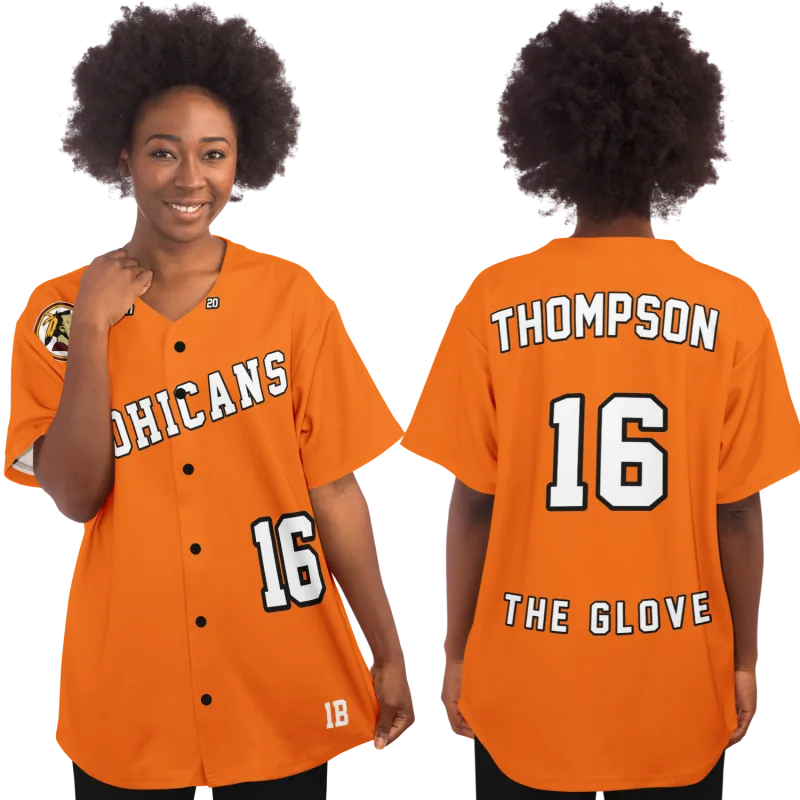
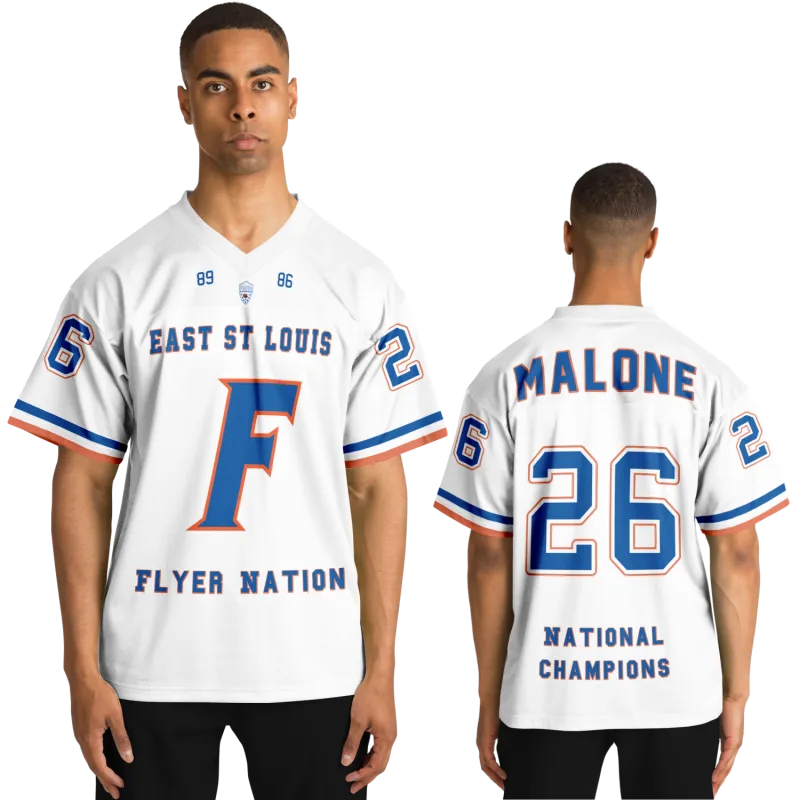
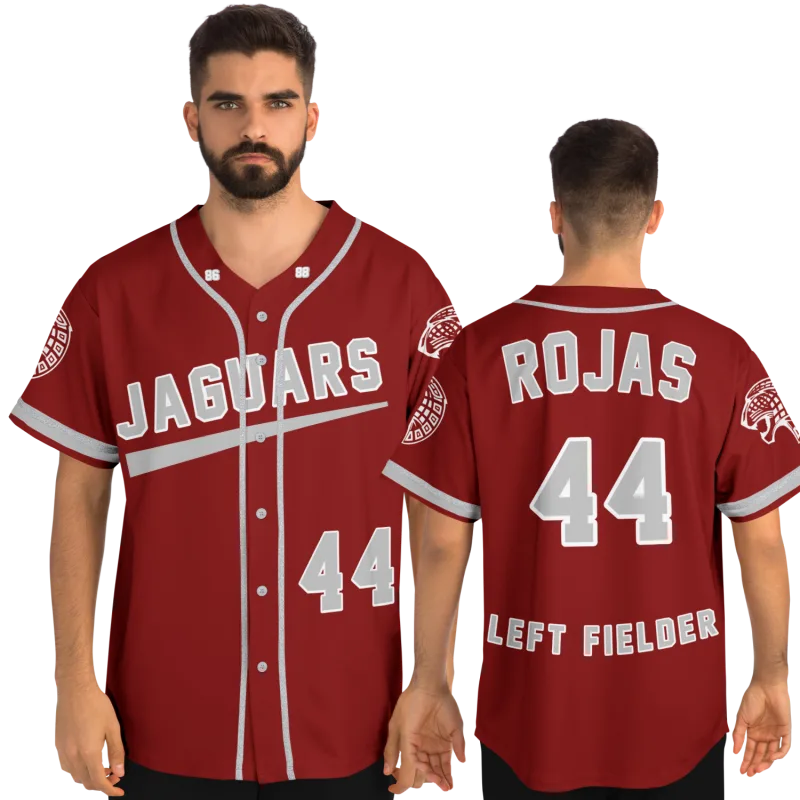
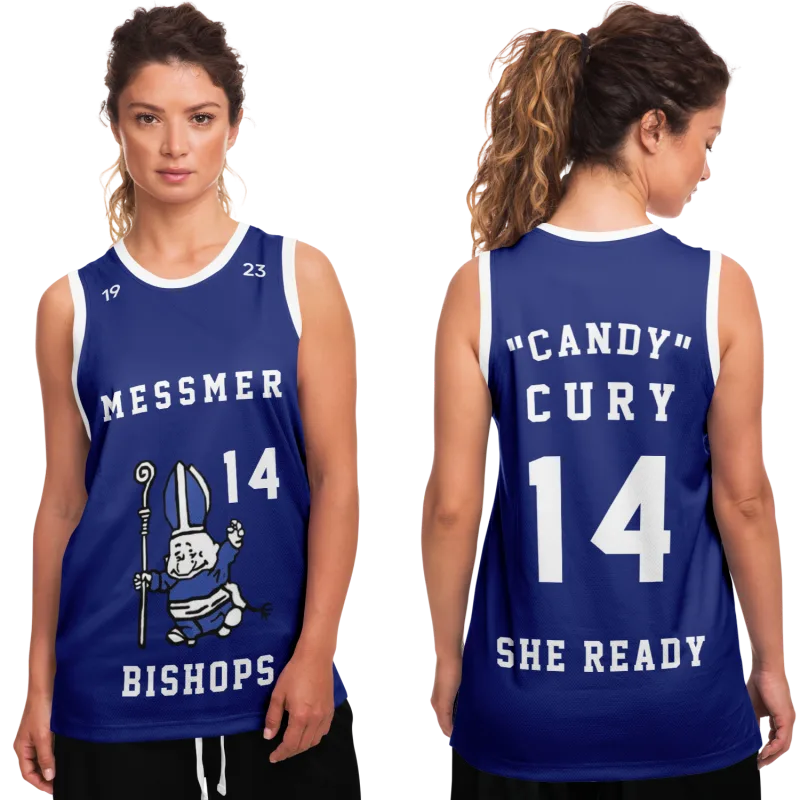
The jersey wasn't clothing. It was a legible declaration of identity at the exact moment your brain was most desperate for one.
This is part of why seeing your name and number — even decades removed — produces a response that feels physical. The brain is recognizing the most concrete external symbol it ever possessed for this is who I was, something far more loaded than any color or font.
The Social Memory Nobody Talks About
Maria T., 41, played varsity cross country for three years at a mid-size school in rural Tennessee. She hadn't thought seriously about those years until a former teammate posted a photo from their state qualifying meet — a candid shot, taken from the sideline, right before the starting gun. Maria saw herself in the frame, mid-stretch, head down, completely focused.
"I didn't get emotional about the race," she said. "I got emotional because I recognized exactly who that girl was. Not me remembering her from a distance. Her. Right there. I knew what she was thinking, what she was afraid of, what mattered to her. It was like the years just — collapsed."
What Maria described has a specific neurological component worth naming: episodic memory (memory for particular events in a particular time and place) is stored with a social layer built into the retrieval structure. Who was there is encoded as part of what happened. The two are not separable.
Your high school sports memories are almost certainly not solo memories. They're populated. The retrieval cue (a photo, a song, a field at dusk) doesn't pull just the event. It pulls the entire social context: the specific faces, the internal dynamics of the team, the particular relationship with the coach, the precise feeling of belonging to something that had its own vocabulary and its own rules.
There's an evolutionary reason this social layer runs so deep. For most of human history, your standing within the group was sorted during adolescence and carried lifelong consequences — and athletic ability was one of the clearest signals of the traits that mattered for survival.
This is also why homecoming hits harder than most people anticipate. You're not returning to a place. You're walking back into a fully populated social memory with a high-fidelity emotional soundtrack already running. Design your own — custom track jerseys.
The Unfinished Story Effect
In psychology, the unfinished story effect (also called the Zeigarnik effect) is the tendency of the brain to keep interrupted narratives in more active, accessible memory than completed ones. Stories that feel resolved get archived. Stories that feel interrupted stay closer to the surface.
For many former athletes, the arc of their high school career has an unfinished quality — not because they failed, but because it ended before the story felt complete. You aged out of the roster. The season ended. You graduated. The structure that had been organizing your identity, your social world, and your daily rhythm simply stopped.
The brain doesn't always process that as chapter closed. Sometimes it processes it as interrupted.
This is part of why the emotional texture of high school sports memories often carries that particular quality that's hard to name — not quite grief, not quite joy, but something that holds both simultaneously. You're not mourning a loss exactly. You're sitting with a narrative your brain never fully filed as finished.
Tangible artifacts — a jersey, a photograph, a trophy — can serve a genuine neurological function here. Not in a sentimental sense, but in a structural one. A present-tense physical representation of that past self gives the brain something it can locate in the now. The open story gets an anchor. The suspended identity gets a form.
Why the Feeling Gets Stronger With Distance, Not Weaker
Conventional intuition says memories fade with time. For most categories of experience, that's accurate. But emotionally significant memories from the reminiscence bump period operate by a different set of rules.
With distance comes a process researchers call fading affect bias — the consistent finding that the negative emotional content of memories decays faster than the positive content. The anxiety before the big game fades. The sting of a loss softens. The embarrassment of a mistake loses its edge. What remains, increasingly vivid by comparison, is the emotional core: the belonging, the effort that felt like it genuinely mattered, the specific moments when everything came together.
This is why the memories that people in their 40s and 50s carry about high school sports are often more emotionally potent than the memories of someone two years out of high school. The noise has cleared. What's left is the signal: the real, distilled emotional substance of what those years actually meant.
It's also why homecoming season produces responses that catch people off guard every year. The calendar cue is enough to open the file. And what's inside that file, after decades of fading affect bias doing its quiet work, is the cleanest version of what those years were actually about.
Your jersey is still out there waiting.
Design yours in minutes and see your name and number the way you remember it.
Frequently Asked Questions
Why do I feel emotional about high school sports even though I wasn't a star player?
The emotional strength of these memories has almost nothing to do with individual achievement. It's tied to the identity-formation process, the neurochemical conditions of adolescence, and the social bonds formed under shared pressure — all of which apply equally to a benchwarmer and a team captain. Your brain wasn't recording your statistics. It was recording who you were in relation to the team, the competition, and the version of yourself you were in the process of becoming. Bench minutes and starter minutes encode with the same emotional depth.
Why do I remember my teammates more vividly than people I spent more time with in other contexts?
Because shared high-stakes experience under conditions of synchronized cortisol, dopamine, and oxytocin release creates some of the most strongly encoded social memories the brain produces. You and your teammates were repeatedly experiencing intense stress and reward together, in a physically demanding environment, over the course of multiple seasons. That's the precise neurochemical recipe for deep, durable social memory formation. The relationships feel permanent because, neurologically, they largely are.
Is it normal for a single song or smell to bring a sports memory back completely and immediately?
Completely normal, and the mechanism is well-documented. The olfactory system connects more directly to the limbic system (your brain's emotional memory center) than any other sensory channel, which is why smells trigger immediate, vivid emotional recall more reliably than visual cues. Music works similarly because auditory memories are stored alongside the emotional context that was present during encoding. Any sensory input that was consistently present during high-intensity emotional experiences becomes a retrieval cue for the entire memory complex: the emotions, the people, the physical sensations, all of it at once.
Why does homecoming specifically bring these feelings back when other times of year don't?
Homecoming functions as a community-level contextual cue — which means it activates the social memory dimension of your athletic memories specifically, not just the personal one. Seasonal timing, geographic return, and collective community attention all focus on the same anchors your memories are attached to. That convergence of retrieval triggers — calendar, place, community, shared attention — is something ordinary life almost never replicates, which is why the emotional response tends to arrive with more force than people expect.
See also: why high school sports still matter so much to adults | why your senior season memories feel more vivid than almost anything else | how athletic identity shapes who you become after high school | the grief that comes with the end of your athletic career