

You remember the first time a jersey felt like it belonged to you.
Maybe it was the way the fabric hung when you pulled it off the hanger. Maybe it was the small stiffness of a button-front you fumbled at in a cold dugout. Maybe it was just the smell, that mix of dirt, sweat, and something older that no laundry soap ever fully removed.
The old school baseball jersey does that to people. Put one on, or just see one in a shop window or a photograph from your grandfather's era, and something in you recognizes it before your brain catches up. It looks different from what came after. Heavier. Quieter. Built rather than manufactured.
If you played, you know the feeling. And if you're here because you want to understand why those jerseys looked and felt the way they did, or because you're thinking about ordering a custom old school baseball jersey of your own, this is the full story of what made the flannel-era uniform a thing apart.
The Flannel-Era Jersey Was Built as Equipment, Not Apparel
Start with the material, because everything else follows from it.
The earliest baseball uniforms, going back to the mid-1800s, were cut from wool flannel. This wasn't a style choice. It was what was available, durable, and warm enough for a game played in spring chill and autumn dusk. Wool flannel is a woven fabric, brushed to raise a soft nap on the surface, and it behaves in ways modern knit fabrics simply don't.
What Wool Flannel Actually Does
Flannel has weight. A full wool flannel uniform top could run well over a pound and a half, and a complete uniform with the heavy trousers, belt, and stirrup socks added up to a load that players of the era simply accepted as part of the game. That weight changed how the jersey hung. It drooped from the shoulders in a way that made every player, regardless of build, look slightly sculpted by gravity.
The fabric also held structure. Where a modern mesh jersey drapes and clings, flannel kept its shape through a nine-inning game. Collars stayed where they were cut. Button plackets stayed flat. The jersey kept a silhouette.
And it showed everything. Grass stains, infield clay, and sweat marks all worked into the nap of the fabric and stayed there, which is part of why the vintage photographs of these uniforms look so alive. A game left its fingerprints on the jersey.
The Weakness Nobody Romanticizes
Here's the part the nostalgia usually skips: wool flannel was miserable in summer. It shrank unpredictably. It itched against bare skin, and players of the era often wore a thin undershirt for exactly that reason. In wet weather it grew heavier and clung. A full season of washing and wearing could leave a flannel jersey a size smaller than the one issued in April.
Our team spends a lot of time with people who want a throwback look without the suffering, and that's worth saying plainly. The look of flannel is the thing people love. Almost no one wants to recreate the actual experience of sweating through a wool uniform in July. That distinction matters enormously when you get to ordering, and we'll come back to it.
The Design Details That Defined the Look
Material is the foundation. The details are what make an old school baseball jersey instantly legible as old school. Each one has a practical origin, and each one is worth understanding before you decide which to carry into a custom design.
Button Fronts
The button-front jersey is the single most recognizable feature of the classic era. Early jerseys were cut like work shirts because that's essentially what they were, and the button placket let players get in and out of heavy wool without the stretch a pullover requires.
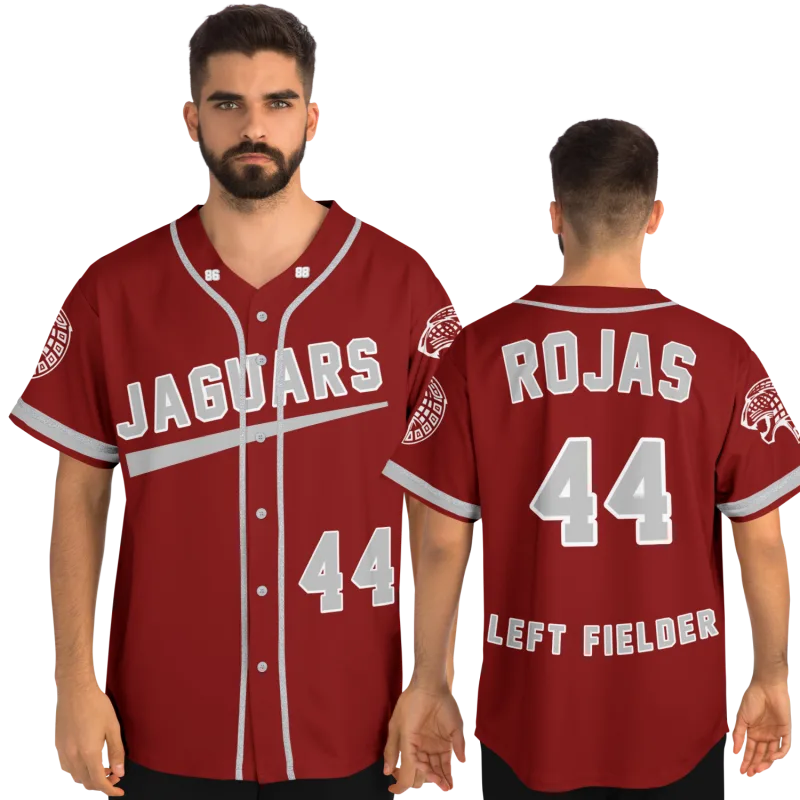
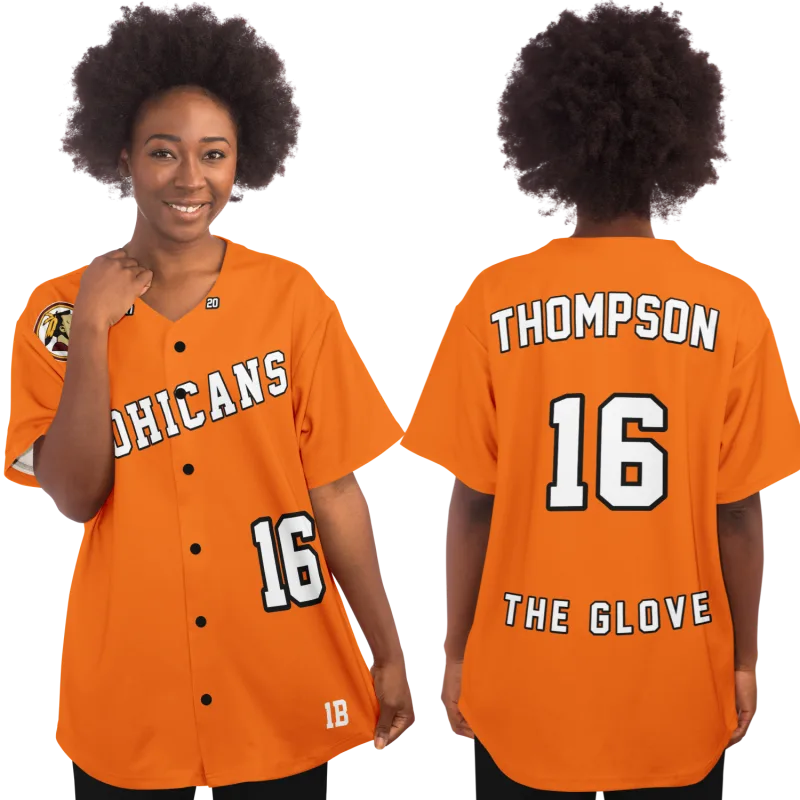
Buttons also created a clean visual spine down the chest. The placket divided the jersey, gave the lettering a natural center line, and added a row of small, repeating circles that caught light differently than the surrounding fabric. When pullover jerseys arrived, with elastic-waist pants and a more athletic cut, the button front began its slow retreat from professional diamonds. But it never left the cultural memory, and it remains the quickest way to signal "old school" on a modern custom jersey.
Piping and Soutache Trim
Look closely at a vintage jersey photograph and you'll often see a thin line of contrasting trim running along the placket, the collar, and the sleeve edges. That's piping, sometimes called soutache when it takes the braided form.
Piping did two jobs. It reinforced the seams that took the most stress, and it gave a team a way to add a second or third color without printing or heavy embellishment. A navy jersey with a thin red and white piped edge looked finished in a way that plain fabric never did. The trim is subtle, but it's often the detail that separates a convincing throwback from a costume.
Chain-Stitched Lettering and Felt Appliqué
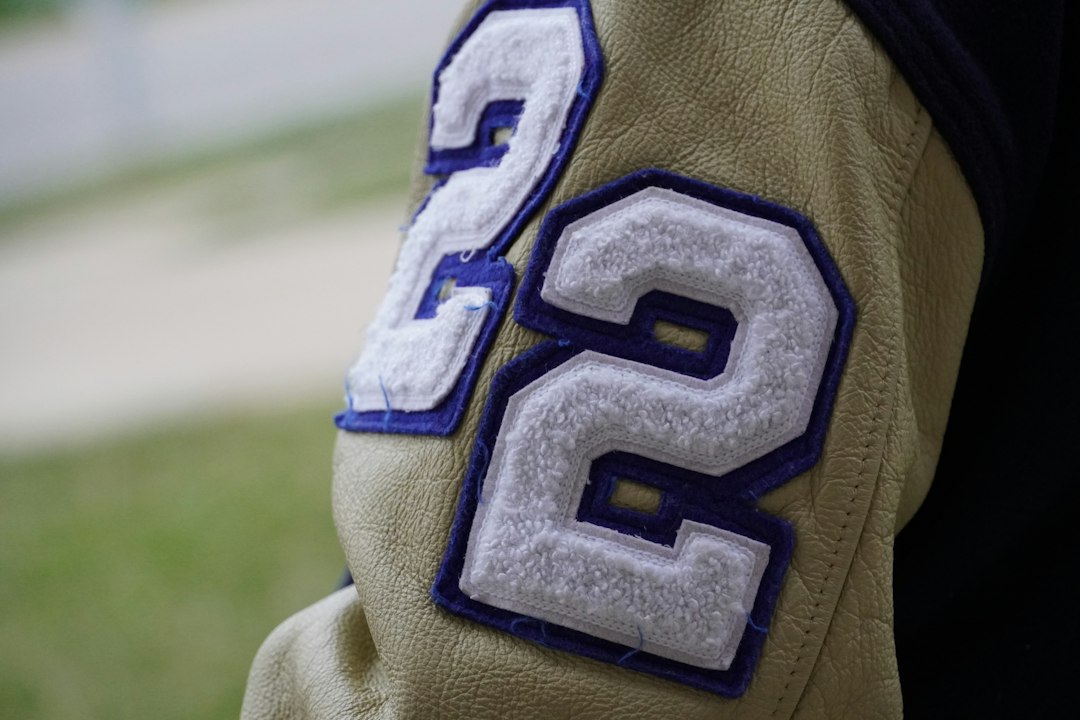
Before screen printing and heat-pressed vinyl, team names and numbers were built from felt or twill appliqué, stitched on, and often outlined with chain stitching, a looped embroidery technique that gives lettering a raised, rope-like border.
If you've ever run your thumb across an old chain-stitched chest script, you know the sensation. It has texture. It has dimension. The letters sit on the fabric rather than inside it, and they catch shadow along their edges. Chain-stitched script, especially the flowing cursive used for team names across the chest, is probably the single most evocative element of the entire design vocabulary.
The Collar Situation
Early jerseys often had open, turned-down collars, a leftover from the shirt-based cut. Later came the collarless crew neck and the V-neck. Each era's collar tells you roughly when a jersey was designed, which is useful if you're trying to match a specific period for a custom order.
Walking Through the Eras
"Old school" isn't one look. It's a span of roughly a century, and the differences between its phases are real. If you're designing a custom jersey, knowing which era you're borrowing from keeps the whole thing coherent.
The Early Flannel Years
In the earliest decades, uniforms were cut like dress shirts, with full collars, laced or buttoned fronts, and long sleeves. Team identity came from a chest letter or a simple city name, often in block lettering. Colors were restrained, and home and road distinctions came down to white versus gray or a darker tone. It was all functional, and it looks stately now.
The Classic Middle Period
By the middle of the 20th century, the look most people picture when they say "old school baseball jersey" had settled in. Button fronts. Script lettering across the chest. A small number on the sleeve or back. Piping. Heavy cotton-wool blends replaced pure wool in places, though the flannel feel persisted. This is the period most throwback collections reach for, because it balances simplicity with enough character to be unmistakable.
The Transition Years
Then came the double-knit polyester pullover, bright colors, and the pajama-like looseness that marked the later decades of the century. Some people love that era too, but it's a different aesthetic entirely, brighter and louder. If you want the quiet, structured look of the flannel period, this is where you stop borrowing.
Why Modern Jerseys Feel So Different
Hold a flannel-era design next to a current performance jersey and the contrast is stark, and it goes beyond color.
Modern jerseys are engineered for moisture-wicking, stretch, and low weight. They use polyester mesh with laser-cut ventilation and sublimated graphics, meaning the design is dyed into the fabric rather than sewn onto it. That produces a flat, uniform surface. It performs beautifully and photographs cleanly, but it doesn't have depth. There's nothing to catch your thumb.
The old jerseys had layers: fabric, then appliqué, then stitching, then trim. Each added texture and shadow. That layered quality, more than any single feature, is why vintage jerseys read as richer in photographs and in person. A modern design can imitate the pattern of a classic jersey, but the physical dimension is harder to fake.
What Sublimation Can and Can't Do
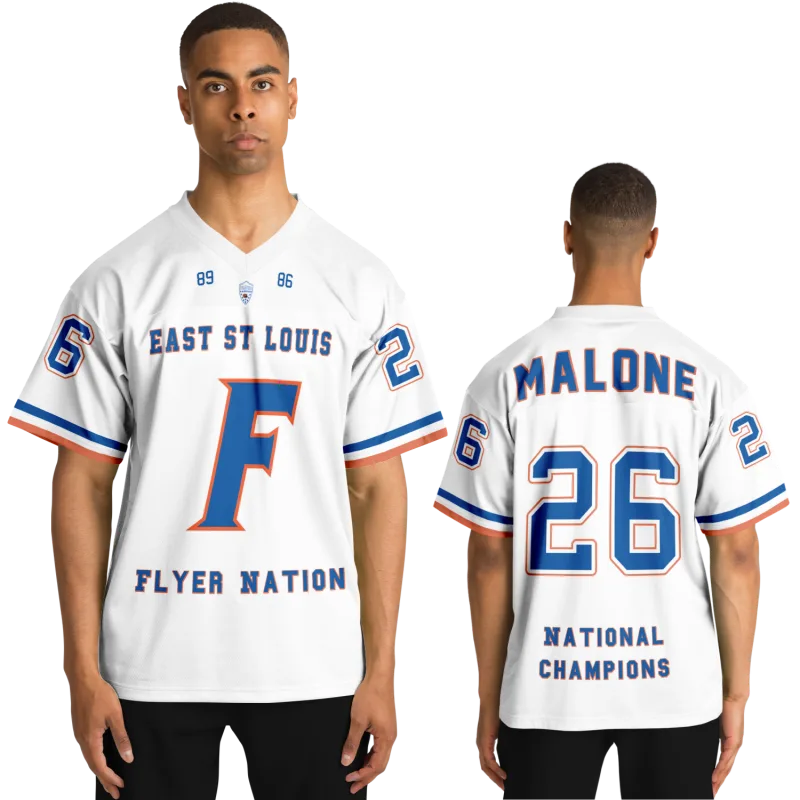
This is the practical truth for anyone ordering custom. Sublimated jerseys can reproduce a throwback look with remarkable accuracy, including script lettering, piped-edge illusions, and period colors, at a price and comfort level that real flannel never matched. What they can't reproduce is the raised dimensionality of true chain stitching or the weight of real wool.
Our team recommends being honest with yourself about which of those matters to you. If it's the visual identity, sublimation gets you there comfortably. If it's the tactile, handmade quality, you'll want to look specifically for twill appliqué or embroidered lettering options and accept that they cost more and move differently.
A Jersey That Meant Something
Dale R., 58, played second base for a small-town American Legion team in the Midwest, and he still keeps one thing from those summers: the flannel-style button-front his coach had made for the whole roster, red piping and a chain-stitched script across the chest. The team folded decades ago, but Dale's jersey hangs in his garage workshop. When his granddaughter joined her first youth team, he wanted her uniform to carry the same feeling. He spent an evening with a designer matching the script style and piping color from memory, then ordered a custom throwback for her and a matching one for himself. She wears hers to every practice, and the button placket is what she always points to first.
That's the pull of the old school baseball jersey. It carries a story people want to hand down.
If You Played, You Know This Feeling
Every former ballplayer remembers the first time a jersey got pulled over a head or buttoned down the front and suddenly you were part of something. Not a customer, not a spectator, but a member of a team with a name across your chest.
If you played, you know the small rituals. Tucking the jersey a certain way. Checking the number on your back in a mirror you weren't supposed to be looking at. The way a clean white home jersey made you stand a little straighter, and the way the gray road jersey, already dusty by the third inning, felt like proof you'd been somewhere.
The old school baseball jersey distills all of that. It strips the uniform back to what it was always supposed to do: tell people who you play for, and tell you who you are when you put it on. That's why the flannel-era look has outlasted every trend that tried to replace it.
How to Bring the Old School Look Into a Custom Jersey
Understanding the history is only useful if it shapes the decision. Here's how to carry the classic design language into something you actually order.
Choose Your Era First
Decide whether you're after the early-century dress-shirt look, the classic mid-century button-front, or something in between. Mixing elements from different eras is where throwback designs start looking confused. A button front with a modern V-neck and neon trim fights itself.
Prioritize the Details That Carry the Look
Not every classic feature needs to be present. Three details do most of the work:
- A button-front placket, which gives the jersey its recognizable spine
- Script lettering across the chest, in a flowing hand rather than blocky sans-serif type
- Contrast piping along the placket and sleeve edges, in one or two team colors
Get those three right and the jersey reads as old school even if the fabric is modern.
Keep the Color Palette Restrained
The flannel era favored limited palettes: two colors, occasionally three. A navy jersey with red lettering and white piping looks authentic. A jersey with five colors and gradient fades does not. When in doubt, take a color out.
Match the Numbering Style
Classic jerseys often kept numbers small and placed them on the back or sleeve rather than splashing them across the chest. If your design leans heavily on the era, keep the numerals modest and the chest script dominant.
Think About How It Will Be Worn
A custom throwback jersey ordered for a former player, a coach, or a family member has a different job than one ordered for a team playing nine innings in July heat. Be honest about whether this jersey will be worn on a field or displayed, gifted, and worn on weekends. Display and casual pieces can lean fully into the nostalgic details. Game-use jerseys should balance the look with breathability.
Common Mistakes People Make With Throwback Designs
After seeing how people approach this look, a few errors come up repeatedly.
Mixing eras. A button front paired with a modern collar and heavy sublimated gradients undercuts the whole premise.
Overcrowding the chest. The old jerseys let one element, the script, dominate. Adding a logo, a number, a sponsor, and a tagline all at once buries what made the original look strong.
Choosing fonts that don't match. Block-letter fonts and thin modern sans-serifs look wrong on a design meant to feel flannel-era. Script and slab styles with a hand-lettered quality fit far better.
Ignoring trim. A plain jersey with no piping looks flat next to the real thing. A thin line of contrast trim is one of the cheapest, most effective ways to make a design feel period-accurate.
Forgetting that fabric has a say. Even with sublimation, the base fabric color matters. Cream and off-white read as vintage in a way stark bright white does not.
Why the Look Keeps Returning
Throwback jerseys have cycled in and out of fashion for decades, and the flannel-era look keeps coming back because it solves a problem modern design can't: it feels earned.
A jersey designed for performance and a jersey designed for memory are different objects. The first optimizes for the player in the moment. The second optimizes for the person remembering. The old school baseball jersey is the second kind, even when it was brand new, because its design language was built from craft rather than engineering.
For a former player, that matters. You aren't ordering a jersey to compete anymore. You're ordering it to hold something. A name, a number, a summer, a team that doesn't exist anymore. The materials and details of the flannel era, the buttons, the script, the piped trim, are better at holding that kind of weight than any mesh or sublimated gradient ever will be.
Your jersey is still out there waiting.
Design yours in minutes and see your name and number exactly the way you remember it.
Frequently Asked Questions
What is an old school baseball jersey?
An old school baseball jersey is a throwback-style uniform top that draws on the design language of baseball's early and mid-20th-century uniforms. The defining features are a button-front placket, script lettering across the chest, contrast piping along the edges, and a restrained color palette. Originally these jerseys were made from wool flannel; today the look is usually reproduced in lighter, more comfortable fabrics.
What were old baseball jerseys made of?
The earliest baseball jerseys were made of wool flannel, a brushed woven fabric chosen for its durability and warmth. Over the decades, cotton and wool-cotton blends appeared, and eventually double-knit polyester took over in the later part of the century. Modern custom jerseys typically use polyester or performance blends that imitate the appearance of older designs without the weight or itch of true flannel.
Why did baseball jerseys have buttons?
Early jerseys were cut like work shirts, and buttons were the practical closure for heavy wool garments that couldn't stretch over the head easily. The button placket also created a clean center line that organized the lettering and trim. Pullover jerseys eventually replaced buttons in professional play, but the button front remains the most recognizable old school feature.
Can I get a custom old school baseball jersey for adults and kids?
Yes. Custom throwback designs are commonly ordered for adult former players, current recreational teams, youth players, and as gifts. The same design elements, button front, script lettering, piping, and a limited color palette, scale across sizes. Many people order matching jerseys for multiple generations of a family.
How do I make a modern jersey look vintage?
Focus on three details: a button-front placket, flowing script lettering across the chest, and contrast piping along the placket and sleeves. Keep your color palette to two or three colors, choose an off-white or cream base rather than stark white, and match your numbering style to the era you're borrowing from. Avoid mixing elements from different decades.
Are flannel baseball jerseys comfortable to wear?
True wool flannel is heavy, can itch against bare skin, and traps heat, which made full-wool uniforms uncomfortable in summer. Modern throwback jerseys usually reproduce the look in lighter, breathable fabrics, giving you the visual style without the discomfort. If tactile authenticity matters to you, look for appliqué or embroidered lettering, which recreates the layered texture of older jerseys.
See also: custom softball jerseys | what the numbers on a jersey actually mean | what to do with your old varsity letter jacket | turning old gear into a custom sports shadow box | why athletic nostalgia hits so hard