





There's a specific moment you still remember exactly.
Not the final whistle, not the scoreboard — something smaller. The way the floor felt under your knees when you sat down. The smell of a gymnasium that had just turned quiet too fast. The sound of someone on the other team celebrating in a way that seemed impossibly loud for how empty everything else felt.
You were sixteen, or seventeen, or maybe fifteen, and what losing taught you in sports in that moment was nothing. Not yet. You were just in it — the raw, immediate, humiliating fact of defeat. You had trained for months. You had wanted this more than you'd wanted almost anything. And then it was over, and you lost, and the way home was very long.
That was years ago.
Here's what's worth examining now: that loss is still working on you. Not as a wound — as a tool. The question isn't whether it shaped you. It did. The question is whether you've taken the time to see exactly how, and to own it deliberately as part of who you are.
This article is for the grown woman who's ready to look back at that defeat with clear eyes — and finally see what she brought home from it.
The Loss Nobody Talks About
Every retrospective about women in sports focuses on the wins. The state championships. The buzzer-beaters. The comeback stories. The records. Sports culture is built on a highlight reel, and the highlight reel never opens on a loss.
But here's what handling defeat in sports actually produces, and what almost no one says out loud: your losses did more formative work on your character than your wins ever did.
Wins confirm. Losses construct.
When you won, you got validation — evidence that what you already believed about yourself was true. That you were fast enough, strong enough, coordinated enough, cohesive enough as a team. The win closed a loop.


A loss cracked something open. It forced you to sit with questions that a win would have answered too easily: Am I actually good enough? What do I do when the thing I worked for doesn't come through? Who am I when I'm not the person who won?
Those questions don't get asked in victory. And the women who have learned to answer them clearly — not in sports anymore, but in boardrooms and hospitals and classrooms and difficult marriages and hard conversations — almost always trace that ability back to a specific moment on a field or a court or a track where everything fell apart.
The loss nobody talks about is the loss that made you.
What the Retrospective Reveals That the Moment Couldn't
There is a reason sports psychology research distinguishes between how an athlete experiences a loss in the moment and what she does with it over time. Carol Dweck's foundational work on growth mindset at Stanford identified that how people interpret failure — as evidence of fixed inadequacy or as information for improvement — determines not just athletic outcomes but professional and interpersonal ones. The athletes who carry their losses productively into adult life aren't the ones who felt nothing. They're the ones who eventually learned to read the loss correctly.
The moment doesn't let you do that. At seventeen, sitting on that gym floor or standing on that field in the cold, you weren't able to zoom out. You were in the middle of the story. What the retrospective gives you — years later, with distance and the pattern recognition that comes from actually living — is the ability to see what that loss was building while you were too busy grieving it to notice.
In our experience talking with former high school athletes, the losses that produced the most lasting resilience share four characteristics:
- They happened in a high-stakes, deeply wanted context (not a scrimmage — a championship, a final, a qualification match)
- They involved genuine effort that still fell short — not a blowout, not a forfeit, but a real contest that was genuinely lost
- They were followed by a period of grief that was real and proportionate
- They came at an age when identity was still being formed — which made the defeat feel existential, even when it wasn't
That fourth point is the most important one. The losses that still teach you something are the ones that happened when you were still deciding who you were. They were absorbed into the construction of your identity — not just remembered by it.
The Specific Strengths That Came From That Specific Loss
Here's where the work gets concrete. Not "you learned resilience" — that's too general to be useful. What specific capability do you use today that you can trace, with real precision, to the way you had to rebuild yourself after that defeat?
For most women, it falls into one of these categories — though the specific form it takes is always personal.
The ability to keep moving when the outcome isn't guaranteed
Before that loss, you may have worked hard because you expected the work to pay off in a specific way. The loss taught you that work doesn't guarantee outcome — but you kept working anyway, afterward. That recalibration is not small. It is the foundation of professional endurance.
The women who can sustain effort through ambiguity — who can run a campaign, raise a child, build a practice, or manage a team through a period where the result is genuinely uncertain — often learned that capacity on a field where they gave everything and still lost. The loss was the curriculum. The professional resilience is the grade.
The capacity to disagree without dissolving
Something specific happened in the aftermath of your loss. You had to have difficult conversations — with coaches, with teammates, maybe with parents. You had to process blame and distribute accountability and sit with the possibility that you contributed to the outcome, or that the system failed you, or both.
That's an advanced interpersonal skill. Most people don't develop it without practice. You practiced it at sixteen, under pressure, when the stakes felt enormous. The version of you who now has hard conversations at work or in relationships without completely falling apart — that's not a coincidence. That's a trained skill.
The ability to want something again after you've been hurt
This one is quieter, but it may be the most significant. After a devastating loss, the next season starts. You have to want something again. You have to commit fully, knowing it might end the same way.
That kind of re-commitment is not naive optimism. It's informed hope — hope that is still chosen even after the evidence that it might not work out. That is an emotional capability that most people struggle with for their entire lives. You built it before you graduated high school.
The Story You've Been Carrying Without Knowing It
Marisol V., 34, had been a starting midfielder in a competitive high school soccer program in Texas. Her team made it to the regional finals twice. Both times, they lost in overtime — once on a penalty kick that she felt responsible for.
She didn't connect that experience to her professional life until a colleague pointed out that she was the only person on their project team who didn't visibly panic when a major client account came back with a rejection. She just recalibrated. She told her team, "Okay. Here's what we change. Here's when we go back." Her colleague asked her how she was so calm. She thought about it for a long moment before she answered: "I've been here before. I know it's survivable."
She hadn't thought of herself as someone who handles defeat in sports especially well. She thought of herself as someone who lost two important games and eventually moved on. The gap between those two self-descriptions is where the lesson lives.
Lessons From Losing a Championship: Why the Biggest Losses Teach the Most
There is a reason the championships that slipped away stay with you longer than the regular-season defeats. The emotional weight of those losses was higher — which means the neurological encoding was deeper. What you feel most intensely, you remember most completely. And what you remember completely becomes the raw material for self-understanding.
But there's another reason those losses are the most educational: they happened at maximum commitment. You were not half-in during a championship match. You were entirely in — physically, emotionally, socially. Your team was with you. Your coaches were watching. Your family was there. The stakes, as you understood them at the time, were as high as they had ever been.
Losing at maximum commitment is not the same as losing when you didn't care. Losing at maximum commitment means you cannot blame insufficient effort. It forces a more honest reckoning: I did everything I knew how to do, and it still wasn't enough — now what?
The "now what" is where character is formed.
The growth mindset that emerges from a sports loss is not just the cliché of "you either win or you learn." It's something more specific and more adult: the recognition that outcomes are not a direct measure of effort or character, and that this does not make effort or character any less worth investing in.
That is a sophisticated and hard-won piece of philosophical equipment. Most people spend decades learning it. You learned it on a scoreboard.
How to Actually Use This Now
The retrospective is not just sentimental. There is a practical application here, and it's worth being direct about it.
Most women who played competitive high school sports carry a set of capabilities — emotional, interpersonal, cognitive — that they either undervalue or have never explicitly named. They attribute their resilience to "just how I am" rather than to specific training that happened in a specific context. That attribution matters, because what you don't know you built, you can't intentionally deploy.
Here is a simple three-part exercise worth actually doing:
-
Name the loss. Not vaguely — specifically. The game, the season, the moment. What was the score, what was your role, what was the feeling afterward? Write it down. The specificity matters. Vague grief doesn't yield specific insight.
-
Name what happened next. Not in sports — in you. What did you do differently the following season, or the following year, or in the first difficult professional situation you faced? What was the behavior that you can now recognize as a direct descendant of that defeat?
-
Name the capability. Give it a word. Not "resilience" — something more specific. "I can re-commit after a public failure." "I can have hard team conversations without making them personal." "I can want something again after I've been hurt." This is yours. Own it with that precision.
Sports defeat and character development are not accidentally linked. They are mechanically linked. The mechanism is lived experience at high emotional stakes during identity formation. You ran that mechanism. You have the output. You just may not have looked at it clearly yet.
The Permission You've Been Waiting For
Here is something that women who played sports rarely give themselves: permission to claim the loss as part of their story with the same pride they claim their wins.
The wins are the easy ones to display. The wins have trophies and photographs and clear social legibility. The loss doesn't fit in a frame. It doesn't have a moment of record. It's stored in your body, in your nervous system's response to pressure, in the specific calm you find in a crisis that surprises the people around you.
But it's yours. As much as any trophy you ever held.
The woman who sat on that gymnasium floor or stood at that starting line or walked off that field in defeat — she was doing something extraordinary that she couldn't see at the time. She was becoming more than she was before she walked in.
The loss won. Just not the way you expected.
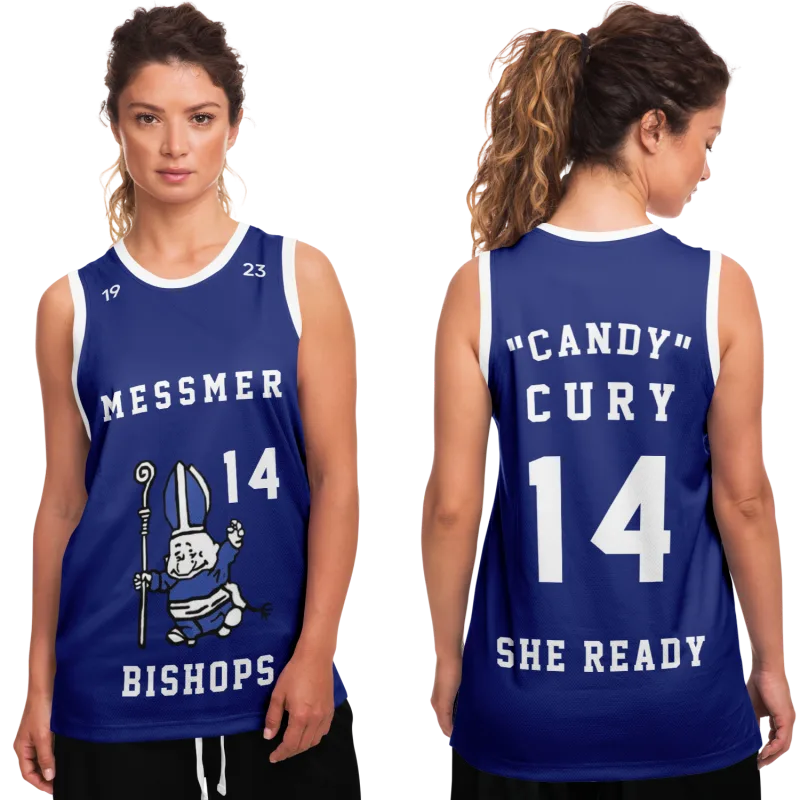
Your jersey is still out there waiting.
Design yours in minutes and see your name and number exactly the way you remember it.
Frequently Asked Questions
How do I stop feeling regret about a loss that happened years ago?
The goal isn't to stop feeling it — it's to reframe what you're feeling. Regret assumes the loss was a failure of character or effort that you could have prevented. Most championship-level losses at the high school stage are not. They are the result of two committed teams, and one team lost. When you name what the experience built in you rather than what it took from you, regret tends to give way to something more complicated and more accurate: grief for the outcome you wanted, combined with genuine respect for who you became in the aftermath. Those two things can coexist.
Is it normal that a high school sports loss still affects me as an adult?
Not only is it normal — it's neurologically expected. High-intensity emotional experiences during adolescence are encoded more deeply than equivalent experiences in adulthood, partly because the identity-forming work of that developmental stage means the experience gets integrated into self-concept, not just memory. The losses that still affect you aren't affecting you because you haven't "moved on" — they're affecting you because they became part of who you are. The question worth asking is whether they're affecting you productively or not.
What if I'm still angry about how that loss was handled — by coaches, officials, or teammates?
That anger is worth examining rather than dismissing. Some losses come with legitimate grievances: a coach who mishandled a situation, a call that was genuinely wrong, a team dynamic that fell apart when it mattered. Those grievances can sit alongside the growth the loss produced — you don't have to choose between "the loss taught me something" and "parts of that situation were unfair." Hold both. The lesson from the loss and the legitimacy of the anger can coexist. What doesn't serve you is letting the anger be the only story, because then the loss only takes — it never gives.
How do I help a younger athlete in my life understand this while she's in the middle of her own loss?
Carefully, and mostly by presence rather than perspective. In the immediate aftermath, a young athlete does not need the lesson — she needs the witness. Sit with her in the grief before you offer the reframe. The insight that "this loss will teach you something" lands differently at forty than it does at seventeen. What she needs first is someone who doesn't try to make it better too fast. The meaning comes later. Your job right now is just to stay.
See also: what high school sports actually teach you that nothing else could | the grief that comes with the end of your athletic career | the bus ride home after a loss | why high school sports still matter so much to adults | how athletic identity doesn't disappear after high school