





That knee tightens before the rain arrives. The shoulder catches on a specific angle — the one you used to throw from — and holds there for just a beat too long. The long term effect of high school sports injuries doesn't announce itself in clinical language. It speaks in the vernacular of Tuesday mornings and cold October air and the particular ache that arrives after a long day on your feet.
If you competed in high school athletics and still carry those physical echoes, you're not alone and you're not being dramatic. Research published in the British Journal of Sports Medicine has documented that musculoskeletal injuries sustained during adolescent sport produce measurable consequences into adulthood — elevated rates of early-onset osteoarthritis, reduced joint mobility, and chronic pain patterns that trace directly back to the original injury site. The science confirms your body has a long memory. What the science rarely addresses is the other dimension of that memory: what it means.
This article holds both things at the same time. The practical reality of old sports injuries in adulthood — what's actually happening, what actually helps — and the less-examined truth that those injuries constitute something more than damage. They are coordinates. Together, they map the shape of a particular chapter of your life.
Your Body Kept a Ledger: What High School Athletics Actually Did
High school athletics may be the most physically demanding sustained experience most of us will ever go through, and we did it during a developmental window that made the stakes higher than most of us understood at the time.
The adolescent musculoskeletal system occupies a strange dual position: simultaneously at peak adaptability and peak vulnerability. Growth plates — the zones of developing cartilage near the ends of long bones — don't fully harden into bone until somewhere between age 17 and 25, varying by individual and by bone. An injury occurring during this window doesn't just affect the immediate structure. The tissue that heals forms differently than the original architecture would have. In joints, that means altered load distribution across the articulating surfaces. In tendons, it can mean permanently changed elasticity. In cartilage — which carries almost no blood supply and therefore almost no capacity to regenerate — it can mean structural changes that stay silent for decades before expressing themselves as pain.

This is the mechanism behind a pattern that former athletes recognize immediately: the injury you played through at 16 becomes the reason your hip talks to you at 42. The original event was real. The delayed consequence is equally real. Neither one diminishes the other.
The Injuries from High School Athletics That Travel Furthest Into Adulthood
Not every athletic injury has the same longevity. In our experience reviewing the relevant literature alongside the accounts of former athletes across many sports and decades, certain injury categories carry disproportionate long-term weight.
Knee ligament damage — ACL and MCL tears in particular — remains the most consequential category. ACL tears, even those surgically repaired with contemporary techniques, alter the biomechanical environment of the knee in ways that increase lifetime osteoarthritis risk by approximately three times compared to an uninjured knee. If your repaired knee still tracks differently on stairs, or stiffens after extended sitting, that sensation reflects altered load distribution that has been operating since the original injury. It's not weakness. It's compensation that became permanent.
Shoulder impingement and rotator cuff micro-damage are the characteristic legacies of baseball, softball, swimming, and volleyball — any sport built around repetitive overhead mechanics. Athletes who specialized early and trained year-round accumulated cumulative structural stress that rarely produced significant symptoms during their playing years, because youth and adaptation absorbed most of it. The bill typically arrives in the thirties and forties, when the buffer of youthful resilience has thinned.
Ankle instability from incompletely rehabilitated sprains is the most common and most underestimated long-term consequence of court and field sports. Each ankle sprain that healed without proper proprioceptive retraining left the joint's internal positioning system slightly compromised. Stack several of those incomplete recoveries across a four-year career — which is the norm, not the exception, in programs without dedicated sports medicine resources — and the result is an ankle that carries chronic subtle laxity. That laxity changes gait mechanics. Changed gait mechanics affect knee tracking. Knee tracking affects hip loading. The chain runs the full length of the kinetic system.
Shin and foot stress fractures, common in distance runners and high-volume court athletes, often healed without incident at the time. The affected bone, however, develops altered density distribution at the fracture site. Under sustained loading in adulthood — a return to recreational running, a demanding hiking trip — those old sites are typically the first to raise a complaint.
Reading the Map: What Each Specific Ache Is Reporting
There's a different way to relate to chronic pain from injuries from high school athletics than most of us were taught. Medicine offers management. What it rarely offers is translation. When a particular joint reports in during a particular movement or weather condition, it isn't only malfunctioning — it's referencing a specific history. Learning to read that reference is practically useful and, we'd argue, genuinely worth doing.
The Distinct Language of Different Joint Pain Patterns
Morning stiffness that eases once you're moving typically signals cartilage architecture changes. Cartilage depends on the compression-and-release cycle of movement to circulate synovial fluid — the joint's lubricating medium. When cartilage has thinned or lost surface smoothness from a previous injury, that lubrication process takes longer to establish. The stiffness isn't structural collapse. It's an extended warm-up requirement from a structure that was altered years ago.
Pain that responds to barometric pressure and cold — the phenomenon former athletes describe as "knowing when rain is coming" — is physiologically documented, not imagined. Researchers at Tufts University identified significant correlations between barometric pressure drops and knee pain in patients with osteoarthritis. The underlying mechanism involves joint capsule expansion in response to external pressure changes. When an old injury site has scar tissue or altered joint architecture, that capsule has reduced capacity to accommodate expansion without irritating adjacent structures. Your body functions as a barometer because its internal environment responds to the same pressure gradients as the atmosphere outside it.
Persistent asymmetries in strength or flexibility are often the longest-lasting signature of a unilateral injury. A right ACL torn at 17 may still correspond to a measurably weaker right quadriceps decades later. The nervous system responds to significant joint injury by reducing recruitment in surrounding musculature as a protective measure. When that adaptation is never deliberately addressed through rehabilitation, it becomes encoded into habitual motor patterns — and it can stay there indefinitely.
Audible grinding or clicking in a previously injured joint — what clinicians call crepitus — is the acoustic result of altered joint surfaces moving against each other. It's consistently startling to hear. In the absence of accompanying pain or swelling, isolated crepitus at a previously injured site is generally benign from a medical standpoint. It is, however, an honest structural report: this joint is not the same joint it was before the original event.
A Story the Body Tells
Marcus T., 41, played outside linebacker at a small school in rural Tennessee. He remembers two significant injuries clearly: a left knee MCL sprain his sophomore year that he played through after two weeks of limited practice, and a high ankle sprain his senior season that kept him sidelined for four games — the longest stretch he'd ever missed.
He hasn't played organized football since graduation. But on cold mornings, or after long shifts at the construction site, his left knee and left ankle both report in. "It's always those two, in that order," he said. "Like clockwork. Like they're reminding me of something."
They are. Those two joints absorbed specific loads at specific developmental moments, healed under the time constraints of a high school program without dedicated rehabilitation resources, and have carried that particular history ever since. Marcus has stopped framing it as damage. "It's like a scar," he said. "You know exactly how you got it. It's yours. It's part of the story."
Dealing with Past Sports Injuries: What Actually Produces Results in Adulthood
Recognizing the emotional and biographical dimension of old athletic injuries doesn't mean accepting unnecessary suffering as the price of having competed. Many of the functional limitations created by injuries from high school athletics are genuinely addressable — not through the aggressive acute interventions of the original events, but through the slower, more sustainable work of adult athletic maintenance.
What Consistently Helps
Eccentric loading as a targeted strength modality is the most well-documented intervention for chronic tendon and joint pain at old injury sites. Eccentric exercise — where the muscle contracts while lengthening, rather than shortening — stimulates tendon collagen realignment in a way that concentric-only training does not produce. The research base for eccentric loading in patellar tendinopathy, Achilles tendinopathy, and rotator cuff dysfunction is substantial and consistent. This isn't generic strength advice applied broadly. It's a specific modality with a specific mechanism for specific old injury types.
Proprioceptive retraining addresses the nervous system adaptations that outlast structural healing. Single-leg balance progressions, unstable surface work, and reactive agility drills rebuild the positional sensing disrupted by ankle and knee injuries. If an ankle still gives way occasionally — twenty years after the original sprain, with ligaments that imaging would show as structurally intact — the issue is almost certainly proprioceptive degradation that was never corrected. That is a trainable deficit, not a permanent one.
Graded loading rather than protective rest inverts the instinct most people have about chronically aching joints. Cartilage, which has no direct vascular supply, receives its nutrition through the compression-and-release mechanics of movement. Prolonged immobility accelerates the cartilage breakdown it's intended to prevent. Managed, progressively increasing mechanical demand on a previously injured structure is consistently more effective than the avoidance strategy that feels protective.
Thermal management around activity — heat applied before movement, cold applied after — remains the practical daily maintenance standard for old injury sites with underlying structural changes. Heat increases tissue extensibility before loading. Cold attenuates post-activity inflammatory response. Neither intervention is sophisticated. Both are consistently effective.
What Doesn't Help
Treating every old injury site with the same generalized approach. The long-term management of an old ACL repair involves different mechanics than the management of a shoulder with a history of repeated impingement. Applying generic "joint support" strategies uniformly across structurally distinct old injury sites delays the specific work each site actually needs.
Waiting for new symptoms at an old site to become significant before seeking assessment. Old injury sites are not static — they continue to change, particularly as the surrounding musculature shifts with age and activity level changes. New pain, new swelling, new mechanical symptoms, or altered range of motion at a previously stable old site warrants current evaluation rather than reassurance based on a historical diagnosis.
The Accounting That Medicine Doesn't Do
Here is the part of the conversation about dealing with past sports injuries that almost never happens in a clinical context: what those years actually cost, and what they were worth.
For most people who competed seriously in high school athletics, that period holds a particular weight that adult life rarely produces again. The specific combination of team belonging, physical peak, genuine competitive stakes, and the particular intensity of adolescent investment — it doesn't have an adult equivalent. When an old injury reminds you of its presence, it isn't only generating a symptom. It's pulling a thread that connects to something larger.
Our team recommends something that might sound unusual coming from a practical maintenance article: let it. Not in a way that amplifies suffering or resists the practical work of management. But in a way that acknowledges what that pain is actually indexing. The knee that registers pressure changes before a storm ran fourth-quarter sprints in October. The shoulder that catches on that particular angle delivered the throw that mattered. The ankle that still occasionally rolls slightly was on the field for all of it.
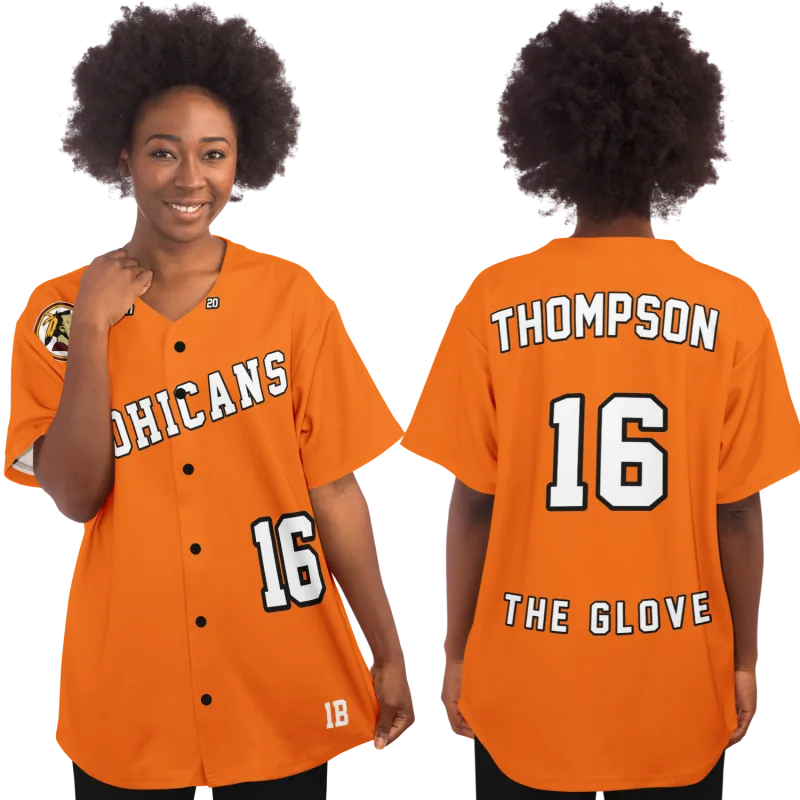
Chronic pain from old athletic injuries in adulthood is a medical reality that deserves practical attention. It is also a form of memory — the way a scar is a form of memory, or the way a jersey with a name and number on the back is a form of memory. You take care of it practically because the structure still has work to do. And you can recognize, simultaneously, that the thing it's marking was real, and significant, and entirely yours.
The number you wore during those years belonged to you. The body that wore it is still here, still reporting in, still carrying the ledger. Both are part of the same story.
Your jersey is still out there waiting.
Design yours in minutes and see your name and number exactly the way you remember it — a tribute to the seasons, the teammates, and the game that shaped you.
Frequently Asked Questions
How long do the effects of high school sports injuries actually last into adulthood?
The structural changes created by significant athletic injuries — cartilage loss, ligamentous laxity, altered bone architecture — are permanent in the sense that the original tissue architecture cannot be restored without surgical intervention. What isn't permanent is the functional limitation those changes produce. With appropriate rehabilitation, targeted strength work, and sustained movement practice, most former athletes can reduce functional limitation to minimal or negligible levels even decades after the original injury. The honest answer is that the structural history is indefinite; the degree to which it affects daily function is substantially within your influence.
When does an old sports injury warrant a new medical evaluation?
The specific trigger is new symptoms at a previously stable site. If an old injury that has been producing predictable, manageable discomfort for years suddenly presents with new swelling, a change in the character or location of pain, mechanical symptoms like locking or giving way, or a meaningful reduction in range of motion, that warrants current assessment rather than management based on historical diagnosis. Old injury sites continue to change over time, and a symptom pattern that differs from the established baseline deserves fresh evaluation.
Is the chronic pain from old athletic injuries the same condition as arthritis?
They're related but distinct. Post-traumatic osteoarthritis — the form that develops as a direct consequence of a previous joint injury — develops through a different pathway than age-related osteoarthritis in uninjured joints. The mechanism in post-traumatic OA is altered joint mechanics following injury creating uneven cartilage loading, which accelerates breakdown in the overloaded areas. A knee that sustained an ACL tear in high school carries materially higher probability of developing post-traumatic osteoarthritis by midlife than a knee with no injury history. Whether that progression meets the clinical threshold for an arthritis diagnosis depends on imaging findings and symptom severity — but the pathway from high school injury to adult joint degeneration is well established.
Can the functional effects of old sports injuries actually improve, or is decline inevitable?
Structural changes don't reverse without intervention. Functional limitation — pain levels, strength deficits, proprioceptive loss, movement restrictions — can improve substantially with targeted work, at any age, regardless of how long ago the original injury occurred. The nervous system remains trainable throughout adulthood. Proprioceptive deficits from old ankle and knee injuries respond to retraining even decades later. Strength asymmetries created by old injuries respond to progressive loading. The structural history is fixed. The functional expression of that history is not.
See also: athletic identity you built in high school | gap between who your body was and who it is now | grief that comes with the end of your playing days | why high school sports still matter so much to adults