

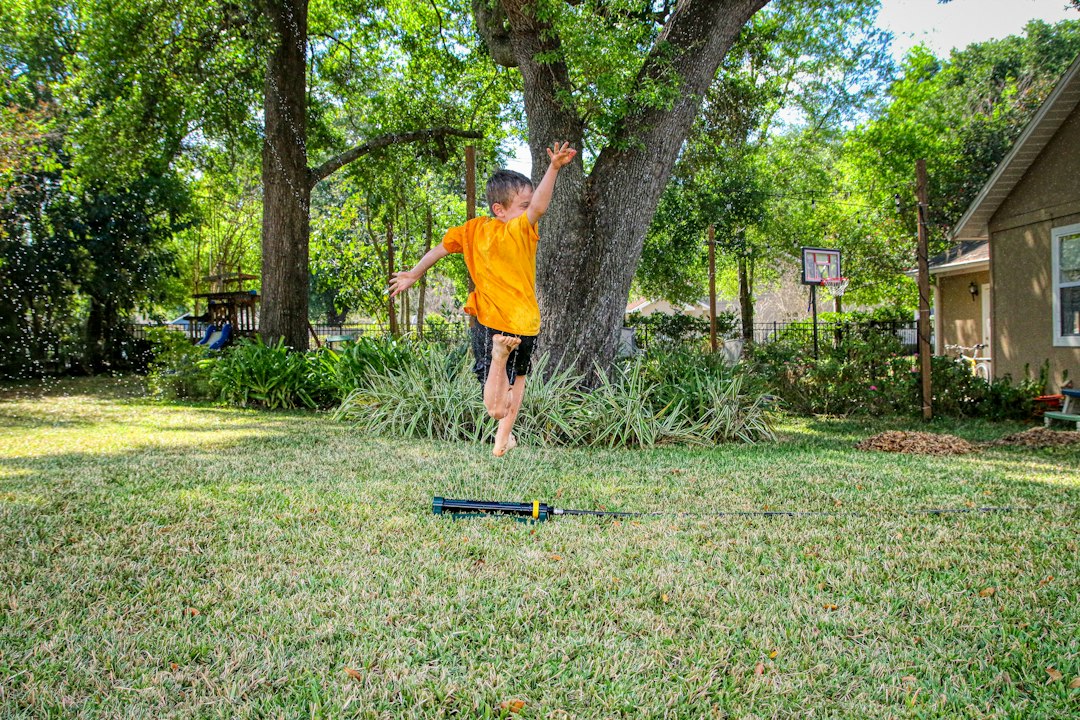




You haven't thrown a ball with real intention in years. Then your kid hands you a glove, and your hand remembers before your head does.
That small moment, the leather settling around your fingers, the pocket forming the way it always did, is why so many people discover that playing sports with your kids to reconnect with your past works in a way that nostalgia alone never could. Memory lets you visit your playing days. A ball in your hand lets you live in them again, just for twenty minutes, in the grass, with someone who thinks you're the coolest person alive.
If you're reading this, there's probably a final game you still carry around. Maybe it was a Senior Night, with the walk across the field, the flowers, the announcer reading your name, and the quiet understanding that the thing you'd built your whole identity around was ending. Maybe it ended less ceremonially, with a injury, a roster cut, or a season that simply didn't continue. Either way, something stopped, and nobody gave you a place to put the feeling.
This guide is about the place to put it. Not a comeback, not a coaching career, not a new league. Just a backyard, a kid, and the very low-stakes act of playing again.
The Grief Nobody Warned You About
Athletes talk about retirement as a logistics problem: what's next, what job, what routine. They rarely talk about it as a loss, but it is one.
For years your body had a purpose that was obvious. You ran because someone was timing you. You lifted because Saturday was coming. Your calendar, your friendships, your sense of who you were all organized themselves around a team. Then the structure disappeared overnight, and the same body that once felt like an instrument started to feel like a thing that sits in a chair.


Sports psychologists have a name for part of this experience: athletic identity loss. Researchers who study athlete transitions have documented that people whose sense of self was tightly bound to their sport often report grief, restlessness, and a lingering feeling of being unmoored after their playing career ends. That's not weakness. It's the predictable result of investing a decade or more into something that then simply stops.
Here's the part that rarely gets said out loud. The grief isn't really about the trophies or the stats. It's about the feeling, the specific, wordless joy of moving a ball through space and having your body do exactly what you asked. That is the thing you miss. And that is the one thing you can get back.
Why the Competitive Version Doesn't Always Fit
Plenty of former athletes try to fill the gap with a rec league or a pickup game, and for some people that works beautifully. For others, it backfires. The old competitive wiring wakes up, the knees remind you what thirty-five feels like, and suddenly a casual game becomes a reminder of everything you've lost instead of everything you still have.
The backyard version removes that trap. Nobody is keeping score. Nobody is comparing you to the twenty-year-old version of yourself. The only person watching is a child who has no idea what your stats were and wouldn't care if they did.
What Your Kid Gives You That No League Can
When you play with your child, something shifts that's hard to name until you're in it.
You stop being a former athlete and become a teacher of joy. Your kid isn't asking for your highlight reel. They're asking, "Can you show me how you hold it?" And suddenly the knowledge you thought was useless, the grip, the footwork, the way to track a fly ball, has a home again.
The Gift of Being Seen Without Performing
Most adults who once played seriously are used to being evaluated. Coaches graded you. Scouts rated you. Teammates counted on you. Playing catch with your seven-year-old removes the evaluation completely. They don't want you to be good. They want you to be there.
That's rare. And for someone carrying old athletic grief, it can be strangely healing to be loved while throwing badly.
The Return of the Rhythm
There's a particular rhythm to catch. Throw, catch, throw. The slap of the ball in the pocket. The small adjustments as you find each other's range. After about ten minutes, most people notice their breathing change, their shoulders drop, and their mind go quiet in a way it hasn't in months.
In our experience, that quiet is the first sign that something old is coming back to life.
Playing Catch With Your Son (or Anyone Who Wants to Play)
Baseball and softball players tend to feel this one most, but the principle applies to any throwing sport: catch is the oldest conversation in athletics, and you already speak the language.
Start Smaller Than You Think
The most common mistake is trying to recreate your old intensity. You grab the glove, stand forty feet apart, and fire it. Your kid flinches, your elbow protests, and nobody has fun.
Try this instead:
- Start at twenty feet. Close enough that your child can actually catch what you throw and feel successful.
- Throw easy, softer than feels natural. Lob it. Let them win the exchange.
- Say one thing about technique per session, not ten. "Show me your glove hand" is plenty.
- Stop while it's still fun. Fifteen minutes with a smiling kid beats forty minutes with a bored one.
Let Them Teach You Something Too
Kids invent games around catch faster than any coach ever could. They'll add a bounce, a spin, a made-up rule about catching with your off hand. Say yes to all of it. The point isn't fundamentals, it's play, and play is exactly what you've been missing.
Marcus T., 41: The Glove in the Closet
Marcus T. played shortstop through junior college and hadn't touched a glove in sixteen years. His eight-year-old son found the old Rawlings in a storage bin and asked what it was. "I almost said 'just an old glove,'" Marcus told us. "Instead I said, 'Want to play catch?' We went out in the driveway in our socks." The glove was stiff, the leather cracked along the thumb, and the first throw sailed over his son's head. They laughed for five minutes straight. Marcus says that was the first time in years he'd thought about shortstop without feeling a pang. "It stopped being something I lost and became something I get to share."
Playing Soccer With Your Daughter (and Why Footwork Is Pure Memory)
If your sport was soccer, your body holds memories your mind forgot. The first time you take a touch with the inside of your foot, something clicks into place like a key finding its lock.
Let the Ball Do the Talking
Soccer in the yard is wonderfully forgiving. You don't need goals, a field, or even a full-sized ball. A few cones, a pair of shoes as goalposts, and a ball that's slightly underinflated is plenty.
Try these low-stakes games:
- Keep-it-up count. How many touches can you string together before the ball hits the grass? Let your daughter set the record you try to beat.
- Dribble tag. One person dribbles through the yard while the other tries to steal the ball gently. Switch roles every two minutes.
- Target practice. Place a bucket or a laundry basket at one end and take turns trying to land the ball inside.
- The wall game. If you have a fence or a garage door, pass against it and let her see what a first touch actually looks like when it's done well.
The Surprising Thing About Teaching
When your daughter asks how you stopped the ball so softly, you'll find yourself explaining something you haven't consciously thought about in decades. And as you explain it, your body will show you. A well-timed cushion with the instep. The tiny backward give at the ankle. Your hands will want to gesture, your feet will want to demonstrate, and you may realize you're smiling like you haven't in a while.
Elena R., 38: Kicking It Back Into Her Life
Elena R. captained her high school soccer team and played two seasons in college before a knee injury ended her career at twenty. For years, she avoided anything with a ball. Then her daughter, age nine, joined a rec team and asked for backyard practice. "I told myself I'd just stand there and feed her passes," Elena said. "Forty minutes later I was in cleats on the lawn, juggling." She didn't sign up for an adult league. She didn't need to. "My knee hurts a little the next day. My heart doesn't hurt at all."
Reconnecting With Your Sport Through Your Child: Beyond the Backyard
Not every sport translates neatly into a driveway. If you played football, basketball, hockey, volleyball, or lacrosse, the same principle applies with a little creativity.
Scale It to the Space You Have
- Basketball: A driveway hoop and a game of H-O-R-S-E. Let your child pick the shots. You'll rediscover your form somewhere around the fifth attempt.
- Football: A soft foam ball and a game of backyard catch. Teach the grip, not the playbook.
- Hockey: A tennis ball and two sticks on the garage floor or the cul-de-sac.
- Volleyball: A beach ball and a rope strung between two trees.
- Lacrosse: A wall, a stick, and ten minutes of cradling practice.
The goal is the same each time: bring the movement back into your body without bringing the pressure back into your mind.
Show Them the Old Photos (Then Put the Ball in Their Hands)
There's a lovely rhythm to pairing the physical with the memorial. Pull out the old team photo, the framed jersey, the dusty program from the championship game. Let your kids ask questions. Then head outside and show them what you meant when you described the sport.
For many parents, this is where the real healing happens. You're not just playing. You're translating your athletic identity into something your child can touch, and in doing so, you give the past a role in the present instead of leaving it as a locked room.
When Your Child Isn't Interested in Your Sport
Not every kid wants to play what you played. That's okay, and it's worth treating carefully. If your daughter prefers art or your son prefers chess, the invitation to play catch can still work, but only as an invitation. Pressure turns joy into obligation, and obligation is what killed the fun for a lot of former athletes in the first place.
Offer once, gently. If the answer is "not today," respect it. Often the interest returns when it's not being pushed.
How to Keep It About Joy, Not Achievement
The biggest risk in all of this is you. Former athletes carry decades of coaching voices, and those voices have a way of sneaking into backyard play.
Watch for these quiet signs that achievement is creeping back in:
- You catch yourself correcting form every third throw.
- You feel disappointed when your child loses interest after ten minutes.
- You start comparing your child's skills to other kids their age.
- You notice yourself keeping score even though nobody asked you to.
If any of those show up, take a breath. Remind yourself why you came outside: not to build a champion, but to rediscover why you loved the game in the first place.
A Simple Rule We Recommend
Our team recommends one guideline for every backyard session: let your kid decide when it ends. If they want to stop after five minutes, you stop. If they want to keep going for an hour, you keep going. The moment you start managing the clock, you're coaching again.
Let Silence Be Part of It
Some of the best moments in a yard happen in the pauses. A long silence between throws. A shared glance when the ball does something unexpected. A quiet "that was a good one" that costs nothing and means everything. Don't fill every gap with instruction. Let the game breathe.
What Healing Actually Looks Like
Healing athletic grief doesn't look like a dramatic breakthrough. It looks like small changes that accumulate quietly.
You notice you're no longer flinching when someone mentions your old sport. You start telling stories about your playing days without the stab of loss. You find yourself looking forward to weekend afternoons in the yard. Your kid starts asking for "one more throw" at dinner time.
Researchers who study how athletes adjust after their careers end often emphasize that finding new, meaningful connections to the sport, rather than severing ties completely, tends to support a healthier transition. The NCAA's athlete well-being resources discuss this directly, noting that identity beyond sport is built, not found, and that staying connected to the activity in a lower-pressure way is one path forward.
A Gentle Note on Bigger Feelings
If playing again stirs up something heavier than nostalgia, such as persistent sadness, anger, or a sense that you can't stop dwelling on the loss, it's worth talking to a counselor or sports psychologist. There's nothing weak about it. Many former athletes find that a few conversations with someone who understands athlete transitions make the backyard sessions even more meaningful.
The Moment You'll Remember
Years from now, your child won't remember the technique you taught them. They won't remember the score, because there wasn't one. What they'll remember is the sound of the ball hitting the glove, the long light of a late afternoon, and a parent who was fully, happily present.
And you'll remember something too. The first time the old rhythm came back. The first time your body felt like itself again. The first time you realized that the sport you thought you'd lost had been waiting in the closet the whole time.
Your jersey is still out there waiting.
Design yours in minutes and see your name and number exactly the way you remember it.
Frequently Asked Questions
Is it normal to feel sad when I start playing my old sport again?
Yes. Many former athletes report a wave of bittersweet emotion the first few times they pick up a ball again. That feeling usually means the sport still matters to you, not that something is wrong. If it passes within a session or two and gets replaced by enjoyment, you're likely healing. If it lingers or deepens, consider talking with a counselor who understands athlete transitions.
What if my child isn't interested in the sport I played?
Offer the invitation once and let it go. Pressure is the fastest way to turn a joyful activity into a chore. You can still share your athletic history through stories, old photos, or wearing your jersey around the house. Interest often appears later, on the child's own timeline, especially when they see you enjoying yourself without strings attached.
How long should a backyard play session last?
Let your child set the clock. For younger kids, fifteen to twenty minutes is often plenty. Older kids may want an hour. The goal is leaving them wanting more, so you'll have an easy yes the next time you ask. If you find yourself pushing for "just five more minutes" of drills, that's a signal to stop.
I have an old injury that keeps me from playing the way I used to. Can I still do this?
Absolutely. Backyard play can be as gentle as you need it to be. Soft tosses, slow dribbling, or even sitting on a bucket and coaching from the sidelines all count. The point is connection and joy, not athletic performance. If you're unsure what's safe, check with your doctor or physical therapist before starting.
How do I keep myself from turning it into coaching?
Set one rule before you go outside: no corrections unless your child asks. Let them experiment, miss, and laugh. If they want technique help, they'll ask, and that moment is when your expertise becomes a gift rather than a lecture.
Can I do this with kids of different ages at the same time?
Yes, and it often works well. Older kids naturally become helpers, showing younger siblings how to throw or kick. Pair simple games that scale easily, like target practice or keep-it-up counts, so everyone can participate at their own level without anyone feeling left out.
See also: how to start training again after years away from your sport | why high school sports matter to adults | athletic identity after high school | adult recreational leagues for former athletes