

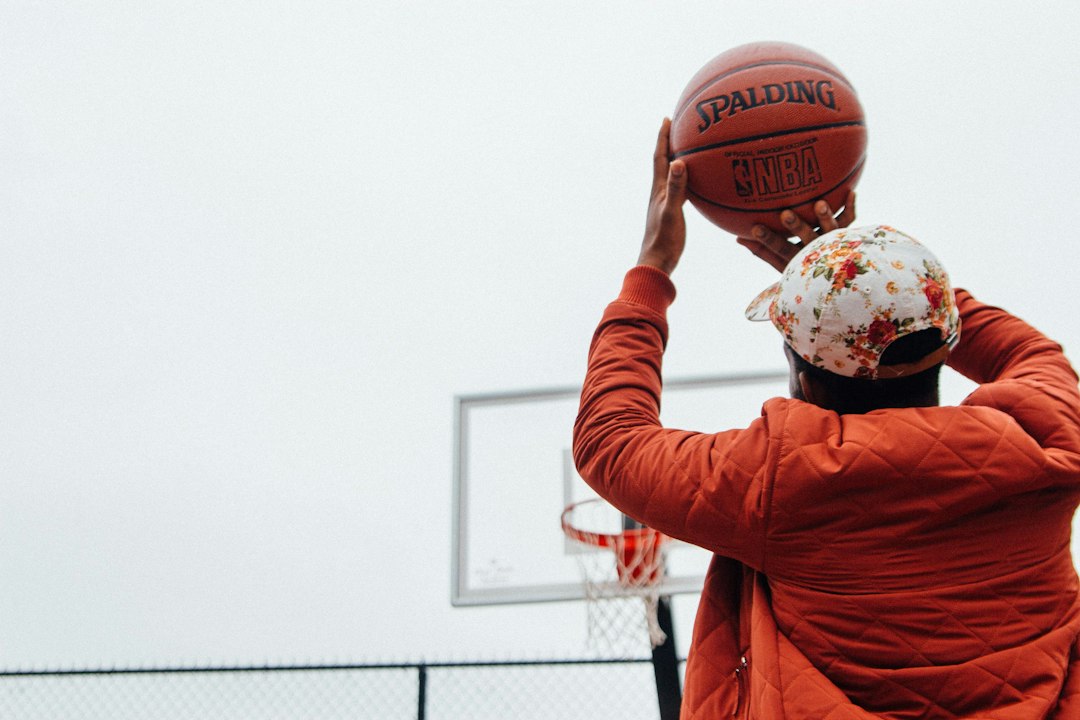




You are standing at the free throw line. The gym has gone quiet in that strange way a gym does when everyone is waiting on you. Before you shoot, your fingers do something on their own. They find the seams. They rotate the ball a quarter turn until the channels sit right under your fingertips. Your palm settles. Your wrists loosen.
That's the feel of a basketball, and it is one of the most specific physical memories a person can carry out of high school.
It isn't the memory of a game, exactly. It's smaller than that and somehow more durable. It's the texture under your fingertips, the tackiness of a fresh ball, the heft that your forearms learned over thousands of repetitions. Ask a former player to describe it and watch what happens: their hands start moving before their words do.
This piece zooms in on that object and that sensation, the part of the game almost nobody writes about. Not the stats, not the highlights. The ball itself, and what it does to your hands, your ears, and your memory.
The Pebbles: What a Basketball's Surface Actually Feels Like
Pick up any regulation ball and run your thumb across it. What you're feeling is a deliberate design, and your fingertips have been reading it since the first day you ever played.
Why the Surface Is Pebbled
The bumps on a basketball are called pebbling, and they are not decoration. They exist to create friction between your skin and the ball so that it doesn't slide off your fingers on a release or squirt away on a crossover. The ball is molded with that raised texture, then divided by channels, the recessed lines that separate the panels. Standard official balls use eight panels joined by those channels.
The pebbling and the channels do two different jobs. The pebbles give your fingertips something to bite into. The channels give your fingers a landmark to find without looking. This is why players rotate the ball in their hands before a shot: they are locating the seams by touch, then aligning their fingers to them. You don't think about it. Your hands know the map.
Leather, Composite, and Rubber: Three Different Hands-On Experiences
Different covers feel dramatically different, and most players can tell them apart blindfolded.


- Full-grain leather is soft and grippy once broken in. It has a faint give when you press into it, and it develops a slightly darker, smoother character over time. It's the classic indoor feel.
- Composite (synthetic) leather is more uniform from the box, with a tackiness that's present on day one. It's the standard for most high school and recreational indoor balls.
- Rubber is the outdoor workhorse: harder, more textured, a little rougher against your fingertips, built to survive asphalt.
In our experience, the player who moves from a rubber outdoor ball to a composite indoor ball gets a particular jolt the first time. The ball suddenly feels like it's holding your hand. That tack is real, and it's why so many players describe the first indoor practice of the year as a homecoming.
The New Basketball Feel: The Day the Grip Is Almost Too Good
There is a specific pleasure in a brand-new ball, and anyone who has played knows it.
The Tack of a Fresh Ball
A new basketball has a slightly sticky, almost clinging quality on the surface. Your fingertips catch where they touch. The pebbling is sharp and defined, each bump distinct, before use has worn it down. The ball feels grippy in a way that makes ballhandling feel easier than it should.
Then you dribble it for the first time and the ball does something it never does later in its life: it comes back to your hand like it's on a string. The tack pulls it in.
The Break-In Period
That perfect tack doesn't last, and the way it changes is part of the feel. A leather or composite ball goes through a break-in period over its first several hours of play. The surface softens slightly. The pebbling smooths by a hair. The ball loosens its factory stiffness and begins to conform to the way you shoot.
Players who care about this have rituals. Some dribble a new ball for an hour without shooting a single shot. Some rub it down with a dry towel. Some just play on it and let the game do the work. Every one of those rituals is aimed at the same goal: turning a stranger into something that feels like yours.
Here's what the break-in actually means, though. It's the ball becoming familiar. And familiarity is what you remember.
Basketball Grip: How Your Hands Learn the Ball
Long before you could explain a shooting form, your hands understood the ball. Grip is the oldest knowledge a player has.
The Fingertip Contact Point
Coaches have said it for decades: shoot off your fingertips, not your palm. The reason is mechanical. Contact at the pads of your fingers gives you control over rotation and touch, while a flat palm gives you power but not finesse. A good shooting grip leaves a small gap of air between your palm and the ball, and your fingers spread across the seams to guide the release.
If you played, you can probably feel that gap right now. It's a very particular sensation: the ball resting on spread fingertips, your palm hovering just above the surface, the whole thing balanced on your hand like a tray.
Two Things Your Hands Know That Your Brain Forgot
Even years after your last game, two bits of muscle memory tend to survive:
- The spread. Pick up a ball and your fingers will splay to the right width automatically, without thought.
- The seam search. Your thumbs and index fingers will drift toward the channels, hunting for the alignment they used a thousand times.
The part of your hands that remembers this isn't a conscious archive. It's something closer to a reflex. That's why handing a ball to a former player is such a reliable test: the hands answer before the person does.
Grip Under Pressure
Grip also changes with the moment. In a quiet shootaround, your hands are loose and the ball feels weightless. In the final two minutes of a close game, the same ball feels different. Your palms are damp. Your grip tightens without your permission. The ball seems to gain a few ounces.
A regulation men's ball weighs 22 ounces and measures roughly 29.5 inches around; the women's ball is 20 ounces and about 28.5 inches. High school varsity boys play with the 29.5-inch ball. Those numbers are small, but a player's hands register every ounce of them when the stakes rise.
The Sound of a Basketball: What Your Ears Remember
If the pebbling is the texture of the game, sound is its soundtrack. And the sound of a basketball is every bit as specific as the feel.
The Bounce on Hardwood
A well-inflated ball striking a hardwood court produces a clean, resonant thud, a full, round note that carries across a gym. You can tell a properly inflated ball from a flat one by ear alone. A flat ball produces a dull, short thup with almost no rebound. An overinflated ball bounces with a sharp, higher-pitched crack.
Inflation matters far more than most casual players realize. Official guidelines call for inflation in the range of 7.5 to 8.5 psi for a standard ball. In that window, the bounce is lively and the sound is full. Outside it, both the feel and the sound go wrong.
The Swish and the Rim
Then come the sounds that every player remembers longer than any score:
- The swish, a soft, silky shhhk of the net snapping up around a clean shot. It is the most satisfying sound in the sport, and it's nearly silent compared to everything around it.
- The rattle, the metallic shudder of a ball working its way around the rim before dropping or spinning out.
- The squeak, sneakers dragging across a finished floor in a sudden stop.
A gym in the off-season carries a particular echo. Empty bleachers, a single ball bouncing, the thud... thud... thud ringing off the far wall. Anyone who has ever shot alone in an empty gym knows that sound is its own kind of company.
Sarah, Age 17: A Ball That Finally Felt Like Hers
Sarah M., a junior guard from Ohio, got a new composite ball for her seventeenth birthday and almost didn't want to use it. "It was so clean," she told us. "The pebbling was so sharp it felt like it would take a layer off my fingertips." She spent the first week dribbling it in her driveway every evening until the surface softened and the ball started following her hand without effort.
By the end of the season, the ball was scuffed, a shade darker, and slightly smoother. Her hands had worn it in, and it had worn her in right back. "I could pick it up in the dark and know it was mine," she said. "Nobody else's ball felt like that."
That's the quiet transaction that happens between a player and a ball over a season. You leave marks on it. It leaves them on you.
The Warmth: How a Ball Changes in Your Hands
There's a physical truth about a basketball that few people stop to name: it warms up.
Temperature and Feel
A ball that has been sitting in a cold car or a cold garage feels stiff and slightly dead. The air inside has contracted, the surface is harder, and the bounce is flat. Pick that same ball up and dribble it for ten minutes and everything shifts. Friction and your body heat warm the surface, the air inside expands slightly, and the ball livens up under your hands.
This is why players who care about their game rarely trust a ball straight from a cold bag. They dribble first. They let the ball come alive.
The Moisture Factor
Warmth also brings moisture. Slightly damp palms, the thin film of sweat that builds during a hard practice, change the grip entirely. The ball can feel tackier and more secure when your hands are just barely damp, and it can turn slippery once the moisture overwhelms the pebbling. Experienced players develop an instinct for this, wiping their hands on their jerseys between possessions without ever consciously deciding to.
That small gesture, the quick swipe of a palm across the front of a jersey, is one of the most universal habits in the sport. It says: I'm ready. Give me the ball.
Why This Sensation Outlasts the Scoreboard
Most of what we remember about playing is a blur: the score of a game, the name of an opponent, the exact bus ride home. But the tactile memory of the ball tends to stay sharp, and there's a reason for that.
Touch is among the earliest and most deeply embedded forms of memory. The repeated, rhythmic physical contact of dribbling, shooting, and catching writes itself into your body in a way that facts and dates never do. Years later, a smell of a certain gym or the first thud of a ball on wood can bring the entire experience flooding back.
This is also why the sensory details of the game carry such emotional weight for former players. The ball is the one object that was in your hands for every single moment you played. Everything else changed: teammates, coaches, gyms, seasons. The ball stayed constant. Its feel is the thread that runs through the whole experience.
Ways to Reconnect With the Feel
If you played and haven't touched a ball in years, here are two simple ways to bring the sensation back:
- Pick up a ball and do nothing with it for a full minute. Rotate it. Feel the seams. Let your fingers spread on their own. Notice what your hands remember.
- Shoot alone in an empty gym or driveway at dusk. No score, no audience. Just the ball, the rim, and the sound.
Neither requires skill. Both reliably return the feeling.
The Ball Is Part of the Jersey Story
The feel of the ball and the feel of the jersey belong to the same memory. The weight of the fabric across your shoulders, the number on your chest, the ball settling into your hands before the opening tip: those sensations arrived together and they live together.
For a lot of former high school players, the ball's texture is the first thing they reach for when they try to remember who they were back then, and the jersey is the second. One is the object you held. The other is the thing you wore. Together they hold most of what it felt like to play.
Your jersey is still out there waiting.
Design yours in minutes and see your name and number exactly the way you remember it.
Frequently Asked Questions
Why does a new basketball feel so sticky?
A brand-new basketball has a factory-fresh surface where the pebbling is sharp and the cover hasn't yet been touched by oils, dust, or wear. Composite and leather covers are manufactured to provide high friction, and that tackiness is strongest before use. It fades gradually over the first several hours of play as the pebbles soften and the surface picks up the natural oils from your hands.
What does proper basketball inflation feel and sound like?
A correctly inflated ball, generally in the 7.5 to 8.5 psi range, produces a full, resonant thud on hardwood and returns to roughly waist or chest height when dropped from shoulder level. If the ball sounds dull and barely rebounds, it's underinflated. If it bounces sharply with a high-pitched crack and feels rock hard, it's overinflated. Checking with a gauge is the reliable method, but your ears and hands will tell you quickly.
How do I get a better basketball grip?
Start with fingertip contact: shoot off the pads of your fingers with a small air gap between your palm and the ball. Keep your hands clean and slightly dry, since dust and heavy sweat both reduce friction. Break in a new ball with consistent dribbling before relying on it in games. If your hands run damp, a quick wipe on your jersey between possessions helps maintain a consistent feel.
Why do indoor and outdoor basketballs feel different?
Indoor balls typically use leather or soft composite covers designed for clean hardwood, so they feel softer and tackier. Outdoor balls use rubber or tougher composite built to withstand abrasive concrete and asphalt, so they feel harder and rougher against your fingertips. Using an indoor ball outside wears down its surface quickly, which is why most players keep a dedicated ball for each environment.
Why do I still remember the feel of a basketball years after I stopped playing?
Repetitive physical movement builds deep muscle memory, and touch is one of the most strongly encoded senses tied to emotional experience. Thousands of hours of dribbling, shooting, and catching imprinted the ball's texture, weight, and sound into your body's memory. That's why handing a former player a ball often triggers an immediate, automatic response in the hands before any conscious thought.
How long does it take to break in a new basketball?
Most composite and leather basketballs reach a comfortable, broken-in feel after several hours of active use, though the exact timeline varies by cover material and how hard you play. Regular dribbling softens the surface slightly and relaxes the factory stiffness. Many players find the ball hits its sweet spot after one to two weeks of consistent practice.
See also: the difference between someone who played and someone who just watches | why athletic nostalgia hits so deep | the science of why your senior season memories are so vivid | how athletic identity stays with you after high school | start training again after years away from your sport