

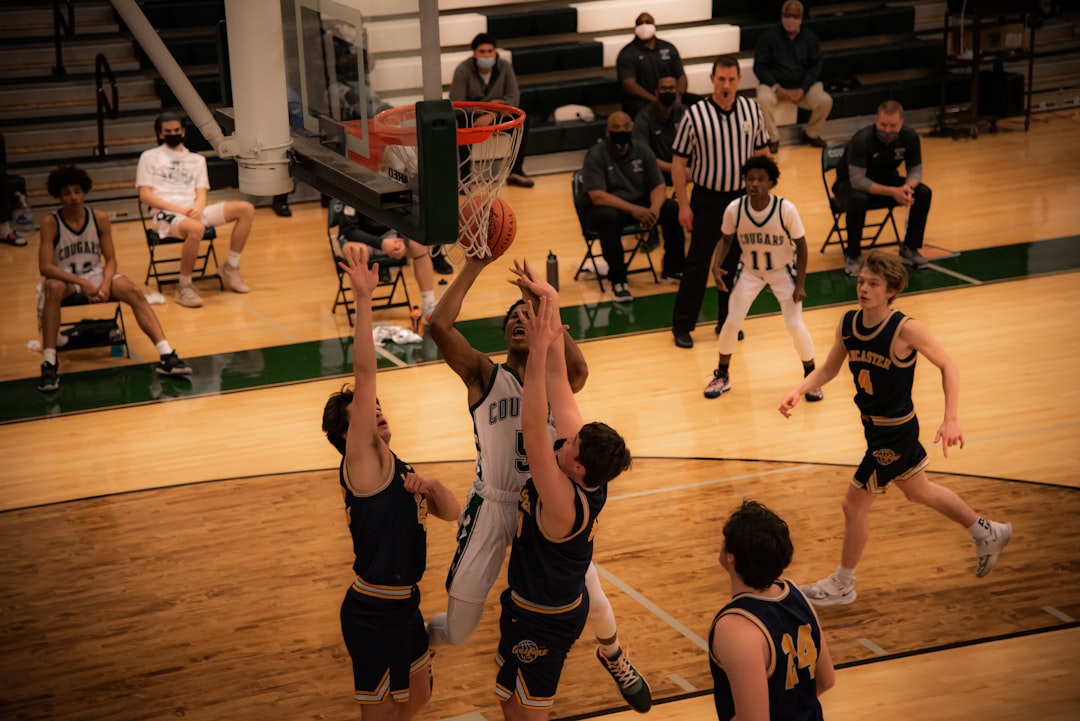
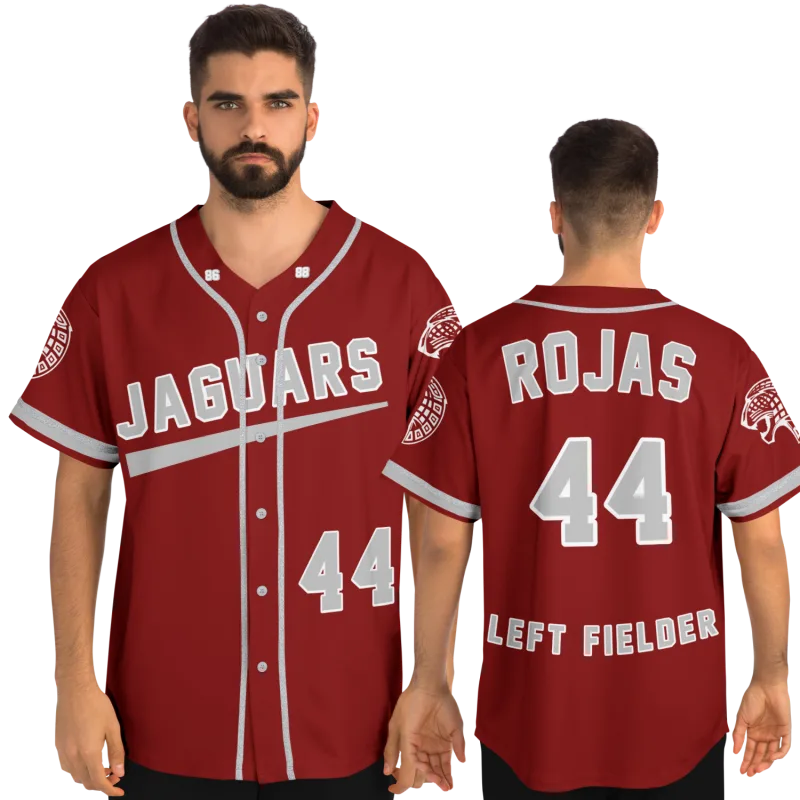
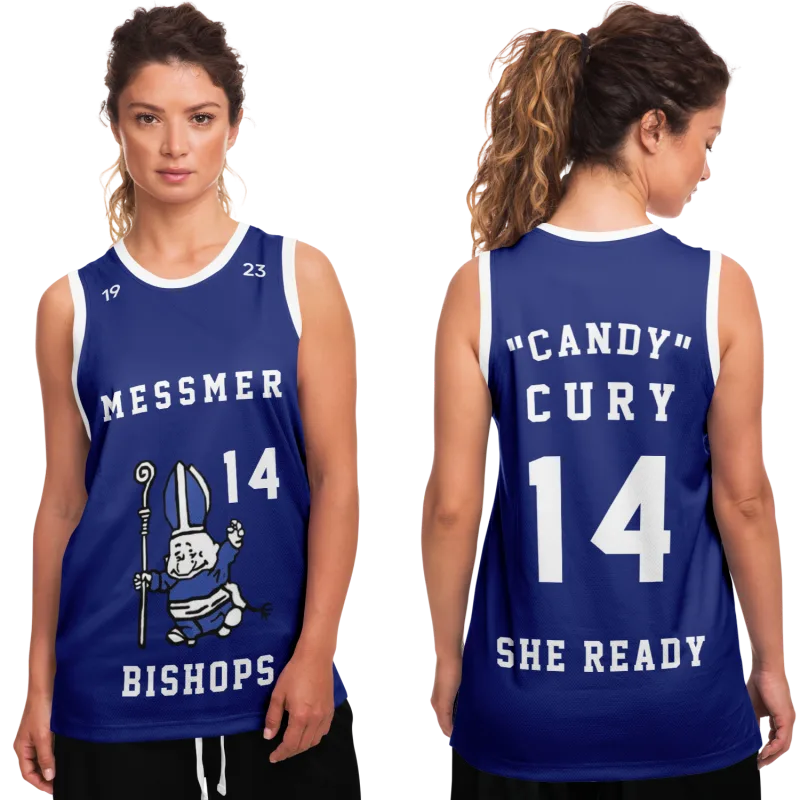
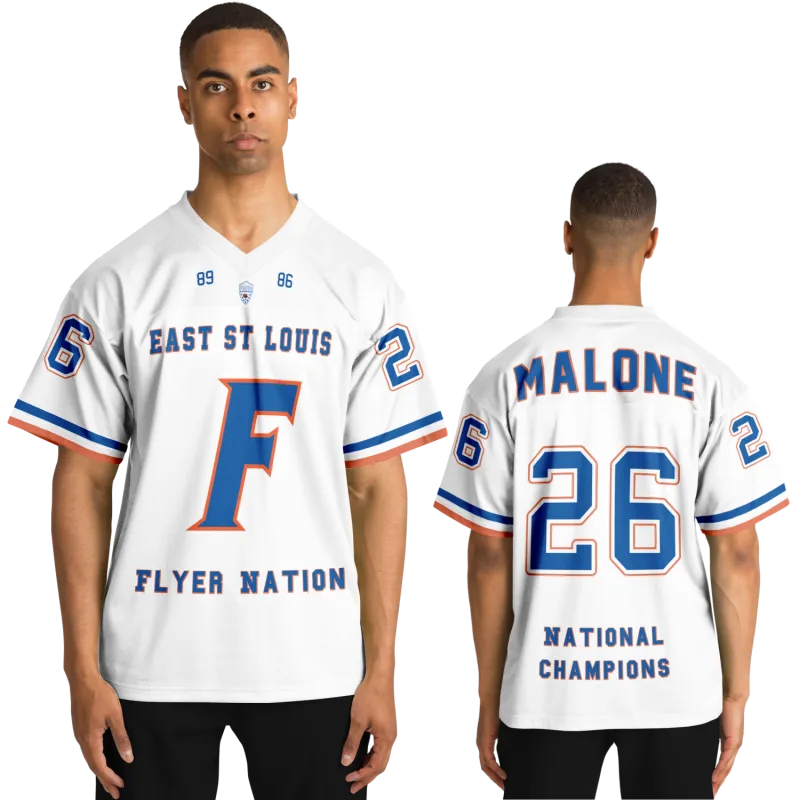
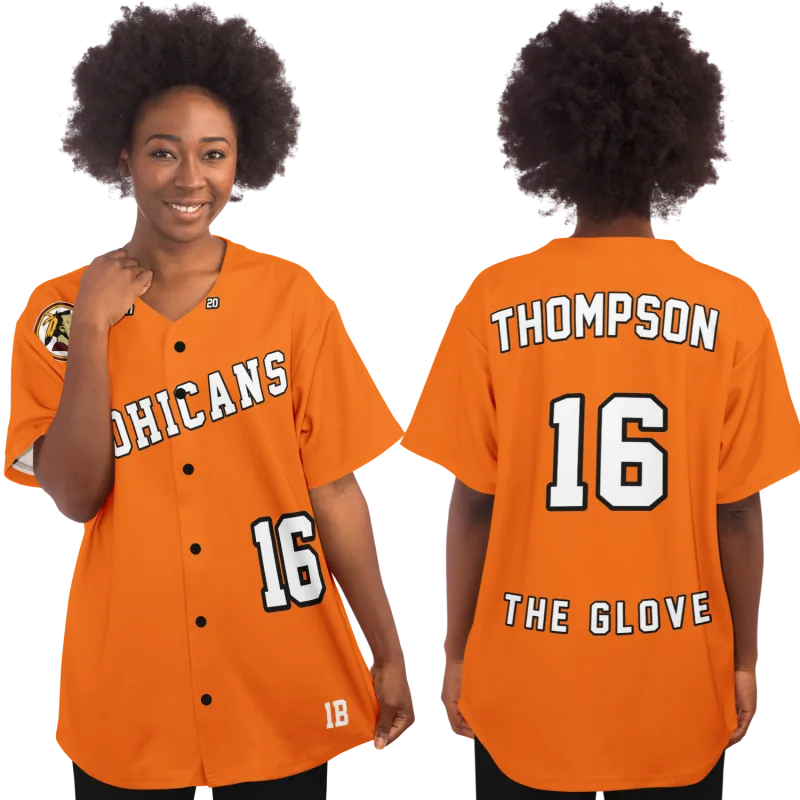
There's a gym smell that never fully leaves you. Rubber floors, chalk dust, the particular heat of a hundred people packed into wooden bleachers. The sound of the gym at tip-off is in there too. Every basketball player knows that acoustic signature in their bones. And somewhere in that memory, you're wearing a jersey: a specific jersey, with a specific weight, a specific sheen, a specific number on the back that meant something to a version of you that ran faster and believed more completely.
High school jersey styles by decade tell a story most people haven't read, because nobody ever wrote it down. Professional uniform history gets documented. College programs get retrospectives. But the jerseys worn by seventeen-year-olds in small-town gyms and Friday night fields under sodium lights? Those designs are tucked inside photograph albums and the back corners of parents' closets, slowly going the color of old paper.
This is that history. Decade by decade, fabric by fabric, cut by cut, exactly how the jerseys changed, why they changed, and what each era's design says about the moment it came from.
The 1980s: Polyester, Block Letters, and the Jersey That Announced Itself
The defining material of 80s sports jersey design was double-knit polyester, and if you wore one, you already know what that means. Heavy. Stiff. Reluctant to move with you. A jersey that had opinions about what direction your arms should go.
That polyester wasn't a shortcut. In the early 1980s, it represented an upgrade over the cotton-blend jerseys of the 1960s and 70s, which absorbed sweat, gained weight across a game, and took days to fully dry. Double-knit polyester at least released moisture. At least theoretically.
The aesthetic was unmistakable: thick, high-contrast block lettering across the chest, usually in two or three school colors with visible tackle-twill stitching — the raised, layered fabric letters you could feel with your fingers and that caught gymnasium light like a small marquee. Numbers were large, centered, and serious. The font choices were architectural. Helvetica variants and condensed block faces dominated. There was no irony in the design language of an 80s jersey. Everything was stated directly.
Collar styles ran toward wide V-necks and round necks with thick ribbed banding. Shorts were short (genuinely short, by any contemporary measurement) and the jersey itself was cut close through the body. The 80s athlete wore their jersey; the jersey did not wear them.
Color palettes were school-dictated and uncompromising. Two-color combinations were standard. Three-color designs existed but were considered extravagant. The idea that a jersey might incorporate a gradient, a fade, or a textural pattern would have sounded like science fiction.
In my experience talking with former athletes who played in this era, the detail they remember most viscerally isn't the color or the number — it's the weight. "That thing felt like armor," is a phrase we've heard more than once. That weight was real, and it was the design problem that the next decade tried to solve.
The 1990s: Mesh, Length, and the Decade That Went Large
The 90s high school jersey style is one of the most visually distinctive design eras in athletic uniform history, and its signature can be summarized in two words: mesh and length.
The shift to open-mesh nylon fabrication changed everything about how a jersey moved, looked, and felt. Where the double-knit polyester of the 80s had been dense and opaque, mesh was airy, semi-translucent, and structural in a completely different way. It draped. It moved. And it got bigger, dramatically, deliberately bigger.
The baggy silhouette of 1990s basketball culture, filtered through hip-hop aesthetics and the shadow of players like Allen Iverson and Shaquille O'Neal, reached high school courts by the mid-90s and redefined what a jersey was supposed to look like on a body. Shorts dropped to the knee. Jerseys followed. The fitted, body-close cut of the 80s was replaced by something that fell loose across the chest and shoulders, with armholes wide enough to show the full compression shirt underneath — the layered look that defined the era.
Typography went bolder and more expressive. Arched lettering became standard. Team names stretched across the chest in curved, upward arcs. Shadow effects appeared on letters. Outlines stacked two and three deep. The tackle-twill construction of the 80s gave way to screen-printing for secondary elements, which meant more complex designs became economically possible at the school budget level.
Color combinations expanded. Teal, purple, and black combinations that would have seemed garish in 1985 were completely standard by 1996. Pinstripes appeared on baseball and softball jerseys. Side panels in contrasting colors became a design element, running vertically from armhole to hem in a stripe that made the silhouette look even longer.
Marcus T., 38, still has his 1997 varsity basketball jersey folded in a box. "I wore a size XL when I was 155 pounds," he says. "That was the point. You wanted it to move when you ran. The bigger it was, the more it looked like you'd been playing forever."
The 90s jersey communicated belonging to something cultural, not just athletic. It was the decade when the jersey became a statement about identity beyond the sport.
The 2000s: Function Takes the Lead
The early 2000s introduced a technical revolution that most high school athletes experienced as a practical upgrade rather than an aesthetic one: moisture-wicking synthetic fabrics. Brands like Nike, Under Armour (founded in 1996 but ubiquitous in high school athletics by 2003–2005), and Adidas brought performance polyester blends to the school-level market, and the jersey as garment began to be evaluated by a new standard: not just how it looked, but what it did.
The 2000s high school jersey trends were defined by this functional shift. Fabrics became lighter, more breathable, and engineered to pull sweat away from skin rather than simply not absorbing it. The performance claims were specific: moisture management technology in the fabric itself, which changed the heat and weight equation that had defined jerseys since the polyester era.
Silhouettes began to tighten again — not to the close fit of the 80s, but away from the extreme bagginess of the 90s toward an athletic fit that acknowledged the body underneath without compressing it. The long, draping mesh look gave way to cut-and-sewn construction with side panels, curved hems, and set-in sleeves on long-sleeve designs.
Sublimation printing made its first serious appearance in high school athletics during this decade, though it remained expensive and relatively rare until the 2010s. Dye-sublimation allows color to be infused into the fabric itself rather than applied on top, which meant gradients, all-over patterns, and photographic-quality designs became technically possible.
The dominant aesthetic of the 2000s jersey was what might be called controlled aggression: sharp diagonal design elements, bold number fonts with mechanical or angular characteristics, side panels that angled from the armhole toward the hem to suggest motion even when standing still. Shadow effects on letters remained popular. The team name arched across the chest was still standard, but the letterforms became more condensed, more technical-looking.
Color continued to expand. Two-tone jerseys with contrasting side panels were ubiquitous. The concept of a "alternate" jersey — a third uniform option beyond home and away — began filtering down from professional sports to larger high school programs.
The 2010s: Sublimation Changes Everything
If the 2000s introduced sublimation printing to high school athletics, the 2010s made it the standard. By 2012–2015, the price point for fully sublimated jerseys had dropped sufficiently that programs with mid-range budgets could access designs that, ten years earlier, would have required professional team resources to produce.
The implications were enormous. With sublimation, there is no practical limit to what can be printed on a jersey. Gradients that transition from navy to Carolina blue across the chest. All-over patterns that integrate the school's mascot as a watermark in the fabric itself. Geometric designs that tile across the entire jersey surface. Photography-quality imagery embedded in the garment.
High school jersey design in the 2010s went through a period of extraordinary experimentation that not all of it survived gracefully. The freedom that sublimation provided also produced some designs of considerable visual complexity, jerseys with so many competing elements that reading the number from across a gym required concentration. The industry learned, over the back half of the decade, that sublimation's power is best deployed in service of clarity, not against it.
The performance fabric evolution continued. Stretch woven fabrics, 4-way stretch panels, and mesh ventilation zones became standard in the upper tier of high school athletic wear. The jersey as performance garment reached a level of engineering sophistication that the 1980s athlete would find genuinely difficult to believe is the same category of object.
Fit continued its evolution toward the athletic cut, tapered through the body, with sleeve lengths calibrated to sport and position. The extreme silhouette experiments of earlier decades settled into something more functional and proportional.
Typography in the 2010s went through its own arc: from the angular, mechanical fonts of the early decade toward a renewed appreciation for classic athletic lettering — varsity block, collegiate arch, the visual vocabulary of mid-20th century American athletic identity given new life through modern production technology.
Running beneath all of this design change was a quieter business transformation: what observers came to call the high school apparel wars. By the mid-2010s, exclusive school-wide brand deals had become common at large programs, as Nike, Under Armour, and Adidas competed to outfit entire districts rather than sell uniforms one order at a time. A school would commit to a single brand across every team and, in exchange, receive free or heavily discounted uniforms, sideline apparel, and design resources a mid-range athletic budget could never have reached on its own.
The trade carried real conditions. Exclusive branding meant the brand's mark appeared on every jersey, every warm-up, every piece of sideline gear, while the school surrendered the freedom to mix suppliers or negotiate price season by season. The deals also accelerated design-turnover cycles: a program locked into a multi-year contract often refreshed its look on the brand's schedule, rolling out new templates and colorways more frequently than schools that still bought uniforms the traditional way.
For the athlete, the effect showed up in the details — uniforms that looked more polished and more standardized, built on coordinated templates that had once belonged only to college and professional programs. What a team wore became, in part, a statement about which brand had won the school's account, one more layer of identity layered on top of the school colors the design itself was built around.
Today: Customization, Nostalgia, and the Era-Accurate Jersey
The current state of high school jersey design exists at the intersection of two forces pulling in opposite directions: maximum technical capability and deep nostalgia for the specific look and feel of earlier eras.
The technical capability available today is unprecedented. Full sublimation on lightweight, moisture-wicking, 4-way stretch performance fabric. Unlimited color. Unlimited design complexity. Photographic precision. Individual player customization across an entire roster, no longer a costly upgrade.
And at the same time, the most popular custom jersey requests trend toward the past. The 90s mesh aesthetic. The 80s block letter on classic fit. The specific color combinations and number fonts of a particular school, a particular team, a particular year. How high school jerseys changed over time is not just a historical question. It's a design brief.
This is where the nostalgia economy meets athletic identity. Former athletes who want to recreate the jersey they wore at seventeen are not looking for a modern interpretation. They are looking for era accuracy — the specific weight class, the specific fabric texture, the specific design language that says 1994 rather than 2024. For anyone reconnecting with their high school sports experience, the jersey is often the most tangible thread — the one physical object that carries the weight of those memories across decades.
The precision required for that recreation is real. A 90s-accurate jersey needs the right mesh construction, the right oversized silhouette, the right arched lettering with the right outline depth. An 80s recreation needs tackle-twill construction, block letterforms, and that particular heaviness. Getting the decade right requires knowing what each decade actually looked like — which is what this history exists to provide.
Your jersey is still out there waiting.
Design yours in minutes and see your name and number exactly the way you remember it.
Frequently Asked Questions
What fabric was used in high school jerseys in the 1980s?
The dominant fabric for 80s sports jersey design was double-knit polyester, sometimes called "double-knit" or "tackle-twill" construction. It was heavier and stiffer than modern performance fabrics but represented an improvement over the cotton-blend jerseys of earlier decades. Lettering was typically constructed from tackle-twill — layered, stitched fabric letters applied to the jersey surface — which gave 80s jerseys their characteristic raised texture. This construction is still available for custom recreation through specialty manufacturers.
Why were 90s high school jerseys so baggy?
The oversized silhouette of the 90s high school jersey style was a direct reflection of the broader cultural aesthetics of the decade, particularly the influence of basketball culture and hip-hop fashion. Players across the NBA wore increasingly longer shorts and roomier jerseys through the early 1990s, and that visual language filtered down to the high school level by the mid-decade. The open-mesh nylon fabric that became standard in the 90s also contributed — it draped and moved differently than the structured polyester of the 80s, making larger cuts more visually intentional rather than simply oversized.
What does "sublimation" mean in jersey design, and when did it become available at the high school level?
Sublimation printing is a process where heat converts dye directly into the fabric fibers rather than applying color to the surface. The result is permanent, fade-resistant color that becomes part of the fabric itself rather than a layer on top of it — which means gradients, all-over patterns, and photographic imagery are all achievable. Dye-sublimation technology existed earlier, but it became accessible to high school athletic programs at reasonable price points in the early-to-mid 2010s. By approximately 2013–2015, fully sublimated jerseys were standard options at the school budget level, which is when the visual complexity of high school uniforms expanded significantly.
Can I recreate a specific decade's jersey style accurately with a custom order?
Yes — era-accurate recreation is entirely achievable when you specify the decade you're targeting. The key design variables by era are: fabric type and weight class (double-knit polyester for 80s, open mesh nylon for 90s, lightweight performance polyester for 2000s and beyond), silhouette (fitted for 80s, oversized and long for 90s, athletic-tapered for 2000s onward), lettering construction (tackle-twill for 80s, screen-print for 90s–2000s, sublimation for 2010s+), and typography style (block/Helvetica for 80s, arched bold with outlines for 90s, angular/mechanical for 2000s, classic revival for 2010s). Specifying these elements — rather than just requesting a "vintage" jersey — produces a result that reads as genuinely era-accurate rather than simply retro-adjacent.
How have number fonts on high school jerseys changed across decades?
Number typography has followed the same general arc as lettering design. The 1980s favored large, structurally simple block numerals — often condensed, wide-stroked, and high-contrast with minimal decorative elements. The 1990s introduced more complex numeral designs with multiple outline layers, shadow effects, and occasionally serif elements that added visual weight. The 2000s went angular and mechanical — numbers with sharp geometric cutouts and diagonal stress that conveyed technical performance imagery. The 2010s saw a partial return to classic numeral styles, with collegiate and varsity number traditions being reproduced through sublimation with contemporary precision. Today, all of these styles remain available, which is why knowing the decade you're targeting matters for accurate recreation.
See also: why high school sports still matter so deeply to adults | what to do with your old varsity letter jacket | why your senior season memories are so vivid | how social media changed the high school athlete experience