
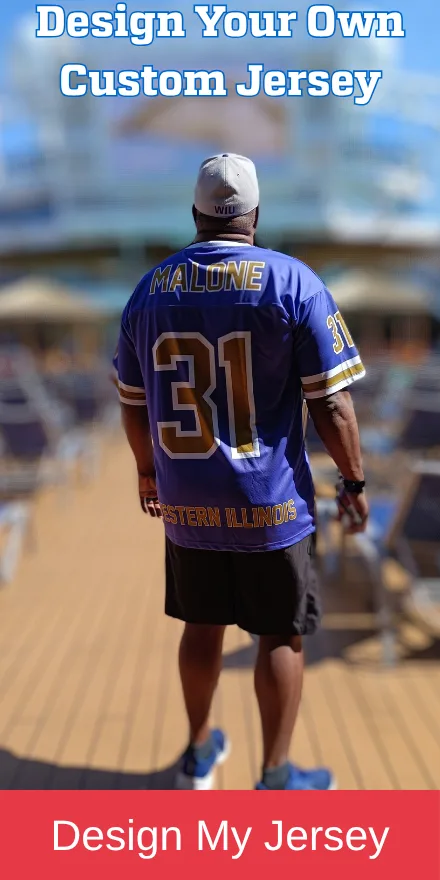
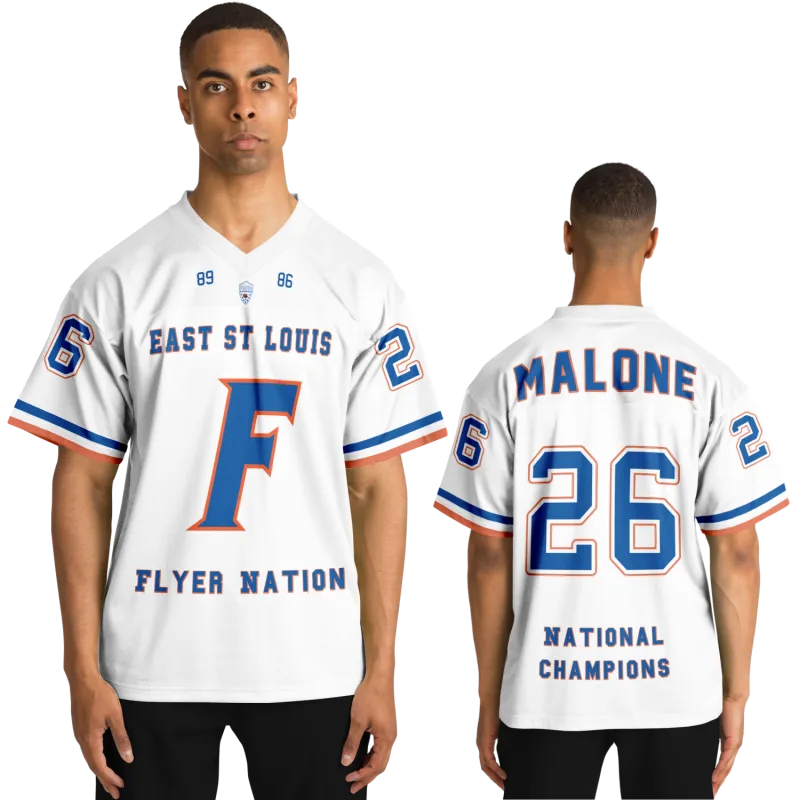
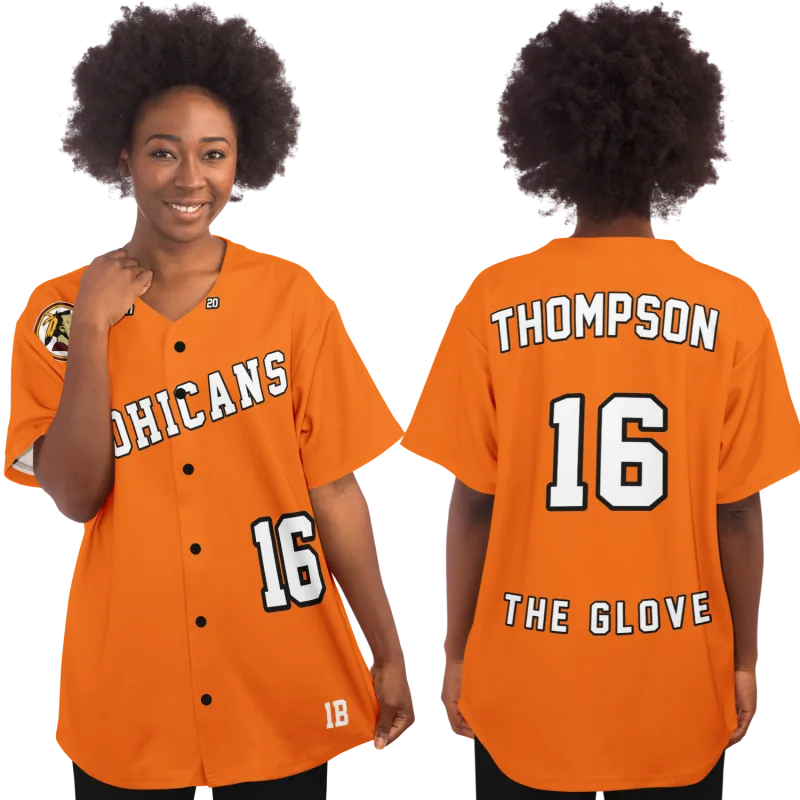
Somewhere in most former athletes' lives there's a photograph — buried in a box, living in a phone backup, maybe still propped on a shelf in a childhood bedroom — of them wearing a jersey with their own name on the back.
Not a star's name. Not a team they follow now. Their name.
If you're searching for the perfect birthday gift for a football fan who actually played the game, you already sense that the standard options fall short. The stadium cup, the team hat, the fan jersey of whoever's popular this season — none of it quite reaches what you're looking for. You want something that connects to the version of them that ran out of a tunnel, taped their wrists before kickoff, or heard their name announced over a Friday night PA system.
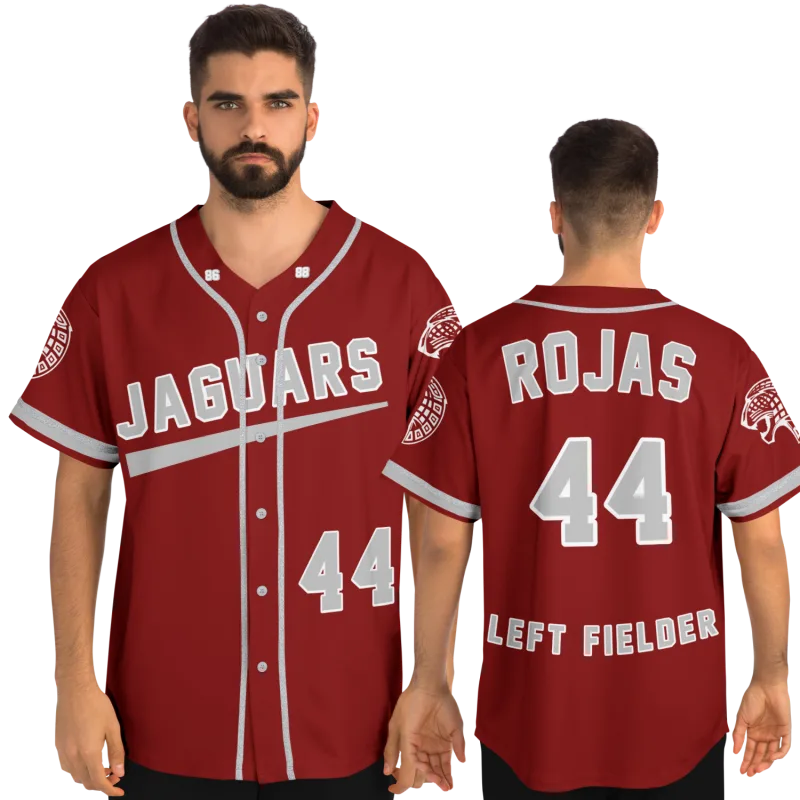
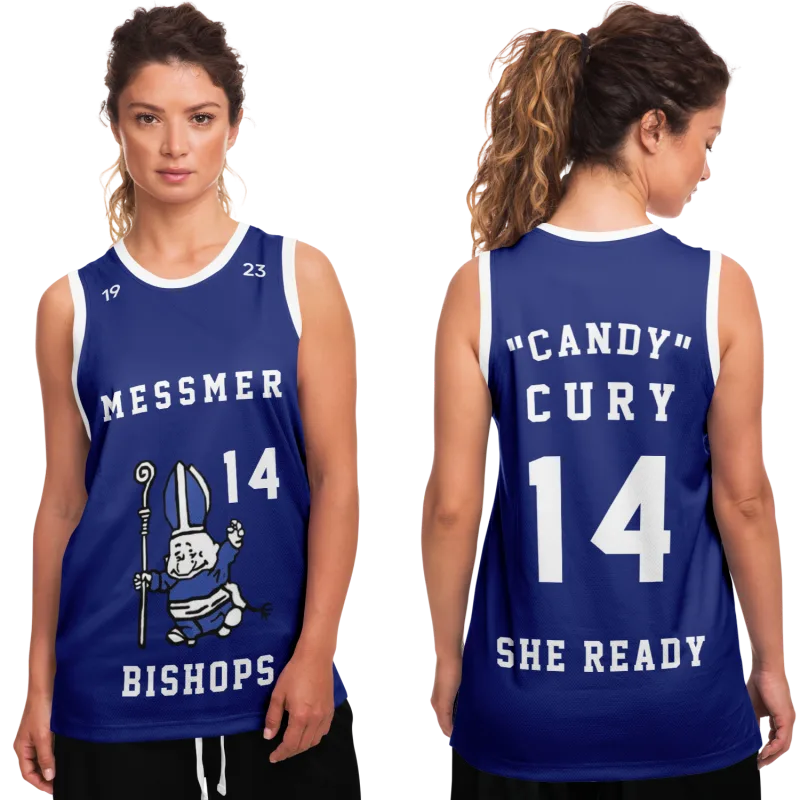
A custom jersey — their name, their number, their sport, their colors, built as a tribute to the program they played in — does that. But ordering one that genuinely lands requires more thought than most gifts.
This is the guide that gets you there.
What a Custom Jersey Means to a Former Athlete
Every former athlete remembers the first time they saw their name on a uniform. It's not a minor thing. That moment — pulling on a jersey that confirmed you belonged to something, that made it official, that made it real — lives somewhere in the body, not just the memory.
Years later, that jersey is almost certainly gone. It wore out. It got handed back to a coach at the end of the season. It's deteriorating in a bag somewhere under a bed. The number lives on in someone's mind but isn't visible anywhere. The name survives in old programs, in the recollections of teammates, in the slightly-too-long story someone tells at a birthday dinner about the game when everything came together.
A custom jersey brings that chapter back — not quite as nostalgia, but as recognition. It says: that version of you was real, and it still matters.
The difference between a fan jersey and a custom jersey is the difference between honoring someone else's athletic identity and honoring theirs. For a person who played, that distinction is everything.
If you played, you know: rooting for someone else's name on a jersey and wearing your own are two entirely different experiences. One is fandom. The other is identity.
The Four Details That Determine Whether It Lands
Ordering a custom jersey isn't complicated, but there are four decisions that separate a gift that gets framed from one that gets worn a handful of times and forgotten. Nail these and everything else falls into place.
1. The Name
This sounds straightforward until it isn't. Former athletes carry their names in specific ways. A player who was always addressed by their last name on the field wants their last name on the jersey. A player who had a nickname that stuck — the one their teammates actually used, the one their coach shouted — may want that instead.
Before you order, think about how this person talks about their playing days. Do they refer to themselves by last name in those stories? Is there a team nickname that comes up? The name on the back should be the one that would have appeared in the game program, or the one their teammates would recognize immediately.
When you're genuinely unsure: last name. That's the standard on virtually every sport jersey, and it's almost never wrong.
2. The Number
This is the detail former athletes never lose. Ask anyone who played seriously what number they wore and they answer immediately — no hesitation, no searching. The number is part of the identity in a way that resists easy explanation.
If you know the number, use it. If you don't, this one is worth investigating — directly, or through someone who would know. A parent, a sibling, a former teammate, a spouse who has heard the stories enough times to have absorbed the details. Getting the number right signals that you were paying attention. Getting it right is the difference between a good gift and one they'll talk about.
3. The Sport and Build
Custom jerseys are sport-specific in cut, collar, and construction. A football jersey is built differently from a basketball jersey, a baseball jersey, or a hockey jersey. Order within the sport they actually played.
Position matters less for the jersey design itself — customization typically doesn't specify position — but it may become relevant for color selection if the former athlete played in a program that used position-coded color conventions. When uncertain, order for the sport and leave position details aside.
4. The Colors
This is where the emotional weight concentrates. School colors, program colors — these carry meaning that generic combinations don't come close to. A former high school linebacker doesn't want any navy and gold jersey. They want the specific shades that matched their helmet.
Color matching from memory alone is imprecise. If you have access to a photograph of them in their playing-day uniform, use it as a reference when selecting colors. Most custom jersey platforms allow color customization with enough flexibility to get close to what they remember. Bring the reference image and work from it.
Sizing a Custom Jersey for Someone Else
Sizing a gift jersey without asking is the part most buyers worry about most. Here's a practical approach that avoids the conversation while getting it right.
Use everyday clothing as your baseline. If you've seen this person in a t-shirt, a fitted hoodie, or a casual button-down, you have a working reference. Most custom jerseys follow standard sizing that maps onto everyday shirt sizing with reasonable accuracy. Someone who wears a large t-shirt will generally wear a large jersey.
When the size feels uncertain, go up. A jersey with a little room reads as intentional and stays wearable. A jersey that's too small goes into a drawer. Former athletes who played at high school or college level often appreciate jerseys with some room — that's closer to how a game jersey actually fit, with space for layers underneath.
Check the platform's specific size chart before ordering. Every custom jersey platform publishes its own sizing guidance. Look at the chest measurement column, not just the S/M/L/XL label. A medium on one platform is not always a medium on another, and the difference matters when you're ordering something that can't be exchanged quickly.
The moment this gift works best: Maria C., 38, ordered a custom basketball jersey for her husband's 40th birthday. He played point guard through college and still keeps his old game program framed in the home office. She pulled his chest measurement from a dress shirt while he was at work, cross-referenced it against the platform's size chart, and ordered one size up from what the chart suggested. He opened it at dinner with their kids watching. He put it on the same night.
Customization Decisions Beyond the Basics
Once name, number, sport, and colors are settled, there are secondary decisions worth thinking through before you confirm the order.
Font style. Most platforms offer several lettering options — block letters, athletic block, script, old-school serif. The right choice follows the era and culture the former athlete played in. High school football programs across most of the country use block lettering. Baseball programs often favor script. When genuinely uncertain, block is the cleanest and most broadly applicable choice.
Front number placement. Many sport jerseys carry the number on both the front chest and the back. This is standard for football and basketball. If the platform gives you the option to include or exclude the front number, include it — it's more faithful to the actual game jersey format and reads as more considered.
Patches and secondary markings. Some platforms allow small additional details — a year, a program indicator, a logo patch. These add meaning when they're specific and personal. A graduation year, a season year, something that anchors the jersey to a particular chapter. When there's no specific meaning attached, leave them off — unearned detail reads as decoration, not personalization.
Material. Performance fabric jerseys — mesh, moisture-wicking polyester — feel and look like the jerseys they actually played in. Heavier-weight versions wear more like casual apparel. For a former athlete, performance fabric is the more authentic choice. It's the material they remember.
The Personalization Layer Most People Skip
There's one additional step that shifts a custom jersey from a great gift to something that gets framed: include something with it that names what it represents.
A card. A handwritten note. A photograph from their playing days.
In our experience, the jerseys that end up on walls rather than in rotation are the ones that arrived with a specific acknowledgment of what they mean. A note that reads "Number 52, your senior year, the season you started every game" does something the jersey alone cannot. It says the chapter out loud. It names what's being honored.
Former athletes spend years with that part of their story living quietly inside them. Being seen — specifically, accurately, by someone who paid close enough attention to get the details right — is its own separate gift layered on top of the jersey itself.
If you have a photograph from their playing days, include it. If you can write two sentences about what that athletic chapter meant to the people around them, write them. The jersey is the anchor. The note is what makes it permanent.
How to Order Without Getting It Wrong
Custom sports jerseys designed as tributes to a player's own program are available through dedicated jersey customization platforms. iPlayedFor is built specifically for this use case — jerseys for former athletes, built around the details that matter to someone who played.
The ordering sequence on a well-built custom jersey platform follows this path:
- Select your sport. This determines jersey cut, collar style, and the customization options available to you.
- Choose your base colors. Select primary and secondary colors, then preview the combination before moving forward.
- Enter the name and number. Verify the spelling. Verify the number. Then verify both again. These are the details that cannot be corrected after the jersey goes into production.
- Select font style and any secondary markings that carry specific meaning.
- Choose size from the platform's size chart — chest measurement, not just the size label.
- Review the digital proof. Nearly every platform generates a preview before you confirm. Look at it carefully: name spelling, number placement, color rendering, font choice.
- Account for production time. Custom jerseys are produced after you order — they're not pulled from a shelf. Production and shipping typically runs one to three weeks depending on the platform and shipping method. Order well ahead of the birthday.
The most common ordering error is rushing. A misspelled name. A number that's one digit off. A color combination that wasn't previewed carefully. Give yourself enough time to review before confirming, and the order will arrive the way you intended.
Your jersey is still out there waiting.
Design yours in minutes and see your name and number exactly the way you remember it.
Frequently Asked Questions
What information do I need before ordering a custom jersey as a birthday gift?
At minimum: the name the recipient went by as a player (last name, or a specific nickname if that's what their teammates used), their jersey number, the sport they played, and an approximate clothing size. Colors drawn from their team or school add meaningful accuracy — if you have a photograph of them in their old uniform, use it as a color reference during customization.
How far in advance should I order a custom jersey for a birthday?
Plan for at least three weeks between your order date and the birthday. Most custom jersey platforms require one to three weeks for production and standard shipping, and custom items go into production after you place the order — there's no inventory to pull from. Check whether the platform offers expedited production if you're working with a shorter window.
What if I don't know the jersey number they wore?
The number is the most meaningful detail to get right, but if you can't find it without ruining the surprise, there are routes around the direct question. A parent, sibling, former teammate, or coach from that era will almost always know. Old team programs, yearbooks, and game photographs are another reliable source. As a last option, some recipients respond well to a number with separate personal significance — a birth year, a meaningful date — paired with a note that explains the choice. It's not the same as the right number, but intentionality can carry it.
Can I order a custom jersey for a sport other than football?
Yes. Platforms built for former athletes typically cover the major team sports — football, basketball, baseball, softball, soccer, hockey, and others. The customization process is consistent across sports; the primary differences are jersey cut, collar style, and sport-specific design conventions. Order within the sport the recipient actually played for the most meaningful result.
Does a custom jersey work as a gift for someone who played recreationally rather than competitively?
It does. The emotional resonance of seeing your own name and number on a jersey doesn't require a varsity letter or a championship run. Anyone who suited up — at any level, in any program, at any point in their life — carries that experience as part of who they are. The gift works because it honors the fact that they played, not the level at which they played.