


November has its own cold.
Not the cold of January, which is just weather. This one arrives with intention — the kind that finds the gaps in your gear, settles into metal bleachers before anyone sits down, and turns every exhaled breath into a small cloud of proof that you showed up. If you ever laced up on a Thanksgiving morning and ran out onto a field in front of a crowd that included your whole life, you already know the cold we're talking about. You've been carrying it ever since.
Thanksgiving football memories work differently than other sports memories. They don't just sit in the part of your brain that files game results and statistics. They press up against everything else from that day — the sound of the kitchen when you got home, whoever met you at the door, the particular weight of your body at the dinner table two hours after the final whistle, too tired to reach for the bread but unable to stop talking about the game. The sport and the holiday fuse completely. After enough years, you can't locate where one ends and the other begins.
This is for the athletes who played those games. The ones who suited up when it counted most — in front of hometown crowds, under November skies, before the turkey was ever carved.
The Game That Claimed Its Own Holiday
Every sport stakes out a place in the American calendar. Baseball owns the summer afternoon. Basketball rules the winter arena. But football on Thanksgiving occupies something different entirely — a space that isn't just athletic but cultural, communal, and in many places, deeply personal.
The game doesn't simply happen to fall on the holiday. The two have grown into each other over more than a century until they share the same identity. That's true at the professional level, where the NFL has hosted Thanksgiving games since 1920, and where the Detroit Lions established their annual tradition in 1934, with the Dallas Cowboys joining the rotation in 1966. But it was true long before any of that at the community level, where high school programs were already making their Thanksgiving rivalry games the most anticipated dates on the local calendar — the kind that brought out people who hadn't been to a single other game all season.

High school Thanksgiving rivalry games rank among the longest-running continuous athletic traditions in American sports. Some matchups have been played every year for over a century, paused only by world wars — and resumed immediately after.
Consider what that says about the relationship between football and this particular Thursday. A tradition so woven into community identity that it outlasted nearly every other institution around it.
If you played in one of those games — or one like it at any level — you were part of a thread that stretches much further back and forward than any single season.
What the Morning Felt Like Before Anyone Was Watching
Ask a former athlete about their Thanksgiving game and they almost never open with the score.
They open with the morning.
The alarm sounding before the house stirred. Something already cooking in the kitchen — coffee, onions, something holiday-specific — carrying through a quiet that wouldn't last. The strange doubling of being in full game mode while the rest of the world was still in holiday mode, the two realities running side by side.
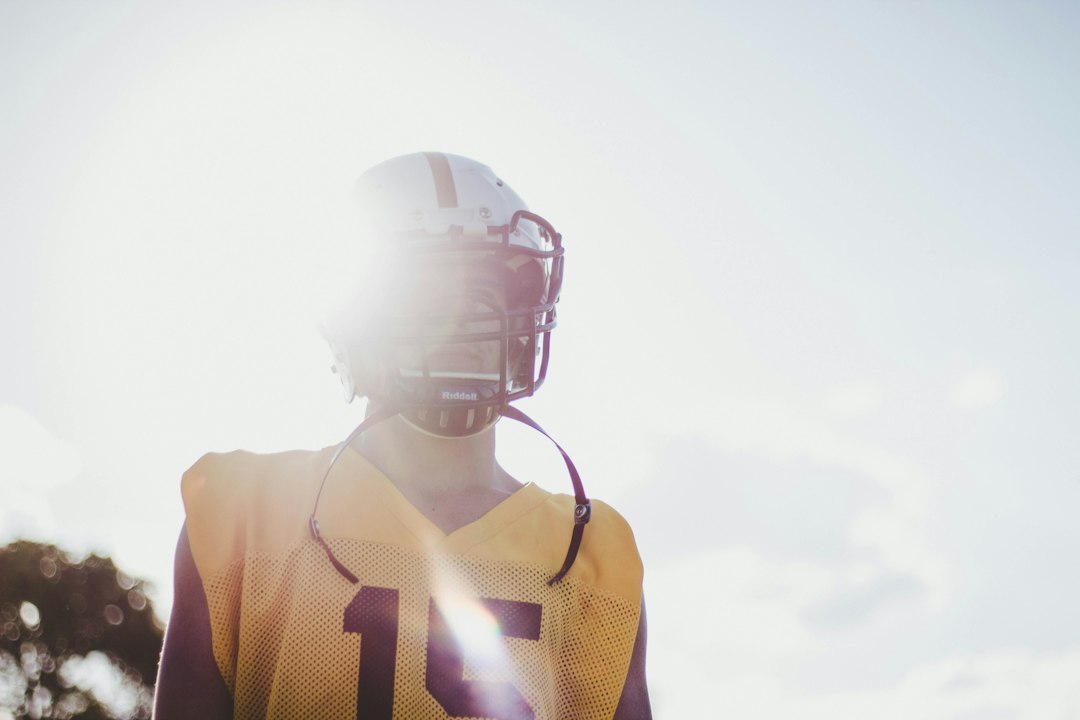
The drive to the field. Light at that low, angled November pitch that makes ordinary things look slightly significant. Breath visible in the air. Crowd already forming even though it was early by any reasonable measure.
And then the crowd itself.
Thanksgiving games pulled people who never came to games. Relatives who considered sports an inefficient use of time. Grandparents who had real trouble with the bleachers and made it anyway. Neighbors who'd watched you grow up in this town and wanted to see what you'd grown into. Your parents, standing in a section you could locate from anywhere on the field without actually looking directly at them — you just knew where they were.
That crowd changes the nature of the competition. Not tactically. Emotionally. You were performing in front of the full assembled version of your life, compressed into a single afternoon on a frozen field.
The opponent felt different too. Thanksgiving rivalry games weren't abstract contests against a team in a different-colored uniform. They were personal. You might have known half their roster from summer ball, from school, from the same streets. There was something to prove that had nothing to do with the standings and everything to do with the specific history between these two groups of people.
Maria T., 34, played center midfield for a club soccer team that ran its own Thanksgiving weekend tournament for several years. "We called it the Turkey Cup, which sounds absurd in retrospect, but at the time it was absolutely everything," she says. "The year we won it, my entire extended family showed up on the sideline. I cried on the field and immediately pretended I hadn't. My aunt still brings it up at every Thanksgiving dinner, without fail."
That's the mechanism. The game becomes family lore. It gets retold for decades at the exact same table where it was first discussed the night it happened.
Three Things Thanksgiving Football Taught That the Regular Season Couldn't
There's a version of this conversation that stays purely in nostalgia, and there's genuine value in that. But underneath the warmth is something worth naming directly — a set of lessons that Thanksgiving football delivered more clearly than almost any other athletic context.
It taught you to perform when the stakes felt personal. Competitive pressure exists in every game. But the pressure of family watching, of community watching, of knowing the results would be discussed at dinner in two hours — that's a different category of pressure. It's closer to the kind you carry into the rest of your life.
It taught you that exhaustion and meaning can occupy the same body at the same time. Sitting at the Thanksgiving table after the game, too depleted to lift the serving dish but unable to stop talking — that was proof of something. The tiredness wasn't ordinary. It was evidence. You had done something that day that most people in that room hadn't done, and your body carried the record of it.
It taught you what a team actually is at its most essential. Not a group of people who practice together on weekday afternoons. A group of people who show up together on the day that matters most, in the cold, in front of everyone they've ever known, and do the thing together anyway. That distinction — between a practice team and a game-day team — became permanently clear on that field.
It taught you that some traditions justify the effort of keeping them. The players who came before you played this game. The ones who came after would play it too. You were a single entry in a long record, and the record itself carried a weight that your individual performance couldn't define.
How the Memory Changes Shape Over the Years
Here's what nobody tells you in the locker room after the final whistle on Thanksgiving afternoon: the memory doesn't hold its original size. It expands.
Immediately after the game, the experience is still factual in scale. The score was what it was. You performed well or you didn't. The outcome is clear. Those are the dimensions of what happened.
But ten years out, the facts have softened while the feelings have sharpened. The score is approximate now. The specific moment you remember most vividly — a block, a stop, a sprint down the sideline, something someone said in the huddle — has separated from the statistical record and is traveling on its own. You remember specific faces in the crowd with unusual clarity. The cold is more precise in your memory than the final numbers on the scoreboard.
Twenty years on, the game has taken on something closer to myth. Nothing has been invented. The emotional significance has simply finished separating from the box score and now stands independently. You might be off by a touchdown on the final score. You are not off at all on how it felt to walk off that field.
This is what athletes mean when they describe the games that shaped them. They rarely mean the games where they posted their best statistics. They mean the games where they discovered something — about what they were capable of, about what their team was capable of, about what it actually costs to compete when the cost is real.
Thanksgiving football, more reliably than almost any other competitive context, is where that kind of discovery happens.
The Jersey, the Number, and the Artifact of the Day
When athletes talk about their Thanksgiving games, something specific comes up again and again beyond the score and the crowd: they remember what they were wearing.
Not in a superficial sense. In the sense that the uniform was the physical form of who they were on that particular afternoon. The number on the back was how teammates called for you, how your name appeared in the printed program, how your family identified you from the bleachers. For the hours of that game, the jersey and the number were you — not a representation of you, but the actual you in the context of the competition.
A lot of those jerseys are gone. Returned to equipment rooms, worn out in years of casual use, lost in moves or basement floods or the general entropy of time. What remains is the memory of wearing them — the memory of who you were when that number was on your back, in front of that crowd, on that particular November day.
In our experience collecting stories from former athletes, the jersey number comes up more consistently than trophies, statistics, or records when people are asked what they'd want to hold onto from their playing years. The number is the anchor of the memory. It's the specific, physical detail that the rest of the story hangs on.
The artifact is gone. The memory it belongs to is not.
Your jersey is still out there waiting.
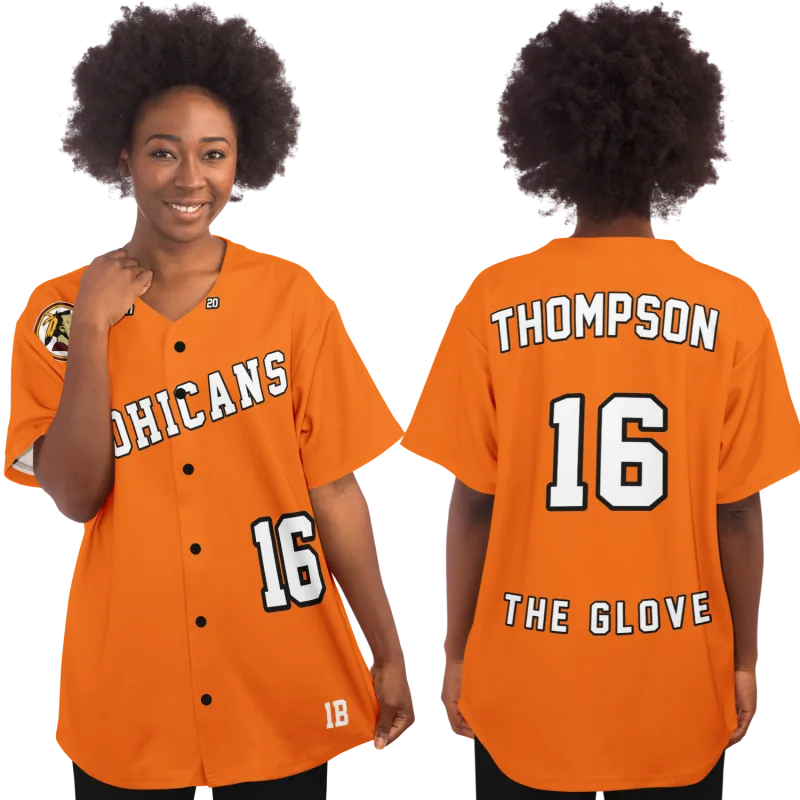
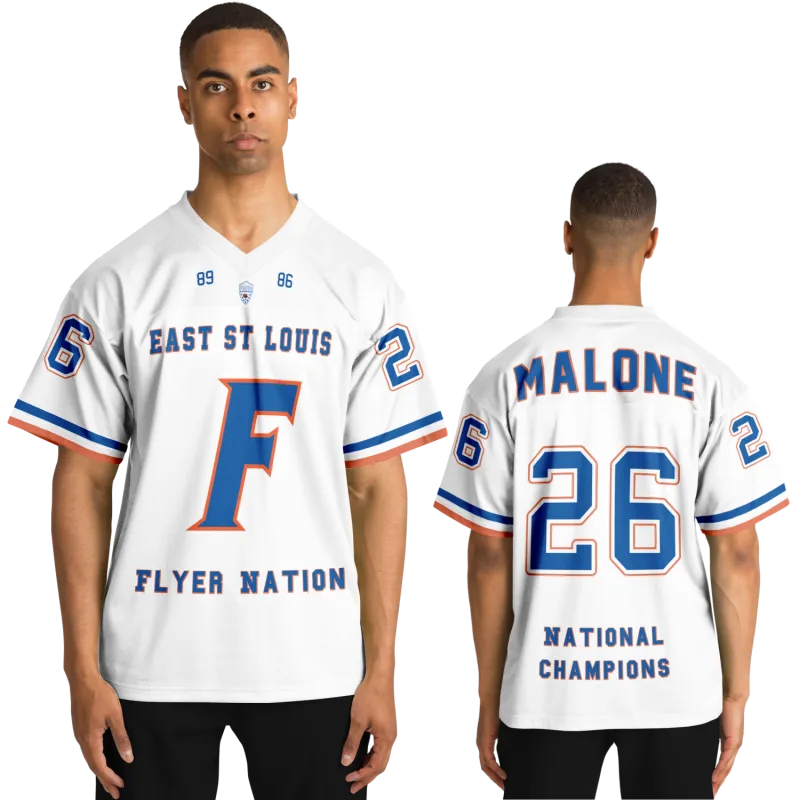
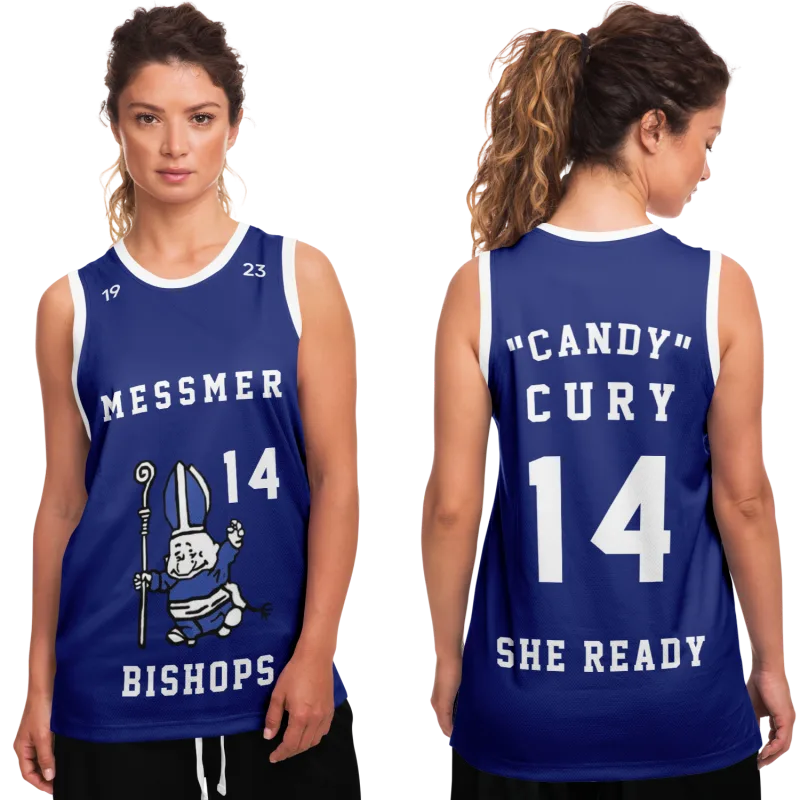
Design yours in minutes and see your name and number exactly the way you remember it. The colors, the font, the number that meant something — in the style of the team you played for, built to honor the seasons that shaped you. Whether it's a tribute to the Thanksgiving game you won, a nod to the year you fell short, or simply the number you wore when football was the most important thing in your week, it belongs in your hands again.
Frequently Asked Questions
When did Thanksgiving football become a tradition in the United States?
Thanksgiving football has roots going back to the late 1800s, when college programs began scheduling significant matchups on the holiday. High school rivalry games on Thanksgiving became widespread community traditions by the early 1900s. At the professional level, the NFL's Thanksgiving Day games formalized the connection between the sport and the holiday, with the Detroit Lions hosting annually since 1934 and the Dallas Cowboys joining the tradition in 1966. Many high school programs have maintained uninterrupted Thanksgiving rivalry games for over a century, pausing only during the World Wars before resuming immediately after.
What makes Thanksgiving rivalry games feel different from regular season matchups?
The combination of holiday audience, community history, and compressed emotional stakes creates a context that regular season games rarely produce. Thanksgiving games draw family members and community figures who don't attend routine games, which raises the emotional weight of the performance in ways that competitive significance alone doesn't. The rivalry dimension adds personal history between teams that may share geography, former teammates, or decades of contested record. Athletes who played in these games consistently describe them as among the most formative of their careers, regardless of outcome or statistical performance.
Why do athletes remember the jersey number they wore more clearly than other details?
The jersey number functions as an identity marker during the playing years — it's how teammates addressed you in real time, how your name appeared in game programs, and how family members located you from the stands. Memory researchers studying emotionally significant events note that objects and identifiers tied to high-emotion experiences become encoded alongside the emotional memory itself, which is why many former athletes recall their number with immediate precision even decades after their last game. The number isn't just a logistical detail — it was the specific, visible form of who you were during those seasons.
How do I get a custom jersey inspired by the one I wore in my playing days?
iPlayedFor lets you design a custom jersey in your name, number, and color scheme — built as a tribute to the uniform you wore and the seasons it represents. You choose the style, the colors, the font, and the number. The result is a wearable piece of your athletic history, designed around your specific memory rather than a generic template. Start at iplayedfor.com/design/start and see your name and number come back together in minutes.
See also: why high school sports still matter to adults | the science behind why those game-day memories are so vivid | Friday night lights and the feeling of playing under them | how football-obsessed your state really is