

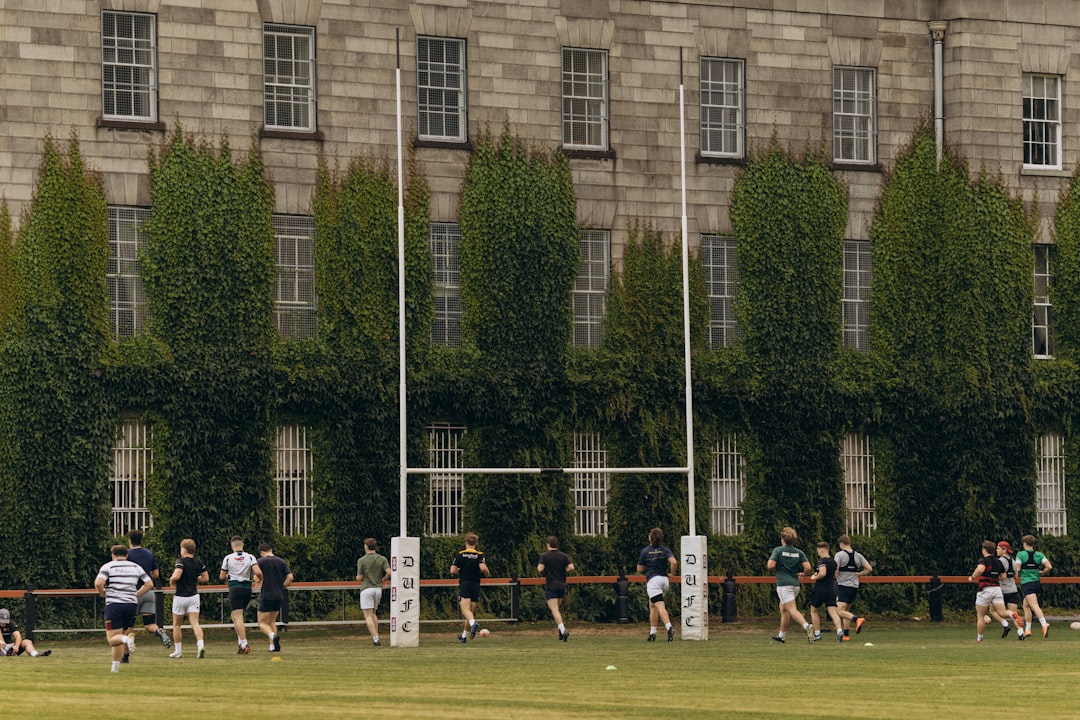


There is a specific kind of August heat that only exists on a practice field.
Not the beach kind. Not the backyard kind. The kind that comes up from artificial turf or sun-baked clay and hits you in the face the second you step out of a gymnasium. You're already carrying a bag that's too heavy. Your water bottle is already half-empty. And somewhere, a whistle is about to blow.
If you played, if you really played, you know exactly what that felt like. And you know that sports camp memories aren't just memories. They're the architecture of who you became.
This piece is about what actually happened to you during those weeks, not summer programs or youth development theory. What was being built while you were just trying to get through the next rep. And why the kids sweating through those same drills right now have no idea what's actually being forged in them.
The Summer That Didn't Feel Important at the Time
Every former athlete has a before and an after.
The before is whatever version of you showed up to camp the first time, probably a little unsure, carrying borrowed equipment, scanning the crowd for someone you knew. The after is who walked off the field at the end of it. They don't look different. Nobody would notice. But something shifted.
In my experience as a former player, that shift is almost never visible in the moment. It happens between the morning session and the afternoon session, somewhere around day three, when your body has stopped protesting and your brain has gotten quiet. That's when the real work begins.
The coaches who ran the best camps understood this instinctively, even if they couldn't have articulated it. They weren't just teaching skills. They were teaching the habit of continuing when continuing is the last thing you want to do. The repetition was about establishing, in the body itself, the fact that you are someone who does not stop, rather than technique refinement.


That is not a small thing to learn. Most people never learn it.
Every former athlete remembers at least one moment from camp where they were genuinely finished, and then kept going anyway. It wasn't a choice, not really. It was more like a discovery. I can do more than I thought. And once you discover that, you carry it everywhere. Into classrooms. Into boardrooms. Into every room where someone tells you something is too hard.
The camp didn't give you that. The camp just created the conditions where you found it in yourself.
What Was Actually Being Built
Let's be specific about the mechanisms, because this isn't sentimentality. This is how athletes are made.
The Reps You Didn't Know Were Doing Something
There's a term in sport science: automaticity, the point at which a motor skill becomes so deeply encoded that it executes without conscious direction. Research from the Journal of Motor Behavior documents what coaches have always known empirically: the path from deliberate effort to automatic competence requires a volume of quality repetitions that can't be achieved casually. Summer camp was where many athletes crossed that threshold for the first time.
You ran the same cut. Threw the same release. Set the same footwork pattern. A thousand times. And at some point, usually when you'd stopped counting, it stopped being something you did and started being something you were.
That's the first thing camp built: competence so practiced it became identity.
The Part Nobody Talked About
The second thing was harder to name, and almost nobody talked about it directly. It was the experience of being seen by a peer group under conditions that revealed character.
Camp stripped away almost everything that usually defines social hierarchy. Your parents' house didn't matter. Your grades didn't matter. What you wore to school didn't matter. What mattered was whether you sprinted through the line or coasted before it. Whether you helped the teammate who was struggling or looked away. Whether you were the same person at the end of the third hour as you were at the beginning of the first.
Kids who had been quiet in every other environment found out they were loud when it mattered. Kids who thought they were tough found out that tough is a behavior, not a trait, and that it requires consistent choice, not a single declaration.
This is identity formation in its most unmediated form. And it happened during a week in August that most parents thought was just keeping their kid busy until school started.
If You Played, You Know Exactly What This Feels Like
There's a specific memory almost every former athlete carries from their camp years, and it's rarely the big dramatic moment.
It's something small. The way a particular coach pronounced your last name. The smell of the equipment room on a Tuesday afternoon. The water that tasted like rubber because the bottle had been sitting in a hot bag since morning. The specific texture of fatigue that comes around hour four of a double session, when everything aches but you're almost laughing because everyone around you aches just the same way.
That shared suffering is not incidental. It is the mechanism.
Community built under conditions of comfort is fragile. Community built under conditions of shared difficulty is structural. The teammates you suffered with at camp were different from the teammates you saw in the hallway. You'd been in the fire together. That created a trust that ordinary friendship rarely produces.
Danielle M., 34, a former high school track and field athlete, still talks about the summer camp where she first broke four minutes in the 1500, not because of the time, but because the girl in the lane next to her, a stranger from a different school, waited at the finish line and said "I knew you had it." They've never seen each other since. Danielle still thinks about her before every hard run.
That's not a small story. That's what camp produces: moments that last so much longer than the season they came from.
The Coach Who Said the Thing You Still Remember
Every athlete has one. You might not have even realized they were doing it.
They weren't the coach who yelled the most or the one who ran the most impressive drills. They were the coach who said a specific thing, at a specific moment, that rearranged something in the way you understood yourself.
Sometimes it was a correction delivered as a compliment. You're capable of better than that, which is why I'm telling you. Sometimes it was a challenge issued with just enough belief in it that you couldn't dismiss it. You're going to be the one who decides how this session goes for everyone else today. Sometimes it was just a nod, but it was a nod from someone who had seen a thousand athletes, and it landed differently because of that.
The best camp coaches were doing more than teaching sport. They were practicing a craft that has almost nothing to do with the sport itself: the craft of making a young person believe something true about themselves that they couldn't yet see.
I've heard version after version of this story from athletes across every sport and every era. The details change. The mechanism is always identical: a coach said something, at the right moment, and it stuck. Not for the season. For good. For many former athletes, what their coach told them that summer still echoes in their head decades later: a voice that outlasted every playbook and every game plan.
When Greatness Stepped Onto Your Field
For some athletes, the camp memory that never fades is neither a drill nor a coach. It's the day a legend walked in.
Maybe it was scheduled: a guest appearance the counselors had been whispering about all week. Maybe it was a surprise, and the whole gym went quiet in a way it never had during a scrimmage. Either way, you remember the shift in the room before you remember anything the person said. Everyone stood a little straighter. Every rep got a little sharper. Nobody wanted to be the one caught coasting in front of someone who had actually been there.
Here's the thing about that moment: the legend probably didn't teach you much, and not in the way your coaches did. What they gave you was closer to proof. Proof that the thing you were grinding toward was real, that there was a place you could get to. A kid at a hockey camp watches an Olympian step onto the ice, and something in their chest quietly rearranges. That's not just admiration. It's the first draft of a future self.
Most of us never became that legend. That's not the point. The point is that for one afternoon, the distance between "some kid at camp" and "the person everyone came to see" collapsed into something you could see and touch. You carried it with you afterward: not the autograph, but the certainty that the ladder was real. The top was occupied. And now you could picture yourself reaching for it.
What the Next Generation Is Learning Right Now
Somewhere, right now, in a gymnasium or on a practice field or in a weight room that smells exactly the way you remember, a kid is learning something that will take twenty years to fully understand.
They don't know it yet. They think they're learning how to set a pick, or how to time a cut, or how to keep their elbow in on the release. And they are learning those things. But those things aren't the point.
The point is the version of themselves that emerges from the repetition. The point is the moment on day four when they want to quit and they don't, and they file that away somewhere deep — not as a thought, but as a fact about who they are. I am the kind of person who doesn't stop when it gets hard.
That is a fact that will show up in every consequential moment of the rest of their life. In the job interview. In the marriage. In the hospital room. In every situation where the easy path and the right path diverge.
Camp teaches sport on the surface. Underneath, it's teaching character — not as a lesson plan, but as an experience. Not as a thing that is told, but as a thing that is lived.
The Drills Nobody Forgets
Ask any former athlete to close their eyes and describe their camp experience, and within thirty seconds they're describing something specific:
- The conditioning drill that seemed designed to break them — the one that, years later, they still use as the mental benchmark for what hard actually means
- The moment they were put in a leadership position they didn't ask for — and discovered whether they could hold it
- The teammate who became the standard they measured themselves against
- The day everything clicked — when the skill they'd been grinding suddenly felt natural, effortless, almost automatic
These aren't random. They're the curriculum that no written syllabus ever documented, delivered with perfect consistency across generations of athletes in every sport in every region.
Why the Jersey Still Means Something
Here's what the camp experience produces that most people don't account for: it makes the uniform matter.
By the end of a week at camp, the jersey — whatever form it takes — has been earned in a specific way. It has been sweated through, and dried, and sweated through again. It has been worn through sessions that should have ended thirty minutes earlier and didn't. It has been worn in the company of people who know exactly what the week cost.
That changes what a piece of fabric means. It's no longer clothing. It's evidence. Proof of something that happened in a gymnasium or on a field in August that nobody who wasn't there will ever fully understand.
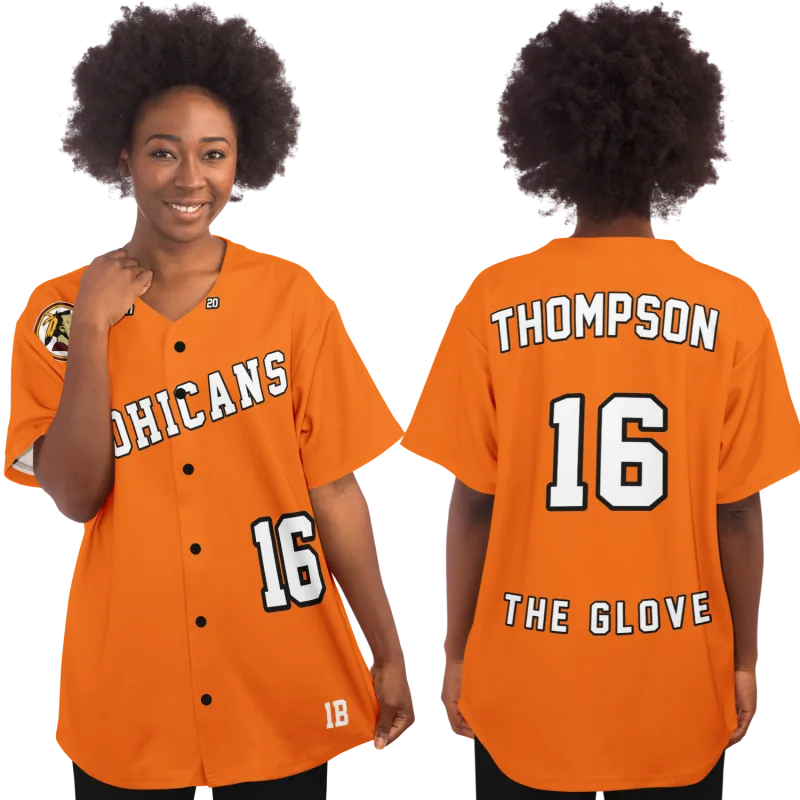
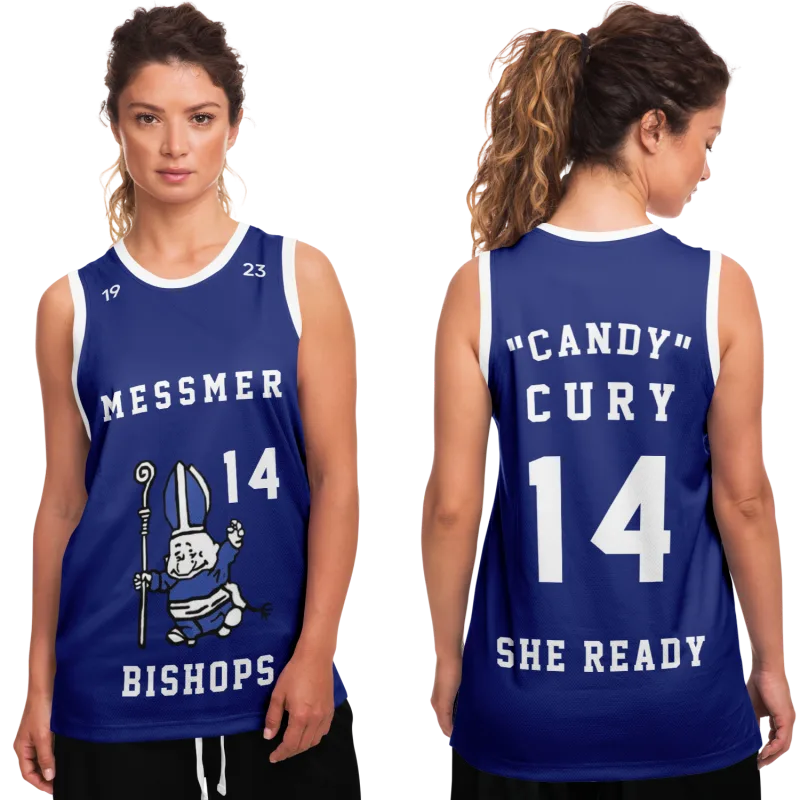
This is why athletes across generations — decades removed from their last practice — still feel something when they see their old number. Still feel something when they hold a jersey from a team they played on. The garment is not the point. What it represents is. The camp, the season, the teammates, the coach who said the thing — all of it is somehow stored in the name and the number. There's a deeper psychology behind why that jersey number still feels like yours decades after you last wore it — it became part of who you are, not just something you wore.
Your jersey is still out there waiting.
Design yours in minutes and see your name and number exactly the way you remember it.
Frequently Asked Questions
What makes sports camp memories so vivid compared to other childhood experiences?
Sports camp memories tend to be encoded more deeply than ordinary experiences because they combine physical intensity, emotional stakes, peer relationships, and novelty — all in a compressed timeframe. Memory research consistently shows that emotionally significant events, particularly those involving physical engagement and social belonging, are retained with unusual clarity. The discomfort, the achievement, and the community all contribute to why former athletes can recall specific moments from a week at camp with more precision than they can recall months of ordinary school days.
Is the character development from youth sports camps lasting, or does it fade?
The evidence — both in sport psychology research and in the consistent testimonials of adult former athletes — suggests that the habits of mind developed under the conditions of athletic camp are genuinely durable. The specific technical skills may become rusty. But the foundational patterns — continuing through discomfort, performing under peer observation, recovering from failure and returning to the task — tend to become permanent features of how a person approaches challenges. This is particularly true when the experience happened during formative adolescent years, when identity is being actively constructed.
Do athletes benefit from camp even if they don't go on to compete seriously?
Consistently, yes — and often more so. Athletes who attend camp but don't pursue competitive athletics to a high level still carry the full character development of the experience. In some cases, the camp experience represents the primary domain in their life where they were pushed to their actual limit and discovered what was on the other side of it. That discovery doesn't require a college scholarship or a varsity letter to remain meaningful. It remains meaningful for a lifetime, regardless of what comes after the final whistle.
Why do former athletes still feel connected to their old numbers and uniforms?
The jersey number functions as what psychologists call an identity anchor — a concrete, external symbol that represents a cluster of experiences, relationships, and self-discoveries that are otherwise difficult to access directly. The number is not the point; it's the shorthand. When a former athlete sees their old number, it doesn't just trigger nostalgia — it activates the entire network of memory and identity associated with that period of their athletic life. The camp, the season, the teammates, the coach, the version of themselves they became — all of it is compressed into two or three digits on a piece of fabric.
See also: what high school sports actually teach you that nothing else can | why playing under the lights felt like nothing else | the psychology of why those early athletic memories still stick with us | why the science behind vivid sports memories explains so much