

You still remember the sound. Not the buzzer, not the whistle — the moment you walked through the tunnel or pushed open the gym doors and the crowd noise stopped being ambient and became something with weight. It landed in your sternum before your ears made sense of it. The greatest high school rivalries don't live in a national rankings article. They live in a specific building, on a specific night, in a specific town where everyone — and you mean everyone — had rearranged their week to be there.
That is the thing about your high school sports rivalry that no top-ten list ever reaches. It was never about which program was objectively superior. It ran beneath standings and statistics: the street you grew up on, the jersey you pulled over your head on game day, the school across town that somehow stood for everything you were not. The stakes were personal long before they were athletic.
This is not a sports history lesson. This is an invitation to go back to the game that is still with you.
The Anatomy of a Real Rivalry
There is a meaningful difference between two programs that share an annual scheduling slot and a genuine rivalry. Every district has opponents on the calendar. Not every district has the game.
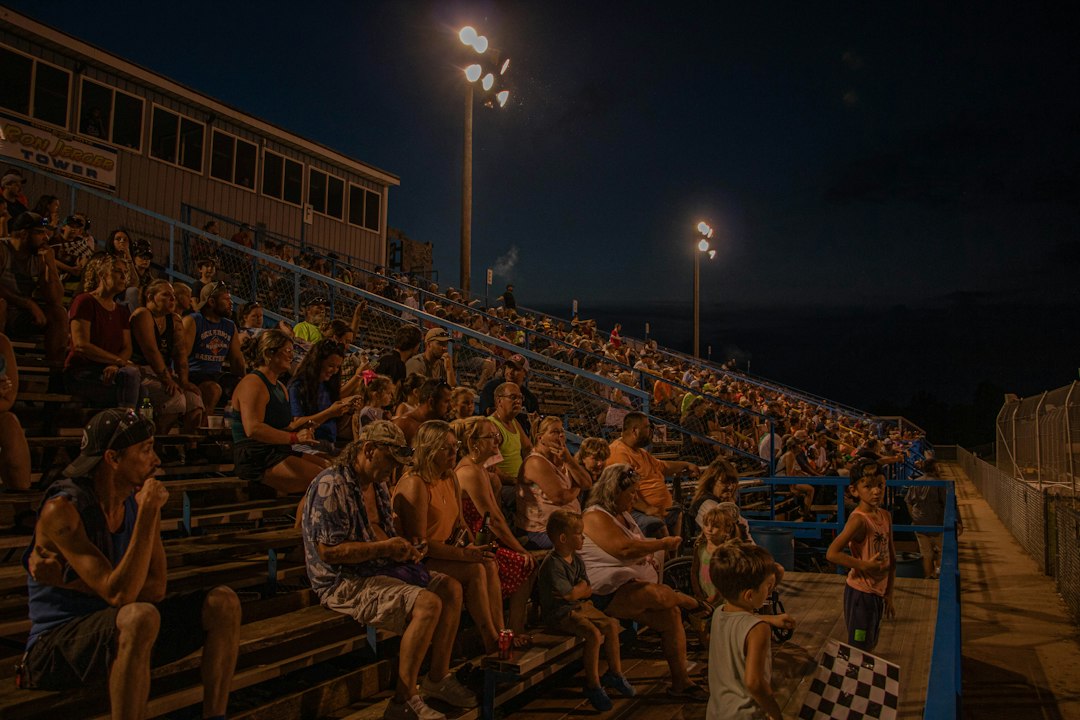
Real rivalries have texture. They carry a specific quality of light — Friday night lights that feel categorically different from every other Friday of the school year. They generate a week of school that barely qualifies as school, because the game is the only thing occupying anyone's mind. Teachers stop pretending otherwise. Hallways fill with a particular low-grade electricity that has no equivalent in adult professional life, before or since.
What separates a genuine rivalry game in high school from a standard contest, in our experience, comes down to a few elements that surface consistently when people describe the games that shaped them.

Proximity. The great ones are cross-town, cross-county, or cross-district — never distant. Distance kills rivalries. When you face a school two hours away, those are opponents. When you face the school whose students grew up on streets parallel to yours — kids you see at the movies, whose names you know, whose parents your parents have strong opinions about — the situation is categorically different. The stakes are social as much as athletic. You will see those people Monday morning. That single fact transforms how every minute of the game feels.
History. A genuine rivalry requires accumulated memory. The 1987 game an older brother still raises at Thanksgiving. The referee's call in 1994 the other side has never acknowledged. The season your school finally broke through. The season you should have won and didn't. Every new game arrives carrying every previous one, and that accumulated weight is what makes the next contest feel enormous before the opening whistle ever sounds.
Community investment. When the whole town appears — not just parents of active players, but former players, neighbors, people who have not attended a high school game in a decade — you understand that you are inside something real. The diner hangs the banner. The grocery store windows go up in school colors. Adults who graduated fifteen years ago rearrange their weekends around a high school game. That level of investment does not happen for an ordinary scheduling entry. It happens when the outcome carries meaning that extends beyond the scoreboard.
The Week Before the Big Game
Ask anyone who competed in a genuine rivalry about the week leading up to it. Watch what their face does.
Rivalry week in high school is its own separate climate — conditions that do not exist at any other point in the calendar. Practice carries a different charge. The coaching staff communicates with more silence and more intention. You absorb the stakes through the skin before anyone names them out loud. You know. Your teammates know. No one needs to say it.
The social texture of that week is something adult life does not produce again. If the opponent was the cross-town school, those players were not abstractions — they were people with names and histories. The starting forward from the other team whose house you had been to once. The kid from their roster who dated someone in your circle. When you passed them at the gas station during rivalry week, the interaction carried a charge it had never held in September. Something was unresolved between you. The game would settle it.
The trash talk was real, but underneath it lived something almost like mutual acknowledgment — a tacit understanding that both sides knew exactly what this was. You know what's at stake. I know what's at stake. Let's settle it properly.
And then the night before. If you played in one of these games, you know what that night feels like from the inside. The sleeplessness that is not quite anxiety and not quite anticipation but some unnamed compound of both. You lay in the dark running through scenarios — the play that works, the moment that doesn't, the feeling of your own hands under pressure you've never faced before. Your stomach behaved in ways it reserved exclusively for this occasion.
That was not manufactured feeling. It arose because something genuinely meaningful was pending.
What You Were Actually Playing For
Here is what goes unsaid about the greatest high school rivalries: the sport itself was almost incidental.
You were playing for something that sixteen-year-olds cannot fully articulate but feel with total conviction. You were playing for your neighborhood. For the name on the front of the jersey and your name on the back. For every player who had worn that same number in the seasons before you arrived. For the alumni who stopped you in the hallway that week and delivered some version of the same message: don't let this one slip.
You were playing for your identity at the precise moment in your life when identity was most raw, most available, and most urgently being formed.
Adolescence is the period when human beings are most actively constructing the story of who they are. The rivalry game arrives at exactly that window. It gives a person something concrete — a side to stand on, something worth competing for, a result that either confirms or tests the story being built. Win or lose, the game becomes chapter material. You carry it forward into every version of yourself that follows.
Maria R., 34, played point guard for her school's basketball team in a rivalry that split a small Ohio town straight down the middle for decades. Her team lost by two in overtime after she made the go-ahead shot that was waved off for a disputed lane violation. She does not describe the memory with bitterness. She describes it with a precision that still surprises her — the way everything surrounding that moment became permanent. "That game is more real to me than things that happened last year," she says. "I can still feel the floor under my shoes."
That is the paradox at the center of every rivalry game in high school that genuinely mattered. The outcome softens over time. The atmosphere — the embodied, sensory, irreversible fact of having been present — does not.
Win or Lose: Why the Memory Holds
Sports mythology insists that only victories matter. The architecture of human memory disagrees.
Some of the most durable rivalry memories belong to people who lost. A close loss carries a particular texture — a sharpness, a sense of unresolved tension — that comfortable wins do not. That quality is exactly what embeds it deeper. The disputed call. The momentum that shifted after an injury. The lead that came apart in the final two minutes. These memories do not soften the way others do. They stay specific and present in a way that defies the normal erosion of time.
The cathartic wins carry their own complexity. If your team finally beat the rival after years of second-place finishes, you know the feeling was not simply joy. It was relief layered over vindication layered over something adjacent to disbelief — a composite emotion that takes years to fully name. The weight of the previous losses was not cancelled by the win. It was what gave the win its particular gravity.
Both outcomes produce the same result: a memory that is identity-forming rather than merely athletic. The game did not happen to you. You happened through it.
What the memory is actually preserving:
- The embodied sensation of that specific environment — the smell of cut grass or gymnasium floor wax on that exact night
- The faces of specific teammates in specific moments under the highest pressure any of you had yet encountered
- The feeling of your own body performing when the stakes were genuinely real
- The social aftermath — who said what, how the other school's side responded, the silence or the noise on the ride home
None of that information lives in a box score. All of it lives in the people who were there.
The Jersey as Artifact
There is a reason people keep their jerseys.
Trophies migrate into boxes, get donated, surface at estate sales decades later. Jerseys survive. They travel through apartments and first houses and storage units and somehow always reappear. A person who hasn't thought about their high school team in twenty years will find that jersey during a move and hold it longer than they planned to.
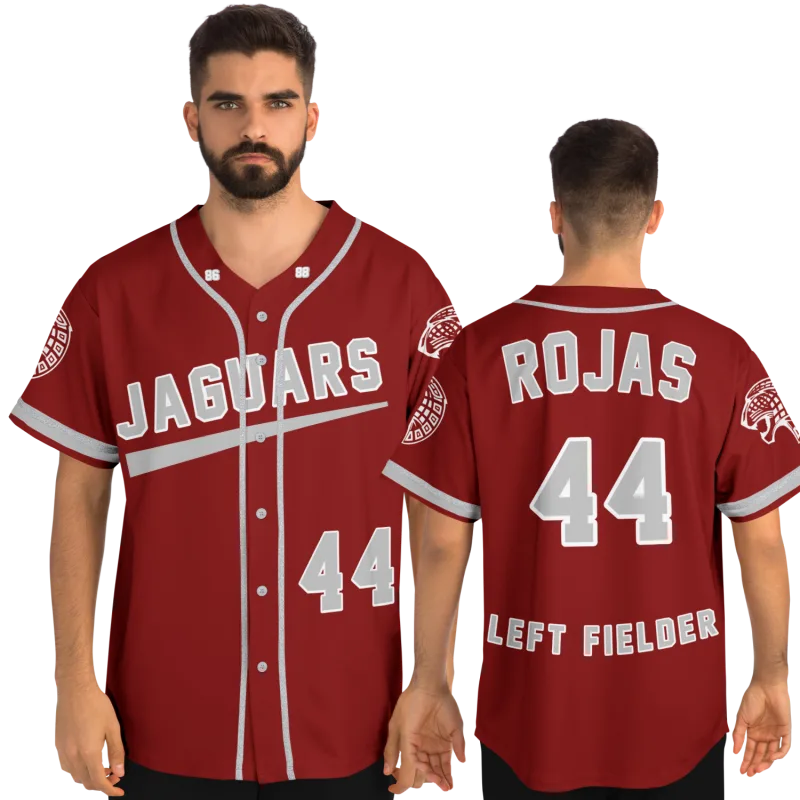
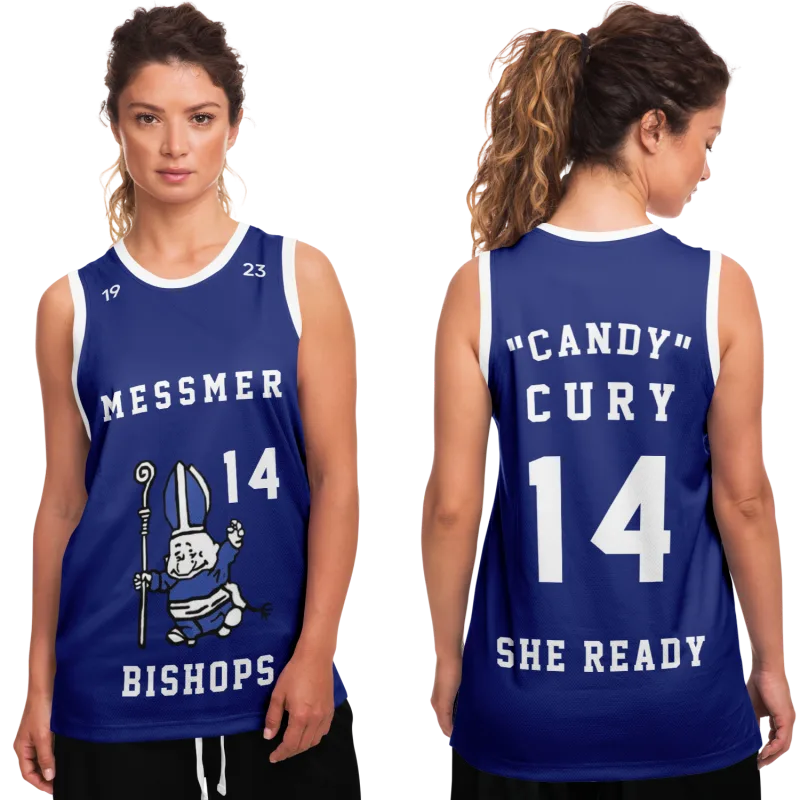
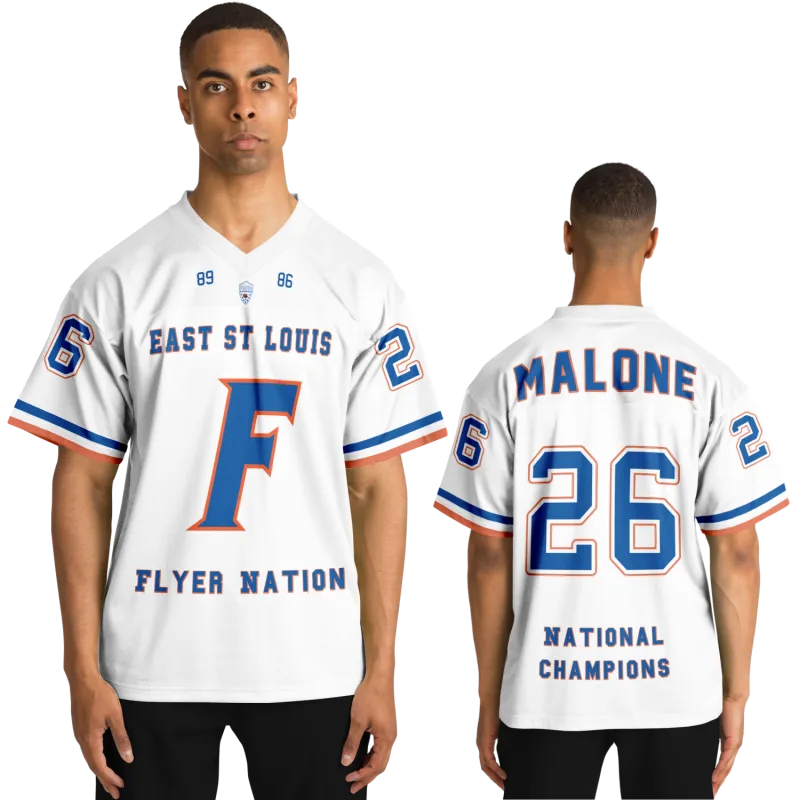
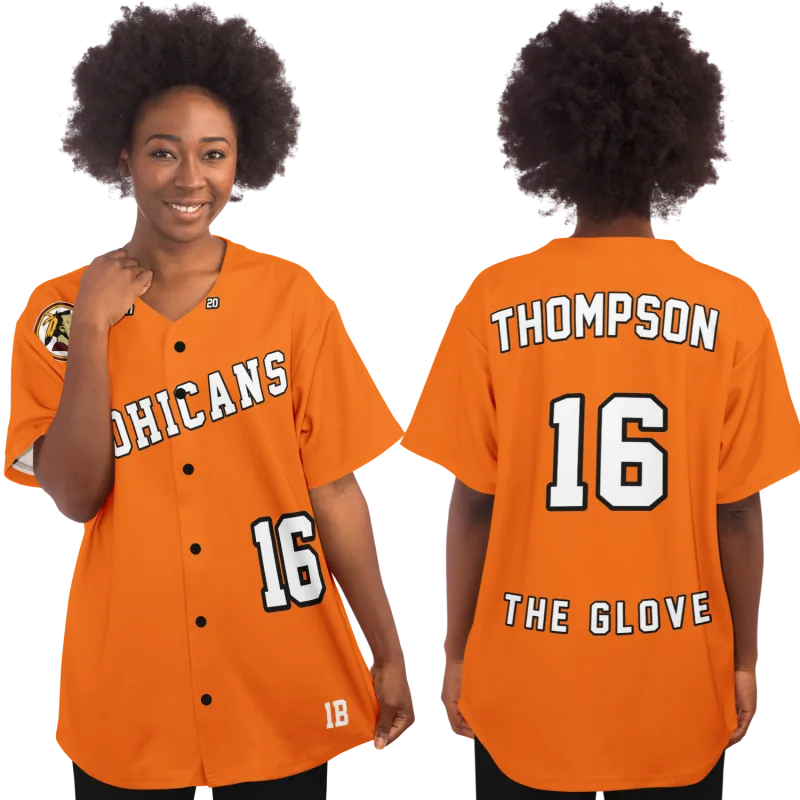
The jersey is the physical object that corresponds to the identity the game helped build. Your name is on it. Your number is on it. It is what you were wearing when it happened — the defining moment, the difficult moment, the moment you can still describe in precise detail when you are sixty. It is the most tangible artifact from the period when you were actively becoming the person you would carry forward.
What becomes clear over time is this: it did define you. Just not in the way you imagined at seventeen. The way you competed when the stakes were real — the way you showed up under pressure, the way your teammates appeared beside you when it mattered, the way you handled whatever the final score delivered — that is character formation. It happens through sport at that age in a way few other environments can produce. The jersey you wore is not a reminder of a game. It is a tribute to a version of yourself that was tested in public and came through it, one way or another.
A custom jersey designed as a tribute to the one you wore — your name, your number, your colors — is not memorabilia. It is a way of keeping that chapter visible. The people who design one are not living in the past. They are honoring the part of the past that earned a permanent place in who they became.
Your Jersey Is Still Out There Waiting
Your jersey is still out there waiting.
Design yours in minutes and see your name and number exactly the way you remember them — your school colors, the number you wore, the name that meant something when it appeared on your back on the biggest night of your season.
Frequently Asked Questions
Why do rivalry games in high school feel more emotional than professional or college games?
Because you were not a spectator — you were a participant with everything personally at stake. Your identity, your friendships, your neighborhood, and your social standing were all connected to the outcome in a way that watching a professional team never produces. Professional athletes compete for championships that feel meaningful from the outside; high school athletes compete for something inseparable from who they are at the exact moment they are becoming it. The emotional residue lasts because the stakes were genuinely, specifically personal — not abstract or borrowed from someone else's story.
Is it normal to remember my high school sports rivalry more vividly than recent events?
Yes, and there is a neurological basis for it. Memories formed during periods of high emotional arousal are encoded more durably and retrieved more readily across a lifetime. Adolescence combined with a high-stakes athletic contest produces exactly that kind of arousal. This connects to what researchers call the reminiscence bump — the well-documented pattern in which memories from late adolescence and early adulthood remain disproportionately vivid compared to memories formed at other life stages. Your rivalry game memory is not nostalgia distorting the past. It is your brain accurately preserving one of the most emotionally charged experiences of your formative years.
What is the best way to honor the memory of my high school rivalry experience?
The most direct path is reconnecting with the people who shared it. Teammates, coaches, and even former opponents hold pieces of the memory you do not — the view from a different position on the floor, the moment you did not see, what was actually happening on the other sideline. Beyond people, physical artifacts carry real weight: original jerseys, team photographs, game programs. If those have been lost over the years, giving the memory a new physical form — including a custom jersey inspired by the one you wore, carrying your name and number — creates an anchor that keeps the experience present rather than allowing it to recede further.
Does it matter whether my team won or lost the rivalry game?
Less than you might expect. What determines whether a memory endures is the emotional intensity of the experience, not the outcome column. Highly charged near-misses and close losses are retained as vividly as wins — often more so, because the unresolved tension keeps the memory active over time. If the loss still carries weight decades later, that is not a wound to close. It is evidence of how much the game genuinely mattered. It stayed because it was real. That is worth something on its own terms.
See also: why high school sports still matter so deeply to adults | the psychology behind why you still dream about those games | why your senior season memories feel sharper than almost anything else | what it felt like to play under the Friday night lights | the bus ride home after a rivalry loss