

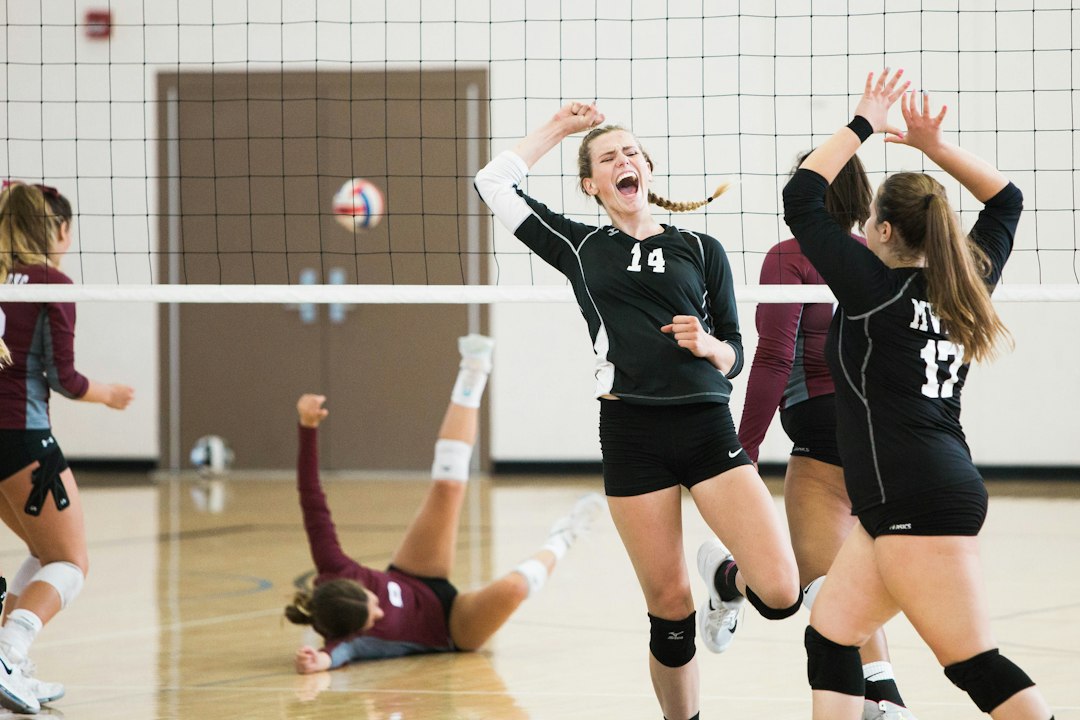




There's a version of you that existed only in a gymnasium — in the third game of a close set, in the middle of a back-row dig no one expected you to get to. That version wore a number. That version had a name on her back. And if you're here, something in you wants to put that on a jersey again.
Personalized volleyball jerseys have become the way former players reclaim that part of themselves — for reunions, alumni tournaments, milestone gifts, or simply because the feeling of pulling on a numbered jersey is one of those things that doesn't fully leave you. The problem is that every vendor you find will hand you a customization tool and ask you to fill in fields: name, number, font, color. What none of them tell you is that those fields are actually decisions — ones worth thinking through before you click anything.
This article is about the thinking. Specifically, it's about the three choices that determine whether your jersey honors the right version of you: the name you put on it, the number you choose, and the lettering details that make it feel real rather than generic.
The Name Question Nobody Warns You About
You'd think the name field would be easy. It's your name. Except — which one?
If you've been married since you played, you have at minimum two last names to choose between. If you went by a nickname that only your teammates ever used, you have a third option. And if you played under a coach who called everyone by a shortened version of their first name, there's a fourth version of you that existed inside that gym.
This is where it helps to ask a clarifying question before you type anything: What moment is this jersey for?
If the jersey is for an alumni tournament where you'll be playing alongside people you competed with — people who knew you by your playing name — the answer is almost always the name they called you. Not your legal name now. The name that made you turn around when someone called it from the bench.


If the jersey is for yourself — a keepsake, something that goes on a shelf or a hanger in a place where you'll see it — then the name on it is a different kind of statement. It's a declaration of which version of you this object represents.
The married name vs. maiden name calculus
In our experience talking with former players who've ordered custom volleyball jerseys, the most common hesitation is exactly this one. The general answer: if your playing years happened under your maiden name — if that's the name in the record books, on the roster photos, in the memory of everyone who watched you play — then that's the name that belongs on a jersey that's meant to honor your playing days. Your married name is the name you built everything after. Your maiden name is the name you played under. They represent different chapters, and neither is more "you" than the other. The jersey is a chapter-specific artifact.
That said, if you played under your married name — if you were already married during your competitive years — then your married name is the playing name and the question answers itself.
The nickname option
Some players were so completely known by a nickname that their legal name feels like someone else's. If your teammates called you "Sarge" for three years and nobody called you by your actual first name unless something was wrong, there's a strong argument that "Sarge" is the name this jersey deserves. Volleyball jersey lettering is meant to identify you on the court — and "Sarge" identified you on the court in a way your legal name never did.
The caution here is context. A nickname jersey makes perfect sense for a personal keepsake or an alumni game among people who remember the name. It can read as a puzzle to anyone outside that circle. Know your audience before you go the nickname route.
What Your Number Actually Means (and How to Choose)
The number question is more complicated than the name question, because numbers carry weight that names don't.
In volleyball, your jersey number isn't just a label — it corresponds to position, to defensive assignments, to who the libero is and who isn't. For anyone who played seriously, their number is tied to specific memories: the rotation they were in when something important happened, the lineup card posted on the locker room door, the way certain numbers feel like they belong in certain positions.
When you're ordering a custom volleyball jersey as a former player, you have a few legitimate options.
Your last playing number
This is the most defensible choice for a keepsake jersey, because it's the number that represents the final, most fully developed version of your playing self. Your last season is typically your best season — you understood the game better, your role was established, your team had figured out who you were. The number you wore in your last season is the number attached to your peak playing identity.
Your longest-held number
Some players switch numbers when they switch teams, switch levels, or because a returning player had seniority. If you wore #7 for eight years and #12 for one season, #7 is your number even if #12 was technically the last one. The number you identify with is the number that belongs on this jersey.
Your senior-year number specifically
If you played through a senior season — high school, college, wherever the arc ended — that number has particular resonance. Senior year in volleyball is the last time you're officially part of a program, the last time the number belongs to you by roster assignment. A lot of former players find that the senior-year number is the one they want precisely because of what senior year represents: the end of something, the completion of a chapter.
A meaningful number that you never actually wore
This is the least common choice but not an illegitimate one. Some players always wanted a number that was taken, or always associated a specific number with a player they admired or a moment that mattered. If you're building a jersey that represents your relationship with the sport rather than a specific roster slot you occupied, wearing a number with personal meaning — even if you never officially wore it — is a valid form of personalization.
The one thing to avoid: randomizing or defaulting. Vendors often pre-fill a number field with something generic. Don't accept it. Whatever number you choose, choose it deliberately.
The Lettering Details That Separate a Real Jersey from a Printout
This is the section most customization tools skip entirely, and it's where a personalized volleyball jersey either feels authentic or feels like clip art on polyester.
Font selection
Volleyball jerseys have a visual grammar developed over decades of the sport. Block lettering with defined serifs reads as traditional — the kind of jersey that looks like it came out of a 1990s national program. Rounded sans-serif lettering reads as contemporary AVCA-era club style. Narrow condensed fonts read as European club influence. None of these is wrong, but each places the jersey in a specific era and aesthetic.
In our experience, former players who played in the 1990s and early 2000s tend to gravitate toward block lettering because that's what their original jerseys used, and the goal is resonance with the specific period they played in. Players who came up through club programs in the 2010s often prefer the cleaner, tighter fonts that club uniforms used. Match the font to the era your playing identity comes from.
Lettering placement and sizing
On a volleyball jersey, the name typically sits above the number on the back. The number is the dominant visual element — large enough to be read from the opposite side of the court. On a custom jersey being ordered as a keepsake rather than a game jersey, the same proportions apply. If the number is undersized, the jersey reads as decorative. If it fills the back correctly, the jersey reads as real.
Name lettering on the front chest (if included) should match the back lettering in style but not in size. A condensed front-chest name in the same font family as the back number creates visual coherence. Mixing fonts between front and back is a common shortcut that undermines the authenticity of the finished product.
Color and outline
The lettering color should contrast clearly with the jersey color — not just visually but in the way that game jerseys contrast. A white jersey with gold lettering outlined in navy is a specific visual choice with a history. A dark jersey with white lettering and a shadow outline is another. Both are rooted in how real volleyball uniforms have looked on real courts. The combination you choose will read, to anyone who played the sport, as either intentional or accidental. Choose your outline colors with the same thought you'd give the number.
On Materials and Construction: What the Jersey Should Feel Like
Personalization decisions get all the attention, but the substrate matters. A perfectly chosen name and number on a jersey that feels like a novelty T-shirt won't honor the memory the way a well-constructed performance jersey does.
Volleyball jerseys have always been built around specific performance requirements: moisture management, range of motion for arm swings and vertical jumps, lightweight construction that doesn't restrict movement on a quick lateral. The best custom jerseys use the same materials, even when they're never going to see a court.
Brands like Under Armour and Champro both produce volleyball-specific jersey blanks that meet those construction standards — and many custom jersey programs build on these or comparable athletic-grade foundations. If you're ordering a personalized sports jersey and the product page doesn't mention moisture-wicking fabric, stretch construction, or athletic-grade polyester, it's worth asking what the base material is before you commit.
The test is simple: put it on and swing your arm the way you used to on a serve. If something pulls or bunches, the jersey wasn't built for volleyball. If it moves with you, it was.
A Story About Getting It Right
Melissa R., 34, played libero for four years in a Division III program in the Midwest. When her team organized a ten-year reunion alumni match, she ordered a personalized jersey and defaulted to her current last name and the number she'd been assigned as a freshman — before she became the starting libero, before she found her role.
She wore it to the reunion. Her former teammates called her by her maiden name all night. Nobody recognized the number. She said afterward that the jersey felt like it belonged to someone adjacent to her, not to her — a player-shaped outline with the wrong details filled in.
The next year, she reordered. Maiden name, #1, block lettering in her program's colors. She still has both jerseys. She says the first one is a lesson in why the choices matter.
The Version of You the Jersey Honors
Here's the question underneath all the other questions: who is this jersey for?
Not who's paying for it. Who is it for — meaning, whose story does it tell, whose playing identity does it affirm, which moment in the arc of your relationship with volleyball does it represent?
A personalized volleyball jersey ordered without answering that question produces a jersey that feels approximate. One ordered with a clear answer to that question produces something that can make you stop in a doorway and feel, for a moment, exactly the way you felt the last time you wore a numbered jersey in a gym that mattered.
The name, the number, the lettering — these aren't form fields. They're authorship decisions. They're the specific details that turn a custom jersey blank into a piece of personal history.
Get them right.
Your jersey is still out there waiting.
Design yours in minutes and see your name and number exactly the way you remember it.
Frequently Asked Questions
Can I put a nickname on a personalized volleyball jersey instead of my legal name?
Yes — and for many former players, it's the right call. If your teammates knew you by a nickname and that's the name attached to your playing identity, that's the name this jersey should carry. The only consideration is context: a nickname jersey makes complete sense among people who remember you by it, and may require explanation outside that circle. For a personal keepsake, the name that feels truest to your playing self is always the correct choice.
What volleyball jersey number should I choose if I played for multiple teams and had different numbers?
Choose the number you identify with most — not necessarily the most recent one. If you wore a specific number for the majority of your playing years or in the season that meant the most to you, that number has a stronger claim than a technically more recent one. Ask yourself which number, when you see it, immediately places you back in that gym. That's the number.
Does volleyball jersey lettering style matter for a custom keepsake jersey?
More than most people expect. The font and lettering construction on a volleyball jersey place it in a specific era and style tradition. Choosing lettering that matches the visual language of the jerseys you actually wore produces a jersey that reads as authentic. Mismatched fonts, undersized numbers, or outline colors that don't contrast properly will make an otherwise well-personalized jersey feel like a reproduction rather than a real one. Most quality custom jersey programs offer style options — spend five minutes on font selection the same way you'd spend it on the name and number.
Should the back name on a custom volleyball jersey match my front chest lettering?
The lettering style — meaning the font family — should match between front and back for visual coherence. The sizing will naturally differ: front chest lettering is smaller and often arched slightly, while back name lettering is larger and set above the number. Mixing fonts between front and back is a common shortcut in lower-quality custom programs and is immediately noticeable to anyone who played at a competitive level. When evaluating a custom jersey program, look at whether they maintain consistent lettering style across both placements.
Is there a standard size for the number on a volleyball jersey?
Competitive volleyball has specific guidelines from USA Volleyball governing number size and visibility in sanctioned play, which typically require back numbers to be a minimum height for legibility. For a custom jersey built as a keepsake or for alumni play rather than sanctioned competition, you have more flexibility — but proportionality still matters. A number that fills the back panel the way a game jersey would reads as real. A small, centered number reads as decorative. Default toward game-jersey proportions unless you have a specific aesthetic reason to do otherwise.
See also: personalized sports gifts vs generic options | custom softball jerseys follow the same logic | jersey size chart and what those numbers actually mean | athletic identity that never fully goes away