



There is a specific sound October makes when you've played the game.
It's the crowd noise bleeding through the television at 9 PM on a Tuesday, the World Series already into the middle innings, and you're doing something completely ordinary — folding laundry, washing dishes, pretending to pay attention to something else. Then a bat cracks. The crowd surges. And for about three full seconds, you are not where you are.
World series nostalgia doesn't announce itself. It arrives sideways, through a sound or a camera angle or the specific way a pitcher sets his jaw on a 3-2 count with the bases loaded in October. Former players know this feeling with a specificity that's almost impossible to explain to someone who never laced up cleats and took that walk from the dugout to the on-deck circle with everything on the line.
This is what October does. Every year, without fail.
The Postseason Has Its Own Frequency
There is regular-season baseball, and then there is October baseball. They share the same field dimensions and the same nine innings. Beyond that, they are different games entirely.
Ask any former player — from the kid who pitched four years of high school ball to the minor leaguer who spent three summers grinding through the heat of the Carolina League — what the postseason does to them as a viewer, and you'll get the same answer dressed in different language. The attention sharpens. The emotional investment arrives uninvited. And somewhere underneath it, reliable as the October calendar, is the pull of memory toward a specific time when you were the one who had a chance.
It isn't envy exactly. It isn't grief. It sits somewhere between the two — a warm ache, like pressing on a bruise that healed right.
In our experience talking to former players across sports, the baseball nostalgia that surfaces in October is uniquely physical. Football nostalgia tends to run through the body — contact, fatigue, the specific weight of full pads. Baseball nostalgia runs through the senses. The smell of a new glove. The drag of infield dirt on your cleats. The way the air in a ballpark feels different at night than it does in the afternoon, and different again in October than it does in June.

The World Series broadcasts all of this directly into your living room, whether you asked for it or not.
What the Chase Actually Felt Like — And Why You Still Carry It
Here is what most people who didn't play competitively don't understand about the championship chase: it's not primarily about the trophy.
The trophy, the ring, the banner — those are the artifacts. What you were actually chasing was a version of your team that only existed in brief, electric windows. A version where the right pitcher was on a run, where your cleanup hitter was locked in, where the third baseman who'd been slumping for six weeks suddenly came alive in the semifinal and nobody could explain why. You were chasing that specific alignment of people and ability and luck and timing.
When it came together, even partially, it produced something that had no name but that every player on that field could feel. A shared internal frequency. The knowledge — not hope, knowledge — that tonight you were capable of something.
That is what the postseason stirs up. Not memories of wins and losses but the texture of those moments when everything was genuinely possible and everyone around you was locked into the same singular purpose.
Marcus T., 44, played catcher through four years of college baseball and spent two seasons in independent ball before his knees made the decision for him. He says he can't watch the World Series without getting a specific memory of a conference tournament game his junior year — a 13-inning game in the rain that his team eventually lost but that he still considers the best baseball he was ever part of. "It wasn't the scoreboard," he says. "It was the feel of it. Everyone in that dugout was completely present. I've never experienced that in a boardroom or anywhere else. Just baseball. Just that night."
That's the thing about the championship chase that only former players fully understand: the scoreboard was almost secondary to the quality of attention it required.
October Reactivates the Identity You Never Fully Left
Something specific happens in the neuroscience of athletic identity that doesn't fully reverse when you stop competing. The neural patterns associated with physical performance — the internal narrative of yourself as someone who competes, who can perform under pressure, who belongs in that specific world — those patterns don't disappear. They become dormant.
October baseball wakes them up.
Research from sport psychology has consistently found that athletic identity — the degree to which a person defines themselves through their role as an athlete — remains active in former competitors long after playing careers end, often resurfacing most intensely during major sporting events in their sport.
Which is a clinical way of saying what every former player already knows from lived experience: watching October baseball is not a passive activity. It is a negotiation between who you are now and who you were then. The player watching from the couch and the player who once stood in the on-deck circle in October are not two different people. They're the same person, separated by time and circumstance, trying to share the same body for a few innings.
This is why world series nostalgia doesn't feel like watching old home movies. It feels like almost being there.
The Specific Things the Broadcast Does to You
There are particular postseason moments that hit former players with a precision that seems almost targeted.
The pitcher's mound visit. When the manager walks slowly from the dugout and the pitcher turns away and stares at the outfield wall while waiting — that specific posture of a player managing his own internal state under maximum pressure. Every former pitcher knows exactly what is happening in that body. The attempt to slow the breath. The effort to make the mind quiet. The next pitch needs to be the only thing in the world.
The at-bat with two outs and the game on the line. Not the home run — the at-bat itself. The sequence. The fouled-off pitch to stay alive. The step out of the box to reset. The way the hitter's hands settle back into their stance. Former position players watch this like people reading in their native language. The mechanics are automatic to interpret. What they're watching for is the intention underneath the mechanics.
The dugout after something goes wrong. Not the dramatic collapse — the quiet, specific moment when a team has just given up the lead and the camera cuts to the bench. What the players are doing with their hands. Whether the body language is closed or open. Whether the energy has broken or is holding. Former players read this with a literacy that most broadcast analysts can't quite match, because they've sat in that dugout in that specific moment and know what it costs to keep the energy alive.
The celebration. This one is complicated. The pile on the field, the champagne, the specific chaos of a team that just won everything — former players watch this with joy that is real and complete. And also with something else. The awareness of what it took to get there. The specific knowledge of what all the players in that pile are feeling in their bodies and their chests that no camera angle can fully capture.
These are the moments that make October dangerous if you used to play. Because they're not just broadcasting the game. They're broadcasting your memory back to you in high definition.
The Jersey You Wore Was Part of All of It
There's a reason former players hold onto their jerseys.
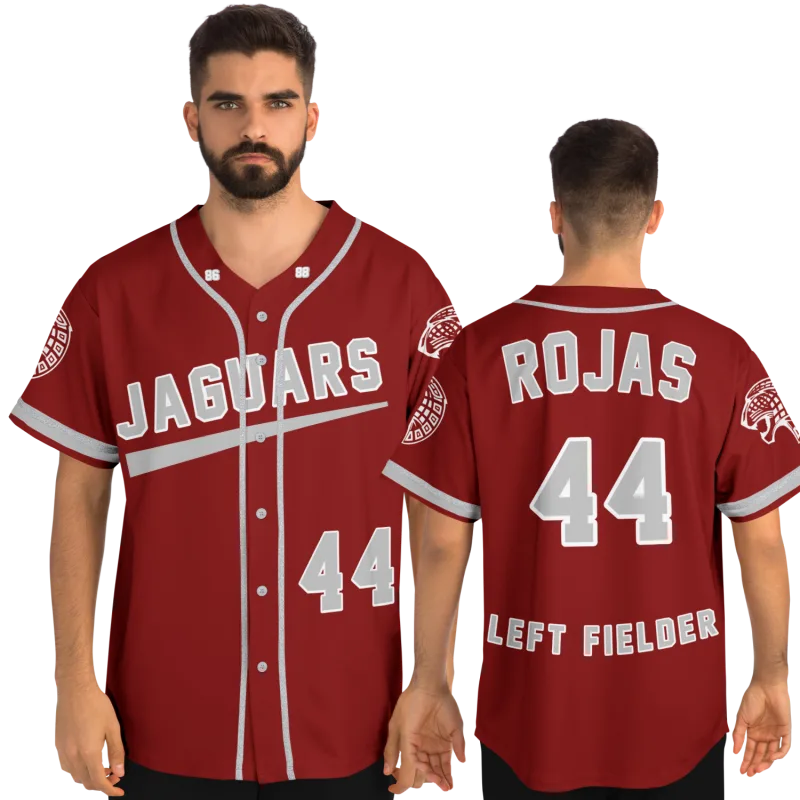
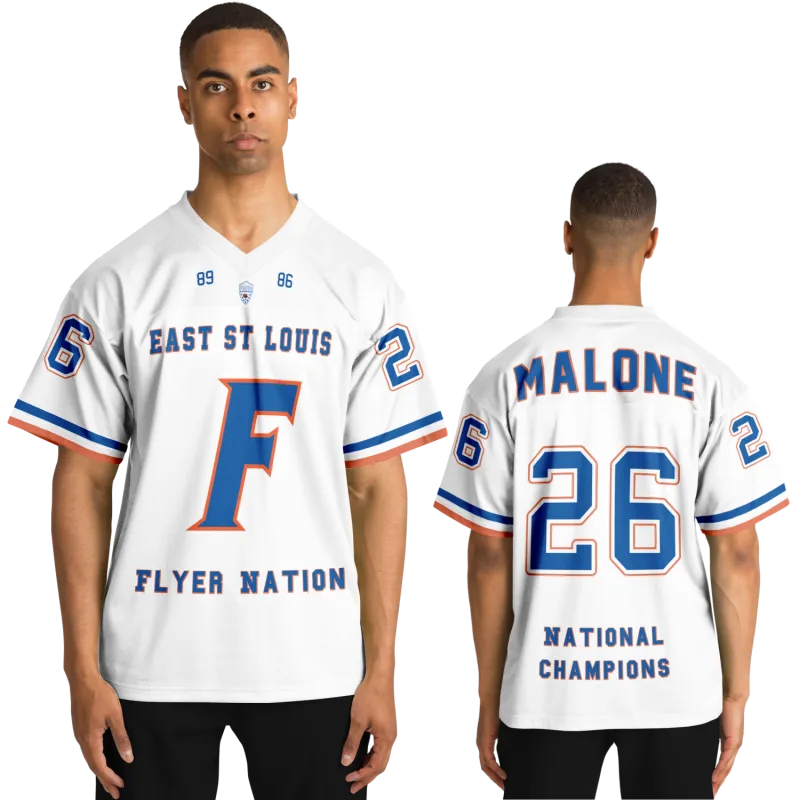
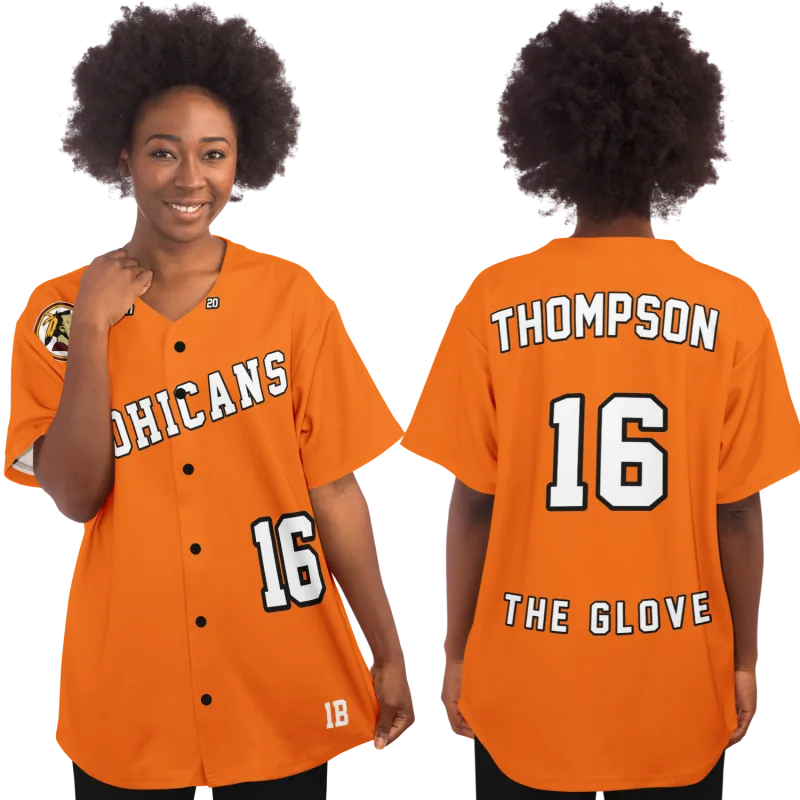
Not because jerseys are valuable collectibles — though some are. Not because they ran out of storage space somewhere else. Because the jersey is a physical document of that identity. It carries the name and number that meant something in a specific context, in a specific season, on a specific team that existed for a specific window of time and then never existed again in exactly that form.
When October baseball arrives and the world series nostalgia comes with it, the jersey is often the object that brings the memory into sharpest focus. Some people have theirs framed. Some have them folded in a box they open occasionally and then close again carefully. Some have them worn soft with age from being pulled out and put back over the years.
The feeling isn't about the jersey itself. It's about what the jersey marks. A period when you were part of something larger than yourself, competing at the top of what you could do, in a uniform that announced your belonging to a team and a game and an identity.
Your Jersey Is Still Out There Waiting.
Design yours in minutes and see your name and number exactly the way you remember it.
Frequently Asked Questions
Why does watching the World Series feel so emotional for former players?
The postseason reactivates athletic identity — the part of a former player's self-image that formed during their competitive years. Watching the World Series doesn't just trigger memories; it temporarily resurfaced the neural patterns associated with competing, performing under pressure, and belonging to a team. The emotional response is a direct result of how deeply athletic identity becomes embedded during playing years, and how persistently it remains active even long after the competitive career ends. World series nostalgia is, at its core, a signal that the identity never fully went dormant.
Does the World Series nostalgia ever get easier to watch, or does it stay this intense?
Most former players report that it shifts rather than fades. In the years immediately following the end of a playing career, postseason baseball can feel genuinely painful — the proximity to that life is too close. Over time, the emotional texture tends to soften toward something warmer. The ache is still present, but it becomes more clearly a form of gratitude: for what you had, for the version of yourself that competed, for the specific people and teams and seasons that made up those years. Many players in their 40s and 50s describe October as one of the genuine pleasures of the year rather than a difficult passage.
What's the best way to honor that playing identity as a former player?
Former players do this in different ways. Some coach. Some stay connected to local leagues as volunteers, officials, or organizers. Some make a point of attending games — minor league, college, high school — to stay close to the environment. And many hold onto, restore, or recreate the physical artifacts of their playing years: the jersey, the number, the name across the back. The specific form matters less than the act of honoring the identity rather than treating it as something that simply ended. You were a player. October baseball proves that part of you still is.
Why do former players remember specific games more vividly than regular-season records?
Postseason and high-stakes games encode differently in memory because of the elevated emotional arousal present during competition. The brain stores emotionally significant experiences with greater detail and accessibility than routine ones. A conference championship game played on a cold April night with everything on the line will be encoded with sensory specificity — the temperature, the crowd noise, the particular anxiety of the moment — that a mid-season Tuesday game simply won't match. This is why world series nostalgia tends to arrive in precise, sensory detail rather than as a general feeling. The brain kept the whole thing, frame by frame.
See also: why watching October baseball hits differently when you once chased a championship yourself | the science behind why those postseason memories feel so vivid decades later | what it means to say 'I played' and why that identity never fully leaves you | the grief that comes when your own championship chase is permanently in the past | what the difference between watching a game and having actually played in one really feels like