

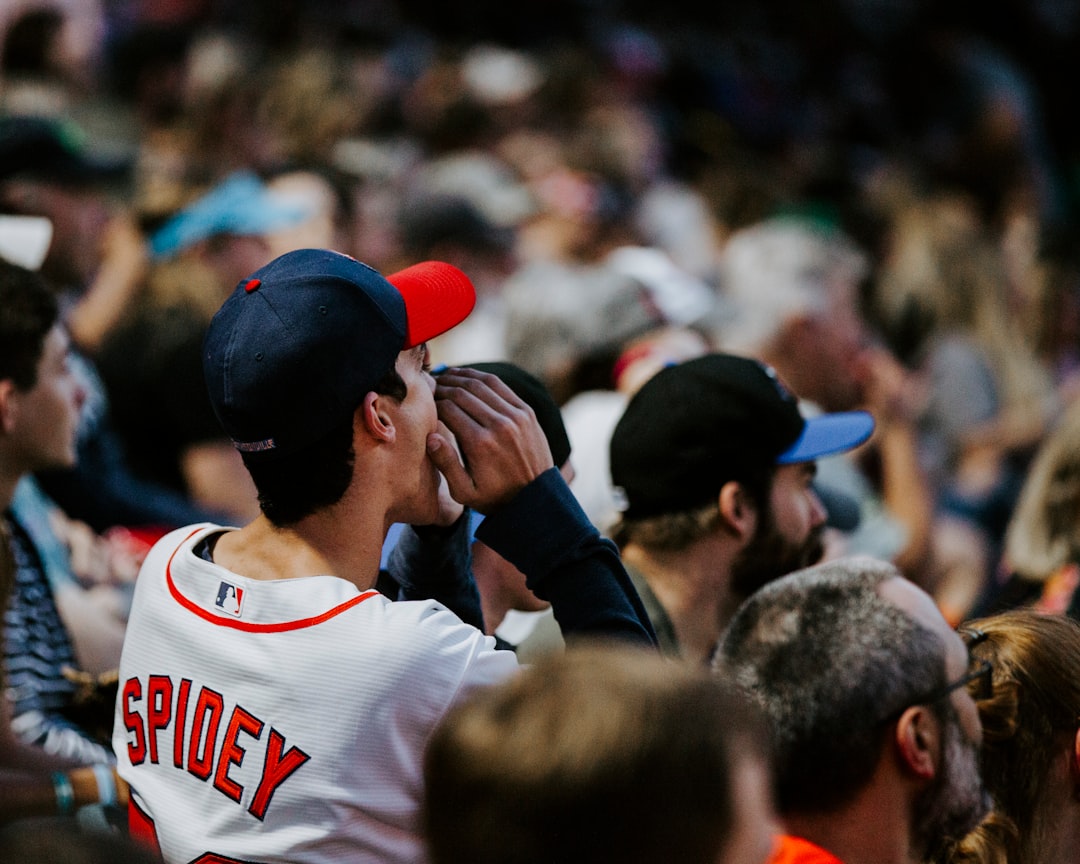
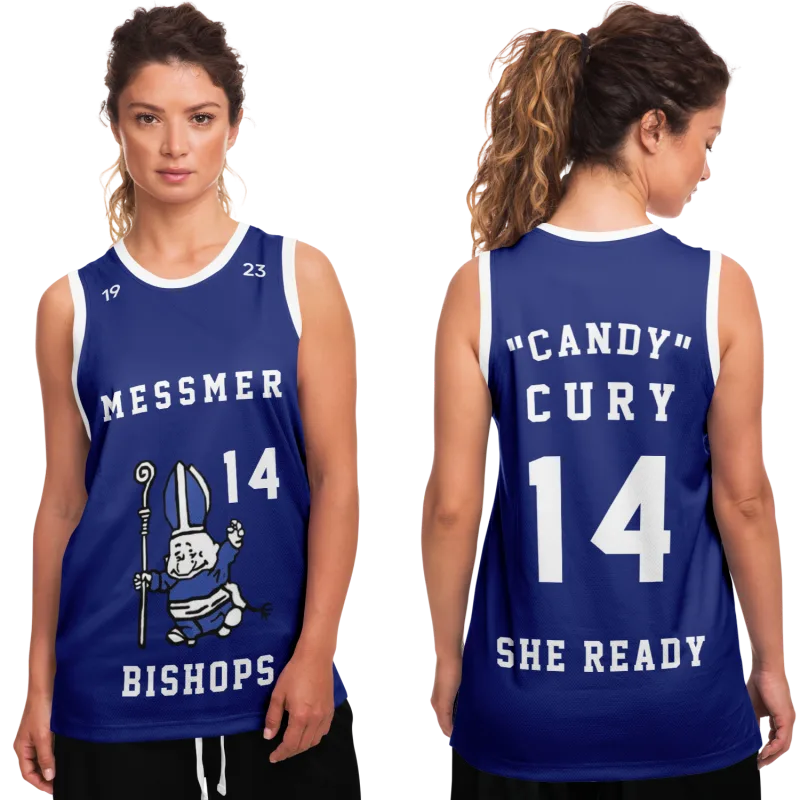
Every September 15th, something quiet happens in arenas, ballparks, and boxing gyms across the country. A number goes up on a scoreboard. A name gets announced over a PA system. And somewhere in the stands — or on the couch, or in a living room halfway across the country — someone exhales and thinks: that name sounds like mine.
That moment is what hispanic heritage month sports is really about. Not the proclamations or the commemorative graphics. The moment when a kid from Ponce or Hermosillo or Havana or San Juan looks at a jersey hanging in a locker room and understands, maybe for the first time, that the number on the back could belong to someone like them.
Hispanic Heritage Month runs from September 15 through October 15, dates chosen to align with the independence days of multiple Latin American nations. But on fields and courts and rings, it gets celebrated in the most direct language athletes know: the jersey.
This is for those jerseys. The numbers that meant something. The names that still do.
The Weight a Jersey Carries
A jersey is not just fabric and a number. Ask anyone who ever wore one seriously and they'll describe the specific weight of it: not grams or ounces, but the feeling of what the name on the back represents when you're lacing up before a game.
For generations of Hispanic and Latino athletes in American professional sports, that weight was particular. It included everything they were carrying before they even touched the ball.
For a lot of athletes, that moment of putting on a jersey is where the self starts to take shape: the name on the back becomes an answer before it becomes a number.
Roberto Clemente knew it. He wore 21 for the Pittsburgh Pirates from 1955 until his death on New Year's Eve 1972, lost in a plane crash carrying earthquake relief supplies to Nicaragua. He didn't just play right field. He played it with a fury and a grace that his contemporaries described as something they had never seen before and didn't have language for yet. The number 21 was retired across all of Major League Baseball in 2003, on the 31st anniversary of his death. Every September 15, at Roberto Clemente Day celebrations around the league, players still wear it in tribute.
That number doesn't belong to the Pirates anymore. It belongs to the game.
Juan Marichal wore 27 for the San Francisco Giants, and if you ever saw him pitch — that high kick, that over-the-top delivery, that absolute command of every pitch in his arsenal — you understood what Dominican elegance looked like at 60 feet, six inches. He won 243 games. He struck out 2,303 batters. He threw with a motion so distinctive that even decades later, baseball people describe it the same way: you knew it was him before you could read the name.
These are not just statistics. They are coordinates. Points on a map that say: we were here. We were this good. We did this.
The Numbers That Changed the Game
Some numbers become bigger than the player who wore them. Some numbers become symbols.
#34: Fernando Valenzuela, Los Angeles Dodgers.
In 1981, a 20-year-old left-hander from Etchohuaquila, Sonora, threw a shutout on Opening Day. He hadn't even been announced as the starter until the day before. By June, Fernandomania had become a documented cultural event: sellouts in every National League city, Mexican flags in the bleachers at Dodger Stadium, Spanish-language broadcasts getting new listeners who had never followed baseball before. Fernando Valenzuela's screwball was a baseball pitch. His presence was something else entirely.
He won the Cy Young Award and Rookie of the Year in the same season — the only player in Major League history to do that. But in East Los Angeles and throughout Mexico and across Latino communities in California and Texas and Arizona, what he won was harder to quantify. He made the game feel like it had always had room for someone who looked and sounded and came from where he came from.
#18: Johan Santana, Minnesota Twins and New York Mets.
The Venezuelan left-hander won back-to-back Cy Young Awards in 2004 and 2006 with a changeup that hitters described, under oath basically, as unhittable. He wasn't the fastest. He wasn't the most physically imposing. He was, for a stretch in the mid-2000s, the best pitcher in baseball, because his command of movement and location was something you had to study to fully appreciate.
#34: David Ortiz, Boston Red Sox.
Shared number, entirely different universe. Big Papi wore 34 for Boston from 2003 through his retirement in 2016, and he did it in the middle of a lineup that won three World Series titles. The Dominican Republic produces more Major League players per capita than any country outside the United States. David Ortiz made sure everyone knew what that looked like at its absolute peak. His number was retired by the Red Sox. His legend gets retired by no one.
#24: Miguel Cabrera, Detroit Tigers.
Venezuelan. Two-time MVP. Triple Crown winner in 2012, the first player to accomplish that feat since Carl Yastrzemski in 1967. Miggy hit .448 in September during that Triple Crown season. That number — .448 — is not a typo.
When Marisol Remembered the Number
Marisol V., 38, grew up in a household where baseball was the primary language between her father and her grandfather. They were both from Caracas. They argued about everything (politics, food, the proper way to make hallacas) but they agreed completely on Miguel Cabrera.
She still has the Tigers jersey she bought her father for his birthday the year Cabrera won the Triple Crown. It's faded now, hung in her parents' living room in Tampa next to a photo of her grandfather who passed in 2019. During Hispanic Heritage Month, her family watches old Cabrera at-bats on YouTube the way other families watch home movies.
"That jersey is more than a jersey," she told us. "It's proof that someone from where we're from could be the best in the world at something."
That's the thing about sports jerseys and the numbers on them. They outlast the seasons. They become archives.
Boxing, Soccer, and the Rings That Remember
The conversation about Hispanic athletes and iconic numbers doesn't stop at baseball.
Oscar De La Hoya stepped into rings throughout the 1990s and 2000s as one of the most decorated and commercially successful boxers in the sport's history. He won a gold medal at the 1992 Barcelona Olympics representing the United States while prominently connecting to his Mexican heritage: the Mexican flag featured in his post-fight celebrations became a signature image. He won world titles in six weight classes. He transcended boxing to become a cultural ambassador, a symbol of what Mexican-American athletes could achieve at the highest level.
His trunks — gold and black, often with Mexican iconography — were as recognizable as his combinations. In boxing, the uniform is the trunks. And De La Hoya's trunks meant something specific every time they walked into the light.
Julio César Chávez (considered by many analysts the greatest Mexican boxer of all time) compiled a professional record of 107-6-2 with 86 knockouts. He held world titles in three weight classes over a career spanning more than two decades. His style was relentless, suffocating, technically brilliant in ways that don't always show up in highlight reels. He simply wore opponents down until there was nothing left.
The flag on his trunks wasn't decoration. It was biography.
In soccer, Hugo Sánchez changed the visual language of what a Mexican footballer could be on the world stage. His overhead kicks at Real Madrid in the late 1980s (he scored 38 goals in a single La Liga season) became part of the sport's aesthetic memory. He celebrated each goal with a somersault and a punch of the fist. The Real Madrid number 9 worn by a Mexican forward in the era of European football's highest global prestige was, in itself, a statement.
The Names That Come Back Every September
Hispanic Heritage Month is the annual reminder that the names on the back of jerseys carry entire genealogies. For every name that made it onto a jersey, there are a thousand more that live on only in the stories that never got told, passed down in kitchens and bleachers instead of broadcast booths.
Think about what it means to see your last name — the one your grandmother passed down, the one that gets mispronounced in waiting rooms, the one you learned to spell before you learned to write in English — on the back of a jersey in a stadium holding 50,000 people.
Manny Ramírez. Alex Rodríguez. Sammy Sosa. Mariano Rivera. Albert Pujols. Ichiro — technically Japanese, but the point holds universally: when a name from your world is at the top of the world's sport, something shifts.
Rivera wore 42 for the New York Yankees, the last player in baseball to wear that number before it was universally retired in honor of Jackie Robinson. He saved 652 games. His cutter was, by consensus, the single most dominant pitch thrown in the history of the postseason. He closed out Yankee victories to the sound of Metallica's Enter Sandman. A Panamanian closer, the greatest of all time, wearing a number that connected him to the man who broke baseball's color barrier.
History threads through numbers in ways that aren't accidental.
What We Carry Into the Next Season
Here is what September 15 through October 15 is actually about, when you strip away the official language:
It's about the father who explains to his daughter why Clemente's 21 never gets worn again. It's about the grandfather who still remembers watching Valenzuela on a fuzzy television signal in 1981, trying to understand how that kid from Sonora was making the entire National League look overmatched. It's about the teenager who sees Framber Valdez or Pablo López or José Berríos take the mound and understands, without anyone explaining it, that the line runs forward from somewhere.
The jersey is the document. The number is the address. The name is the proof.
The moment that resonates most isn't the championship. It's the first time someone wearing a number they love sees a kid in the crowd wearing that same number. That transaction — jersey to jersey, stranger to stranger — is what heritage actually looks like in motion.
These athletes didn't just play. They represented. And representation, when it happens at the highest level of competition, has a permanence that statistics alone can't capture.
The numbers go into the record books. The names go somewhere else — into the specific weight of a jersey hanging in a living room in Tampa, into the exhale of a kid in the bleachers who suddenly understands that the sport has room for a name that sounds like theirs.
If you still have yours, that uniform in the closet is waiting on a decision: whether to keep it, frame it, or pass it on.
Your jersey is still out there waiting.
Design yours in minutes and see your name and number exactly the way you remember it.
Not ready to design? Browse the gallery to see how other athletes remembered theirs.
Frequently Asked Questions
When is Hispanic Heritage Month and why does it start on September 15?
Hispanic Heritage Month runs from September 15 through October 15 each year. The start date was chosen to coincide with the independence days of five Latin American nations (Costa Rica, El Salvador, Guatemala, Honduras, and Nicaragua), all of which celebrate independence on September 15. Mexico's independence day falls on September 16, and Chile's on September 18. The month-long observance was established as a federal holiday in 1988 under President Ronald Reagan, expanding from a week-long celebration that had existed since 1968.
Which Hispanic athletes have had their jersey numbers retired at the league level?
Roberto Clemente's number 21 is the most notable. It was retired across all of Major League Baseball in 2003, meaning no player on any MLB team can wear it. Mariano Rivera's number 42 was the last active use of that number before it was retired league-wide to honor Jackie Robinson; Rivera wore it until his retirement in 2013 under a grandfather clause. Individual team-level retirements for Hispanic athletes are extensive across all major sports leagues.
How do sports leagues typically celebrate Hispanic Heritage Month?
Major League Baseball holds Roberto Clemente Day on September 15, with players wearing special commemorative patches and some wearing the number 21 in tribute. Many teams feature Spanish-language broadcasts, community events, and on-field ceremonies honoring local Latino athletes and contributors. The NFL, NBA, and MLS have each developed similar programming including special jersey patches, community partnerships, and featured athlete spotlights throughout the month. The specific activities vary by team and market.
What makes a jersey number become a cultural symbol beyond the sport itself?
A number becomes a cultural symbol when the athlete wearing it represents something larger than individual achievement, when their presence in the sport at the level they achieved it carries meaning for a community that previously had limited representation at that level. Clemente's 21, Valenzuela's 34, Rivera's 42: each of these numbers marks a moment when Hispanic and Latino athletes didn't just participate in American professional sports but defined them. The number becomes an address for that history.
See also: personalized tribute that actually makes a former athlete feel seen | the psychology of why athletic identity stays with us long after the final game | preserving those memories in a custom sports shadow box