

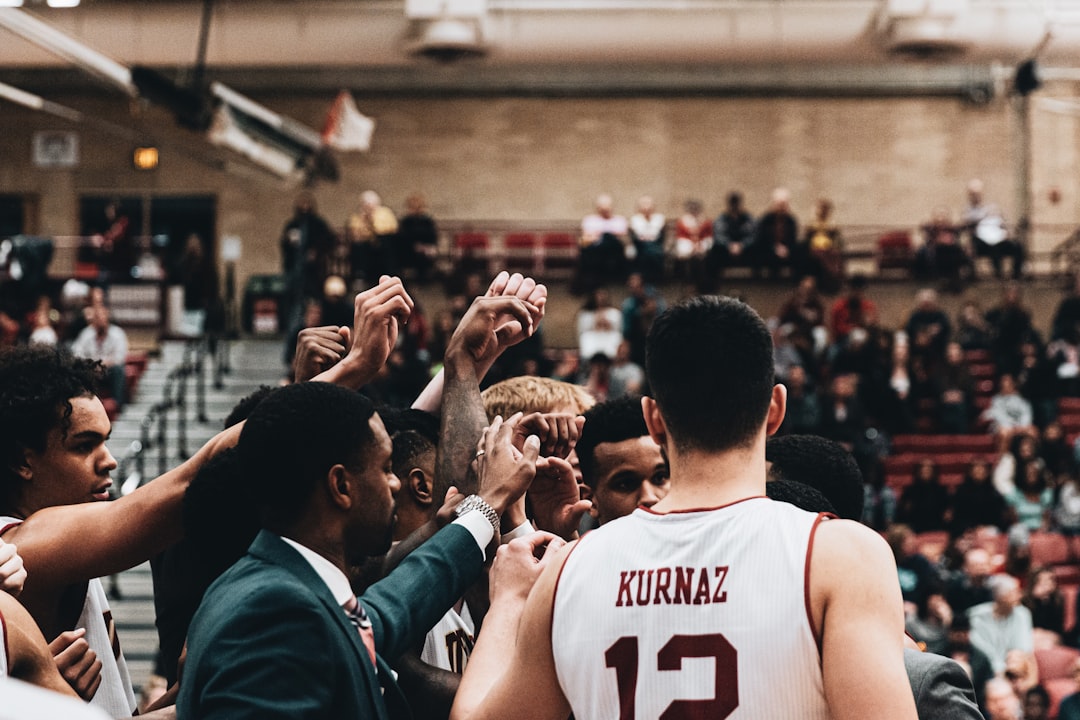




There's a specific feeling that arrives somewhere on the drive over.
You know the parking lot. You know which entrance cuts past the field house. You know the exact sound the bleachers make before the crowd fills them — that hollow metallic resonance that means the night is just starting. And somewhere between the highway exit and the gate (except you're not really a visitor, not exactly), you start working out how you're supposed to carry yourself tonight.
If you're heading back for homecoming or an alumni sports event and turning over whether to wear your jersey, which one, and what it announces to the people who'll see you, this article addresses it straight. Because the content gap here is genuine. Guides for homecoming dance outfits and tailgate logistics are everywhere. What's almost entirely absent is a clear-eyed look at what it feels like to return to your old field as a former athlete, and how to navigate that return with actual intention.
That's exactly what this covers.
The Return Is More Complicated Than It Looks
Going back to your high school or college for homecoming is a particular kind of time travel: the building is exactly the same, and your relationship to it has fundamentally changed. You are simultaneously the person who played here and the person who no longer does, and those two things occupy the same body on the way over.
For current students, the bleachers are present tense. For you, they're present tense and accumulated memory running at the same time. You remember the specific weight of a game that actually mattered. You remember the tunnel, the pre-game music, the way the crowd noise changed when something real was happening on the field. And now you're buying a ticket and finding a row, and part of you hasn't fully resolved what this night is.


In my experience as a former player, and in conversation with former athletes across sports and levels, the emotional complexity of going back is almost universally underestimated, and almost universally felt. The pride, the nostalgia, the feeling that hasn't found a name yet. None of that is unusual. All of it is the natural cost of having been genuinely in it.
What a jersey does inside that experience is more than clothing selection. It makes a statement about wearing your identity: I played here. That identity doesn't have an expiration date. I'm still someone who played this game, and I'm not here pretending otherwise.
That matters. It matters most when you wear it knowing exactly what it means.
Which Events Are Actually Jersey-Appropriate
Not every moment in an alumni weekend calls for a jersey. Showing up confidently starts with reading the specific context before you arrive. The framework is more straightforward than it might feel in the moment.
The Homecoming Game — The Clearest Yes
This is unambiguous. The homecoming game is the one event where wearing a jersey isn't just acceptable — it's arguably the most honest thing in your closet for the occasion. The stands are already full of people in school colors: current students in spirit gear, parents, returning players from several eras, coaches who recognize faces from years back. A custom jersey with your name and number communicates exactly what it should: I was part of this program.
What separates the homecoming game from other events is the built-in social permission. Everyone in attendance has already made a deliberate choice to show up representing the school. Your jersey sits naturally inside that context. Nobody reads it as out of place. They read your number and do the quiet math on when you played.
The National Federation of State High School Associations reports that high school athletics serve more than 8 million student participants each year, which means millions of former athletes are navigating exactly this kind of return every fall. You're not an outlier for thinking carefully about how to do it right.
Alumni Weekend Events — Match the Format
Alumni weekends usually run multiple events across a day or two: outdoor pre-game gatherings, the game itself, a reception, sometimes a formal dinner. The working rule is simple: the more structured and formal the event, the less a jersey works as a standalone piece. A tailgate or outdoor pre-game? Wear it. A field house reception with a sit-down component? A jersey layered under something, or saved for the game itself, reads better. A formal alumni dinner? The jersey belongs at tomorrow's game.
The jersey is a sports-context item. It earns the most meaning when you match it to its environment. And if you're ordering one ahead of an alumni reunion, getting a jersey that fits who you are now matters as much as matching the field.
Post-Game Alumni Gatherings
This is the setting most former athletes underestimate until they're actually in it. Post-game gatherings (organized by the program or impromptu at a nearby spot) are exactly where a jersey does its best work. Former teammates recognize numbers. Current coaches connect the history. Parents of current players start conversations. The post-game atmosphere is warm, relaxed, and centered on the sport. This is its native territory.
Booster and Community Fundraiser Events
These sit in the middle. The specific format is worth checking before deciding. Outdoor, casual, game-adjacent? You're fine. A formal fundraising event with a program and assigned seating? Layer the jersey or keep it for the field.
How to Engage With Current Players and Coaches Without Making It Awkward
Here's what almost nobody explains before you go back: current players and coaches aren't ignoring returning alumni out of disrespect. They're operating inside a focused, present-tense environment (game preparation, pre-competition routine, team management) that genuinely doesn't have bandwidth for extended nostalgia in the hours before tip-off or kickoff.
Understanding that dynamic changes how you move through the evening.
Before the game is your window, if one exists at all. Some programs build a formal alumni recognition or pre-game walkthrough into the schedule, which creates a natural moment for interaction. If you want to say hello to a coach, make it brief and generous. "Great season" is the right register. A long story about your senior year is not what they need forty minutes before game time. Give them the space to stay present with today.
During the game, you are a fan. Own that fully. Former athletes who hover near the sidelines without credentials, drift toward restricted areas, or position themselves as participants rather than spectators create friction — even with the best intentions. The field belongs to the current team on game day. The stands are where you belong, and a former athlete who is genuinely in the stands, reading the game with informed eyes and real energy, is an asset to the atmosphere.
After the game is where organic connection happens. Win or lose, the post-game environment allows for the interactions that pre-game pressure prevents. If a coach finds you in the crowd or a current player spots your name on your jersey, that's the conversation worth having. If it doesn't happen, you showed up, you were present, and you represented the program honestly.
Tasha R., 34, came back to her old high school's homecoming wearing a custom volleyball jersey she'd had made with her senior year number. She'd spent most of the drive second-guessing the decision, wondering if wearing a jersey to an alumni event would feel like she was overstating something. What actually happened: two current players asked about her number during warmups, she ended up in a long conversation with the JV coach about the program's history, and a parent she'd never met photographed the jersey to show her daughter, who plays the same position. Tasha didn't arrange any of it. The jersey opened every door.
The Emotional Reality of Watching Your Old Team From the Stands
Here's the part worth saying plainly.
There will be a moment — maybe during warmups, maybe when the starting lineup is announced, maybe at a specific sound or a specific play — where the full weight of it arrives. What you had, what it cost you to have it, and what it means that you're watching now instead of playing.
That feeling is the exact measure of how much the experience mattered to you, not a weakness to manage or minimize.
Research on athletic identity, including work documented through the American Psychological Association's sport and exercise psychology resources, consistently shows that former athletes carry a strong, enduring identification with their sport long after competition ends. The emotional pull of returning to a place where that identity was built is a real, documented feature of athletic life rather than misplaced nostalgia.
A custom jersey gives that feeling somewhere visible to live. It doesn't say I wish I were still playing. It says I played, I know what this costs, and I'm here because it still belongs to me. Those are different sentences. The first is longing. The second is identity — why former athletes wear gear that says they played. A jersey worn with that understanding reads differently on the person wearing it — and on everyone who sees it.
What to Wear and How to Wear It: The Practical Decisions
When you're going back to a high school game as a former athlete or any alumni sports event, the actual decisions around wearing a jersey come down to four things.
Your number, specifically. Wear your number. Not a current player's number you admire, not a general school team jersey — your number. The entire point of a custom jersey at an alumni event is that it represents your specific chapter in the program's history. Your name and your number make the statement personal rather than generic.
Your era's colors versus the current uniform. Programs update their look, sometimes significantly. If your era's scheme no longer matches the current team's identity, that's context, not a problem. It places you historically, and getting your school's older colors right is easier than it looks. You're not trying to pass as a current player. You're marking your specific moment in a longer story, and that distinction carries more meaning than matching today's colorway.
Layering for the weather and the setting. A homecoming game in late September and one in mid-November are different conditions entirely. A jersey over a long-sleeve performance base handles cold weather without burying the jersey under outerwear. If temperatures demand a heavier layer, a school-colored pullover over the jersey preserves the visual identity while keeping you comfortable.
Condition and fit. A custom jersey that fits well and is in clean condition reads as intentional. A jersey that's fifteen years old and two sizes small reads as something else. If you're going back to represent your athletic identity, go back in something that represents it well. A new custom jersey made specifically for this return is the right tool for the occasion, and it's worth displaying without ruining it — and worth knowing how to keep it looking new between washes.
The Jersey vs. the Letterman Jacket: What Each One Signals
For a former athlete, the letterman jacket is the classic keepsake — it says you lettered, you belonged, and you kept the proof. A custom jersey says something more specific: it names you. Your number, your position, your particular chapter in the program's history. At an alumni event, that distinction drives real conversations. The jacket tells people I was on the team. The jersey tells them I played here, and here's exactly when and how.
The stronger call depends on the moment. For the homecoming game and casual pre-game or post-game gatherings, the jersey usually wins — it's the sports-context item, and it gives former teammates and coaches a number to recognize from across the stands. For a colder night or a semi-formal reception, the jacket reads better as a standalone layer, with the jersey doing its best work underneath or saved for the field. And the two aren't mutually exclusive: a jersey layered under a letterman jacket is a legitimate look that says I'm back twice over — and a practical way to keep wearing a jacket that would otherwise stay in the closet. If yours is still in there, here's what to do with your old varsity letter jacket.
How a Custom Jersey Connects "I Used To" With "I Still Am"
The default language around athletic identity at alumni events defaults to past tense almost automatically. Former athlete. Used to play. Back when I was on the team.
Past tense is factually accurate — you're not on the current roster. But athletic identity doesn't actually work on a clean past-versus-present axis. The person who played three years of varsity basketball is not gone. They're in the stands. They're reading every defensive rotation and every offensive set with a precision that pure spectators don't have access to. They feel every well-executed transition the way only someone who ran those same sets can.
According to NCAA research on student-athlete well-being, athletic participation produces identity, community, and belonging that extend well beyond active competition, which is precisely why the return to a homecoming game as a former athlete carries the weight it does. That connection is a real, ongoing part of who you are, not a leftover feeling from a past life.
At an alumni event specifically, a custom jersey with your name and number does something a school hoodie cannot: it individualizes. The hoodie says I went here. The jersey says I played here, this was my number, this was my time in this program. In a crowd of returning alumni, that distinction means something — to you, and to the people who read it.
Your jersey is still out there waiting.
Design yours in minutes and see your name and number exactly the way you remember it.
Frequently Asked Questions
Is it appropriate to wear a jersey from a sport that's no longer offered at my school?
Yes — and in some ways it carries more weight than a jersey from a current program. Wearing a jersey from a discontinued sport makes a specific statement about the program's history and your place in it. It represents something the current student body genuinely cannot replicate. That tends to generate more conversation than a jersey from an active team, and it honors a chapter of the school's athletic story that might otherwise go unacknowledged.
What if I only played JV or at the freshman level — is a jersey still appropriate?
Completely. JV, freshman team, club sport — if you played for your school, the identity is real and the jersey is yours to wear. A custom jersey doesn't require a varsity letter to be authentic. It requires your name, your number, and the school you played for. Everything else is yours by right.
How do I handle it if people don't recognize me or don't know I played?
You don't need to manage it. The jersey makes the statement whether or not anyone in the stands validates it with recognition. If someone asks about your number, tell them. If nobody asks, you still showed up as exactly who you are. The jersey isn't a credential that needs external confirmation — it's a statement of identity that belongs to you regardless of audience.
Should I wear my jersey to both the game and formal alumni programming in the same weekend?
For the game: yes, without hesitation. For formal programming: match the event's actual format. A jersey under a blazer works well for semi-formal alumni receptions — it acknowledges both contexts cleanly. For sit-down dinners or evening events with a dress expectation, keep the jersey for the game itself and dress for the occasion separately. The jersey earns more meaning when it's worn in the right setting than when it's worn everywhere regardless of context.
Should I wear my jersey or my letterman jacket to an alumni event?
Both are legitimate, but they signal different things: the letterman jacket says I lettered, while the jersey names you — your number and your specific chapter in the program. For the game and casual gatherings, the jersey is usually the stronger call; for colder or more formal moments, the jacket reads better, often layered over the jersey.
See also: why high school sports still matter so much to adults | how to find and reconnect with former high school teammates | what to do with your old varsity letter jacket | the athletic identity that never fully leaves you after high school | making sure your jersey actually fits right