

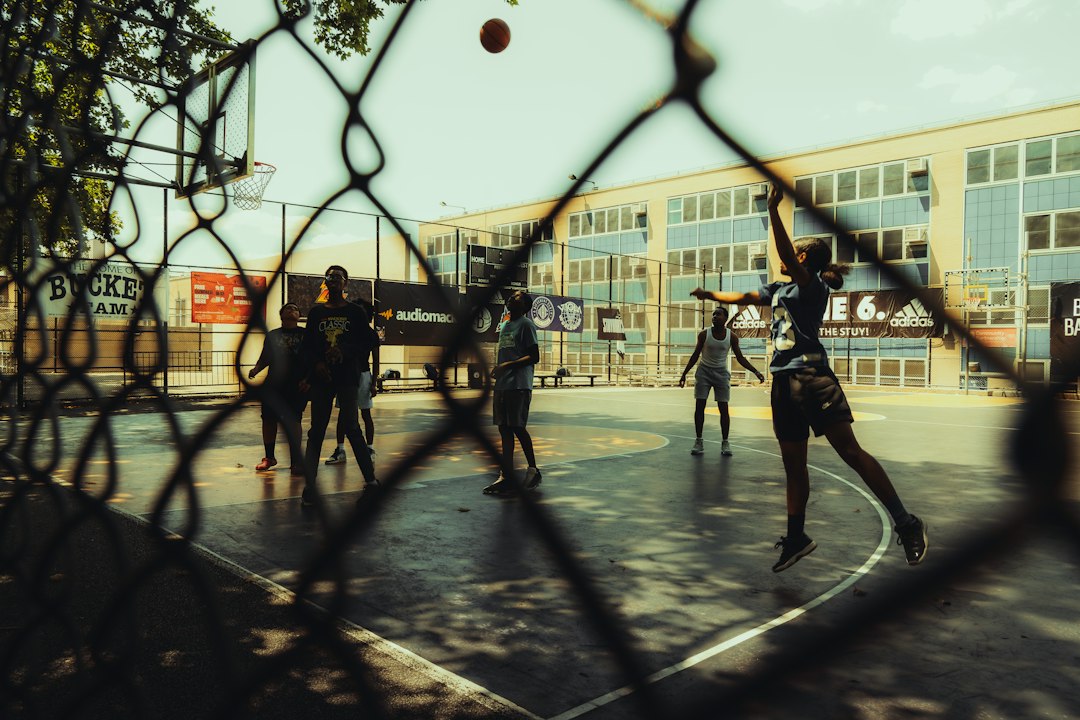




You had a group once. Maybe it was college intramurals, a company league, a neighbor's driveway every Sunday. You knew the time, you knew the people, you showed up. Then jobs changed. Kids happened. Someone moved. The group dissolved so gradually you barely noticed it was gone — until you were standing in a sporting goods store holding a basketball you hadn't touched in two years.
If you've been searching for how to start a weekly pickup basketball game, you already know the problem isn't motivation. It's logistics. It's the reality that getting adults to do anything on a recurring basis is harder than it should be, and most guides skip straight to "find a gym" without addressing the actual challenge: building a crew that shows up consistently, week after week, without the structure of a paid league forcing the commitment.
This guide fixes that. By the end, you'll have a concrete system for finding players, locking a court, setting the right rules, and — most importantly — keeping the game alive past the third week.
The Real Reason Pickup Games Die (And Why Yours Won't)
Here's a scene that plays out in every city, every season: someone enthusiastic texts eight people, five say "definitely," two show up, the game never happens, and the conversation dies in the group chat. Three weeks later, the initiator quietly stops trying.
It doesn't fail because people don't want to play. It fails because adult pickup basketball — or any recurring adult rec sport — runs on a completely different social logic than organized leagues. In a league, the fee creates accountability. In a pickup game, the only accountability is social, and social accountability requires specific conditions that most people never deliberately create.
The condition that matters most: the group has to feel small enough that your absence is noticed.
Eight to twelve players is the sweet spot for a weekly pickup game. Fewer than eight and one absence cancels the game. More than twelve and it turns into a crowd where individual accountability evaporates — nobody feels missed, so nobody prioritizes showing up.


Before you think about courts, group chats, or schedules, anchor to that number. You're recruiting to ten. Not twenty. Not however many respond to a mass text. Ten specific people whose absence would matter.
Finding People to Play Sports With: Start With Your Second-Ring Network
The instinct is to start with your best friends. In our experience, this is where most weekly games stall before they begin. Your closest friends are also your busiest, most scheduled, most committed-elsewhere people. They want to play, but they're the ones who will cancel first because they're already overcommitted to the people who know them best.
Start instead with what organizational psychologists call your second-ring network — people you know and genuinely like, but aren't obligated to in the way you're obligated to close friends or family. Former coworkers. Neighbors you've talked to more than once. The guy from your kid's soccer sideline who mentioned he used to play. The cousin who lives twenty minutes away and keeps saying "we should hang out."
These people have one critical advantage: showing up to your game is how they see you. It's the relationship. They're not prioritizing you against a dozen other social obligations — they're prioritizing the game because the game is the connection.
How to recruit from this network:
- Text or call individually, never mass-message first. "Hey, I'm putting together a small weekly game — ten people, same time every week, low commitment. You interested?" One person at a time until you have twelve names who said yes.
- Be specific about the format upfront. "Saturdays at 9am, outdoor court at Riverside Park, half-court 5-on-5, we play for 90 minutes and leave." Vagueness kills adult commitment. Specificity creates it.
- Ask each person if they know one other person. One referral per recruit gets you to twelve faster than any app or flyer, and referred players already have a social anchor in the group — they're less likely to ghost.
Finding a pickup game near me used to mean checking bulletin boards at the gym or wandering to the park and hoping. In your 30s and 40s, the better version of that is building the game yourself from people who already know your face.
Locking the Court: The Decision That Makes or Breaks Consistency
This is the step most guides treat as an afterthought. It's not.
The court determines everything: drive time (adults won't consistently make a 25-minute drive for a casual game), surface quality (knee health becomes a real consideration in your late 30s), lighting if you play evenings, and whether you can count on the space being available when you show up.
Four court options, ranked by reliability:
-
Reservable outdoor courts — Many municipal parks allow advance reservation of basketball courts for a nominal fee, often $10–30 for 90 minutes. This eliminates the nightmare scenario of showing up to find the court occupied. Check your city's parks and recreation department website; most have online booking now.
-
Church or community center gyms — Underused spaces. A quick call to a local church, YMCA, or community center often reveals gym availability on weekend mornings that nobody is using. Many will let small groups use the space for free or near-free in exchange for a regular, predictable booking.
-
School outdoor courts on weekends — Public school courts are typically accessible on weekends. The catch is no reservation system, so you're competing with whoever else shows up. Viable for summer months in low-population areas; unpredictable in denser neighborhoods.
-
Open public courts, no reservation — The riskiest option for a recurring game. Workable if you play at an off-peak time (early morning weekdays, early Saturday before 10am) and have a backup court identified for when yours is occupied.
The non-negotiable principle: your court solution has to work for 52 weeks. Test it in the hardest conditions first — a holiday weekend, a cold Saturday in February. If it holds up then, it'll hold up always.
Building the System: Scheduling, Communication, and the Role of the Coordinator
Marcus T., 41, spent two summers trying to get a consistent Saturday game going in his neighborhood before a friend gave him the framework that changed everything: "Stop running a game. Run a schedule."
The difference sounds minor. It isn't. Running a game means you're reacting — confirming people each week, managing last-minute cancellations, figuring out numbers the night before. Running a schedule means the game happens unless explicitly cancelled, and the default assumption is that everyone is in unless they say otherwise.
That inversion — opt out instead of opt in — is the single biggest structural change you can make to a weekly pickup game. It works because it removes the weekly decision-making friction that kills attendance. People don't have to re-decide whether to play each week. They only have to decide when they can't.
Setting up the opt-out system:
-
Create a dedicated group chat (not email — nobody checks group email) with only your committed players. Name it something people will actually feel good seeing in their notifications: "Saturday Runs," "Court Crew," "The Game." Simple and specific.
-
Post the standing schedule once, clearly: "Every Saturday, 9–10:30am, Riverside Park Court 2. Game on unless I post otherwise by Thursday night."
-
The only weekly message needed is a Thursday check: "This week: we're on. Let me know if you can't make it." Players who are out reply. Everyone else is assumed in.
-
Track attendance informally for the first month. If the same two or three people are consistently no-shows, have a private conversation. You're not running a league — but you're also not running a game that can absorb chronic ghosters. Keep the roster honest.
The coordinator role is real and it matters. Someone has to own the Thursday check-in, the court reservation, the group chat. In organizing adult rec sports at this level, this person isn't a commissioner — they're just the one who cares enough to keep the engine running. In our experience, the best coordinators aren't the most athletic players. They're the ones who genuinely want the social infrastructure to exist, because the game itself is what they're there for.
If that's you, own it without apology. The group will appreciate it even if they never say so directly.
The Rules Conversation You Have to Have Before the First Game
Nothing fractures a new pickup group faster than showing up with different assumptions about how the game is played.
Half-court or full-court? Make-it-take-it or alternate possession? What counts as a foul, and who calls it? How do you handle the guy who plays too physical for a casual game?
Have this conversation in the group chat before the first session, not on the court when someone's already annoyed. Send a simple message: "Before we play the first week, let's agree on the format." Then propose defaults and let the group respond.
Suggested defaults for a 30s/40s casual game:
- Half-court, first to 11 by ones (or 15 if your group runs full-court — but half-court is easier on joints and easier to manage with variable attendance)
- Call your own fouls, honor the call — no referee, but a culture of taking the call seriously
- Losers sit, next team rotates in if you have more than two teams worth of players
- No score arguments past 30 seconds — play the disputed possession over or flip for it, move on
The specific rules matter less than the fact that you established them together before anyone had reason to be defensive about them.
Keeping It Alive: Retention Past the First Month
The first two weeks of a new pickup game generate their own energy. New thing, everybody shows up, the novelty carries the attendance. Week three is where reality arrives.
Someone cancels for a kid's birthday party. Someone else has a work conflict. Attendance drops from ten to six, the game feels thin, and the group chat goes quiet. This is the moment most games don't survive.
The games that survive week three share one characteristic: the coordinator treats it as a normal fluctuation, not a crisis. They run the game with six. They send the same Thursday check-in the following week. They don't send a "we need more people to make this work" message that signals fragility.
Two retention tactics that hold groups together past the initial enthusiasm:
The anchor-player strategy. Identify two or three players in your group who are the social glue — the people others come partly to see. Make sure those players are prioritized in scheduling conversations. If the anchor players are consistently in, attendance around them stays stable. Protect their availability by keeping the time slot consistent rather than trying to accommodate everyone's schedule every week.
The seasonal reset. Every three months or so, send a message that feels like a fresh start: "Spring schedule is locked in — we're back every Saturday through June. Who's in?" Even for players who've been coming all along, the explicit re-confirmation reactivates commitment. It gives everyone a low-friction moment to re-opt-in and remind themselves why the game matters to them.
Your Jersey Is Still Out There Waiting.
Design yours in minutes and see your name and number exactly the way you remember it — or exactly the way you want your crew to remember you.
Frequently Asked Questions
How many people do I actually need to start a weekly pickup basketball game?
You need a minimum of six committed players to run a reliable half-court game, but ten to twelve is the sustainable target. Six is the floor — below that, a single absence cancels the game. Twelve gives you a cushion: even if two people can't make it on a given week, you still have a full run. Recruit to twelve, plan for ten, and the math takes care of itself.
What if I can't find a reservable court near me?
Start by calling your city's parks and recreation department directly — many cities have court reservation systems that aren't well-advertised online. If that comes up empty, contact two or three local churches or community centers and ask specifically about weekend morning gym availability. In our experience, community center gym space on Saturday mornings is the most underutilized recreational resource in most mid-sized cities. A direct phone call gets a faster yes than any online search.
How do I handle a player who consistently no-shows without warning?
After the second no-show with no heads-up, send a private message — not in the group chat. "Hey, we missed you the last couple weeks — are you still in for the regular game?" This gives them a graceful way to re-commit or bow out. If they bow out, no friction: "Totally fine — we'll keep you posted if we ever need a sub." Keep a short sub list of players who want to play occasionally but can't commit to every week. They become your buffer for low-attendance weeks and your candidate list if a regular spot opens up.
Should I charge players anything to cover court costs?
Keep money out of it if at all possible. Even a small fee changes the social dynamic and introduces logistics that create friction. If you're reserving a court that costs money, absorb the cost yourself or rotate who covers it informally. The moment you add Venmo requests to the weekly game routine, it starts feeling like an obligation rather than a standing invitation — and that shift in framing affects attendance more than most people expect.
What's the best day and time for a weekly adult pickup game?
Saturday or Sunday mornings between 8am and 11am are the most durable time slots for players in their 30s and 40s. Early enough that it doesn't consume the family afternoon, late enough that people can get there without a 6am alarm. Weekday evenings work for some groups, but they're more vulnerable to work conflicts and childcare issues. If you're running a weekday evening game, Thursday tends to outperform Monday (too close to the weekend) and Friday (too many competing social options). Pick the time that works for your anchor players, hold it consistently, and let the schedule become a standing fixture in people's weeks rather than something they have to actively plan for each time.
See also: adult recreational leagues for former high school athletes | how to find and reconnect with former high school teammates | how to start training again after years away from your sport | the gap between your athletic memory and your current body