

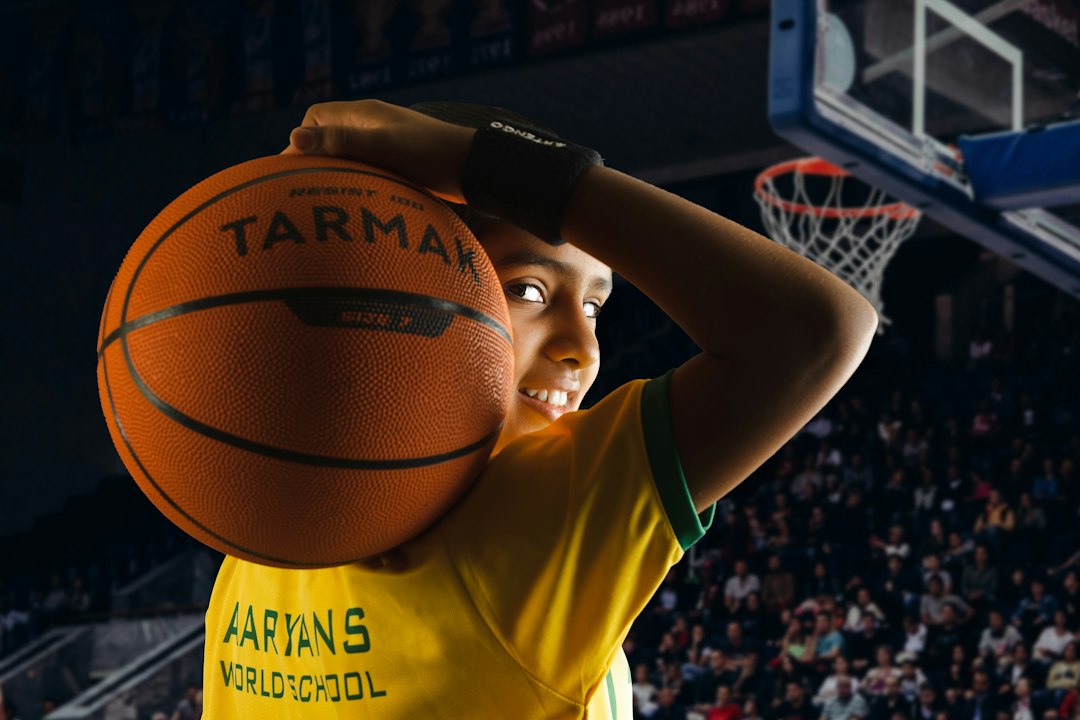




There's a moment every former player recognizes. You're pulling boxes out of a closet, or scrolling through old phone photos, and there it is — the team picture, the game shot, the away jersey under the gymnasium lights. And something in you thinks: I want that back.
So you go looking. You type "design basketball jersey online" into the search bar, land on a builder, start clicking through options — and within about four minutes, you realize the tool was not built for you.
It was built for a varsity coach ordering 14 identical uniforms by Thursday. It was built for someone without a specific year to honor, a specific number to carry forward, or a specific shade of midnight blue they need to reference against a photograph taken in 1997.
This article is for the other person. The one with the photo. The one who needs number 12 in the right font on the right color — not the closest available option in a dropdown menu designed for bulk purchasing.
Here is exactly what every online basketball jersey maker gets wrong for solo tribute builds — and the specific manual workarounds that actually produce the right result.
What Online Basketball Jersey Builders Were Actually Designed to Do
The modern basketball jersey design maker is a genuinely powerful tool for its intended purpose. Upload a logo, select a color, choose a template, enter names and numbers across your roster, and place a bulk order. Done in 20 minutes. Delivered in two weeks. For a coach, that's the entire job.
The problem is that every design assumption embedded in those platforms serves the coach ordering in volume — not the former player working from memory and a photograph.
The color picker is calibrated for teams, not for personal history. Most builders offer somewhere between 20 and 40 color swatches, labeled things like "Royal Blue," "Scarlet," and "Forest Green." What they don't offer is "the specific Pantone used by your high school athletic program in 1994" or "the away-game shade that was noticeably different from the home uniform." If your original jersey came out of a custom dye lot — which most school and rec league uniforms did — the swatch closest to it may still read visibly off on the finished garment.


The font library reflects licensing agreements, not uniform history. Professional basketball uniform lettering — the styles associated with teams like the New York Knicks, the Chicago Bulls, or the Orlando Magic — is licensed intellectual property. Online builders cannot legally offer those fonts without formal agreements. What you get instead are geometric approximations and display fonts that read as "basketball-style" without matching any specific uniform era. If your number was set in block lettering inspired by the 76ers' classic look, or the pointed serif style the Knicks used through certain decades, you will not find either in the standard font dropdown.
There is no photo-match function. Not one major consumer basketball jersey builder offers a reference-photo matching tool. You cannot upload your team picture from 1998 and ask the system to identify the template, the color family, or the number style. Every decision requires manual comparison — which means you need a structured workflow for that comparison, not just an open color picker.
The entire platform assumes you're ordering multiple units. Most builders optimize around minimums of 6 or 12 pieces. Single-unit ordering is available through some platforms, but those tend to offer fewer template options, more limited color ranges, and longer lead times. The solo order is not the primary business model. That doesn't make it impossible — it means you need to know which tools serve it and how to approach them differently.
The Three Things You Need Before You Open Any Design Tool
This is the step most former players skip, and it's the step that determines whether the finished jersey looks right or close-enough-but-wrong.
Opening the builder before your reference materials are assembled means making decisions without the information needed to make them well. The builder becomes a guessing tool instead of a production tool. Those are very different things.
1. The Best Available Photo of the Original Jersey
Not a memory of it. A photograph — ideally the clearest one you can find, taken in decent light, showing the number, the nameplate, and both the primary and secondary colors without significant color cast from gymnasium lighting.
If you have the physical jersey, photograph it flat on a white surface in natural daylight. If you don't, pull every digital file, scan every print, and identify the image with the highest resolution and least color distortion from artificial light.
This photo is your specification document. Every decision you make in the builder — color selection, font style, layout proportions — gets checked against it.
2. The Specific Details, Written Out
Work from the photo and document:
- Primary color — describe it precisely. "Dark purple with a slight blue cast in direct light" is actionable. "Purple" is not.
- Secondary colors — trim, number outline, nameplate background if it differs from the body
- Number placement — chest only, back only, or both; approximate size relative to jersey width
- Number style — solid block, single-outlined, double-outlined, drop shadow, inline stripe through the character
- Nameplate — straight or arched, font weight, relative size compared to number
- Additional detail — side panel color, waistband treatment, collar construction
3. A Hex Code or Pantone Reference If One Exists
This is how you solve the color swatch problem. If your original jersey came from a school or rec organization with any kind of documented branding, their official colors may still be on file with the athletic department or a local print shop that produced their materials.
If the organization no longer exists or the records are gone, there's a manual path: photograph the jersey under neutral light, open the image in a free tool like GIMP or use Canva's built-in color picker, and sample the dominant color directly. The hex code you extract won't be manufacturing-perfect, but it gives you a target number you can share with a custom supplier — a far more precise instruction than selecting the nearest swatch from a grid of 30 options.
How to Use an Online Builder for a Solo Tribute Build
Once your reference materials are assembled, the builder stops being a decision-making tool and becomes a visualization tool. That shift in how you use it changes everything about the outcome.
You are not asking the builder to design your jersey. You are using it to proof a jersey you have already specified on paper.
Marcus T., 44, used this approach when commissioning a tribute to his high school point guard jersey from his senior season in suburban Ohio. He'd worn that uniform for 12 games. The original was lost in a move years later. Working from a scanned team photo and a free color-sampling app, he identified his school's dark navy as a close match to a specific hex value, then worked with a custom supplier to target that value within standard commercial dye tolerances. The number font was the harder problem — the builder's closest option was noticeably too condensed compared to the original. He provided a reference image and requested a custom number treatment, which added two weeks and roughly $30 to the total cost. His assessment: entirely worth it.
The workflow that produces consistent results:
-
Lock the template before touching color or font. Most builders organize by silhouette and construction method — sublimated versus tackle twill, reversible versus non-reversible, sleeveless versus short-sleeve. Match your original's construction type first. A sublimated jersey, where the design is printed into the fabric itself, looks fundamentally different from a tackle twill jersey, where numbers and letters are stitched fabric applied to the garment surface. Getting the construction type wrong means no subsequent color or font work will make it look right.
-
Select the closest available options, then document the gap. Choose the closest swatch, the closest font style, the closest layout. Screenshot the result. Compare it directly against your reference photo. Write down specifically what is wrong: "The red reads too orange. The number weight is too light. The name arch sits too high." These documented gaps are your instructions — either to the platform's customer service team or to a custom supplier working from your brief.
-
Use the builder output as a production brief, not a final order. For most solo tribute builds, the best outcome from a standard basketball jersey maker online is a visual proof you can use to communicate with a human being. If the platform offers custom requests, live support, or email specification options, that proof is your starting point: here is what the builder generated, here is what the original looked like, and here is specifically what needs to change.
The Font Problem: When Your Number Style Isn't in the Library
The font limitation is the single most consistently frustrating aspect of solo jersey tribute work, and it deserves a direct answer.
Licensed team lettering — the number and wordmark styles associated with the most recognizable uniforms in professional basketball — exists in a complicated intellectual property space. Styles inspired by the Phoenix Suns' lettering tradition, the Orlando Magic's wordmark era, or the Chicago Bulls' iconic number treatment appear in various commercial font libraries, but those versions are typically unlicensed approximations. A legitimate custom jersey supplier operating within standard business practice won't apply them to a finished garment without proper authorization.
What a supplier can do is work from a reference image to produce a custom number cut specific to your order. This is a bespoke number shape produced for your jersey — not a licensed font pulled from a library. It costs more and takes longer. For a build where the number style is central to what you're honoring, it is the right path.
When requesting a custom number treatment, send:
- The sharpest available photo of the original number, cropped and well-lit
- The finished size you need, either measured from the original or estimated from photo proportions
- The application method — tackle twill, screen print, or sublimated
- Any outline, shadow, or inline detail visible in the reference image
The supplier cannot produce what they cannot see clearly. The quality of your reference image is a direct input into the quality of the finished number work.
Color Accuracy: The Gap Between Screen and Garment
Color is the discrepancy that surprises former players most consistently. The order goes in based on the swatch. The jersey arrives. The color is too bright, too muted, or simply wrong in a way that's immediately visible but hard to put into words.
Two specific reasons produce this gap.
Digital color and dye color are different physical systems. A swatch on a screen is an RGB value rendered on a backlit display. A jersey color is a physical dye lot applied to a specific fabric substrate under manufacturing conditions. The translation between those two systems is imperfect by definition. It also varies based on fabric type, dyeing method, and dye batch variation within a single production run. According to the Society of Dyers and Colourists, even standardized color systems like Pantone experience measurable variation between paper specification and textile application — which is precisely why physical swatch confirmation exists as a professional step in garment production.
Builder swatches represent standard inventory, not the full range of manufacturable color. If your original jersey was produced in a custom color outside the standard commercial range — common in school athletics, where the athletic department selected a specific shade for the program decades ago — that shade may simply not exist as a swatch option in any standard builder.
Two workarounds:
- Request physical swatch samples before ordering. Many custom jersey services will mail swatch cards of their available colors on request. Some charge a nominal fee; most do not. Comparing a physical swatch against your original jersey, or against a printed color reference under consistent lighting, is dramatically more accurate than comparing two screens.
- Ask about Pantone-matched custom color. Some suppliers offer Pantone matching as an add-on service for single-unit orders. Expect an additional $15–$40. If color accuracy is non-negotiable to what you're building, this is the only path to genuine precision.
A Note on Nike and What "Custom" Actually Means in This Context
This comes up often enough to address directly.
Nike basketball jerseys produced for the NBA, for Division I college programs, and for elite high school athletics are manufactured under team licensing agreements that do not extend to consumer custom orders. Ordering a custom Nike basketball jersey through a standard online builder will not produce the same construction, fabric weight, or silhouette as a game-worn NBA jersey. Nike's official custom uniform programs serve authorized organizations — schools, clubs, registered leagues — and require institutional credentials along with volume minimums.
What some online builders describe as "Nike-style" or "pro-cut" basketball uniforms are typically unbranded performance garments manufactured to comparable specifications — moisture-wicking polyester mesh, similar silhouettes — but are not Nike products and carry no Nike authorization.
If your original jersey was a Nike product, as was common in larger high school programs and college athletics through the 2000s and 2010s, the specific fabric hand, mesh weight, and construction finish may be difficult to match precisely through a consumer custom supplier. The closest available path is typically a comparable performance-mesh garment from an established athletic supplier, specified to match the weight and weave characteristics of your original as closely as the supplier's inventory allows.
For former players building a tribute to a jersey inspired by a specific team aesthetic — a Knicks-orange colorway, a 76ers-blue tribute, a Suns-purple-and-orange design — the distinction matters in both directions: the design can honor that visual tradition without claiming to be something it isn't, and the finished garment can carry genuine personal meaning without requiring a licensed reproduction.
Your jersey is still out there waiting.
Design yours in minutes and see your name and number exactly the way you remember it.
Frequently Asked Questions
How do I design a basketball jersey online if I only need one?
Single-unit custom jersey orders are available through several specialized suppliers, though they're less prominent than bulk-order platforms. Search specifically for suppliers advertising "no minimum order" or "single jersey" production. Expect a per-unit premium over bulk pricing — typically 30 to 60 percent higher for a single piece — and allow additional production time, since single units are often processed outside standard run batches. Before placing the order, confirm the supplier offers the construction type that matches your original: sublimated, tackle twill, or screen print are meaningfully different in finished appearance.
Can I design my own custom jersey to match a specific old photo?
Yes, but the process requires you to treat the photo as a specification document rather than hoping the builder interprets it on your behalf. Extract the key details manually — color (use a hex code if you can sample one), number style, nameplate layout, template silhouette — and use those specifications as your instructions to the builder or supplier. For anything the builder's standard options can't address, document the gap specifically and request a custom treatment. The clearer your reference materials, the closer the finished result.
What's the best color for a basketball jersey if I'm starting fresh rather than working from an original?
If you're designing a new jersey rather than building a tribute to an existing one, contrast is the primary functional consideration — the number needs to read clearly from the bench and from the stands at game distance. Dark body with light number, or the reverse, works consistently across lighting conditions. For single-color bodies, navy, black, and true red have the longest track record of on-court readability. For two-color designs, one primary and one accent is the practical ceiling — additional colors add design complexity that rarely improves readability and increases custom production cost proportionally.
What does the number 12 mean in basketball jersey customization?
Number 12 carries strong associations in basketball history — John Stockton wore it throughout his career, Dwight Howard wore it during his prime seasons — but in the context of a custom jersey order, it simply means you're specifying number 12 as your personal number. There's no special pricing, no restricted availability, and no particular process difference for any specific number. Choose the number that was yours. That's the entire logic of a personal tribute build.
Why does the color look different when my jersey arrives compared to the online preview?
The gap between on-screen color preview and finished garment color is a known limitation of digital-to-physical production. Screens render color in RGB — additive light. Fabric dyes are physical pigments applied to a specific substrate under manufacturing conditions. The same hex value produces visibly different results on different fabric types, and even on the same fabric across different dye batches. The builder's color preview is an approximation, not a guaranteed match. The most reliable workarounds are requesting physical swatch samples before ordering, specifying a Pantone reference number if precision is critical, and reading supplier reviews specifically for color accuracy rather than general product satisfaction.
See also: jersey size chart for numeric sizes | personalized sports gifts vs. generic options | custom softball jerseys for alumni games | adult recreational leagues where former athletes relive their game | the athletic identity that never fully leaves you