

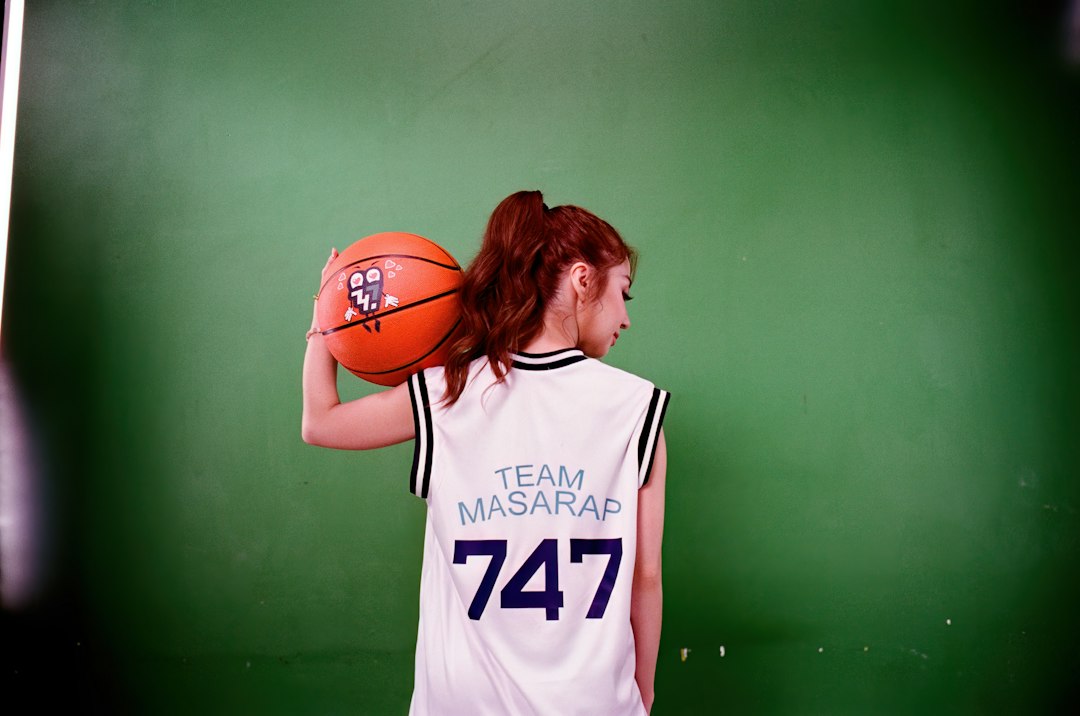




There is a specific weight to a jersey with your name on the back.
Not the fabric weight — though you remember that too, the difference between the practice mesh that clung in August heat and the game-day fabric that felt like it meant something. The weight we're talking about is the other kind. The kind you feel the first time a jersey becomes unmistakably, specifically yours.
Custom sports jerseys exist at the intersection of identity and memory in a way that almost nothing else in an athlete's life does. The ball gets put away. The cleats wear out. But the jersey — the one with your name and your number — carries something that doesn't fade with the season.
If you played, you already know what we're talking about.
What a Custom Jersey Actually Is (And What It Isn't)
Before anything else, let's be precise about what we mean when we say "custom sports jersey" — because the term gets used to describe at least three very different things, and knowing the difference changes every decision that follows.
A fully custom jersey is built from scratch. You choose the sport-specific cut and construction. You choose the base color, the accent colors, the font, the number placement, the name placement. You submit your name and your number. The jersey that arrives has never existed before in that form. It is, in the most literal sense, yours.
A customized stock jersey is a manufacturer's existing template with your information printed or stitched onto it. The silhouette, color options, and design language are predetermined. You're personalizing within boundaries someone else set.
A fan-market jersey with added customization is built for spectators, not players — the kind sold at sporting goods retailers with a name and number applied after the fact. The cut, the materials, and the construction reflect a stadium experience, not a playing one.


The distinction matters because the experience of wearing each one is entirely different. If you played, your muscle memory knows the difference between a jersey built for performance and one built for the stands. The former athlete who wants a jersey that feels like it felt — not like a souvenir — needs to understand which category they're ordering from before they click anything.
Most of the confusion in the custom jersey space comes from this gap. Someone orders what they think is a custom jersey and receives what is effectively a fan item. The expectation mismatch is real, and it's avoidable once you know what to look for.
The Elements That Make a Custom Sports Jersey Yours
If you've ever ordered a custom sports jersey — or watched someone else go through the process — you know there are more decisions than you expected. Here is what actually matters, and why each element carries weight beyond the aesthetic.
The Number
Every former athlete carries their number differently than a fan does. A fan picks a number because a favorite player wore it. A player earns their number through a season or two until it becomes part of how they're known in the sport. By the time you've worn a number through a full season — through the losses as much as the wins — that number belongs to you in a way that goes beyond superstition.
When ordering a custom jersey, the number is not a stylistic detail. It's documentation of something that actually happened. The specific placement, sizing, and font of that number communicate whether the people who made the jersey understood what a jersey number means to someone who wore one for real.
Look for front number placement that follows the sport's authentic conventions, back number sizing that matches what the sport actually uses (not scaled arbitrarily for aesthetics), and chest number options if your sport calls for them. A jersey that gets the number placement wrong doesn't feel right — even when every other element is perfect.
The Name
The nameplate — your name, running across the shoulders on the back — is where the jersey becomes undeniably yours. In terms of pure identity, nothing on the jersey works harder than this single detail.
The font matters more than it seems like it should. The correct sport-specific block lettering feels right in a way that's hard to articulate but impossible to miss. A decorative or stylized font that wouldn't appear on a real game jersey feels like a costume. If you played the sport, your eye catches the difference immediately.
For custom jerseys, look for nameplate options that include:
- Tackle twill or stitched lettering — dimensional, durable, and closest to how game jerseys are actually constructed
- Sublimated lettering — printed directly into the fabric, smooth finish, common in modern sport-specific designs
- Font libraries that include sport-conventional options — not just decorative fonts, but the actual block and serif styles the sport uses
The right name in the right font, in the right color, sitting correctly across the back — that's what turns a jersey from an item into something worth keeping.
The Colors
This is where former athletes and casual jersey buyers diverge most sharply. A casual buyer chooses colors they like. A former athlete is looking for the colors they wore — or the specific combination that represents the team, the school, the organization, the particular era they played in.
Custom jersey builders vary significantly in how precisely they can match colors. Some work from a standard palette. Others allow hex code or Pantone specification. If you're creating a jersey inspired by your high school team's away kit, or in the style of your travel softball uniform from a specific period, you need a builder that offers precise color matching — not just a dropdown of 24 approximations.
One real variable to understand: sublimation printing and fabric dyeing produce different color outcomes on different fabric weights. What reads as an exact color in a digital preview may appear slightly different on the finished material. For large orders, request a physical sample before full production.
The Cut and Construction
This is the element most often overlooked in the design process — and the one most responsible for whether the finished jersey feels like a real jersey or a jersey-shaped object.
Sport-specific construction details are not decorative. The shoulder seam placement on a baseball jersey differs from a basketball jersey for real biomechanical reasons. The mesh panel placement on a football jersey serves ventilation demands tied to the sport's movement patterns. The hem length and construction on a soccer jersey differs from a lacrosse jersey because the sports ask different things of the garment.
A truly custom sports jersey built for the sport it represents will carry construction details that reflect that sport's actual requirements. A generic template with numbers and a name dropped onto it will not — and your body will know the difference before your brain has time to name why.
What Former Athletes Notice That Casual Buyers Don't
There's a moment that happens when a former athlete puts on a jersey that isn't quite right.
You can't always name the specific thing. The number is there. The name is there. The colors are approximately correct. But something is off — a stiffness in the shoulder, a hem that sits wrong, a mesh that doesn't move the way mesh is supposed to move — and your body, which spent seasons learning how a real jersey feels, registers the discrepancy immediately.
This is not nostalgia being picky. This is athletic memory being accurate.
If you played, you know the difference between a jersey built for someone who competes and a jersey built for someone who watches. That knowledge doesn't leave you. It becomes the standard against which every jersey you touch gets measured — whether you're conscious of applying it or not.
Marcus T., 34, ordered custom basketball jerseys to give his former AAU team as a ten-year reunion gift. He chose a builder that allowed him to specify the longer silhouette his team actually wore — the late-2000s cut, not the modern slim fit — because he wanted the jerseys to feel like the ones they played in, not a present-day approximation inspired by them. When the jerseys arrived, the team's group chat went from quiet to loud in about four minutes. That's what specificity in the design process produces.
The athletes who have the best experiences with custom jerseys are the ones who go into the process knowing what they're evaluating. They look at construction, not just the visual. They ask about fabric weight and composition, not just color options. They know the difference between a jersey designed for someone who plays and one designed for someone who watches — and they order accordingly.
The Design Process, Start to Finish
Understanding what goes into a custom jersey is one thing. Walking through the actual design process is another. Here is how it works, and where the decisions that matter most actually live.
Step 1: Choose your builder based on your sport.
Not every custom jersey builder works across all sports with equal depth. Some specialize in team sports — football, basketball, soccer, baseball. Others are built for individual or niche sports. Start by identifying builders who explicitly serve your sport, with sport-specific templates and construction options, not just generic athletic templates with sport names attached.
Step 2: Determine your use case before you open the design tool.
Are you creating something in the style of your playing-days jersey — a tribute to a specific team, season, or uniform you wore? Ordering for a current recreational team? Making a one-of-one piece for a specific occasion? The use case determines the priority stack. A tribute jersey prioritizes accuracy to the original design language. A current team order prioritizes durability and cost-per-unit. A single commemorative piece may justify investing in construction quality that wouldn't be practical at scale.
Step 3: Work through the design builder in the right sequence.
Most custom jersey builders now offer online design tools. Work through them structurally: sport and cut first, then colors, then number, then name, then any additional design elements. Don't start with the aesthetic elements before locking in the structural ones. Number placement looks different on different cuts, and designing colors first creates attachment to a visual before you've confirmed the construction will support it.
Step 4: Review the proof carefully — every field, every time.
This is the step most people rush. The digital proof is your only opportunity to catch errors before fabric is cut. Check spelling of the name (all caps vs. mixed case), number accuracy front and back, color accuracy relative to your expectations, and the placement of every element. If the builder offers a physical sample for large orders, request it without exception.
Step 5: Order with margin for size.
Athletic sizing on custom jerseys can run differently than standard apparel sizing, particularly on sport-specific cuts. If ordering for a team, collect actual measurements — do not rely on self-reported sizes. If ordering a single jersey, check the builder's size chart against real measurements rather than your usual apparel size.
What Separates a Jersey Worth Keeping from One That Ends Up in a Box
Some custom jerseys get worn until they're threadbare. Others get worn twice and forgotten. The difference is almost never about how the jersey looks in the design preview. It's about whether the finished object feels like it belongs in the category of things worth keeping.
The jersey that earns a permanent place in a former athlete's closet has two qualities working together:
Accuracy — it represents the sport, the position, the number, the name, the colors with enough fidelity that it triggers genuine memory, not approximate memory. A jersey that's close enough isn't the same as a jersey that's right.
Construction quality — it feels, when worn, like a jersey built for someone who competes. The fabric has the right weight and breathability. The mesh moves. The seams sit where they're supposed to sit. The name and number don't peel after two washes.
These two qualities are the only evaluation criteria that matter for a former athlete ordering a custom jersey. Everything else is secondary.
According to research published in the Journal of Retailing on material authenticity in apparel, the gap between expected quality and received quality is the primary driver of dissatisfaction in custom apparel — which is exactly why understanding what you're ordering before you order it matters more in this category than in almost any other purchase you'll make.
A Note on Team Orders vs. Individual Orders
The economics and logistics of custom jersey ordering shift significantly when you're ordering for a group rather than for yourself.
For individual orders: the design process is entirely about specificity. Your number, your name, your sport, your cut. Prioritize the builder who gives you the most control over the details that matter to your memory of the game.
For team orders: minimum quantity requirements, per-unit pricing at scale, and turnaround time become the governing variables. Most custom jersey builders offer meaningful per-unit price reductions at team quantities — typically at 12 or more units. The design process for team orders also involves more stakeholders, which makes the proof review stage more critical, not less.
A few additional considerations for team orders worth knowing before you start:
- Designate a single point of contact for all design approvals — committee design is where timelines collapse
- Collect measurements from every player individually; self-reporting produces sizing errors at a rate that will cost you more than the time the measurement collection takes
- Confirm the builder's policy on individual name and number variation within a team order — some charge per-variation fees that change the total cost calculation significantly
- Build more time into the proof-review-revision cycle than you think you'll need
Your jersey is still out there waiting.
Design yours in minutes and see your name and number exactly the way you remember it.
Frequently Asked Questions
What is a custom jersey?
A custom jersey is a sport-specific garment built to your exact specifications — your name, your number, your colors, your cut. Unlike stock jerseys or fan-market jerseys, a fully custom jersey is designed from scratch around your inputs. The result is a jersey that has never existed before in precisely that form: your identity, your number, your name, documented in fabric and construction built for the sport you played.
How long does it take to receive a custom sports jersey?
Turnaround time varies by builder and order complexity. Individual custom jerseys typically take between 7 and 21 business days from approved proof to delivery. Team orders, which involve more variation and larger production runs, often run 3 to 5 weeks from proof approval. Rush options are available from some builders at additional cost. If you have a fixed date — a reunion, a ceremony, a gift occasion — build your order timeline backward from that date and add meaningful buffer for the proof review cycle.
What's the difference between sublimated and tackle twill on a custom jersey?
Sublimation printing dyes the design directly into the fabric using heat — the result is a smooth surface with no dimensional texture, the ability to handle complex color gradients, and excellent long-term durability because the design is part of the fabric rather than applied to it. Tackle twill applies layered fabric letters and numbers that are stitched onto the jersey — the result is dimensional, textured lettering that closely matches traditional game jersey construction. Former athletes who want the jersey to feel the way a real game jersey felt often prefer tackle twill for the name and number. Sublimation is typically more cost-effective at scale and allows for more complex design across the full jersey body.
Can I order a single custom jersey, or is there a minimum quantity?
Most custom jersey builders accept single-unit orders, though the per-unit price at quantity one is significantly higher than at team quantities. For a former athlete creating a jersey in tribute to their playing days — capturing the specific style and feel of what they wore — a single-unit order is entirely standard. For team or group orders, pricing typically improves substantially at 6, 12, or 24 units depending on the builder and construction type.
How do I make sure my custom jersey holds up over time?
Construction quality is the primary factor — a jersey built from performance fabrics with stitched or properly sublimated lettering will outlast a jersey built from commodity materials with iron-on or low-quality print applications. Beyond material quality: wash inside out in cold water, hang dry rather than machine dry, and avoid folding directly on the number or name for extended storage periods. A well-made custom jersey, cared for properly, can last well over a decade. The jerseys that deteriorate quickly are almost always ones where construction quality was sacrificed for the lowest possible per-unit price — a tradeoff that rarely looks like a good deal a year later.
See also: personalized vs. generic sports gifts | jersey size chart | custom softball jerseys | athletic identity that never really went away