

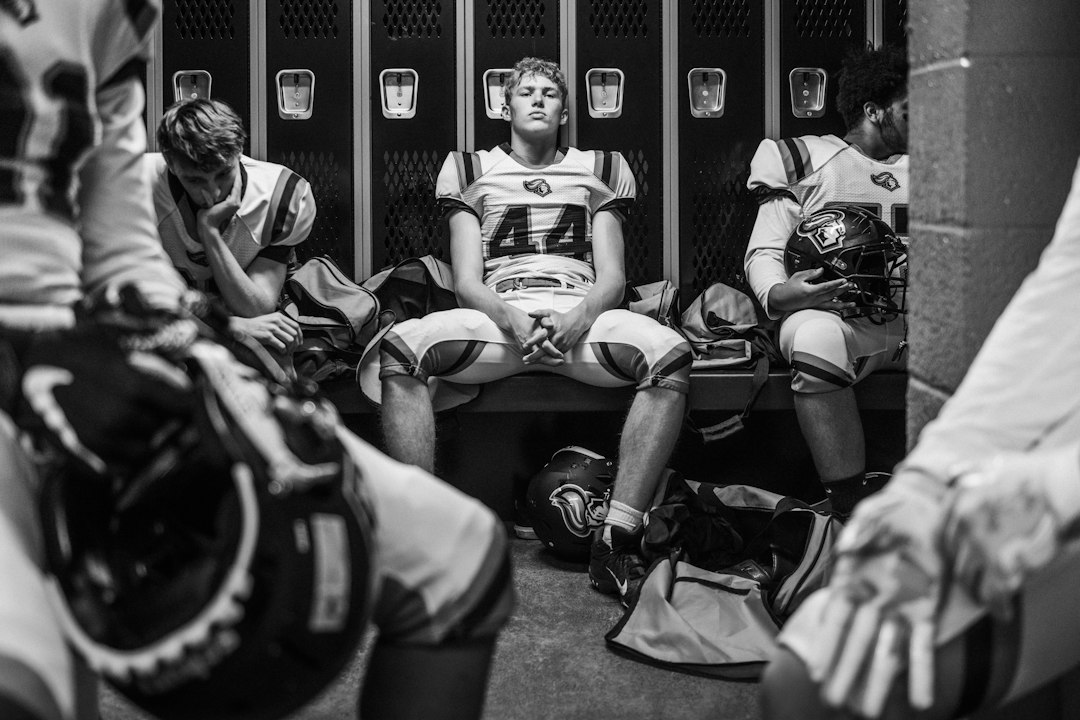




You played. You know what that jersey felt like.
Not the fashion cut hanging in a big-box sporting goods store — the one with a screened number that cracks after six washes. The real one. The heavy sweater with your name on the back, your number on the sleeve, the colors that meant something specific to a specific group of people on a specific sheet of ice.
The problem is that every guide to custom hockey uniforms online was written for a coach with a purchase order and eighteen players to dress. Minimum quantities of 12. Bulk pricing tables. Roster upload forms.
If you need one jersey — one authentic, team-real, built-to-spec sweater — the internet mostly tells you to find a team first.
This article is the exception. Here is exactly how former players, recreational skaters, and one-off commemorative jersey buyers navigate the solo order: which construction method actually makes sense at quantity one, how to negotiate (or route around) minimum order requirements, and how to spec a single custom ice hockey jersey so it looks like it came out of a real team's locker room.
The Real Problem With Solo Custom Hockey Jersey Orders
Most custom hockey jersey builders are optimized for one type of customer: a program director or coach filling out a full roster. The pricing structures, the minimums, the decoration methods — every default assumption in the industry is built around team hockey jerseys ordered in bulk.
That creates a specific friction for the solo buyer that nobody talks about directly.
Minimum order quantities (MOQs) are the first wall. Most full-custom sublimation shops set their MOQ at 6, 10, or 12 units. A handful require 20. The reason is straightforward — the setup costs for a custom sublimation run (art separation, print calibration, heat press or dye-sub machine time) are the same whether you run 1 jersey or 24. Spreading that setup cost across one unit makes the economics difficult for the shop.


The decoration method you want may not be available at qty 1. If your mental image of "authentic" is a stitched twill number like the kind you'd see on NHL hockey jerseys or USA Olympic hockey jerseys — raised, thick, layered felt — most shops that do genuine tackle twill require minimums of at least 6 units. The cutting and sewing labor per unit only becomes cost-efficient at volume.
Generic builders produce generic results. The self-serve custom hockey jersey builder tools that do accept single-unit orders often produce a result that reads as "custom recreational" rather than "team authentic." The template libraries are limited, color matching is approximate, and the construction quality reflects the price point that makes a one-off economically viable for the vendor.
None of this means a solo order is impossible. It means you need a different playbook than the one written for coaches.
Custom Hockey Uniforms at Quantity One: Sublimation vs. Stitched
This is the decision that matters most for the solo buyer — and the answer lands differently here than it does for a team order.
What sublimation actually is (and why it dominates at low quantities)
Sublimation is a dye process. The ink converts to gas under heat and pressure and bonds permanently into the fabric fibers themselves. The result is a jersey where the graphics, numbers, and name are part of the fabric — not a layer on top of it. No cracking, no peeling, no heat-transfer surface feel.
For a one-off custom hockey uniform, sublimation is almost always the right answer — not because it's the premium option, but because the economics work at low volume. Once a shop has your art file and your order placed, the marginal cost difference between printing one jersey and printing twelve is mostly material. Setup is the expensive part, and some shops that specialize in single-unit runs have built their pricing model around exactly that reality.
The look has also improved substantially. A decade ago, sublimation read as "recreational league." Today, the top-tier sublimation shops produce sweaters with the visual density and color saturation that make them genuinely indistinguishable from what you'd see on ice at a high level. The key differentiators are the shop's color profile management and the weight of the fabric they're printing on — more on that in the spec section below.
Where stitched twill still wins
If the jersey you have in mind draws on the tactile character of a Team Canada hockey jersey or carries the dimensional number style associated with Colorado Avalanche hockey jerseys from their early-2000s era, sublimation will get the visual right but not the dimension. Stitched twill numbers have a specific weight and texture that flat sublimation cannot produce.
For a qty-1 order, getting genuine tackle twill work done means one of two paths:
-
Order a blank sublimated jersey in your colors and spec, then commission a local embroidery or twill shop to apply the numbers and nameplate separately. This splits the job between two vendors, each of whom can accommodate a single unit without hitting bulk minimums.
-
Find a shop that does custom twill work with no minimum — they exist, but they charge accordingly. Expect to pay $80–$140 for nameplate and numbers on top of the base jersey cost when ordering as a one-off.
In our experience, the split-vendor approach produces a better result at a lower total cost than forcing a single shop to accommodate twill work at qty 1. It also gives you more control — you can nail the sublimated base before the twill goes on.
How to Actually Place a Single Custom Hockey Jersey Order
Here is the practical sequence — not the idealized version, but the one that actually works when you're ordering without a full team behind you.
Step 1: Filter vendors before you invest time in a design
Not all custom hockey jersey builder platforms treat single-unit orders the same way. Before spending two hours on a design only to hit a "minimum 6" wall at checkout, confirm the shop's MOQ upfront. Search specifically for "single custom hockey jersey order" or "custom ice hockey jerseys no minimum" — that language surfaces shops that have explicitly optimized for the solo buyer.
Shops that do low-volume runs well tend to be smaller operations with faster communication cycles. That's actually an advantage for a complex one-off — you can talk to the person making your jersey rather than submitting a ticket into a bulk fulfillment queue.
Step 2: Call to negotiate when a shop is close but not quite there
If a shop you want to work with has a 6-unit minimum, call them. Don't email — call. A phone conversation gives you room to explain the specific order and ask whether they'll accommodate a single-unit run at a price that covers their setup cost.
The ask that works: "I understand your standard pricing requires a minimum run. I'm happy to pay a setup fee on top of the per-unit price to make the economics work for you. Can we structure it that way?" Most shops have a number in their head — typically $35–$75 as a single-unit setup surcharge — that they'll quote if you ask directly. You'll almost never find that information on the website.
Step 3: Spec the fabric weight first, decoration second
Most solo buyers get this sequence backwards. They design the jersey — colors, logo, numbers — and then accept whatever fabric the builder defaults to. The result often looks right in the preview and feels wrong in person.
For a sweater that reads as authentic, the minimum fabric weight you want for a sublimated jersey is 200 gsm (grams per square meter). Recreational league jerseys are frequently printed on 150–160 gsm material. The difference is immediately apparent when you hold them — the lighter fabric drapes differently, moves differently, and photographs differently than what you likely remember from playing. According to USA Hockey's equipment standards documentation, sweater construction and weight are specifically addressed at the organized level for exactly this reason.
Some shops listing custom hockey uniforms will include fabric weight as a spec option. Others require you to ask. Ask before you order.
Step 4: Provide reference imagery, not just color codes
If you're recreating a design from memory — a youth league sweater, a college intramural design, a recreational team from fifteen years ago — the most important thing you can give the shop is reference photography. Even a blurry game photo gives the artist something to work from.
Hex codes and Pantone references matter, but they are secondary to reference imagery for achieving team-real accuracy on a one-off. A good shop will use the reference to calibrate color matching against their specific ink profile and substrate, which is what actually determines whether the printed jersey matches your memory.
Speccing a One-Off That Still Looks Team-Real
This is where the solo order either succeeds or reads as "custom recreational." The difference lives in the details that team orders get automatically because experienced coaches specify them from habit.
The four spec decisions that separate authentic from amateur
Cut and pattern: Hockey jerseys have a specific boxy cut with dropped shoulders and extended body length to accommodate padding and skating position. "Athletic" or "slim" cut options available in some builders are not hockey cuts. If the builder offers a hockey-specific pattern, select it. If they don't offer a hockey-specific cut, find a different shop — this is non-negotiable.
Neck finishing: A real hockey sweater has a knit collar — not a hemmed fabric edge, not a sublimated collar graphic. If the shop can't do a knit collar finish on a single-unit order, the result will read as a jersey costume rather than a hockey sweater.
Sleeve and hem stripes: The stripe detailing on sleeves and hem is often the element that signals team-real most strongly. Sublimated stripes with accurate color separation and clean edge definition are achievable. What undermines it is letting a builder default to stripe widths that don't match the reference — easy to miss in the preview, obvious in person.
Number font selection: NHL hockey jerseys and major national program sweaters — USA men's hockey jerseys, Team Sweden hockey jerseys, Team Canada Olympic hockey jerseys — each use distinctive number fonts that are central to their visual identity. If you're drawing inspiration from a specific team aesthetic, identify the font family and specify it. Most custom shops carry a library of hockey-specific number fonts; the authentic ones are usually in there if you ask.
Marcus T., 38, wanted to commemorate his college club hockey years after his team's 20-year reunion came up — the program had folded and the original sweaters were long gone. He went through two builders that couldn't accommodate a single-unit sublimation run before finding a small shop that charged a $50 setup fee on top of the unit price. Total came to $189 for one jersey — knit collar, 210 gsm fabric, correct number font, inspired by the color scheme and stripe style his team had worn. "It looked like it came out of a real locker room," he said. "Worth every cent."
Where Licensed Team Aesthetics Fit Into This Conversation
You can't commission a licensed version of a Team Canada Olympic hockey jersey or a Colorado Avalanche hockey jersey through a custom builder — those are licensed products produced by specific manufacturers under official agreements. Fanatics hockey jersey product lines, for example, are officially licensed and exist in an entirely different product category from a fully custom-built sweater.
What you can do is draw inspiration from the design language of those programs — the color palettes, the stripe patterns, the overall silhouette — when building your own original design. If your old recreational team wore blue and white with diagonal stripes in the style of a USA hockey jersey aesthetic, you can honor that design direction faithfully in an original sweater. You simply can't place official marks, wordmarks, or licensed insignia on it.
This distinction clarifies what the custom builder is actually delivering: an original garment built to your specifications, not a licensed product. The authentic quality comes entirely from the construction and spec decisions you make — the fabric weight, the collar finish, the number font, the color accuracy. That's where the real work is, and that's where this guide has focused.
Your jersey is still out there waiting.
Design yours in minutes and see your name and number exactly the way you remember it.
Frequently Asked Questions
Can I order a single custom hockey jersey without hitting a minimum order requirement?
Yes — but you need to filter for the right vendors before investing time in a design. Search specifically for shops that advertise low-minimum or no-minimum custom ice hockey jerseys. Many smaller sublimation shops accommodate single-unit orders, sometimes with a setup fee of $35–$75 on top of the per-unit price. Calling directly and asking about single-unit pricing almost always produces better results than reading the FAQ on a builder's website.
Is sublimation good enough for an authentic-looking one-off hockey jersey, or do I need stitched numbers?
For the vast majority of solo orders, sublimation produces a genuinely authentic result — especially if you specify the right fabric weight (200 gsm minimum) and work with a shop that has accurate color profile management. If the jersey you're paying tribute to had raised tackle twill numbers and that texture matters to you, the most cost-effective path at qty 1 is to order a sublimated base jersey and commission twill numbers from a local embroidery shop separately. Forcing one shop to do twill work at qty 1 is possible but expensive.
How long does a single custom hockey jersey order take to produce and ship?
Most single-unit sublimation orders run 10–21 business days from art approval to shipping. Rush options are available at some shops for an additional fee, typically reducing production to 5–7 business days. Get the timeline confirmed in writing before finalizing — single-unit runs are sometimes deprioritized behind bulk orders at shops that handle both.
What fabric weight should I specify for a custom hockey sweater that feels authentic?
Specify a minimum of 200 gsm (grams per square meter). Standard recreational league sublimation jerseys are often printed on 150–160 gsm material, which feels noticeably lighter and less substantial than what most players remember wearing. Some shops go up to 220–240 gsm for their premium hockey-specific fabric. If the builder's website doesn't list fabric weight as a spec option, ask directly before ordering.
Can I build a jersey in the style of a Team USA or Team Canada design through a custom builder?
You can absolutely draw from the design language — color palette, stripe patterns, overall silhouette — as long as you're creating an original design rather than placing official marks or licensed insignia on the garment. Custom builders produce original garments to your specifications. Use your reference team's aesthetic as a design direction and build something that honors that look in your own original sweater.
See also: personalized sports gifts vs generic alternatives | custom softball jerseys ordered the same way | getting the right jersey size before you order | athletic identity that never really went away | adult recreational leagues where that jersey would actually get used