
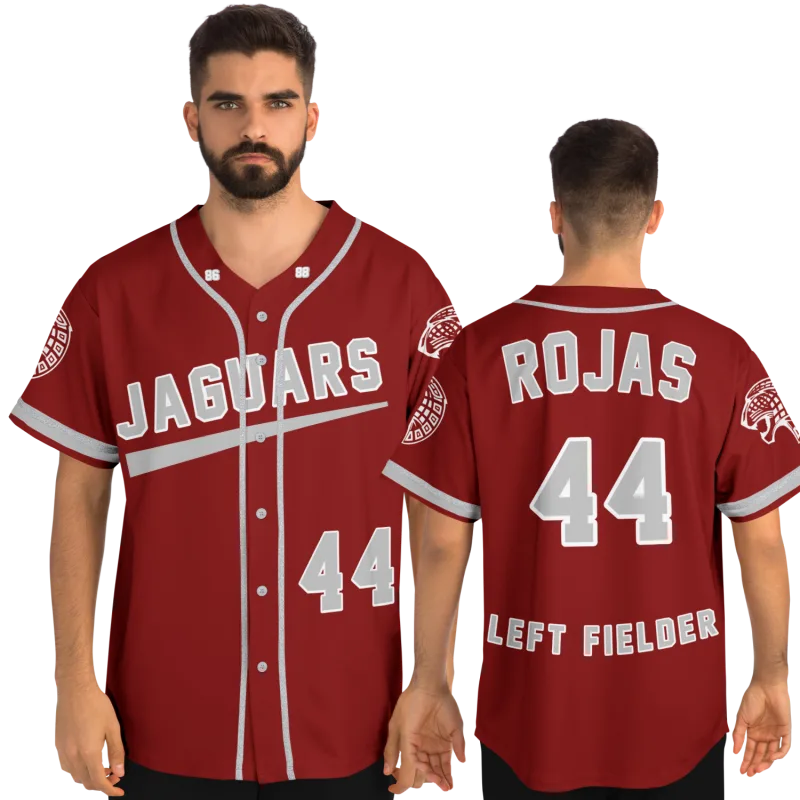
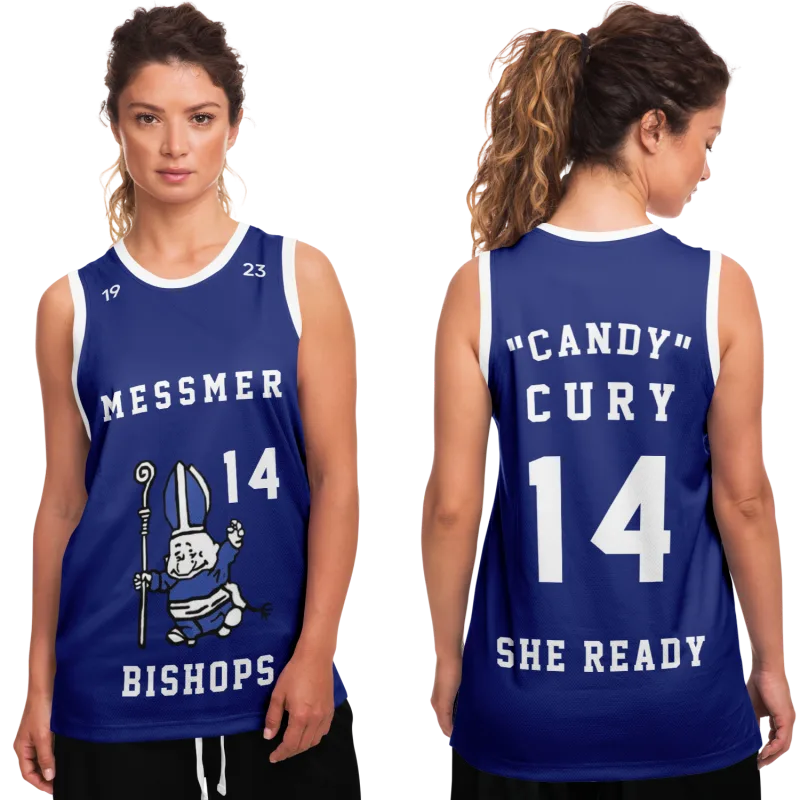
There's a specific moment every former player knows. You're watching a game (maybe your kid's little league, maybe a college game on a Saturday afternoon) and a player steps into the box wearing pinstripes with a button-front, the jersey half-tucked, the number clean and bold on the back. And something in your chest catches.
You wore that jersey. Different name, different number, same feeling.
The search for a custom baseball jersey former player usually starts right there. Not from a marketing email, not from a product page. From a moment on a field that reminded you of who you used to be when you crossed the baseline.
This guide is written for that person. Not for the casual sports fan looking for something to wear to a themed party. For the player who knows the difference between a pullover and a button-front by feel, who remembers whether their high school wore pinstripes or solid whites, who tucked their jersey a specific way before every at-bat and hasn't thought about it consciously in years until right now.
The details matter here. Let's get every one of them right.
Button-Front vs. Pullover: The Era Debate That Defines Your Jersey
If you played baseball at any level between roughly 1950 and the early 2000s, there's a decent chance your memory defaults to a button-front jersey. The full placket, the flat collar, the way the buttons gave you something to fidget with in the dugout — that's the classic silhouette that defined American baseball aesthetics for half a century.
The pullover had its moment. The polyester double-knit pullover dominated the 1970s and into the 1980s, particularly in the major leagues. If you grew up watching the Pirates in those black-and-gold pullovers, or the early-career Cardinals in their Saturday red alternates, a pullover is your jersey. That era has its own specific texture and cultural weight.
Here's what that means for ordering a custom baseball jersey with a button front: the choice isn't purely aesthetic. It's autobiographical.
The button-front signals: - Traditional baseball sensibility - High school and college programs from the 1990s onward - The formal, structured game-day look that most players associate with "real" baseball uniforms - A slightly longer front hem designed to stay tucked during the full range of a swing
The pullover signals: - 1970s–1980s MLB aesthetic - Recreational league and team jerseys from the same era - A more relaxed, slightly looser fit through the torso - The specific way a number sat on the back without any vertical seam interruption
Most former players ordering personalized baseball jerseys as adults default to button-front without thinking about it — because that's what high school and college programs wore from the 1990s onward. But if your mental image comes from watching your dad's generation, or from playing in a recreational league that went with the Rawlings double-knit look, the pullover deserves serious consideration.
Get this wrong and the jersey won't feel like yours. Get it right and you'll put it on and immediately know it.
What Pinstripes Actually Mean at the High School Level
Not every program wore pinstripes. That's the first thing to understand.
Pinstripes on a baseball jersey were earned — in the sense that programs with history, with established aesthetics, with boosters who cared about the uniform, tended to wear them. Pinstripes added cost to every uniform order. They required a more precise manufacturing process. Programs that wore them usually wore them consistently, year over year, because the identity was built around that look.
If your high school wore pinstripes, you remember them precisely. The width of the stripe. Whether they ran all the way to the hem or faded at the waist. Whether the number was outlined in a contrasting color or stood clean against the pinstripe field. That visual memory is sharp because you looked down at it during every game.
A custom high school baseball jersey that gets the pinstripes right (the actual spacing, the actual color, the actual weight of the stripe against the base fabric) is immediately recognizable to anyone who played in that program. One that approximates it is noticeably wrong to anyone who knows.
What to specify when ordering:
- Stripe color — this is almost never pure white on white. Pinstripes are typically the program's accent color, or a specific shade of gray, or navy on white. Know your specific color before you order.
- Stripe width — standard pinstripes run roughly 1/8 inch. Some programs ran slightly wider accent stripes. If you're matching a specific uniform, look at old photos and ask the manufacturer for samples.
- Stripe spacing — typically 1 inch on center, but this varies by manufacturer and era.
- Sublimated vs. woven — modern custom jerseys typically produce pinstripes through sublimation printing rather than woven yarn. The visual result is accurate; the tactile feel is different. If fabric authenticity matters to you, ask about the production method.
The pinstripe question comes up most often when former players set out to re-create their high school jersey, and it's one of the places where a little specificity in your order makes the biggest difference in the finished product. If memory is hazy on the shade, pulling the colors off a 1997 team photo beats guessing.
Softball Jerseys Are a Different Garment — and a Different Culture
This distinction matters more than most ordering guides acknowledge.
A custom softball jersey with number is not a baseball jersey with a different sport printed on it. The cut, the cultural associations, and the functional design considerations are different enough that ordering the wrong base template produces a jersey that looks immediately wrong to anyone who played the sport.
The specific differences:
- Cut through the torso and hips: Softball jerseys — particularly women's cut jerseys — are designed with a different drop from shoulder to hem. The fit through the waist and hip is different from the traditional straight-cut baseball jersey. A women's softball player ordering a standard baseball template gets a jersey that doesn't fit the way she remembers — which is why the difference between a women's cut and a unisex fit is worth settling before you order.
- Hem length: Softball jerseys are typically worn untucked over sliding shorts or compression shorts. The hem is cut accordingly: longer in the back, designed to stay in place through a slide without pulling up. Baseball jerseys are designed to be tucked, which changes the entire proportion of the garment.
- Sleeve length and cut: Softball jerseys frequently run with a slightly shorter, more fitted sleeve. The raglan sleeve, the two-tone sleeve with a contrasting color running from collar to cuff, is more common in softball than in baseball at the recreational and high school level.
- Number placement: Softball jersey numbers are frequently larger relative to the back panel than in baseball, particularly in recreational leagues that adopted the oversized number aesthetic from basketball-influenced uniform designs of the 2000s.
Maria C., 34, played four years of varsity softball at her Illinois high school and ordered a re-creation of her senior season jersey through iPlayedFor. She specifically requested the women's cut with the raglan sleeve in royal blue and gold, with her number 12 in the same oversized block font her program used. "The first baseball-style jersey I tried looked like I'd borrowed it from someone else's sport," she said. "Getting the cut right made it actually look like what I wore."
The culture difference matters too. Softball programs at the high school and recreational level have developed their own visual identity that diverges from baseball aesthetics in specific ways. Brighter colors. More contrast between the body and sleeve colors. More willingness to go bold with font choices on the number and name. If your softball program wore neon yellow accents or a font that leaned more athletic than traditional, those choices belong on your custom jersey. Don't default to the conservative baseball aesthetic when your actual uniform wasn't conservative.
The Specific Details That Make a Custom Jersey Feel Real
Beyond the big decisions (pullover or button-front, pinstripes or solid, softball cut or baseball cut), there are a handful of smaller details that former players consistently notice on the finished jersey. These are the details that separate a jersey that looks right from one that feels right.
Font selection for numbers and names
Most players remember their jersey's number font more clearly than they think. The block font used by most high school programs in the 1990s and early 2000s sits in muscle memory. When a custom jersey comes back with a slightly different number style — more rounded, thinner stroke, different serif treatment — something registers as wrong even if the wearer can't immediately articulate why.
Ask your custom jersey manufacturer for a font sheet and compare it to photos of your actual uniform. If you can find a team photo from your playing years, match the number style before you finalize the order.
Name on back vs. no name
Not all programs put names on the back. Many high school programs ran numbers only, particularly programs that ordered through budget-conscious suppliers or programs with traditional aesthetics that considered names on jerseys too showy.
If your jersey had no name on the back, putting your name on the custom jersey adds something that wasn't there. For some former players, that addition feels like a completion of something the program couldn't afford. For others, it reads as wrong: a decoration that changes the fundamental identity of the uniform.
There's no universal answer here. Know which camp you're in before you order.
How the name and number get applied to the jersey
Stitched numbers and letters — often called tackle-twill — are cut from a layer of fabric, layered for the outline color, then sewn on with a tight zigzag stitch. They sit slightly proud of the base fabric, catch the light along the stitching, and carry a dimensional weight that matches what most high school and college programs actually wore. Stitched twill is heavier, more expensive, and built to survive being worn.
Sublimated numbers and letters are dyed into the fabric along with the rest of the design. The surface stays flat and smooth, the number moves with the jersey instead of sitting on top of it, and the color is limited only by what the printer can produce. Done well, high-quality sublimation gives you colors that never crack, peel, or fade — and it's lighter and cooler to wear than stitched twill.
What matters most isn't which method you choose, it's how well it's executed. A cheap printed number looks flat and washed-out in a photograph; a well-made stitched number looks like the one in your senior portrait. Either way, the jersey holds up for years with the right washing and storage routine. Ask which method your jersey uses, and whether the outline color is stitched or printed.
The specific feel of the fabric at the collar
This one is harder to specify in an online order but worth asking about. Traditional baseball jerseys ran with a flat, slightly stiff collar, the kind that sits just below the base of the neck and doesn't move much during play. Modern moisture-wicking fabrics often produce a softer, more pliable collar that reads as athletic wear rather than uniform.
If the tactile experience of the collar matters to you — and for former players, it often does, because the collar was the first thing you felt when you pulled the jersey on before a game — ask the manufacturer about the collar construction and whether they offer stiffer collar options.
Tucking and the at-bat routine
The tuck was a ritual. Half-in, half-out, the specific way the jersey gathered at the belt line when you got into your stance. This seems like it has nothing to do with ordering the jersey, and technically it doesn't — but it's worth understanding that the way a jersey was designed to be worn changes its proportions when you put it on.
A baseball jersey ordered in a longer cut, designed for tucking, will look different hanging loose than one designed for the modern untucked aesthetic. If you're ordering something you'll wear to a game, a reunion, or just around the house, decide whether you want it to look right tucked or untucked — and make sure the hem length reflects that decision.
Getting Your Number Right: More Than a Preference
Your number isn't arbitrary data for the order form.
For most players, the number they wore in their most significant season — varsity high school, college, the adult rec league team where they finally felt like they had their swing back — is a specific piece of identity. The personalized baseball jersey adult is ordering isn't a generic sports garment. It's a specific artifact from a specific time.
A few practical notes for the number field:
- Single-digit vs. double-digit spacing: Single-digit numbers are centered differently than double-digit numbers. On a well-made custom jersey, a number 7 is placed with different horizontal centering than a 47. Confirm this with your manufacturer rather than assuming the template handles it correctly.
- Outline colors: Many programs outlined numbers in a second or third color — the outline color was part of the number's identity. A solid number where your original had an outlined number will look immediately wrong.
- Number on the front vs. back only: High school programs varied. Some ran a smaller number on the front left chest, same as the back number. Some ran only back numbers. If yours had front numbers, include that in your order specification.
Your jersey is still out there waiting.
Design yours in minutes and see your name and number just the way you remember them.
Frequently Asked Questions
What's the difference between a baseball jersey button front custom order and a standard sports jersey?
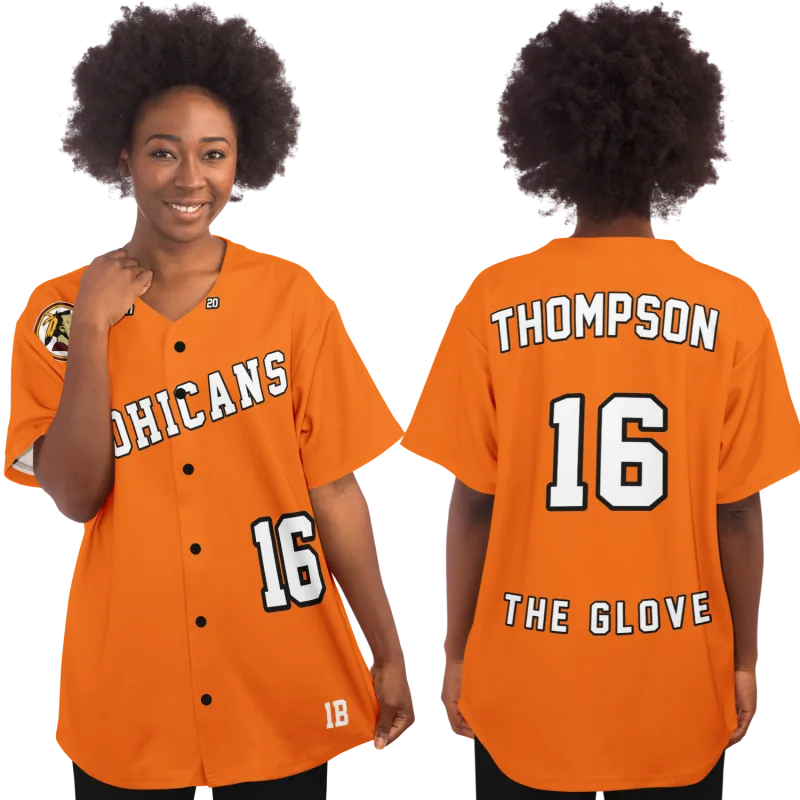
A button-front custom baseball jersey uses a full or half placket with functional or decorative buttons running vertically down the center front, echoing the traditional baseball uniform silhouette. Standard sports jerseys — like basketball or soccer jerseys — use a pullover design with no front opening. For former baseball players, the button-front construction is often the defining feature of the uniform they remember. When ordering, specify whether you want a full placket (buttons to the bottom hem) or a half placket (buttons stopping at mid-chest), as this affects both the look and the way the jersey drapes when worn.
Can I re-create my high school softball jersey accurately if I don't have photos of the original?
You can get close, but photos help significantly. Most former players remember the primary and accent colors, the number, and whether the jersey was a pullover or button-style — those details are enough to produce a jersey that reads as authentic. Where players sometimes misremember: the precise font style of the number, the specific shade of a secondary color (royal blue versus navy, for example), and whether the sleeve design was a standard cut or a raglan two-tone. If you can find a team photo from your playing years — even a low-resolution one from a school yearbook — bring that into the order process. Most custom manufacturers can match from a reference image.
Do softball jerseys and baseball jerseys use the same sizing?
No, and this distinction matters for getting the fit right. Traditional baseball jerseys are cut with a straight, boxy torso designed to be tucked into baseball pants. Women's softball jerseys are cut with a different hip-to-shoulder proportion and are intended to be worn untucked, which means the hem and torso measurements differ significantly. A women's softball player ordering a standard baseball template will typically find the fit through the waist and hip doesn't match her memory of how her uniform felt. When ordering a custom softball jersey with number, specify whether you want a women's cut or a unisex baseball cut — and if the original was a women's cut, stay with that template for an accurate re-creation.
Is there a meaningful difference between sublimated pinstripes and woven pinstripes on a custom jersey?
Yes, though it's primarily tactile rather than visual. Sublimated pinstripes are printed directly into the fabric using a heat-transfer dye process, producing a visually accurate stripe that sits flush with the fabric surface. Woven pinstripes are created during the fabric manufacturing process and have a slight raised texture. Modern custom jersey manufacturers almost exclusively use sublimation, which produces sharp, consistent stripe colors across the full garment. The visual result is accurate; the hand-feel is different from old woven-stripe jerseys. If you're ordering for display or occasional wear, sublimated pinstripes are entirely appropriate. If the tactile experience of the fabric is important to your custom jersey, ask your manufacturer specifically about fabric construction options.
See also: personalized sports gifts vs. generic alternatives | custom softball jerseys | athletic identity that stayed with you long after the last game | getting the right fit for your jersey