

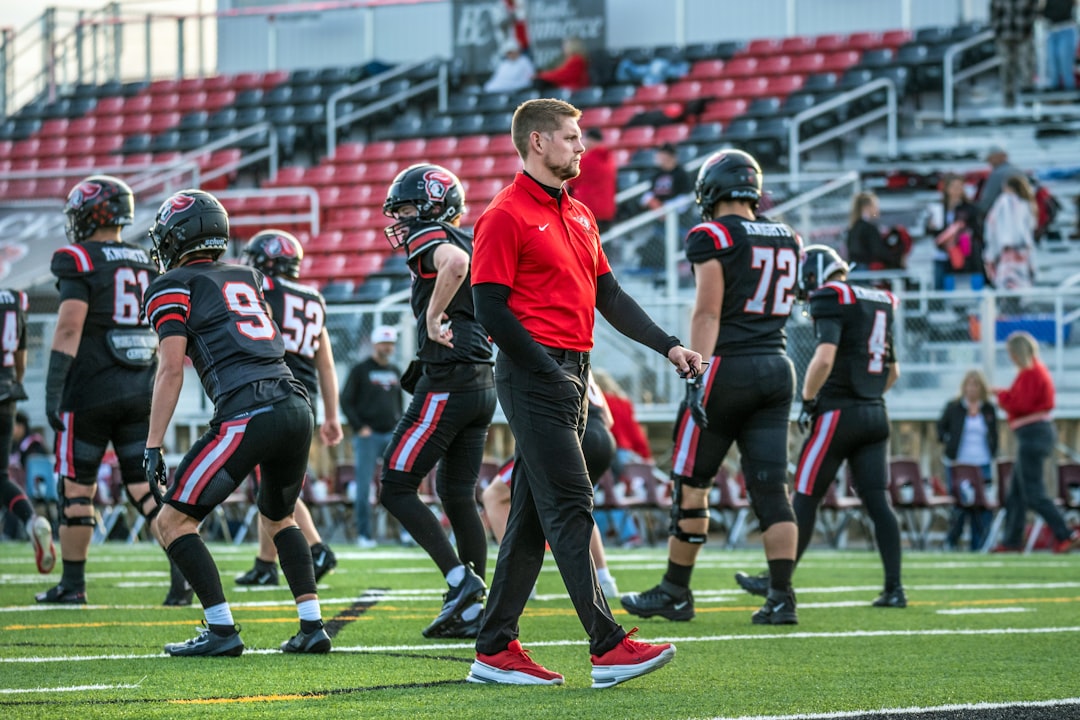




You said yes before you thought it through. A parent asked if anyone had experience with the sport. Your hand went up. And just like that, you were a coach.
If you're a former athlete coaching kids team for the first time — or even the third season in — there's a specific collision that happens between what you know about the sport and what these kids actually need from you. It's not something the volunteer coach orientation covers. It's not in the email the league sends with the practice schedule. It's the gap between the athlete you were and the coach these children need you to become.
This article is about that gap. Not the logistics of running a practice. The psychological and emotional territory that nobody maps out for the former competitive player who just picked up a clipboard.
Your Instincts Are Real — They're Just Calibrated Wrong
Here's the thing about playing a sport at a competitive level: you were shaped by feedback that worked on you. Your coach raised their voice and you responded by working harder. You were pulled from a game and you came back determined. Criticism in front of teammates lit something in you rather than extinguishing it.
You absorbed thousands of hours of that environment. It became muscle memory — not just physical muscle memory, but psychological and interpersonal muscle memory. You know what urgency sounds like. You know what precision demands. You know that in competition, half-effort has consequences.
And then you walk onto a field with nine-year-olds.
The ex-athlete youth coach challenge that nobody names out loud is this: your instincts are not wrong about the sport. They are wrong about this specific population at this specific moment of their development. A correction that would have sharpened you will flatten a child who is there because their parent thought it would be fun and who genuinely cannot locate second base yet.


In our experience talking to former players who've made this transition, the first season almost always involves at least one moment where a coach looked at the reaction on a kid's face after a sharp correction and felt something drop in their stomach. Not because the correction was cruel — but because the kid didn't have the foundation to receive it the way you would have received it at 17.
Your competitive instincts are a gift in the right context. That context is not a recreational U10 league on a Tuesday evening.
The Projection Problem: Whose Story Are You Coaching?
This is the one that takes the longest to see, and it's the most important thing in this entire article.
You had an athletic story. Maybe it ended well. Maybe it ended with an injury, a roster cut, a scholarship that didn't come through, a season that finished one game short. Whatever the ending, it left something unresolved — even if you've been out of the sport for twenty years.
When you're a parent coach who played the sport, you are uniquely positioned to relive that story through the children in front of you. Sometimes this looks obvious: the former player who pushes their own child hardest in practice. More often it looks invisible: the coach who prioritizes competitive success over development because losing still activates something that has nothing to do with this team.
Keisha M., 38, a former high school midfielder who now coaches her daughter's recreational soccer team in suburban Atlanta, described it this way: "I realized in the second season that I was coaching the version of myself that never got to start varsity. I was trying to produce results that would have meant something to 16-year-old me. These were eight-year-olds who wanted juice boxes at halftime."
That's not a failure. That's what happens when competitive athletic identity meets a completely new role. The former player coaching expectations problem isn't that former players care too much — it's that their caring is calibrated to a story that predates these children's existence.
The question worth sitting with before every practice: Whose story am I serving right now?
This dynamic — former athletes projecting their own unfinished business onto the next generation — doesn't just show up on the sideline. It also shapes the specific way former athletes talk to their kids about their playing days, often in ways the parent doesn't fully realize until the child is old enough to reflect it back.
What "Coaching Like Your Coach" Actually Means
Most former athletes don't consciously model their coaching on a specific coach from their past. But the patterns show up anyway, because those patterns are what shaped you during some of the most formative years of your life.
The way your coach ran warmups. The way corrections were delivered. The tone used when the team was losing. The priority placed on winning versus skill development versus inclusion. The relationship between effort and praise.
You inherited all of it. And you'll reproduce a significant portion of it without realizing you're doing so — unless you actively examine it. The relationship with a high school coach leaves marks that don't fade on their own, and the way that dynamic still affects former athletes decades later is one of the most underexamined pieces of the coaching puzzle.
This is not an invitation to resent your former coaches. Most of them were doing their best with the tools and culture they had. But the environment that shaped you into a competitive athlete may have included things that are not appropriate for the developmental stage you're now coaching.
A few of the most common inherited patterns that former players surface in youth coaching without intending to:
- The silence-as-pressure move. Saying nothing after a mistake and letting the weight of the silence do the work. Powerful motivator for competitive teens. Confusing and anxiety-inducing for children who don't yet read social cues that way.
- The competition-based hierarchy. The best players get the most instruction and the most playing time. This was probably your reality. In a developmental rec league, it's the fastest way to lose the bottom half of your roster to other activities.
- The "figure it out" correction. Pointing out the mistake without explaining the fix, because the struggle to find the solution was part of your education. Some kids need that. Most kids at the recreational level need the mechanism explained directly, then demonstrated, then practiced.
- Emotional flatness under pressure. A lot of high-level athletic environments reward emotional control to the point where expressing confusion or frustration is framed as weakness. Many former players unknowingly pass this norm to kids who haven't developed the vocabulary to name what they're experiencing.
None of these patterns mean you're a bad coach. They mean you're a human being who learned in a specific environment and is now operating in a completely different one.
There is another dimension to this that former athletes often miss entirely: the techniques themselves have changed. Not the spirit of the game — the mechanics. Baseball swing mechanics have been overhauled by biomechanics research in the last fifteen years. Football tackling form has been entirely rethought around safety since most former players learned to lead with the helmet. Soccer formation tactics, basketball offensive spacing principles, volleyball approach footwork — in nearly every sport, the technical orthodoxy of your playing days has been updated, refined, or in some cases outright replaced by the sport's own governing bodies.
This means coaching "how we did it" is not just a psychological disconnect from what children need — it can mean actively passing along methods that the sport now discourages or prohibits. The head-first slide you were taught in baseball, the tackling technique your football coach drilled into you, the shooting form that biomechanics has since revised — none of this is your fault for not knowing. But it is your responsibility to verify before you teach it. A youth coach who says "I learned it differently, so let me check what the current standard is" does not undermine their credibility with kids. That sentence models the thing you most want young athletes to learn: that getting better means staying open to correction.
The Identity Shift Nobody Prepares You For
There's a particular emotional experience that happens when you walk back onto a field or a court or a diamond in a coaching role for the first time. It's hard to describe until you've felt it, but most former athletes recognize it immediately when it's named.
You're in the environment that once defined you. The sounds, the smells, the spatial orientation of the game. Your body still knows things. Your legs still want to move in certain ways. And you're standing on the sideline.
The transition from being a player to coaching your child's sport as a former player involves a quiet grief that almost nobody acknowledges. Not grief for the sport itself — grief for the version of yourself who existed inside it. The athlete identity doesn't dissolve when the playing career ends. For many people, it goes underground and waits. Being back in the environment brings it back to the surface in unexpected ways.
This can show up as:
- Overcorrecting. Giving constant technical instruction because doing something feels better than watching. You played. You know what this looks like when it's done right. Watching it done imprecisely is almost physically uncomfortable.
- Emotional over-investment in outcomes. A close loss that shouldn't affect you at 40 the way it affected you at 17 somehow still does. The scoreboard still matters more than you expected it to.
- Difficulty celebrating imperfect effort. A child completes a skill at 60% of the correct form and the team cheers. Something in you notes the 40%. You have to consciously work to cheer with them.
Recognizing this shift is not weakness. It's the specific work of coaching your child's sport as a former player. The athletes who do this well are not the ones who suppress their competitive nature — they're the ones who understand where it's coming from and choose, deliberately, where to direct it.
What Former Players Actually Get Right (And How to Use It)
This article has covered a lot of friction. Here's the other side.
Former athletes bring something to youth coaching that no amount of certification or parenting instinct replicates: they know what it feels like to be in the arena. They understand the internal experience of competition from the inside. They know the specific kind of focus that performance requires, the specific kind of disappointment that a missed opportunity produces, and the specific kind of joy that a well-executed skill generates.
That's not nothing. That's a significant gift when it's directed correctly.
What former players do well when they're self-aware:
- Demonstrating with their body. You don't just explain the footwork. You can show the footwork. Kids learn movement by watching movement, and a coach who can physically demonstrate a skill at close to correct form is rare and valuable.
- Identifying the actual problem. You've seen enough of this game to know when a kid is struggling with footwork versus timing versus decision-making. You can get specific in a way that a coach who never played at a meaningful level cannot.
- Preparing players emotionally for competition. You know what it feels like to be nervous before a game. You know that nerves are not a problem to be solved but energy to be redirected. That's hard-won knowledge that transfers.
The goal is not to stop being a former athlete. The goal is to be a former athlete who is actively coaching these specific children, not the athlete you were.
A Few Things Worth Trying at Your Next Practice
You don't need a coaching philosophy overhaul before Thursday's practice. Here are four concrete adjustments that former competitive players consistently report as making the biggest difference:
-
Set a correction ratio before you start. For every one correction, plan to deliver two specific observations of something done right. Not generic praise ("good job") — specific observation ("that was the right foot, the right weight transfer, what we talked about"). This forces you to actually watch for what's working, which retrains your attention.
-
Ask before you correct. "What do you think happened there?" is a question that does two things: it treats the kid as a thinking participant rather than a recipient of instruction, and it tells you whether they already know the answer. You might be about to correct someone who already understands the mistake and just hasn't fixed it yet — which is a very different coaching situation than someone who doesn't see it.
-
Name the emotion, not just the technique. When a child is visibly frustrated, saying "here's the fix" misses the actual barrier. "That's a frustrating one — it takes a while before your body figures it out" acknowledges what's happening before offering the solution. Former athletes sometimes skip this step because their own training environment didn't always include it. It matters here.
-
Check whose standards you're applying. Before a game or a hard practice, ask yourself: are the standards I'm about to hold these kids to appropriate for their age, their experience level, and the purpose of this league? You already know the answer. The act of asking it is what matters.
-
Keep explanations under 90 seconds, then get them moving. Former players tend to over-explain because they have deep knowledge — they see five layers of a single skill and want to communicate all of them. But kids who have been in a classroom all day do not need another lecture. Standing around listening is the fastest way to lose a young athlete's engagement. State the one thing you want them to work on, demonstrate it, and let them try it. Correct during the activity, not before it. If you find yourself talking for more than 90 seconds at a stretch, you have probably already lost half the team. The reps themselves teach more than the explanation ever will.
Your jersey is still out there waiting.
Design yours in minutes and see your name and number the way you remember it.
Frequently Asked Questions
Is it harder to coach your own child when you're a former player?
Almost universally, yes — and the difficulty is specific. Former players often hold their own child to a higher standard than other kids on the team, sometimes visibly, sometimes just internally. The child senses both the higher expectation and the particular weight of disappointing a parent who knows what the skill should look like. Many coaches who played at a competitive level find that explicitly lowering their expectations for their own child — not lowering standards for the team, but adjusting what they require from their specific kid during team activities — makes the parent-coach relationship more sustainable for both of them.
What's the biggest mistake former athletes make in their first season of youth coaching?
Confusing technical knowledge with coaching skill. Knowing the sport deeply is necessary but not sufficient. The specific work of youth coaching is communicating that knowledge in a form that a developing child can receive, retain, and use. Former players sometimes underestimate how much translation that requires — from what they know to what a ten-year-old can absorb in a 45-minute practice. The coaches who adapt fastest are the ones who treat the communication skill as something to be learned, not assumed.
How do you handle parents who expect more from the team because they know you played?
Directly and early. In a pre-season parent meeting, naming your philosophy for the season — what success looks like at this age group, what you're prioritizing, and what you're deliberately not prioritizing — sets the expectation before it becomes a conflict. Former athletes who coached at a high level can create an implicit expectation among parents that the team will perform at a level consistent with that background. Getting specific about developmental age-appropriateness before the season starts converts that expectation into alignment rather than disappointment.
When should a former athlete coach consider getting formal youth coaching certification?
When the technical knowledge is solid but the developmental knowledge isn't. Most sport-specific certifications at the youth level focus less on X's and O's and more on child development, age-appropriate training loads, and communication frameworks. For a former competitive player, this is often the most valuable gap to close — not the sport knowledge but the developmental context that makes that sport knowledge applicable to children rather than to the competitive adult athlete you once were. The Positive Coaching Alliance offers workshops specifically designed for this transition.
See also: athletic identity after high school | what high school sports actually taught you | the grief that comes with the end of your playing career | the difference between watching sports and having actually played | adult recreational leagues as another outlet for that competitive drive