

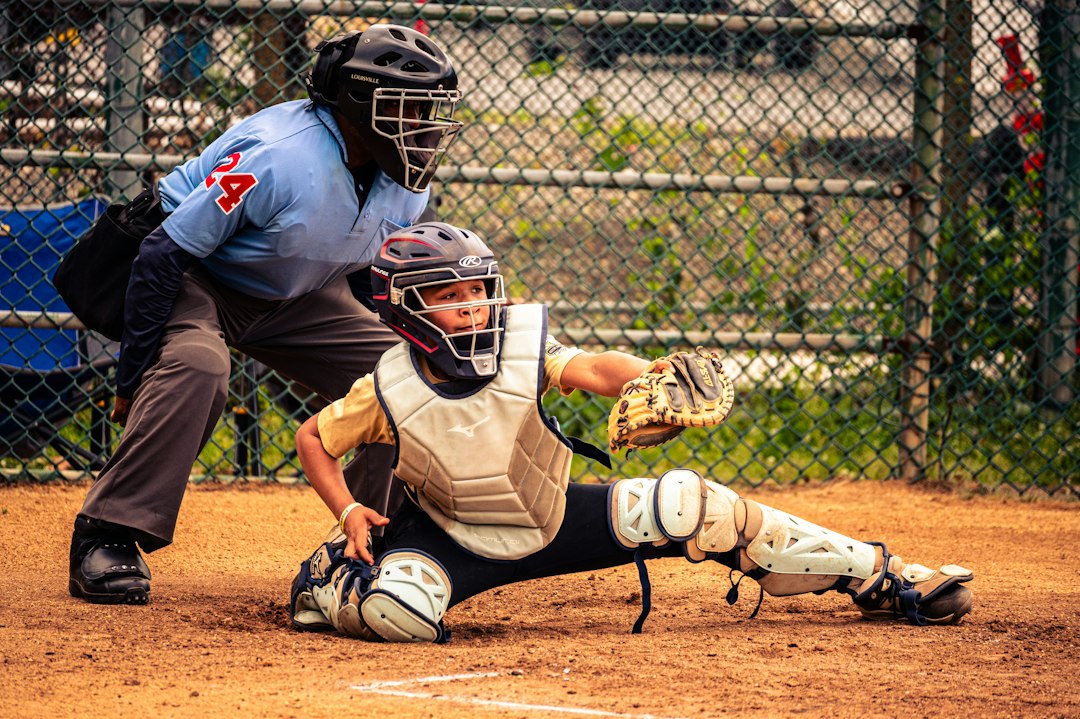




You remember exactly how it felt to put it on.
Not the jersey first — the baseball pants went on last. After the sliding shorts, after the cup was seated right, after the stirrups were pulled up and positioned just so. There was an order to it, a sequence that never changed, and by the time you looked down at the finished picture — pants breaking cleanly above the cleats, or sitting snug at the knee the way they were supposed to — you weren't just dressed. You were a specific version of yourself that only showed up on a diamond.
That version doesn't disappear. It just waits.
If you've been turning this over lately — whether you're pulling together a rec league uniform, outfitting a youth player you coach, searching for gear that fits an actual adult body rather than a sixteen-year-old's, or just trying to name why a particular cut of baseball pants still looks right in a way you can't quite explain — this is the article you needed to find.
Retail pages will give you fabric weight and inseam options. This one covers what they skip: what your pant length said about your era, why the sliding shorts ritual carried more weight than it appeared to, and how to track down gear today that honors what you actually remember.
Knicker vs. Full-Length Baseball Pants: Your Era Written in One Hemline
Pull up a baseball photograph from 1975. Now pull up one from 1995. You don't need to read the jerseys. The pants tell you roughly when the picture was taken.
The knicker — baseball pants cut to end just below the knee, worn with high stirrups that exposed a clean band of white sanitary sock above the shoe — was the sport's dominant silhouette from its early decades through the 1980s. It's the visual language of Reggie Jackson's October, of Pete Rose diving headfirst into second, of Little League diamonds where the uniform came straight from a tradition nobody had thought to question. The look wasn't a style choice. It was simply what baseball looked like.


The full-length pant arrived as a serious alternative in the 1990s and climbed steadily from there. By the early 2000s it had become the near-universal standard at the professional level. By the time today's college players were growing up watching the game, the knicker was already a deliberate throwback — something worn by players making a conscious aesthetic statement or by coaches who'd come up in a different era and never changed their minds about it.
The practical implication: if you played through the 1970s or 1980s, the knicker wasn't a preference. It was the default. The stirrup and the knicker were a single unit; one implied the other. If you came up in the 1990s and later, full-length grey baseball pants were your baseline, stirrups were optional at best, and the cleats showed or didn't without anyone attaching meaning to it.
Both traditions are legitimate. Both carry weight. And both are still findable — though locating the knicker cut in adult sizing that respects an actual grown body requires knowing where to look and what to ask for.
What the Stirrup Actually Did Before It Became a Statement
The stirrup sock had a practical origin before it became an identity marker. Early baseball pants were frequently made of wool, and players wore stirrups over white sanitary socks partly to prevent dye transfer — the dark stirrup material could bleed color when wet, and the white underlayer kept that away from the skin.
Once synthetic fabrics eliminated that concern, the stirrup had already become something else: a canvas for personal expression within the uniform's constraints. Players wore them high or low based on preference, team culture, and what simply felt correct. How much white sock showed between the top of the shoe and the bottom of the pant was a statement — sometimes subtle, sometimes emphatic.
When full-length pants took over, the stirrup had nowhere to live. It became vestigial, then ceremonial, then largely absent from everything below the vintage-tribute segment of the market. If the stirrup was part of your uniform, you know precisely what left with it. It wasn't a sock. It was a proportion.
Sliding Shorts: The Layer That Did More Work Than It Got Credit For
Before the baseball pants went on, something else went on first.
Sliding shorts — compression-style shorts worn underneath the baseball pants, typically extending to mid-thigh — were a standard part of the serious player's uniform for decades. The name undersells what they actually accomplished, and the way they accomplished it was more considered than most players who wore them ever stopped to think about.
The first job was friction protection. During a hard slide on a dry infield or artificial turf, the inside surface of a baseball pant against bare skin produces a burn that any player who's experienced it once spends the rest of their career working to avoid. Sliding shorts interrupted that equation. The compression fabric moved with the leg rather than against it, and the result was the difference between walking off the field and limping.
The second job was structural. Baseball sliding pants designed for serious play were typically built with a cup pocket — a dedicated interior pocket positioned to hold a protective cup stably throughout a full game. This arrangement was more secure than a traditional jockstrap alone, particularly during the explosive lateral movements that infield play demands. The cup stayed where it was supposed to stay.
The third job was psychological, and this is the one that doesn't show up on a product spec sheet. Putting on the sliding shorts was step one of the sequence. By the time the outer baseball pants went on, you'd already been getting dressed for several minutes. The game had already started in your head before you left the locker room.
Modern compression shorts have absorbed most of what the traditional sliding short design did, but the underlying logic is identical. The layer nobody sees does work that everyone benefits from.
Finding Baseball Sliding Pants That Fit an Adult Body
This is a specific problem, and it catches returning players off guard consistently.
Most sliding shorts stocked at mainstream sporting goods retailers are sized for youth and high school athletes — proportioned for bodies that are still developing, with inseam lengths and waist-to-hip ratios that don't translate to a 38-year-old coaching rec ball or playing in an adult amateur league on Saturday mornings.
A few specific things to look for:
- Prioritize inseam length over waist size. Adult sliding shorts need a minimum 7–9 inch inseam to provide meaningful thigh coverage. Shorts labeled "adult" but cut for a leaner teenage frame will ride up during play.
- Check cup pocket placement and sizing. Not all cup pockets are positioned identically. If you're pairing sliding shorts with a traditional hard cup rather than a flex or soft cup, verify that the pocket holds the cup stable and prevents rotation during lateral movement.
- Rawlings Sports Goods has supplied protective baseball equipment to the amateur and professional levels for well over a century, and their adult equipment lines generally reflect the actual dimensions of grown players rather than extrapolated youth sizing.
Grey Baseball Pants, Grass Stains, and the Evidence of a Game Well Played
There is a specific shade of grey that belongs to baseball the way rosin bags belong to pitching mounds and the smell of a new glove belongs to spring.
Grey baseball pants — the traditional road-uniform grey, neither too pale nor too deep, in that slightly textured polyester-cotton blend that generations of players wore — showed everything. Every grass stain from a dive in the gap. Every clay smear from a slide that caught the bag at an awkward angle. Every infield drag where your knee hit the dirt before the rest of you caught up.
You could tell how hard a player had worked by looking at their pants at the end of a game. That is not a trivial detail. The stain was the record. It was the game's events written in grass and clay on the fabric that had been present for all of them. White pants that were still white at the fifth inning told one story. Grey pants brown at both knees by the third told another entirely.
The Home-White, Road-Grey Tradition and Why It Still Reads as Correct
The convention of white pants for home games and grey for road games has roots in practical baseball history — road teams reportedly wore grey because they couldn't reliably launder uniforms between games on extended travel schedules, and grey concealed accumulated dirt more forgivingly than white. Whether that origin is fully documented or partly legendary, the visual convention it established became so embedded in the sport's grammar that it survived every generation of uniform redesign.
The Baseball Hall of Fame's uniform history collection documents how thoroughly the home-white/road-grey division shaped the visual identity of the game across more than a century of professional play. White and grey baseball pants don't just signal team affiliation — they signal context. Home or away. Your field or theirs. That layer of meaning doesn't require explanation to anyone who grew up watching the game.
For adult recreational players assembling a custom uniform today, grey remains the standard for road-style aesthetics. It still looks right in a way that any other color has to earn.
Putting the Uniform Back Together as an Adult
Marcus T., 44, played high school ball in suburban Ohio through the late 1990s. When his son's travel team needed parent volunteers for a fundraiser game last spring, Marcus found himself trying to assemble a uniform that actually fit — not billowing at the waist, not cutting off circulation at the thigh, but actually correct the way he remembered correct feeling. "Everything in the sporting goods store was sized for a kid," he said. "I went three sizes up just to get the waist to work, and then the inseam was too long by four inches. It took more research than I expected to find anything made for a grown person."
That gap between youth baseball gear and adult recreational gear is real, and it's consistent enough that it's worth walking through the process deliberately:
- Measure your actual current inseam before ordering anything. Not the inseam you remember from your playing days. Your inseam right now, standing in the shoes you'll wear with the uniform.
- Decide on pant length style before anything else. Knicker or full-length isn't just aesthetic — if you want to wear stirrups correctly, the knicker cut is the foundation the whole look requires. If you're going full-length, you're choosing a different tradition, and that's a legitimate choice.
- Distinguish between open-bottom and elastic-bottom construction. Open-bottom pants give you control over how the fabric breaks above the cleat. Elastic-bottom pants are more forgiving on sizing but offer less adjustability in fit and silhouette.
- Account for the sliding short layer in your sizing. If you're wearing sliding shorts underneath — and for recreational adult play, it's strongly worth doing — the outer pants need to accommodate that compression layer without feeling constrictive through the thigh and hip.
Mitchell & Ness and the Vintage Uniform Market
No conversation about reclaiming the look of a specific baseball era is complete without addressing what the Mitchell & Ness company has built for the collector and tribute uniform market.
The Mitchell & Ness brand has become, over decades of focused work, the reference point for authentically inspired vintage team apparel. Their position in the nostalgia space — the Mitchell & Ness nostalgia category covering throwback jerseys and uniform pieces designed as tributes to specific historical eras — is what makes it possible to find, say, a 1970s-style jersey built in the spirit of how it appeared on the field, rather than a modern approximation that gets the colors right but misses the construction details that give it weight.
For baseball specifically, Mitchell & Ness tribute pieces tend to honor things that most retail products ignore: fabric weight, stripe placement, the way lettering was applied, the relationship between jersey cut and pant rise. These aren't details that show up in product photography. They're the details that determine whether a uniform feels like the era it's meant to honor.
It's worth noting that Mitchell & Ness does significant work across sports — New York Knicks apparel tributes are among their most recognized basketball pieces, which speaks to the breadth of the nostalgia-era market they've developed. But for baseball, their core contribution is the careful evocation of a specific historical moment in a team's visual identity, made available to people who want to wear something in the spirit of that era rather than a generic approximation of it.
If you're assembling a uniform meant to represent a specific decade rather than a general baseball aesthetic, knowing what the Mitchell & Ness brand does and how to navigate their catalog is genuinely useful knowledge.
The Hat Closes the Uniform
A baseball uniform assembled without the right hat is a composition that hasn't reached its last note.
The cap was always inseparable from how the full look came together — broken in correctly, brim curved or flat according to era and personal preference, sitting at the angle that felt right rather than the angle the packaging suggested. Getting the hat right mattered in the same way the pants mattered. Both were visible signals of which tradition you were playing in.
For anyone assembling a period-accurate look, the licensed cap market is extensive and worth navigating carefully. The Los Angeles Dodgers hat, as one example, is among the most immediately legible silhouettes in American sports — the Dodgers script on a blue crown carries a visual authority that spans generations of the game. Finding dodgers baseball hats in a vintage-accurate cut means looking specifically for structured wool-blend construction rather than the unstructured flex-fit versions that dominate current retail. What gets marketed as hats for LA Dodgers fans spans an enormous range of authenticity and construction quality, and for anyone who wants the hat to match the era of the uniform rather than the current retail season, that distinction matters.
The same logic applies across any team: the hat's construction, brim shape, and crown height all changed across decades, and the right choice means matching those construction details to the pants and jersey — not simply landing on the correct logo.
Your jersey is still out there waiting.
Design yours in minutes and see your name and number exactly the way you remember it.
Frequently Asked Questions
What is the difference between knicker baseball pants and full-length baseball pants?
Knicker baseball pants are cut to end just below the knee and are traditionally worn with stirrup socks and sanitary socks underneath, creating the high-sock look that defined the sport's visual identity through the 1980s. Full-length baseball pants extend to the ankle and cover the top of the cleat — the style that became dominant at the professional and collegiate level through the 1990s and 2000s. The choice between them is partly personal, partly era-based. If you played in a specific decade, one of these styles is almost certainly the one you picture when you close your eyes and think about baseball pants.
Do I need sliding shorts under baseball pants for adult recreational play?
For casual recreational play, sliding shorts are optional. For anyone who plans to actually slide — which in adult amateur leagues happens more often than people expect, especially on dry summer infields — they provide real skin protection from friction burns and meaningful structural support for cup placement. The compression layer also stabilizes the hip and upper thigh during lateral movement in ways that matter more once you're playing on a body that's absorbed a few decades of use. If you're taking the game seriously enough to suit up properly, adding sliding shorts under your baseball pants is worth the additional layer.
How do I find grey baseball pants in adult sizing that actually fit?
Treat youth and adult sizing as entirely separate product categories rather than assuming that "adult" labeling means the garment was proportioned for a grown person. Measure your current inseam before ordering — not your remembered inseam from your playing days. Look for open-bottom construction if you want flexibility in how the pants break above the cleat. When sizing sliding shorts to wear underneath, prioritize inseam length: 7–9 inches of thigh coverage is the minimum for the shorts to function correctly during slides. Brands with dedicated adult recreational lines rather than youth-first product development will generally give you more accurate proportions and a better overall fit.
How do I layer stirrups correctly with knicker baseball pants?
The traditional layering runs from skin outward: white sanitary sock pulled to the knee; stirrup sock worn over it with the strap running under the foot and the colored portion visible above the shoe; knicker pant pulled down over both, sitting just below the knee with the stirrup and sanitary band exposed beneath it. How much white sock you show between the top of the stirrup and the bottom of the pant was historically a matter of personal preference and varied significantly by era and player. If you're assembling a look that's meant to honor a specific decade, photographs from that period are the most reliable reference for correct proportions — the difference between a 1965 look and a 1982 look lives in those inches of visible sock.
See also: why high school sports still matter to adults | athletic identity that doesn't disappear after the last game | why your senior season memories feel so permanent | what to do with the gear you can't throw away