

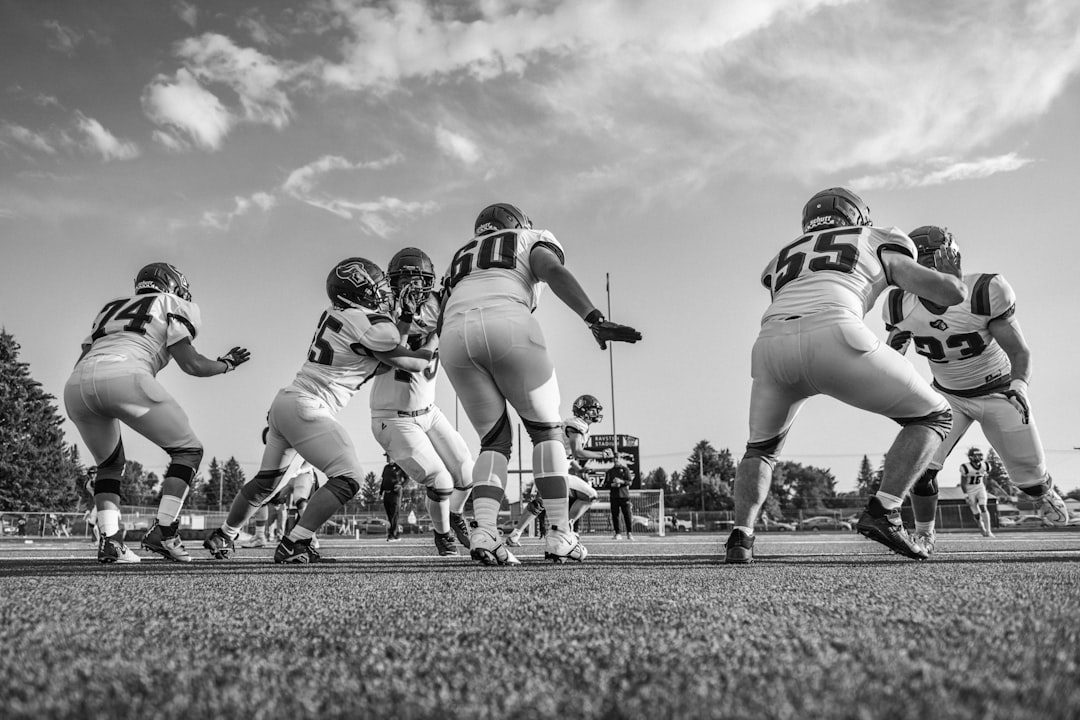



Something hits you without warning — the smell of cut grass, the squeak of sneakers on a gym floor, the particular cold of an October Friday night — and suddenly you're not just remembering.
You're there.
High school teammates memories don't work the way other memories do. They don't sit politely in the past, organized by year. They live in your body. In the way your hands still know how to grip, how to position, how to move without being told. In the breath you take before something important. You didn't store those years the way you stored facts for a test. You stored them the way you store balance — below conscious thought, below language, in the part of you that was being formed before you understood what formation meant.
This isn't a piece about looking backward. It's about something more specific than that: why those memories refuse to stay in the past, what they're actually telling you about who you became, and why the people who stood next to you in those years still occupy something permanent in the way you understand yourself.
If you played, you're already thinking about someone. You've been thinking about them since the first sentence.
What the Mind Keeps — And What That Tells You
Ask former athletes what they remember most about their playing days and watch what happens. There's always a pause. Not because they're searching for the answer. Because there are too many answers competing at once, and none of them are what you might expect.
They don't lead with the scoreboard. Rarely with the stats. Almost never with the trophies — even the ones currently living on a shelf somewhere in a childhood bedroom, earning their slow coat of significance and dust.
What comes out instead: The way Coach said my name when I finally got it right, like she'd been waiting for that moment too. The way the whole bus went silent on the way home after we lost the one we should have won, and how that silence felt different from every other kind of quiet. The look on a teammate's face right before the biggest moment of the season — not fear, not nerves, just locked in and ready.

Memory is not a recording device. It is a significance filter. The brain does not preserve what was objectively important. It preserves what mattered to the person you were when it happened. And in high school — standing on a field or a court or a floor with people who needed you and whom you needed back — things mattered in a way that most of what came before and much of what came after simply hasn't matched.
Research into how team sport participation shapes social development, including studies published in the Journal of Athletic Training, has documented what athletes already carry in their bones: the bonds formed inside a team environment are categorically different from ordinary peer relationships. Shared physical effort. Shared vulnerability. Stakes that are real, if contained. These conditions compress the timeline of trust — producing in a single season the kind of depth that casual relationships rarely achieve across years.
You didn't just go to school with those people. You went through something with them. That's not the same thing. Not even close.
The You That Only They Witnessed
There is a version of you that your high school teammates knew — and that almost no one else in your current life has ever seen.
Not the version that showed up to class performing indifference. Not the version carefully managed in professional settings or measured out in adult relationships. The version that appeared at six in the morning in February when every reasonable excuse existed and you showed up anyway. The version that fell apart in the locker room after a loss and then came back the next day. The version that had not yet learned how to protect itself — and so didn't.
That unarmored version is often the most honest version of a person. The one that exists before the coping strategies fully develop, before the identity hardens into something more deliberate. Your teammates didn't see you perform yourself. They saw you become yourself, in real time, under conditions that didn't allow for much pretending.
This is why those relationships carry the specific weight they do. Your teammates aren't witnesses to your history. They are witnesses to your formation.
Every former athlete remembers at least one teammate who saw them at the lowest point of a season — exhausted, frustrated, coming apart at the seams — and responded not with words but with presence. Who just showed up the next day, ran the next rep, made it clear without saying anything that they weren't going anywhere.
That kind of witness doesn't fade. It becomes part of how you understand loyalty. Part of the standard you hold other relationships to, sometimes without realizing that's what you're doing.
The Spaces Between the Games
The official memories — the games, the championships, the moments that made the local paper — are real. But the ones that surface with the most force, in our experience, are almost always the in-between ones. The ones that weren't on any schedule.
The locker room. Every sport has its version of this space. Before the game, when the nerves are either making everyone too loud or too quiet. After, when the result is still settling into the body. The locker room is where teams become actual teams — where the distance between who people appeared to be and who they actually were collapsed. Where you found out the star player had the most self-doubt in the room. Where the person nobody noticed turned out to be the one everyone leaned on. The locker room is where the real team existed, separate from the version that performed for the crowd.
The bus. There may be no more universally shared memory across American high school athletics. The bus after a win — someone's speaker too loud, everyone talking over each other, the kind of noise that sounds exactly like relief. The bus after a loss — that specific silence with its own texture, its own weight. Not defeated exactly. Just present. Just honest. The bus after a loss is where you learned, without anyone teaching you, how your teammates handled pain. You measured your own response against theirs. Most former athletes still do, in situations that have nothing to do with sports.
The pregame. Thirty seconds before everything. Hands in. Whatever got said — or whoever said it — that made the noise in your head go quiet. You may not remember the exact words. But you remember the voice. You remember the feeling of being completely locked in with people who were all the way in it with you. That feeling has a name, and you've spent a long time since trying to find it in other rooms.
Maria C., 34 — Former Varsity Cheer Captain
Maria C., 34, grew up in a small Ohio town where the varsity cheer squad competed at the regional level every year. She went into marketing, built a career she's proud of, and hadn't thought specifically about her squad in years — until her daughter came home from middle school cheerleading practice and asked whether being on a team "actually feels like being a family."
Maria sat with that question for a while before she answered. Then she texted four former teammates — women she hadn't spoken to in nearly a decade. Within twenty minutes the thread was running. They didn't talk about routines or competition scores. They talked about the coach who stayed late every Thursday for anyone who needed to just sit and talk. They talked about a senior night when it rained and none of them cared. They talked about who they had been to each other.
"I'd forgotten," Maria said, "how much of who I am now came from being around them then. Not from the cheering. From them."
Why the Distance Makes It Sharper
Something that catches most former athletes off guard: the memories don't soften with time. They sharpen.
In the years immediately after you stop playing, the experience feels recent enough that you don't examine it closely. It's just recent history. But as the years accumulate — careers, relationships, loss, reinvention, all the complexity that adult life becomes — the gap between who you are now and who you were on that field grows. And the memories, paradoxically, grow more vivid as the distance increases.
Part of this is how memory actually works. The brain consolidates emotionally significant experiences over time, reinforcing the emotional core while letting peripheral detail fade. The result is that what remains after years isn't a faded version of the original experience — it's a distilled one. The essence, without the noise.
But part of it is something more personal and harder to articulate. Adult life asks most people to manage their commitments carefully. To be realistic. To negotiate, to compromise, to hold something back in case it doesn't work out. These are not failures of character — they are learned adaptations. But they exist in contrast to what it felt like to be sixteen in the fourth quarter of a game that mattered, with nothing held back, surrounded by people who were also holding nothing back.
That quality of total commitment — the absence of the hedge — is rare after a certain age. When you find it again, in a marriage, in a friendship, in a cause worth the risk, you recognize it. You recognize it because you felt it first in a uniform, next to people who are somewhere right now carrying a version of you in their memory.
They remember you then. The question is whether you let yourself remember them — and what those memories are still trying to tell you.
When You Actually Reach Out
Most former athletes don't reach out.
Not because they don't want to. Because something stops them — a hesitation that lives in the gap between thinking about a teammate and actually picking up the phone. What if they don't remember you the same way? What if the person who answered your biggest moments no longer exists in the form you're carrying? What if the silence on the other end tells you that what felt permanent was only season-length?
Almost everyone who pushes through that hesitation reports the same thing: the fear was wrong.
The voice on the other end — even after ten years, even after fifteen — sounds just the way you remember it. Maybe a little older. Maybe surprised to hear from you in a way that isn't guarded, just genuine. And within the first ninety seconds, something specific happens that catches people off guard: the dynamic returns. Not as a memory of how it used to feel. As a present-tense reality. The same rhythm. The same shorthand. The same way of talking that doesn't require you to explain yourself because the person on the other end already knows who you are — not the version you became, but the version you were when you were still becoming.
That feeling has a particular quality that former athletes struggle to name. It is not nostalgia. Nostalgia looks backward. This is something more like recognition — the kind that happens when you see someone's face in a crowd and know them before your brain has processed why. Your teammates knew you before the story of your life had a second act. They remember a version of you that predates the compromises. And when you hear their voice, that version surfaces — not as a ghost, as something still living. Still capable of answering.
The reach-out is not a trip to the past. It is proof that the past never fully ended.
What It Means to Carry It Forward
There is a version of holding onto the past that keeps you stuck in it — the kind where everything that came after is measured against what was, and found smaller. That's not what this is.
The former athletes who carry their playing years most fully are the ones who let those years travel forward with them. Who recognize that the lessons weren't sports lessons at all. That showing up when you don't feel like it isn't a football principle — it's a life principle that you first understood on a practice field. That finding your role and owning it completely, even when it isn't the role you wanted, is a skill that transfers. That a group of people who know their jobs and do them without ego will consistently outperform a more talented group that hasn't figured out how to be in it together.
You have been running plays drawn up in huddles that no longer exist. You know this because you've been in rooms where something suddenly clicks and the whole group moves as one, and the feeling is unmistakable — you've felt this before, somewhere, in a different building, wearing a different number.
If you played, you know: the team is still in you. The teammates are still in you. Not as nostalgia. As structure.
Honoring what those years were doesn't mean living there. It means acknowledging that the person you are — the one who shows up when it's hard, who knows how to be part of something larger than themselves, who recognizes real loyalty when they see it — was built partly by the people who wore the same colors, ran the same sprints, and sat in that same silence on the ride home.
That's not a small thing. That's the foundation of something that still holds.
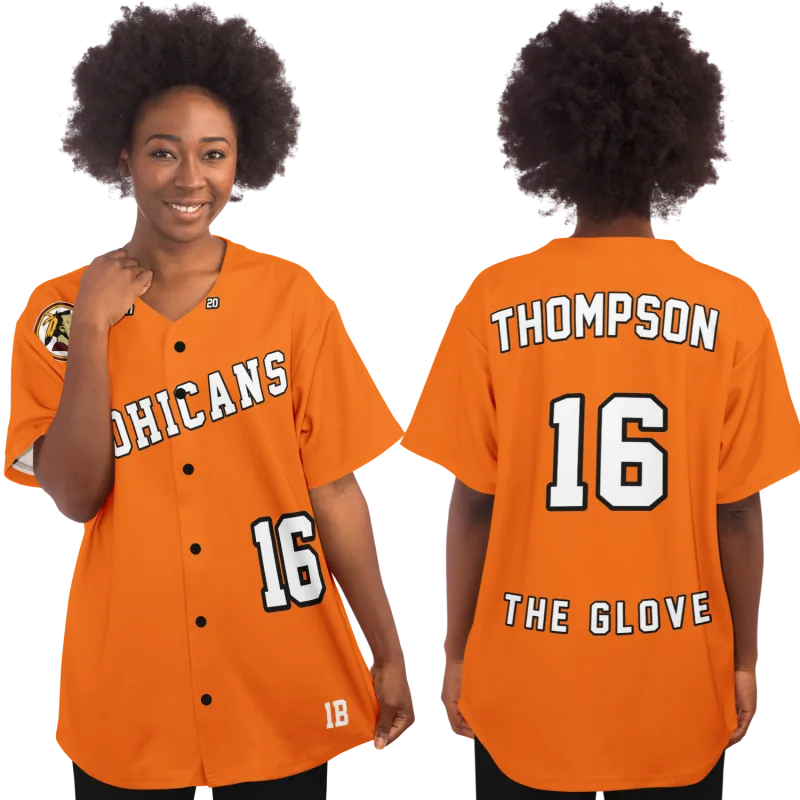
Your jersey is still out there waiting.
Design yours in minutes and see your name and number exactly the way you remember it.
Frequently Asked Questions
Why do high school sports memories feel more vivid than other memories from that time?
Athletic experiences in high school are encoded with unusually concentrated emotional weight — physical intensity, social bonds, shared stakes, and a clear narrative of outcome all converge in the same moments. The brain treats experiences with high emotional significance as high-priority for long-term storage, reinforcing them during sleep and over time. This is why a specific moment from a game fifteen years ago can surface with more sensory detail than an entire week of ordinary days from the same period. The significance filter was wide open.
Is it normal to feel deeply connected to teammates you haven't talked to in years?
Yes, and the connection isn't a product of staying in touch — it's a product of how the relationship was originally formed. Team environments create trust through shared vulnerability and shared stakes rather than accumulated casual time. The result is a bond that doesn't require regular maintenance to remain real. Most former athletes report that when they reconnect with old teammates, even after years of silence, the conversation locates itself immediately. The shared experience created a common language, and that language doesn't expire.
What's the most effective way to reconnect with someone from your old team?
Specificity is the key. Not a generic check-in, but a particular reference — a moment, a game, a thing that happened that only the two of you would remember in exactly that way. Specific memory signals genuine care, which is why those messages land differently than vague ones. A physical object connected to that time — a photograph, a piece of gear with your number or team name — is often what surfaces the impulse to reach out in the first place. Start with the specific. The conversation follows from there.
Why do some former athletes find it hard to talk about their playing days?
For athletes whose sense of identity was closely tied to their sport, the transition out of competition can involve a grief that isn't always easy to name. The playing years weren't just enjoyable — they provided structure, community, purpose, and the kind of clear, immediate feedback that adult life rarely offers back in the same form. When memories of that time feel complicated or bittersweet rather than simply warm, it's often because what's being mourned is not just the sport but a specific version of oneself — the one who existed inside that structure. Acknowledging that loss directly is usually what allows those years to be carried forward rather than avoided.
See also: why high school sports still matter to adults | why your senior season memories are so vivid | still dream about those games | find and reconnect with former high school teammates