

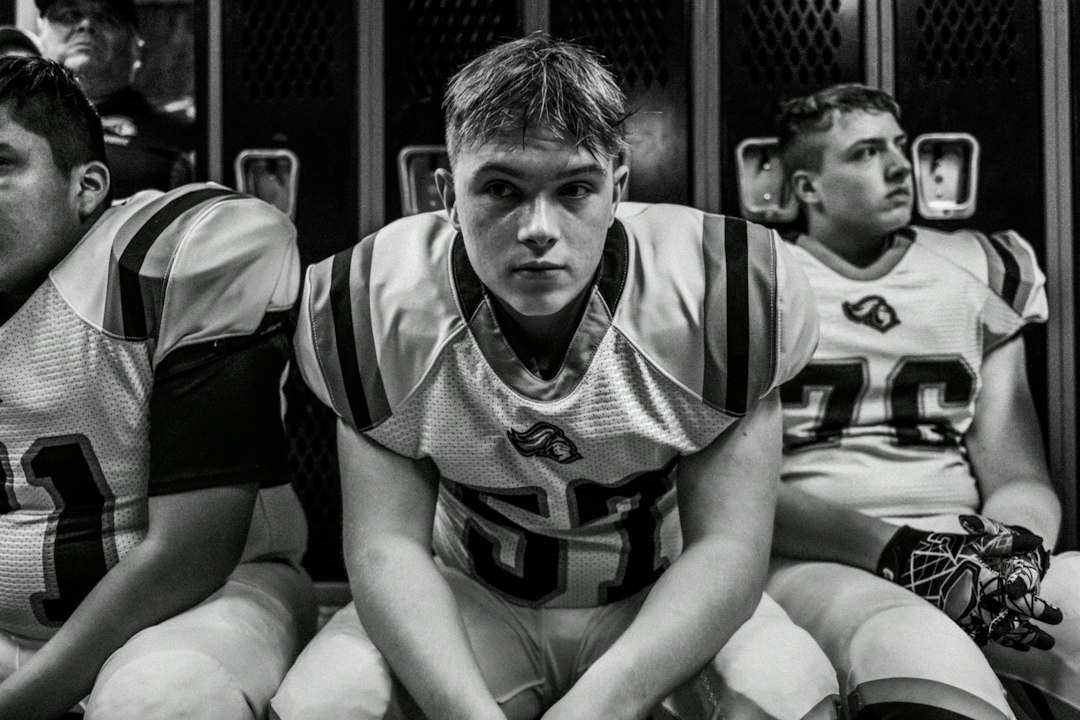




There's a moment every former athlete knows. You're sitting at the design screen, the jersey template is loaded, the number is locked in, and then you hit the name field.
You stop.
Because it's not obvious. It's never been obvious. Your legal last name is on your birth certificate, your diploma, and your team roster. But the name your teammates actually used — the one that went up in the gym during playoff runs, the one your coach barked from the sideline — that one lives somewhere else. Somewhere the paperwork doesn't reach.
This is the only decision in building a custom jersey that isn't really about the jersey. It's about who you were when you played, who you want to remember being, and who's going to see this thing hanging on a wall or worn at a reunion.
The good news: there's no wrong answer. But there is a right answer for your specific situation. And most guides to building a custom jersey skip this entirely.
This one doesn't.
The Name Field Is a Mirror
When you create a jersey — whether it's for yourself, a team gift, a reunion, or a display piece — the back nameplate carries more identity weight than any other element. The number is a fact. The colors are team history. But the name? That's a choice. And choices reveal something.
In our experience working through the design process with athletes across dozens of sports and age groups, the name field stops more people than any technical decision. Font size, material, stitching type — those get figured out. The name gets debated.
Here's why: a custom jersey isn't a product. It's a statement about a moment in time. The name you choose tells the story of which version of you is being honored.
Consider what you're actually deciding between:
- Your legal name — the name on the original team roster, the name your parents used when they signed the permission slip, the name that shows up in the newspaper box score
- Your nickname — the name your teammates gave you, the one that stuck through three seasons, the one that required no explanation in the locker room
Both are legitimate. Both are yours. The question is which one is true to the jersey you're building and the moment it's meant to capture.


Four Situations That Actually Determine the Answer
The decision isn't abstract. It's grounded in context. Here are the four real-world situations that come up most often, and what former athletes actually choose in each one.
1. The Reunion Jersey
You're going back. The whole team is getting together — five, ten, twenty years out — and someone had the idea to make jerseys. Maybe it's for a tournament, maybe it's just for the photo. Either way, this jersey needs to be immediately recognizable to the people who were there.
This is the clearest case for the nickname.
When Darnell calls across a parking lot and you turn around, he's not calling your last name. He's calling the name he gave you in 2004. That's the name that belongs on this jersey. Legal names on reunion jerseys feel like wearing a nametag at a party where everyone already knows you.
The exception: if your nickname was so inside-the-locker-room that it requires explanation to half the people at the reunion, reconsider. A great nickname on a reunion jersey lands without context. If someone has to ask, it might not be the right call.
2. The Family Display Piece
This one gets hung up. Literally — on a wall, in a frame, in the hallway where the kids walk past it every morning.
For family display jerseys, legal names win more often than not. Here's why: the next generation doesn't know the nickname. Your kids, your grandkids, your nieces and nephews — they know you as a person, not as a teammate. A jersey with "GRANDPA'S NICKNAME" on the back requires a story every time someone sees it. A jersey with your actual name connects to you as a whole person, not just your athletic self.
There's also a longevity argument. Nicknames are contextual. They live inside a group. Legal names outlast the context that created the nickname.
That said, some family display jerseys are specifically honoring the athlete identity — the "this is who Dad was before we were born" version. In that case, the nickname is exactly right, because it's telling the athletic story, not the family story.
3. The Team Gift
Someone on the organizing committee had the right idea: get everyone jerseys with their high school nickname on the back, wrapped, delivered before the anniversary dinner.
This is the one situation where you're not making the decision for yourself — you're making it on behalf of the person receiving the jersey. And that changes everything.
The rule here: when in doubt, use the name the honoree's teammates used. Not the name their parents used. Not their legal name from the roster. The name their peers gave them in the specific context being honored.
If you're not sure what that name was, ask someone who was there. This is worth a text. Getting the name wrong on a team gift jersey is the kind of thing people remember — because the jersey was almost perfect and then wasn't.
4. The Solo Commission — Just for You
You played. It mattered. You want a jersey that captures it, full stop. No audience to consider, no reunion, no gift.
This is where the decision gets most personal — and most interesting.
Former athletes who commission solo jerseys for themselves split almost exactly down the middle between legal name and nickname, and the reasoning falls into two distinct categories:
The "I want to remember who I actually was" camp goes with the nickname. Because that name is the one that was real. The roster had your last name. The field had your nickname. And the field is what you're trying to get back to.
The "I want the full official version" camp goes with the legal name, usually with the argument that the jersey should look like it could have been professional — exact, correct, complete. There's pride in the official version. It takes the memory seriously in a different way.
Neither camp is wrong. Both are making a deliberate choice about what the jersey represents.
What the Jersey Is Actually For
Before you lock in the name, answer this question honestly: Where is this jersey going to live, and who is going to see it?
That question resolves the decision faster than any framework.
Marisol V., 34, ordered a custom soccer jersey to commemorate her years playing club ball in high school — a run that included a regional championship her junior year. She'd been "Soli" to every teammate she'd ever had. But the jersey was going in her home office, where clients came in. She chose her last name. "Soli is for the people who were there," she said. "The jersey is for everyone."
That's a clean piece of reasoning. The jersey's audience determined the name.
The Nickname Problem Nobody Talks About
Here's the thing about nicknames: they have shelf lives.
Some nicknames are timeless. They survive the reunion. They get explained once and immediately make sense. They're the kind of name that, when you hear it thirty years later, takes you right back to the gym.
Some nicknames are frozen in a specific moment. They made total sense in 2007 when you were seventeen and that thing happened at practice. In 2025, they need a three-sentence explanation and land with a polite smile instead of the real laugh.
Before you commit a nickname to a custom jersey — especially a display piece meant to last — run this test: can you explain the nickname in one sentence, and does that sentence make the person you're telling it to immediately understand why it was perfect?
If yes: that nickname belongs on the back.
If you need more than one sentence, or if the explanation involves context that no longer exists: consider the legal name, or consider the number alone as the primary identity marker.
When the Name Isn't the Hard Part
Sometimes the real tension isn't between your legal name and your nickname. It's between two different versions of your name that carry equal weight.
Common scenarios that come up in the design process:
- Maiden name vs. married name — for athletes who played under their maiden name, going back to that name on a custom jersey is often an emotional act of reclamation. "That jersey belongs to who I was, not who I became" is a legitimate and powerful reason to use the maiden name.
- First name vs. last name on the back — most jerseys carry last names, but some sports and some team cultures used first names, particularly at youth and recreational levels. If the original jersey had your first name, the custom version should too.
- Initials only — a small but consistent group of athletes use only initials on custom jerseys, particularly for display pieces. This creates a kind of visual mystery that works well in frames. It's not common, but it's always intentional.
There's no universal answer across these variations. The consistent principle is the same one that governs the name-vs-nickname decision: what was true when you played?
What Pro Jersey Culture Actually Tells Us
Professional athletes' jersey decisions are instructive — not because you should copy them, but because they reveal what the back of a jersey actually signals to the people wearing it.
Some of the most recognizable jerseys in sports history carry nicknames. Some carry legal names that became so associated with a player that they function as nicknames. And a small number of iconic pro jerseys carry no name at all — just a number — because the number was enough.
When you look at something like the instantly recognizable style of a New York Yankees jersey — which famously carries no names on the back at all — you're looking at an organization that decided the team identity was larger than any individual nameplate. The number says everything.
That's a philosophical position about identity. Your custom jersey is also a philosophical position about identity. The difference is you get to choose yours.
The Mexico national soccer team jersey carries the player's last name in official matches — but in fan culture, the most beloved jerseys are often ones personalized with a nickname or a regional identity that the official version can't accommodate. That gap between the official and the personal is exactly where custom jersey design lives.
A Quick Decision Framework Before You Design
If you're still sitting at the name field, run through this in order:
-
Who will see this jersey most often? If the primary audience knew you by your nickname, use the nickname. If they know you by your legal name, use the legal name.
-
What story is this jersey telling? Athletic identity (who you were on the field) favors the nickname. Personal identity (who you are as a whole person) favors the legal name.
-
How long do you want this jersey to make sense without explanation? If you want it readable in twenty years to someone who wasn't there, the legal name ages better. If it's for the people who were there, the nickname is the point.
-
What did the original jersey say? If you're recreating something that existed, recreate it faithfully. If you're creating something new that honors a memory, you have full creative authority.
That's the framework. Four questions. Most people answer all four in under two minutes, and the answer is obvious by the time they finish.
The Honest Answer About "Right" and "Wrong"
There isn't one.
The back of a custom jersey is yours. The name you choose is legitimate because you're the one choosing it. Nobody gets to tell you that your nickname wasn't the real name, or that your legal name isn't the one that matters.
What the framework above is designed to do is help you make a deliberate choice — one you'll still feel good about the first time the jersey comes out of the box. The athletes who are most satisfied with their custom jerseys are the ones who made that choice consciously, not the ones who defaulted to whatever came to mind first.
Take the thirty seconds. Answer the questions. Then type the name and move on to the number.
Your jersey is still out there waiting.
Design yours in minutes and see your name and number exactly the way you remember it.
Frequently Asked Questions
How do I decide what name to put on a custom jersey if I went by multiple nicknames?
Pick the one that was used by the largest group of people in the context you're honoring. If this jersey is for a specific team reunion, use the name that particular team used. If it's a solo commission, use the nickname that lasted longest — the one that stuck through multiple seasons or multiple settings. When two nicknames are genuinely equal, the tiebreaker is: which one would someone call across a parking lot ten years later and have you turn around immediately?
Can I put a nickname that wasn't on my original team jersey?
Absolutely. Custom jerseys are not bound by what the original team roster said. They're personal commissions, and the name field is yours to use however reflects your actual identity during that time. Many athletes specifically choose custom jerseys because the official version never had their real name on it. The custom version fixes that.
How about putting a jersey number instead of a name — is that a legitimate choice?
Yes, and it's more common than people expect, particularly for display pieces. A number-only back has a clean, professional look and lets the jersey read as a complete statement without requiring any explanation. If your number was genuinely iconic within your team — the kind that everyone remembered as yours — a number-only back can be more personally meaningful than any name.
Is there a standard character limit for the nameplate on a custom jersey?
Most custom jersey builders accommodate between 10 and 14 characters comfortably, depending on the font and jersey size. Longer names or longer nicknames may require a slightly smaller font size to fit properly across the back. If you're working with a particularly long nickname, it's worth checking the preview at full size before finalizing — some names look great in the design tool and then feel crowded on the actual garment. When in doubt, abbreviate the way your teammates did.
See also: personalized sports gifts vs. generic ones | athletic identity that followed you past high school | getting the right fit for your custom jersey