

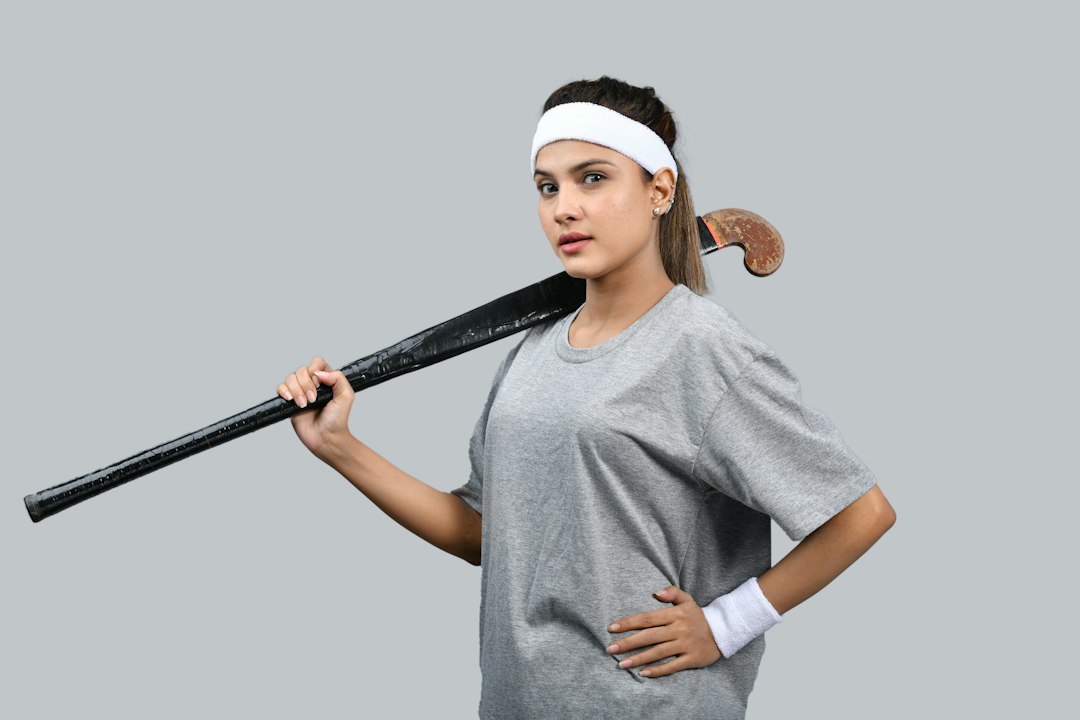




You still know exactly how it felt. The weight of the sweater over your shoulder pads, the hem sitting right where your pants ended, your number between your shoulder blades. Now you're a grown adult searching for a women's hockey jersey, and every page you land on is a fan jersey, a bulky men's cut, or a "smaller men's" tagged with a women's label.
If you played high school hockey as a girl, you probably wore whatever the program had, and often that meant a men's or youth sweater that was never built for you. That history is exactly why bringing your sweater back as an adult is trickier than clicking "add to cart." This guide is written for you: the former player who wants a custom jersey that fits an adult athlete's body and carries the look of the one you remember.
What a Women's Hockey Jersey Actually Means
Start with the term that causes the most confusion. "Women's hockey jersey" can mean three different things on a product page, and only one of them is a true women's pattern.
The three things a listing might mean
- True women's cut. The pattern was drafted around a female torso: narrower shoulders relative to the chest, a defined but not tight waist, and a hem that is shaped for hips. This is rare in hockey.
- Unisex, sized smaller. The same boxy men's pattern scaled down. The label says "women's," but the geometry is identical, just shorter and narrower overall.
- Fan-fit apparel. Fashion-oriented tops, often cropped or fitted, sold as a "women's hockey jersey." They look the part but aren't built for pads, movement, or a custom jersey inspired by the game sweater you wore.
Most search results fall into the second and third categories. They serve fans well. They don't serve someone trying to bring back what she actually wore.
Why a smaller men's jersey doesn't fit the same
Scaling a pattern down changes length and width evenly. A female athlete's proportions don't scale evenly. Shoulder width, bust, waist, and hip measurements relate to each other differently than a male torso. The result of "just size down" is typically one of two outcomes: the chest is right but the sleeves swallow your hands, or the shoulders sit correctly but the body pulls across the bust. Neither looks like the sweater you remember.
In our experience, this mismatch is the single biggest reason women are disappointed with their first custom hockey jersey order. The design is perfect and the fit is off, and fit is the one thing a photo on a screen can't show you.


Body proportions are only part of the story. Hockey sweaters are also built around what goes under them. USA Hockey's equipment guidance for female players (USA Hockey) notes that girls' and women's protective gear is sized and shaped differently from men's gear, so the sweater that covers it has to account for a different volume in the chest and shoulders. A pattern that ignores that difference is the one that pulls and bunches.
The Measurements That Actually Matter
Forget the S/M/L chart for a moment. For a custom jersey, you want to speak in inches. Here is what to measure and why each number matters.
Chest (pit to pit)
Lay a well-fitting top flat, or have someone measure you at the fullest part of the chest with a soft tape. Hockey sweaters are traditionally cut loose to fit over pads. If you want the authentic, game-day look, add 4 to 6 inches to your body chest measurement. If you want a wearable, off-ice fit with no pads, add 2 to 3 inches.
Hem width and body length
This is where women's fit diverges most from men's. A men's hockey sweater is often long and straight through the hem. For a body with hips, a straight hem can ride up or flare awkwardly. Decide whether you want:
- Authentic game length, which reaches roughly the hip bone to upper hip and is the look of a player on the ice.
- Shorter lifestyle length, which sits at the top of the hip and works better as everyday apparel.
Measure from the high point of your shoulder (where the neck meets the shoulder) straight down to where you want the hem to land.
Shoulder width and sleeve length
Sleeve length is the quiet deal-breaker. Hockey sweaters use a drop-shoulder or set-in pattern depending on the cut, and sleeves are often long to cover the elbow pad and glove cuff. For a former player, measure from the center back of the neck, across the shoulder, down the arm to where you want the cuff to land: at the wrist bone for lifestyle wear, slightly past it for an on-ice feel.
A simple measuring routine
Start with the measurement you can do alone. Lay your favorite fitted top flat and measure pit to pit, then hem to shoulder. Next, have someone help with your sleeve and shoulder width. Last, compare those numbers to the size chart of whatever manufacturer you use, and size to the chart's inches, not its letter.
Women's Cut vs. Unisex-Smaller: A Side-by-Side
| Feature | True Women's Cut | Unisex, Sized Smaller |
|---|---|---|
| Shoulder pattern | Narrower relative to chest | Same ratio as men's, just smaller |
| Waist shaping | Slight taper, still roomy | Straight, boxy |
| Hem | Shaped or slightly curved for hips | Straight cut |
| Sleeve length | Often shortened proportionally | Scaled down uniformly |
| Best for | Everyday wear, authentic-but-flattering fit | Pad-friendly game fit, vintage look |
Neither is "better." If you want to recapture the experience of wearing pads, a roomy unisex cut is closer to the truth. If you want something you'll wear to a game, a bar, or around town, a true women's pattern usually wins. Knowing which one you're ordering is the whole battle.
Spec'ing a Custom Sweater for an Adult Athlete's Body
Most guides skip this part. You're not buying off the rack. You're specifying something that should echo your old sweater but fit the body you have now.
Step 1: Decide on authenticity versus wearability
Be honest about where this jersey will live. A wall frame? A closet? Game-night seats? If it's going to be worn, size it for the body you have today, not the one you had at sixteen. If it's going to hang on a display, you can lean into the original proportions.
Step 2: Pull the details you remember
Write down the number, the font style, the colors, and the stripe pattern on the sleeves and hem. Hockey sweaters have a distinctive visual grammar, including arm stripes, waist stripes, and shoulder yokes, and getting those right is what makes it feel like yours. Photos from old team pictures are the best reference you have.
Step 3: Match the construction to the look
If your original had a lace-up collar, say so. If it had a V-neck with a contrasting trim, say so. Small construction details drive how authentic a custom jersey feels more than the logo does.
A Mid-Article Story: Dana R., 34
Dana R. played defense for her high school's co-ed team in Minnesota, back when there was no girls' program in her district. Her sweater was a men's large that hung past her hips and had sleeves she rolled twice. When she ordered a custom jersey in the style of that old sweater at 34, she measured an old fitted jacket instead of guessing a size, asked for a shortened body length, and kept the sleeves long to match the original. "It looked like mine," she told us, "but it finally fit me. That was never true the first time."
Her takeaway is the one to steal: match the look to your memory, but size to your body in inches.
Cut, Collar, and Construction: The Details That Change the Feel
Fit isn't only chest and hem. These construction choices decide whether a custom hockey jersey feels like a game sweater or a costume.
Fabric weight
Game sweaters are typically a mesh or double-knit polyester. Heavier double-knit hangs better and resists curling at the hem but runs warmer. Lighter mesh breathes better for off-ice wear. For a jersey you'll wear casually, mid-weight is usually the sweet spot.
Collar styles
Hockey collars vary: a crew neck, a V-neck, or a lace-up. Each changes how the sweater sits on the shoulders. A lace-up collar with a tied lace is the classic look but needs a little extra neck room. A flat V-neck drapes more cleanly on a smaller frame.
Twill, embroidery, and lettering
Names and numbers on custom ice hockey jerseys are usually applied as stitched twill or heat-pressed vinyl. Stitched twill is more authentic and lasts longer. Vinyl is lighter and less expensive but can crack with heavy wear. If you plan to actually wear and wash this jersey, stitched twill is worth the upgrade.
Stripes and yokes
Sleeve and waist stripes frame the whole look. When you spec the stripes, count them from an old photo. Two stripes versus three is the kind of detail a former teammate will notice instantly.
Fan Jerseys vs. Player Sweaters: Know What You're Comparing
If you've been shopping, you've likely scrolled past licensed products: a Colorado Avalanche hockey jersey, a Team Canada Olympic jersey, a Team USA men's jersey, or a Fanatics hockey jersey in the NHL hockey jerseys aisle. Those are built to celebrate a pro or national team, and many are cut on a men's or unisex pattern. They're a great way to show fandom. They're not a way to bring back your own number, your own school colors, or your own sleeve stripes.
That distinction matters because a pro team jersey answers the question "Who do I root for?" A custom jersey answers a different one: "Who was I when I played?" The second question is the reason this guide exists. Fan gear tells people what you watch. A custom jersey inspired by your own playing days tells them what you did.
It also changes how you shop. When you buy a fan jersey you accept the manufacturer's pattern and sizing as given. When you build a custom jersey, you control the pattern, and that control is the entire advantage for a female athlete whose proportions rarely match a men's template.
How to Order Without Getting the Fit Wrong
Most sizing mistakes happen at the ordering stage, not the design stage. Here's how to avoid them.
- Use inches, not letters. Compare your measurements to the manufacturer's size chart in inches. Letter sizes mean different things everywhere.
- Ask whether the pattern is women's or unisex. If the seller can't tell you, assume unisex.
- Order one size up if you're between sizes and plan to wear it casually; hockey sweaters are meant to be roomy.
- Check the return policy on custom items. Many custom orders are final sale, so confirm before you buy.
A short pre-order checklist
- Measured chest, hem length, shoulder, and sleeve in inches
- Decided game-fit vs. everyday-fit
- Confirmed pattern type (women's or unisex)
- Gathered reference photos for number, font, and stripes
- Chosen stitched or heat-pressed lettering
Common Mistakes Former Players Make
What most hockey-jersey guides miss is that the biggest errors aren't design errors. They're expectation errors.
- Sizing to the pads you no longer wear. If you won't wear shoulder pads under it, a game-fit size will look oversized.
- Trusting "women's" in the title. The label doesn't guarantee a women's pattern. Ask.
- Ignoring sleeve length. It's the most common reason a "perfect" jersey feels wrong.
- Skipping reference photos. Memory edits stripes, fonts, and colors. A photo doesn't.
Frequently Asked Questions
Is a women's hockey jersey really different from a men's?
It can be, but only if it's cut on a true women's pattern. Many listings labeled "women's" are the same boxy men's pattern in a smaller size. A true women's cut adjusts shoulder width, waist shaping, and hem shape for a female torso. Always ask the seller which pattern they use.
What size should I order for a custom hockey jersey?
Order by your measurements in inches, not by S/M/L. Measure your chest at its fullest point and add roughly 2 to 3 inches for an everyday fit or 4 to 6 inches for a game-day fit over pads. Compare the result to the manufacturer's chart.
Can I bring back my old high school hockey jersey?
You can build a custom jersey inspired by it if you can reference the colors, number, font, and stripe layout. Old team photos are the best source. School logos and trademarks may involve licensing limits, so many players recreate the look and feel with their own number, colors, and stripe pattern using custom ice hockey jerseys.
Should I choose a longer or shorter body length?
It depends on how you'll use it. Authentic game length reaches the hip bone or just below and gives the classic on-ice look. A slightly shorter length sits better for everyday wear on a body with hips and is usually more comfortable to move in.
Is stitched twill worth the extra cost?
If you plan to wear and wash the jersey regularly, yes. Stitched twill is more durable and looks more authentic than heat-pressed vinyl, which can crack or peel over time. For a display piece that won't be worn much, vinyl can be a reasonable savings.
Your jersey is still out there waiting.
Design yours in minutes and see your name and number exactly the way you remember it.
See also: jersey size chart | custom softball jerseys | a personalized gift that makes a former athlete feel seen | the psychology of athletic nostalgia | adult recreational leagues