





There's a game you still replay.
Not the state championship. Not the section final. Not the night you went off for 24 against the best defender in your conference. The one you replay — on the drive home from work, in the middle of a Tuesday afternoon, in the half-second before sleep finally arrives — is the rivalry game. The one against them. The high school basketball rivalry game that, by every objective measure, meant nothing beyond your zip code and somehow meant everything inside it.
That feeling is not coincidence. It is not sentimentality doing what sentimentality does. It is the product of something precise — a convergence of identity, community, and psychological pressure that the human brain is not engineered to release easily. This article is about that feeling: what builds it, why it outlasts everything else, and why playing your rival at 17 is the kind of experience that trophies and stat lines were never equipped to explain.
When the Stakes Are Personal, Not Statistical
Ask any former high school player to rank their most memorable games and the rivalry game almost always sits above the state championship. On paper, this makes no sense. Championships carry more by every external standard — trophies, newspaper front pages, college coach attention.
But the rivalry game carries something no championship can: witnesses who know you personally.
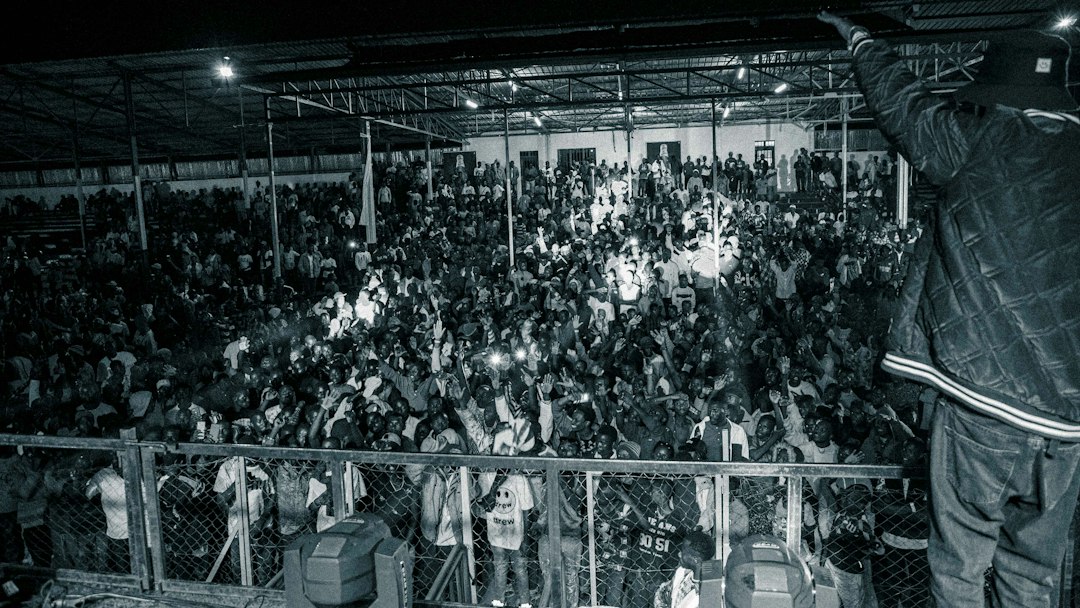
The player guarding you on the other end of the floor went to your elementary school. His older brother worked at the same summer job as yours. His parents are six rows behind your parents in a gymnasium so loud the cinder block walls feel like they're absorbing the noise and sending it back. You will see every person in that building at the grocery store. At the diner. At the Fourth of July parade. This is not a neutral performance environment. This is an accountability structure assembled from your entire childhood, compacted into a single Friday night.


That is the first layer of why the rivalry game lives longer than the championship. Championships are witnessed by strangers who have no claim on your identity. Rivals are witnessed by your community — people with memory, geography, and years of shared context. You cannot be anonymous in that gym. The crowd already knows you.
In our experience covering high school athletics, the athletes who felt the least pressure in state tournament games were often the exact same players who described rivalry week basketball as the most psychologically demanding stretch of their careers. The scoreboard stakes were objectively lower. The personal stakes were total.
The Town Versus Town Dynamic That Makes It Bigger Than Basketball
There is a reason the biggest high school basketball rivalry in any region earns its own name. Not "the game against Jefferson" — The Crosstown Clash. Not "when we play Riverside" — The Hardwood War, The Classic, The Border Battle. Towns baptize these matchups because the matchups carry something the towns themselves feel but rarely say out loud.
Town versus town basketball is a proxy confrontation. It is the gymnasium version of every argument that simmers between neighboring communities — which side of the county line runs tougher, which school produces harder workers, which program's kids are willing to sacrifice more. None of this is ever stated at center court. All of it is felt from the opening tip.
What makes this dynamic especially acute in basketball — as opposed to football or baseball — is the physical intimacy of the environment. You are not separated by a field or a diamond or a track. You are 94 feet apart in a space that seats 400 people, nearly all of whom you recognize by name or by face. The opposing point guard can hear your breathing. His coach can hear your coach. The referees are absorbing pressure from every direction simultaneously.
The psychological research on intergroup competition confirms what any former player already knows intuitively: when group identity is explicitly on the line, individual effort expenditure increases significantly. A 2011 study published in the Journal of Personality and Social Psychology found that rivalry framing — the specific perception that this opponent represents something about us — meaningfully elevated competitive motivation beyond what equivalent non-rivalry matchups produced. The town-versus-town frame does not add generic pressure. It transforms what the game means to the people inside it.
That transformation is precisely why you remember it. Your brain encoded that game differently because your nervous system processed it differently. The rival game was not a basketball game with added stakes. It was a distinct category of experience that happened to use the same court and the same ball.
What Rivalry Week Basketball Actually Feels Like From the Inside
What deserves more attention than it gets is the week before the game.
Rivalry week basketball is its own psychological season. The game hasn't happened yet, but the pressure is already present and building. You hear the other team's name in the hallways on Monday. Someone has a scouting report from their older sibling who saw them play last weekend. The coach says the right things about focusing on your own preparation — taking it one day at a time, controlling what you can control — and you nod, and the entire time your mind is on that one player on their roster who made your teammate look slow in last year's fourth quarter.
The internal timeline of rivalry week looks like this. If you played through one, you recognize every beat:
- Sunday night: You tell yourself you are not nervous yet. Your body is already nervous.
- Tuesday practice: The scout team runs their sets at half speed and you are playing like it is a tied game with two minutes left.
- Wednesday: You pass someone in the hallway wearing their colors and your stomach does something you did not authorize.
- Thursday night: Sleep is shallow. You run scenarios that have not happened yet.
- Friday morning: You are more awake, more present, more on than you have been at any point in the season.
That heightened state is not a problem to be managed or a symptom of poor mental preparation. It is the experience itself. The rival game produces a level of attentional intensity that most athletes only access a small number of times in their lives. The body recognizes that this game is different before the conscious mind has fully processed the reason. The adrenal response does not wait for a rational explanation.
Why the Loss Is Sharper Than the Win
Here is the part that any honest examination of rivalry psychology cannot skip: the losses are more durable than the wins.
This is not a character flaw. It is memory architecture. The human brain encodes emotionally charged negative events with higher fidelity than emotionally charged positive ones — a function of the amygdala's threat-prioritization system. A rivalry loss is not simply a disappointing result. It is a social exposure event in front of everyone who knows you, in a context where your identity was explicitly invested, with an outcome that ran directly against what the moment required of you.
The brain files that under survival-relevant. It keeps the file open and accessible.
Marcus T., 34, a former point guard from central Indiana, can still reconstruct the final 11 seconds of a rivalry loss his junior year — the specific play call, the defensive rotation that collapsed, the face of the opposing player who hit the go-ahead bucket — in granular, unhesitating detail. He laughs telling the story. His jaw tightens slightly while he laughs. "We won districts that same year," he says. "I honestly cannot tell you the score of the championship game. I could not tell you who I guarded. That other game I know play by play."
The rivalry win over your rival fades because it resolved the tension. The rivalry loss persists because it didn't. The account stays open. The brain keeps checking it.
What Playing Your Rival Was Actually Teaching You
The reframe that takes years to reach — and that most former players only access in retrospect — is this:
The rivalry game was not about basketball.
It was a training environment for a kind of pressure that does not exist anywhere else in a teenager's life: public, personal, inescapable, and witnessed by people whose knowledge of you is built from actual shared history rather than a single performance. That is specific. That is irreplaceable. And the skills built inside it transfer in ways that have nothing to do with scoring averages.
Playing your rival at 17 taught you four things that showed up later in ways you may not have connected back to the source:
- How your body behaves under maximum-stakes pressure — not simulated, not practice-intensity, but the genuine version. You learned whether you go quiet or go loud, whether you shrink or expand, whether you need noise to stay locked in or need silence. That self-knowledge is real and it moves with you.
- How to function inside a community that is watching and remembering — the gymnasium held your coach, your parents, your teammates' families, your teachers, your neighbors, the entire social infrastructure of your adolescence. Performing in that environment — whatever the result — built a form of social resilience that surfaces decades later in difficult professional conversations, in moments that require you to hold yourself together in front of people who already have an opinion of you.
- What it feels like to care so much it is physically uncomfortable — and to discover that the discomfort does not break you. You went into that game. You played through it. You came out the other side. That survival is evidence your nervous system will access again when it needs to.
- That belonging to something larger than individual performance is its own form of motivation — rivalry games are rarely won by one player. They are won by teams that play for each other and for the people in the stands who drove 20 minutes on a Friday night because it mattered. Learning to play for something communal, not just personal, is a lesson worth every bit of the pressure it cost.
The Reason It Still Matters Two Decades Later
Twenty years out, you are not still replaying the rivalry game because you are stuck. You are replaying it because it was one of the most fully realized experiences of your adolescent life — a moment where identity, community, effort, and consequence converged in a way that most adult experiences simply do not reach.
The biggest high school basketball rivalries endure in collective memory not because the basketball was always great — though sometimes it genuinely was — but because they were authentic. The stakes were personal to everyone in the building. The players were not performing for a television audience or a recruiting evaluation. They were performing for the people they would face the next morning in first period, the next weekend at the same church, the next decade at every intersection their lives continued to share with the community that formed them.
That authenticity is not common. And the brain knows the difference between an authentic experience and a managed one. It files them differently. It keeps the authentic ones longer.
If you played in a rivalry game, that night is part of how you understand yourself as a competitor — as someone who has been in a situation where everything personal was on the line and showed up anyway. That is not a small thing dressed up as nostalgia. That is formation. The kind that does not ask for your permission before it shapes you.
Your jersey is still out there waiting.
Design yours in minutes and see your name and number exactly the way you remember it.
Frequently Asked Questions
Why does a high school basketball rivalry game feel more important than a state championship?
The rivalry game is witnessed by people who already know you — classmates, neighbors, former coaches, family friends who have watched you grow up. That social accountability raises the personal stakes beyond what a state championship typically produces, which draws a larger but less personally connected crowd. Your brain encodes the rivalry game as a high-identity, high-exposure event, which is why the emotional memory tends to outlast even a title game in clarity and durability.
Is rivalry week basketball harder on players psychologically than playoff basketball?
For many players, yes — particularly at the high school level. Playoff basketball carries external stakes: advancement, championships, the possibility of a longer season. Rivalry week basketball carries internal and social stakes that are significantly harder to compartmentalize. The extended psychological buildup across the week, the personal familiarity with opponents, and the community-witness dynamic create a pressure load that is distinct from even high-stakes postseason environments. This is why experienced coaches treat rivalry week preparation as a separate discipline from tournament preparation.
Why do rivalry losses feel sharper and more memorable than rivalry wins?
This is a documented function of emotional memory encoding. The brain's amygdala flags high-identity, high-exposure failure events as survival-relevant and stores them with higher fidelity than success events, which resolve tension rather than sustain it. A rivalry loss in front of your entire community represents social exposure and unresolved competitive tension simultaneously — the memory file stays open and accessible in a way that a rivalry win, which closes the loop, typically does not.
What makes town versus town basketball rivalries feel different from other high school sports rivalries?
Basketball's physical intimacy amplifies everything. The gymnasium is contained. The players are close enough to hear each other. The crowd is loud in a space with no distance buffer between athletes and audience. There is no separation between the people on the floor and the community watching in the way that a football stadium or baseball diamond provides. In a rivalry game, the player guarding you is within arm's reach, both sets of parents are 30 feet away, and every person in the building has a personal connection to the outcome. That proximity — physical and social simultaneously — is specific to basketball and is a primary driver of why these rivalries carry the intensity they do.
Does competing in a rivalry game have any lasting psychological benefit?
The lasting effect is primarily constructive. Athletes who competed in high-stakes rivalry environments consistently report stronger self-knowledge about their performance under pressure, greater social confidence in high-accountability situations, and a clearer sense of their own competitive identity. The difficult version — an unresolved rivalry loss — typically softens with time while the self-knowledge gained from performing under that level of pressure remains fully accessible. Most former players, regardless of the final score, describe the rivalry game as one of the experiences they are most grateful to have had.
See also: why high school sports still matter to adults | why your senior season memories are so vivid | still dream about those games years later | what it felt like to play under the lights | the bus ride home after a tough loss