

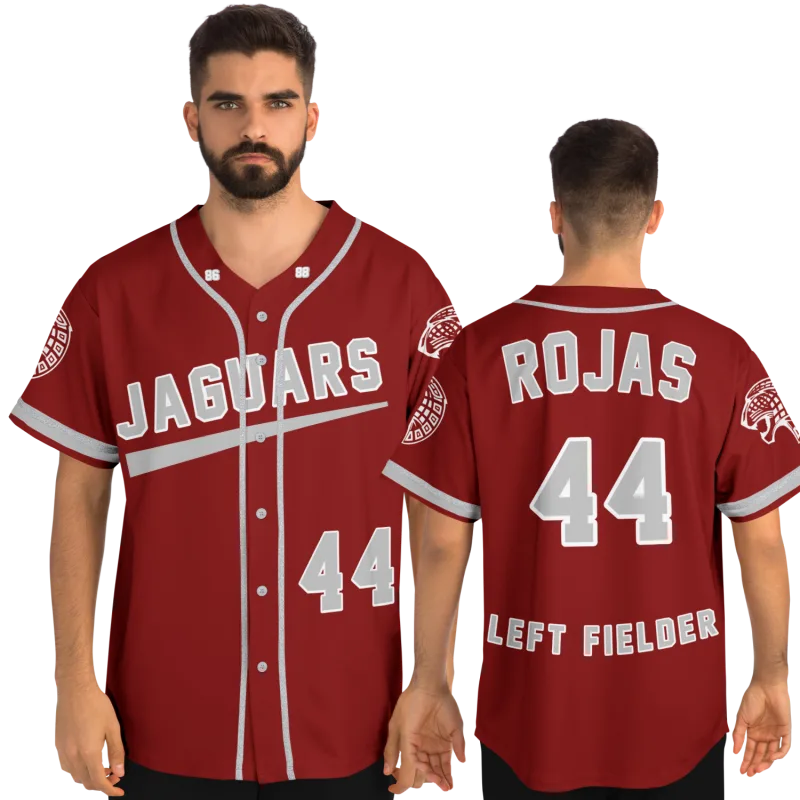
There is a specific color (maybe a deep navy, maybe a burnt orange, maybe a green so particular it doesn't exist anywhere outside your hometown) that still does something to you when you see it.
Not a general something. A specific, immediate, physical something.
You're driving and you see it on a bumper sticker. You're at a store and it's on a hoodie someone else is wearing. You're scrolling and a thumbnail catches your eye for half a second before you even know why. And then you know why. That's the color. Your color.
School colors athlete pride is the kind of loyalty that doesn't require maintenance. You didn't decide to keep feeling it. You just do. And if you played, if you actually laced up and ran out under those lights, you already understand everything this article is about. This is just the place where someone finally says it out loud.
The Color Wasn't Decoration
When you first put on that uniform, you probably weren't thinking about identity theory. You were thinking about not messing up the opening play, or whether the other team was bigger than last year, or if your parents could see you from the stands.
But something was happening underneath all of that.
The uniform was doing its work on you whether you noticed or not.
Colors aren't neutral. They carry association: layered, accumulated, specific association built up over years by every person who wore that combination before you. The royal blue and gold meant something at your school before you ever touched a jersey, and it would mean something after you graduated. But in between? In those seasons? It was yours. It was you.
Psychologists who study group identity use the term "social identity theory" to describe how belonging to a group (a team, a school, a program) becomes incorporated into a person's self-concept. The colors are the most visible expression of that belonging. They're the shorthand. When you wore them, you weren't just representing your school. You were declaring your membership in something with a history, a standard, and a set of expectations that existed independent of any single player.

The ones who downplay what the colors meant are usually the ones who meant the most to those colors. The ones who say "it was just a jersey" are often the ones who wore it with the most ferocity.
Every Former Athlete Remembers the First Time They Put It On
If you played, you know this moment.
The first time the uniform was yours — not the one you tried on at practice, not the one hanging in the locker room with your number written in marker on a piece of tape, but the one that was yours for real, for the season, for the record — something shifted.
It wasn't the fabric. It wasn't the fit. It was what the thing meant.
That was the moment you stopped being a kid who played the sport and became a member of the program. There's a difference, and you felt it. The colors were part of what made the difference real.
Maya T., 34, played varsity volleyball for three seasons in the Pacific Northwest. She still has the photo from the first game she started, not because she played well that night, but because she says it's the first picture where she looks like herself. "The uniform made it real," she says. "Before that, I was just hoping I was good enough. After that, I was on the team. The colors told me I belonged."
That experience, that specific transformation from hopeful to belonging, is inseparable from the visual symbol that marked it. The colors weren't present when the feeling happened. The colors were the feeling made visible.
What Those Colors Were Actually Carrying
Here is what school colors carry that no other symbol in an athlete's life can quite match:
The weight of the people who wore them before you. Every program has a history. Former players whose names are on plaques or trophies or just on the lips of coaches who still tell the same stories. When you put on that uniform, you were connected (whether you wanted to be or not) to everyone who had ever put on that same combination. That's not metaphor. That's how institutional identity works. You became part of a lineage. Some programs make that lineage permanent, and for the athletes it happened to, what it meant when a school retired a jersey number is a story they carry for the rest of their lives.
The specific geography of your childhood. Your school colors belong to a place. Not an abstract place — a specific one. The field with the bad drainage on the left side. The gym with the banner from the year before you were born. The locker room that always smelled just the same way. Those colors are the shorthand for that entire geography. When you see them now, you're not just seeing a color combination. You're seeing the place.
The version of yourself you were becoming. You were young when you wore those colors. You were in the process of figuring out who you were going to be. And because the colors were present during that figuring-out, they became associated with the raw, uncertain, urgent energy of that time. Seeing them now doesn't just remind you of games. It reminds you of that version of you — the one who was willing to run until they couldn't breathe because the team needed it. And if you've ever stopped to consider how your sport shaped the person you became, the answer is stitched into those colors — one season, one game, one moment at a time.
The people you competed alongside. Not the abstract concept of teammates. Specific people. The one who always knew when you needed a word and when you needed silence. The one who made you better by competing harder than you expected. The one you're still close with and the one you've lost track of but would recognize instantly if you saw them in those colors again. The colors carry their faces.
The Offseason That Never Came
The season ends. The uniform gets turned in. Life moves forward.
But school colors athlete pride doesn't operate on a seasonal schedule. That's one of the things that distinguishes it from other forms of loyalty or belonging. You can stop playing. You can move across the country. You can go a decade without thinking about it directly. And then you see the color (on a car, a hoodie, a stranger's hat) and the whole architecture comes back in an instant.
This isn't quite nostalgia. Nostalgia is longing for something past. What former athletes experience when they see their colors is something more immediate than that. It's recognition. The feeling isn't "I wish I were back there." The feeling is "that's still part of who I am."
There's a meaningful distinction between those two things.
Nostalgia places the past behind you. Identity recognition places it inside you. Former athletes don't miss their colors the way you miss a place you've left. They carry their colors the way you carry anything that's become part of your self-understanding. It doesn't require activation. It's just there.
There's one more way to see how deep this goes, and it tends to show up at the strangest moments, usually when someone tries to change the colors.
Programs change their look from time to time. A rebrand, a move to a new conference, a fresh uniform deal, a consultant with a deck. When a school that wore one combination for generations suddenly steps out in different colors, the response is almost never polite. A warm copper-and-gold that had been the identity for decades gets traded for a cooler maroon-and-silver, and nobody asks the people who wore the originals. Alumni who never said much about the colors turn unexpectedly vocal. Players describe something closer to grief than to disappointment, a this-was-ours reaction that outsiders find hard to explain. Years later, when the old combination returns as a throwback or an anniversary uniform, those same people celebrate it like a homecoming. The lesson is simple: nobody notices how much the colors meant until someone tries to take them away.
Then there's the other direction: forward, into the next generation. A parent who ran out under a particular combination years ago watches their kid pull on the same two colors decades later, at a different school in a different state that happened to land on the same scheme, and feels something land that they didn't expect. Sometimes it isn't chance at all. Some families trace the same colors through two generations on purpose: a nephew signs with the high school his uncle played for, a daughter ends up at her mother's college. The uniform changes. The numbers change. The two colors stay, and something quiet passes from one generation to the next along with them.
That's the real measure of what school colors are — not what they meant during the season, but how much they still mean when the season is long over, the uniforms are packed away, and the next person to pull those colors on might be someone you love.
If you kept yours (and plenty of former athletes did), deciding whether to keep or frame the old uniform is its own quiet decision, and there's no wrong answer.
The Specific Moment Athletes Talk About
Ask enough former athletes, across sports, levels, and decades, and a pattern emerges. There is almost always a specific, particular moment they return to when they talk about what the colors meant.
It's rarely the championship. It's rarely the highlight.
It's the small, loaded, unrepeatable moment that somehow became the container for everything the experience held.
The warmup lap where the stadium lights first hit the jersey the right way and you thought: this is real. The bus ride home after the loss that shouldn't have happened, everyone in the same colors, silent in the same grief. The handshake line at the end of the season, opponents in their colors, you in yours, both sides knowing it was over and that neither side would ever be quite this team again.
The colors were present for all of it. That's why they carry all of it.
What It Means That You Still Feel It
If you're reading this, you already know the feeling is real. You don't need it validated. But it might be worth naming what the persistence of that feeling actually says about you.
It says you were genuinely in it.
Not everyone who plays experiences this. Some people move through sports without ever being fully claimed by them. They played, they were fine at it, and they moved on without much of a backward glance. That's legitimate. But the former athlete who still feels their colors — who still, years or decades later, has a visceral response to that specific combination of colors — that person was in it. The program got into them the way things only get into you when you're genuinely present.
The feeling doesn't mean you're stuck in the past. It means something real happened there.
Athlete identity research consistently shows that the people who most strongly internalize the identity — who become athletes in the full sense, not just players of a sport — tend to be the ones for whom the experience becomes generative. They carry the work ethic. They carry the coachability. They carry the understanding that your individual performance exists inside a collective effort. The colors are just the most visible marker of an identity that shaped them in ways that lasted.
The Identity That Traveled With You
You took more than memories when you left that program. And the way you carry those experiences now — not as distant nostalgia but as something present and active — that's how former athletes wear their identity long after the last game ends.
You took a way of showing up. The understanding that preparation is the prerequisite for performance. The reflex to work harder when things get harder rather than easing up. The knowledge — not theoretical but felt, in your body — that consistency across a long season is how championships are built, and that this principle applies everywhere.
You took a relationship with commitment. Athletes make commitments to coaches, to teammates, to a standard of play, and then they honor those commitments when they don't feel like it. That's not a sports skill. That's a life skill. And most former athletes, if they're honest, trace it back to specific seasons, specific coaches, specific moments in specific uniforms.
You took a standard for what it means to be part of something. Teams work because every member subordinates their individual preference to the collective goal — selectively, and in the moments that matter. Former athletes often describe being unusually attuned to group dynamics, to when a team is working and when it isn't, to what roles they're being asked to fill and whether they're filling them well. This comes from years of practice in environments where the feedback was immediate and the stakes were real.
And those colors? They're the symbol the whole thing crystalized around. They're the shorthand for the entire education that happened inside that program.
When You See Them Now
There are the colors on the bumper sticker. On the hoodie. On the hat of a stranger in an airport who might have walked these same halls, worn these same colors, felt this same thing.
You don't always stop and speak to that stranger. But you notice them. And there's a moment — brief, specific, real — where something passes between you that doesn't require words. You were both in it. Maybe different years, maybe different sports, maybe different enough experiences that your stories wouldn't overlap at all. But you wore the same colors and you know what that means.
That's not a small thing.
In a fragmented world where common ground is increasingly hard to find, that shared symbol — those specific colors representing that specific place and program — is a genuine point of contact. Athletes who played for the same school across decades have more in common with each other than they might initially expect, because the colors connect them to the same institutional history, the same physical geography, the same culture that formed around that program.
The former athlete who sees their colors and feels something is being accurate, not sentimental. Those colors are carrying real information about who they are and where they came from.
And it's remarkable how specific that information is. Most former athletes can name the exact shade from memory, years later, without a swatch in front of them. A lot of them eventually go looking for it — matching your school's colors from an old team photo — because once you've decided to bring those colors back into your life, getting them right matters more than you'd expect.
Your jersey is still out there waiting.
Design yours in minutes and see your name and number the way you remember them.
Browse the Gallery — see how other former athletes are wearing theirs.
Frequently Asked Questions
Why do school colors feel so emotionally powerful compared to other symbols from childhood?
School colors occupy a unique position in identity formation because they're active rather than passive. You didn't just observe them — you wore them, competed in them, and experienced some of the most formative moments of your development while wearing them. Colors that are associated with intense experience, belonging, and personal growth during adolescence become encoded differently than other symbols. They're associated with identity formation itself, which is why seeing them decades later can produce an immediate, visceral response rather than just a pleasant memory.
Is it common for former athletes to still feel connected to their school colors years later?
It's more than common — it's the norm among athletes who were genuinely invested in their programs. The experience of strong ongoing connection to school colors is most pronounced in athletes who played for multiple seasons, who had coaches or teammates they were close to, and who experienced the program as a genuine community rather than just an activity. The intensity of the original experience directly predicts the persistence of the connection.
Do former athletes who played different sports share the same emotional relationship with their school colors?
Yes, with interesting variations. Football, basketball, and soccer athletes often cite the shared uniform as a primary carrier of team identity. Individual-sport athletes who competed under a school banner — swimmers, wrestlers, cross-country runners — describe the colors as especially meaningful precisely because their sport is often experienced alone, and the uniform is the primary symbol connecting them to the team. The mechanism is consistent across sports: the colors mark belonging to something larger than individual performance.
How do school colors connect to the broader identity of a former athlete?
School colors function as a compressed symbol for the entire athletic identity — the work ethic, the relationships, the formation that happened inside the program. When former athletes see their colors, they're not just remembering games. They're accessing the full architecture of who they were becoming during those years, and who they became as a result. The colors are the shorthand for an identity that continues to shape how former athletes approach work, relationships, and challenge long after the last season ends.
See also: why high school sports still matter to adults | the identity you built as an athlete doesn't disappear after high school | why your senior season memories feel permanently burned into your mind